 Purdue University - Extension - Forestry and Natural Resources
Got Nature? Blog

It’s a tough neighborhood for trees in the built environment. It is an ecosystem unlike any other, because it is dynamic, fragmented, high-pressure, and constantly under siege. There are continual extremes and challenges in this “un-natural” area as opposed to the environment in a more natural woodland. It’s a place where trees die young, without proper selection, planting, and care. Successful tree selection requires us to think backwards—beginning with the end in mind— to get the right tree in the right place…in the right way. This publication, Tree Selection for the “Un-natural” Environment, takes a look at some important components of the decision-making process for tree selection. There is both a publication and a video resource on this topic, both of which can be found below.
The video can be watched here:
Planting Your Tree Part 1: Choosing Your Tree
Resources:
Tree Selection for the “Un-natural” Environment, The Education Store, Purdue Extension’s resource center
Tree Installation: Process and Practices, The Education Store
Construction and Trees: Guidelines for Protection, The Education Store
Diseases in Hardwood Tree Plantings, The Education Store
The eastern hellbender is an endangered salamander found in the Blue River in southern Indiana. It requires cool, clean rivers and streams with high water quality in order to thrive. Water quality in the Blue River is affected by many factors. One relatively unknown contributor to poor water quality is pollution entering sinkholes. Many landowners have sinkholes on their properties and treat them like outdoor waste sites without knowing that these sinkholes have a direct link to our water supplies. In this video, Purdue biologists interview a local cave expert and a local conservationist about how sinkholes are connected to our rivers, streams, and water supplies and how we can help protect them.
Resources:
Improving Water Quality by Protecting Sinkholes on Your Property, The Education Store, Purdue Extension’s resource center
A Landowner’s Guide to Sustainable Forestry: Part 5: Forests and Water, The Education Store
Improving Water Quality Around Your Farm, The Education Store, YouTube
Animal Agriculture’s Effect on Water Quality: Pastures and Feedlots, The Education Store
Improving Water Quality At Your Livestock Operation, The Education Store, YouTube
Nick Burgmeier, Research Biologist & Extension Wildlife Specialist
Purdue Department of Forestry and Natural Resources
Dr. Rod Williams, Professor of Wildlife Science
Purdue Department of Forestry and Natural Resources
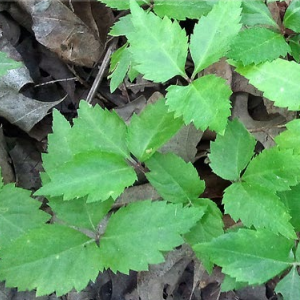 Forest farming in North America is becoming a popular practice that provides short-term income for owners of new forest plantations while their trees reach maturity. This income diversification is particularly relevant for many of the Indiana hardwood plantations planted in the last decade, but will not fulfill their economic potential until 60–70 years from establishment. This free download publication titled Costs and Returns of Producing Wild-Simulated Ginseng in Established Tree Plantations, FNR-530-W, is the second in a two-part series aimed at analyzing economic opportunities in forest farming for Indiana forest plantation owners. The first study explores growing hops along the tree line of newly established forest stands, while this second study investigates producing American ginseng in older (20- to 30-year-old) forest plantations.
Resources:
Costs and Returns of Producing Wild-Simulated Ginseng in Established Tree Plantations, The Education Store, Purdue Extension’s resource center
Energy Requirements for Various Tillage-Planting Systems, The Education Store
Home Gardner’s Guide, The Education Store
Planting Forest Trees and Shrubs in Indiana, The Education Store
Kim Ha, Research Assistant
Purdue Agricultural Economics
Lenny Farlee, Sustaining Hardwood Extension Specialist
Purdue Department of Forestry and Natural Resources

Recent Posts
- ID That Tree: Sugarberry
Posted: December 12, 2025 in Forestry, Wildlife, Woodlands - Powering Rural Futures: Purdue’s Agrivoltaics Initiative for Sustainable Growth
Posted: December 9, 2025 in Community Development, Wildlife - Learn How to Control Reed Canarygrass
Posted: December 8, 2025 in Forestry, Invasive Plant Species, Wildlife - Benefits of a Real Christmas Tree, Hoosier Ag Today Podcast
Posted: December 5, 2025 in Christmas Trees, Forestry, Woodlands - Succession Planning Resource: Secure your Future
Posted: December 2, 2025 in Community Development, Land Use, Woodlands - A Woodland Management Moment: Butternut Disease and Breeding
Posted: December 1, 2025 in Forestry, Forests and Street Trees, Woodland Management Moment, Woodlands - Controlling Introduced Cool-Season Grasses
Posted: in Forestry, Invasive Plant Species, Wildlife - Red in Winter – What Are Those Red Fruits I See?
Posted: in Forestry, Plants, Urban Forestry, Wildlife, Woodlands - Managing Common and Cut Leaved Teasel
Posted: November 24, 2025 in Forestry, Invasive Plant Species, Wildlife - Extension Team Wins Family Forests Comprehensive Education Award
Posted: November 21, 2025 in Forestry, Urban Forestry, Wildlife, Woodlands
Archives
Categories
- Alert
- Aquaculture/Fish
- Aquatic/Aquaculture Resources
- Ask the Expert
- Christmas Trees
- Community Development
- Disease
- Drought
- Forestry
- Forests and Street Trees
- Gardening
- Got Nature for Kids
- Great Lakes
- How To
- Invasive Animal Species
- Invasive Insects
- Invasive Plant Species
- Land Use
- Natural Resource Planning
- Nature of Teaching
- Plants
- Podcasts
- Ponds
- Publication
- Safety
- Spiders
- Timber Marketing
- Uncategorized
- Urban Forestry
- Webinar
- Wildlife
- Wood Products/Manufacturing
- Woodland Management Moment
- Woodlands