 Purdue University - Extension - Forestry and Natural Resources
Got Nature? Blog
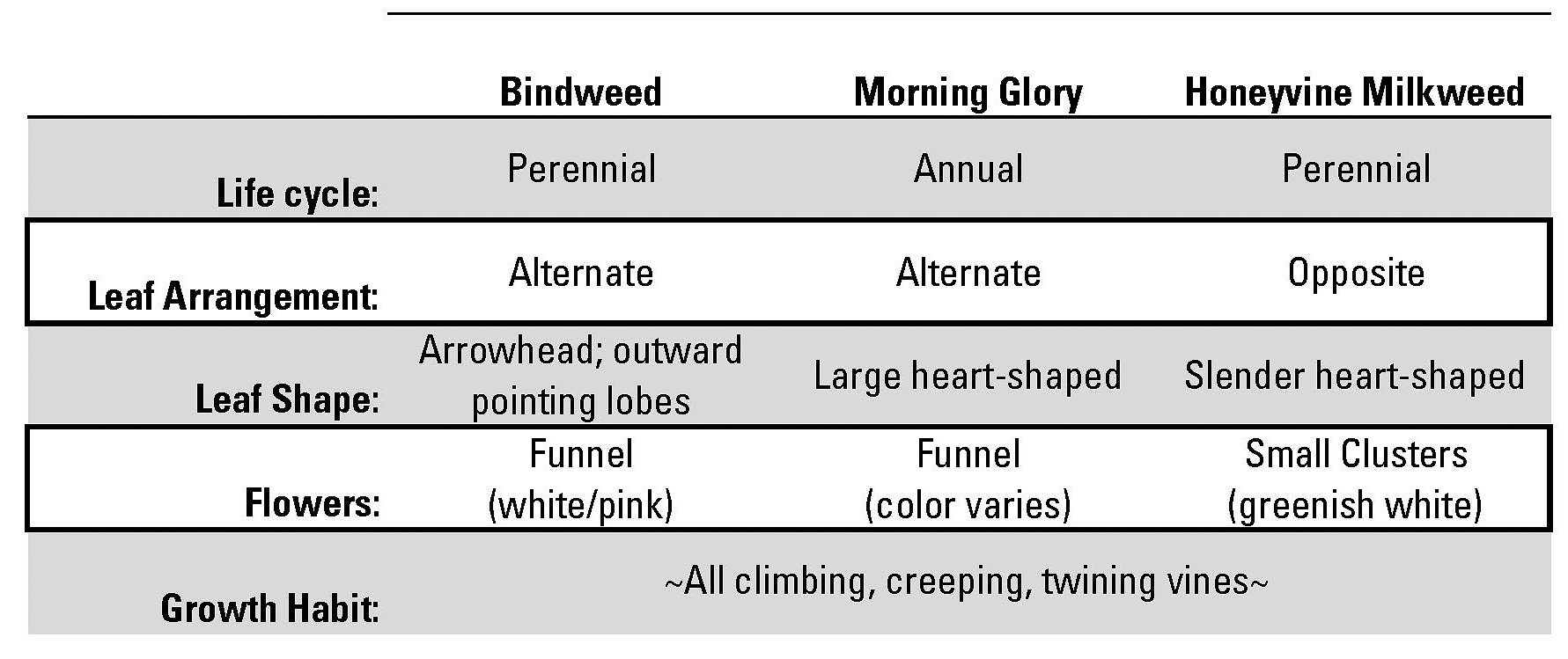
Figure 1. Chart comparing plant traits of bindweed, morning glory, and honeyvine milkweed. Credit: K. Mitchell
Purdue Landscape Report: Few garden problems cause as much frustration as untangling vines. Sometimes the vines are beautiful climbers planted with intention. Other times, they creep in uninvited and smother everything in their path. Among the most common, and the most confusing, vines in Indiana are bindweed, morning glory, and honeyvine milkweed. To the untrained eye, they look similar: all are fast-growing vines with heart-shaped leaves. However, there are noticeable differences in their physiological traits (Fig. 1) and ecological value. Recognizing the distinctions can improve management and help strike a balance between aesthetics, control, and ecological benefits.
Bindweed (Hedge bindweed: Calystegia sepium; Field bindweed: Convolvulus arvensis)
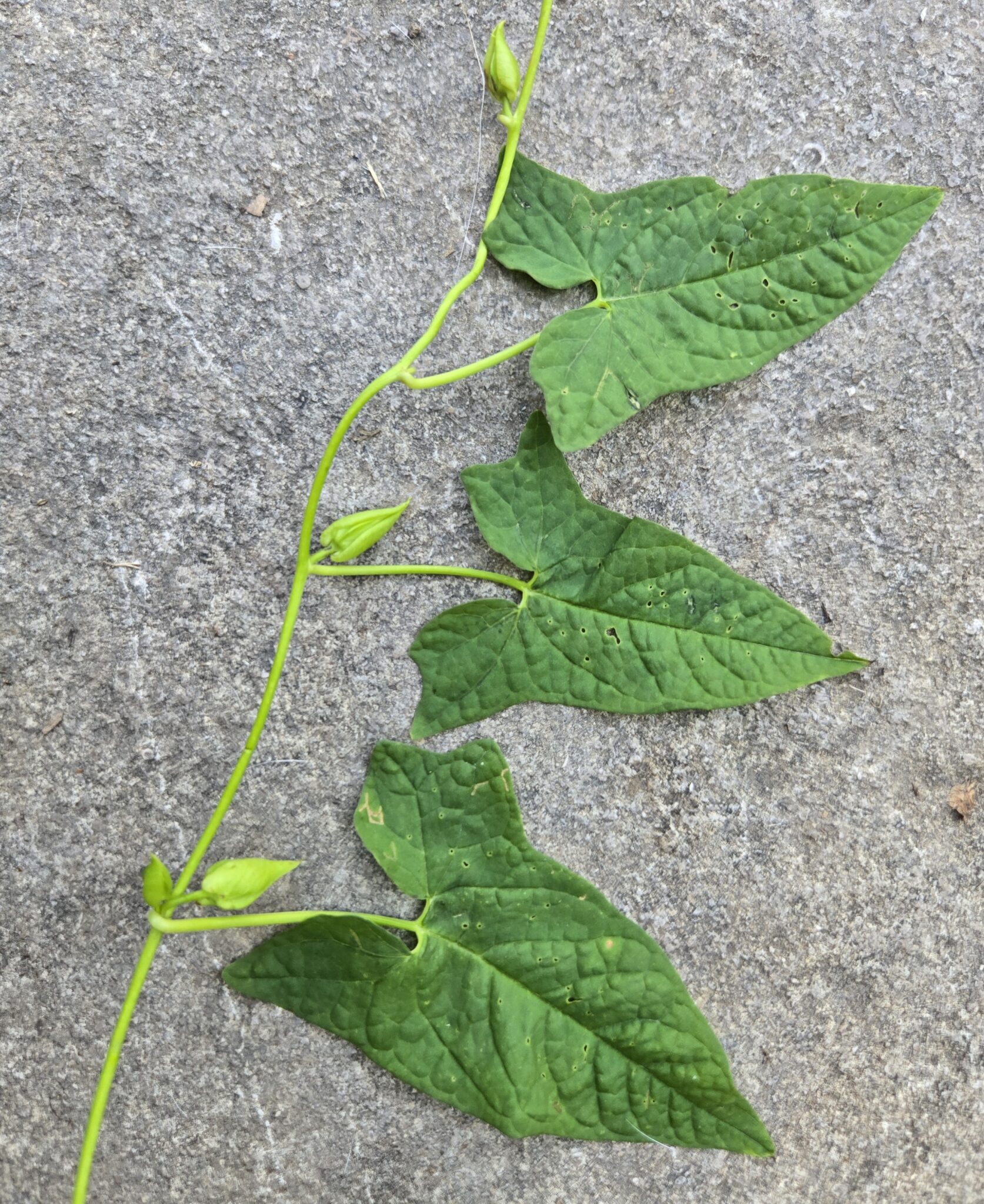
Bindweed is an aggressive vine with alternate, arrowhead-shaped leaves (Fig. 2) and small white or pink funnel-shaped flowers (Fig. 3). This perennial spreads readily from rhizomes (underground stems), forming vegetative colonies that become increasingly difficult to control. Hedge bindweed and field bindweed differ slightly in appearance, but both are aggressive invaders; in fact, field bindweed is listed as a prohibited noxious weed in Indiana. Cultural control methods, such as cultivation or light exclusion, can take 3 to 5 years to achieve eradication. The best results often come from combining these approaches with carefully timed herbicide applications.

Morning Glory (Ipomoea spp.)
Morning glories are a familiar vine often planted intentionally for their large, colorful flowers. Unlike bindweed, morning glory is an annual and dies off in winter. However, its abundant seed production allows it to return year after year. A single vigorous vine can produce hundreds of colorful, funnel-shaped flowers (Fig. 4) resulting in over a thousand seeds which may remain viable in the soil for decades. Morning glory will become weedy if left unmanaged. Thoughtful containment and regular deadheading can help to keep it under control.


Two types are most often seen (Fig. 5):
- Common morning glory (Ipomoea purpurea) has large, heart-shaped leaves and showy, funnel-shaped flowers in a wide variety of colors.
- Ivy-leaf morning glory (Ipomoea hederacea) has leaves with three distinct lobes that resemble ivy, and its smaller flowers are typically light blue or purple with white.
Honeyvine Milkweed (Cynanchum laeve)
Honeyvine milkweed has slender heart-shaped leaves like bindweed, but unlike bindweed, this native vine provides ecological value as a food source for monarch caterpillars. It’s easily distinguished from morning glory and bindweed by its opposite leaf arrangement (Fig. 6), small clusters of greenish-white flowers (Fig. 7), and long seed pods, typical of the milkweed family, that release hundreds of windblown seeds. While beneficial to pollinators, honeyvine can overwhelm a home landscape and should be contained to naturalized areas or pollinator gardens.


Correct identification is the first step toward effective management. Though bindweed, morning glory, and honeyvine milkweed are all fast-growing vines, they have key differences in their physiological traits and ecological value. Proper identification determines whether you are eradicating noxious weeds, containing ornamentals, or conserving natives where appropriate.
Quick Tips for Identification
- Leaf arrangement:
- Alternating leaves (only one leaf per node) – bindweed or morning glory
- Opposite leaves (two leaves per node) – honeyvine milkweed
- Flowers:
- White or pink funnel-shaped (~1 to 3 in) – bindweed
- Colorful funnel-shaped (2 to 4 in) – morning glory
- Small, greenish white clusters – honeyvine milkweed
- Seed pods:
- Tiny capsules – bindweed or morning glory
- Long pods with silky seeds – honeyvine milkweed
View the original article on the Purdue Landscape Report website: Untangling the Vines: Identifying Bindweed, Morning Glory, and Honeyvine Milkweed.
Subscribe and receive the newsletter: Purdue Landscape Report Newsletter.
Resources:
ReportINvasive, Purdue College of Agriculture
What are Invasive Species and Why Should I Care?, Got Nature? Blog, Purdue Extension – Forestry and Natural Resources
Large Spots on Maple Leaves that Look Like Tar, Purdue Extension News
Find an Arborist, International Society of Arboriculture
Fifty Common Trees of Indiana
An Introduction to Trees of Indiana
Native Trees of the Midwest, The Education Store
Shrubs and Woody Vines of Indiana and the Midwest, The Education Store
Tree Installation: Process and Practices, The Education Store
Planting Your Tree Part 1: Choosing Your Tree, Video, Purdue Extension – Forestry & Natural Resource (FNR) YouTube Channel
Investing in Indiana Woodlands, The Education Store
Forest Improvement Handbook, The Education Store
ID That Tree, Purdue Extension-FNR YouTube playlist
Purdue Plant and Pest Diagnostic Laboratory
Karen Mitchell, Consumer Horticulture Extension Specialist
Purdue Horticulture & Landscape Architecture

Recent Posts
- Publication – Planting Forest Trees and Shrubs in Indiana
Posted: April 8, 2026 in Forests and Street Trees, Urban Forestry, Wildlife, Woodlands - ID That Tree: Virgin’s Bower Clematis
Posted: April 6, 2026 in Urban Forestry, Wildlife, Woodlands - It’s Timberdoodle Time!
Posted: April 3, 2026 in Got Nature for Kids, How To, Wildlife - Keep An Eye Out for Hammerhead Worms, Purdue Landscape Report
Posted: April 2, 2026 in Invasive Animal Species, Wildlife, Woodlands - When is the Peak Migration For Hummingbirds and How Can You Attract Them?
Posted: in How To, Wildlife - ID That Tree Featured in National Woodland Owners Association Newsletter
Posted: April 1, 2026 in Urban Forestry, Wildlife, Woodlands - New 2026 Indiana Woodland Steward Newsletter
Posted: March 30, 2026 in Urban Forestry, Wildlife, Woodlands - A Woodland Management Moment: Why Aspect Matters
Posted: in Urban Forestry, Woodland Management Moment, Woodlands - 2026 Winter Bat Survey In Progress, MyDNR
Posted: March 27, 2026 in How To, Wildlife - Fast-Growing Trees for the Landscape, Purdue Landscape Report
Posted: March 26, 2026 in Forestry, Urban Forestry, Woodlands
Archives
Categories
- Alert
- Aquaculture/Fish
- Aquatic/Aquaculture Resources
- Ask the Expert
- Christmas Trees
- Community Development
- Disease
- Drought
- Forestry
- Forests and Street Trees
- Gardening
- Got Nature for Kids
- Great Lakes
- How To
- Invasive Animal Species
- Invasive Insects
- Invasive Plant Species
- Land Use
- Natural Resource Planning
- Nature of Teaching
- Plants
- Podcasts
- Ponds
- Publication
- Safety
- Spiders
- Timber Marketing
- Uncategorized
- Urban Forestry
- Webinar
- Wildlife
- Wood Products/Manufacturing
- Woodland Management Moment
- Woodlands