 Purdue University - Extension - Forestry and Natural Resources
Got Nature? Blog
Indiana Department of Natural Resources (INDNR) recently received inquiries asking what to do with an abandoned animal. The INDNR web resource titled Orphaned and Injured Animals has steps to follow as you decide if the animal is truly abandoned.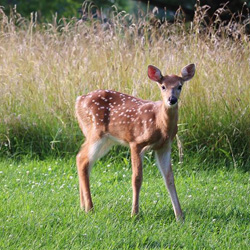
Resources
Got Nature? Orphaned Animals, author Brian MacGowan, extension wildlife specialist, Purdue University:
In most cases, the young animal is simply “spreading its wings” and exploring, or mom simply left it to get something to eat. Fawn deer are programmed to hide and remain motionless while mom is away. The fact is wildlife rarely abandons their young. They may leave briefly only to return.
Remember that you should never handle wild animals unless absolutely necessary. Any animal can bite you, and many harbor diseases and pests that can be transmitted to people.
In Indiana, wildlife rehabilitators have necessary state and federal permits to house and care for sick or injured wild animals. If you think you have found a sick or injured animal, you can find a list of licensed Wild Animal Rehabilitators in your area on the DNR Division of Fish and Wildlife’s website.
Mammals of Indiana, J.O. Whitker and R.E. Mumford
Common Indiana Mammals, R.N. Chapman and R.N. Williams, publication number FNR-413-W
Orphaned and Injured Animals, Indiana DNR
The Education Store (Search keywords to find the resources you need)
It doesn’t sound like there would be much chance of the chemical to get into the shrubs if the imidacloprid is applied close to the base of the tree. Also another thing to consider is unless you’re eating solely certified organic food, there’s a really good chance you’ve consumed very small amounts of imidacloprid at some time.
The United States Department of Agriculture (USDA) Pesticide Data Program monitored imidacloprid residues in food and published their findings in 2006. Imidacloprid was detected in a range of fresh and processed fruits and vegetables. It was detected in over 80% of all bananas tested, 76% of cauliflower and 72% of spinach samples. In all cases, however, the levels detected were below the U.S. EPA’s tolerance levels. Imidacloprid was also found in 17.5% of applesauce and 0.9% raisin samples, although percentage of detections were greater in the fresh unprocessed fruit (26.6% of apples sampled and 18.1% of grapes sampled).
These findings were on direct application to the plant, which would indicate higher concentrations than that which you would find on plants nearby those that were treated. Additionally, it is advised that if homeowners want to use a product with imidacloprid as the active ingredient, then they use one specifically labeled for edible food crops. The product label will contain specific instructions on application, pre-harvest intervals and special instructions on limiting harm to pollinators.
Resources
Purdue Pesticide Programs
Office of Indiana State Chemist – Pesticide Section
Lindsey Purcell, Urban Forestry Specialist
Department of Forestry and Natural Resources, Purdue University
 Woodlots are dynamic, vital ecosystems in the urban and suburban landscapes of the Midwest. People own these small wooded lots in urbanized areas for a variety of reasons: timber production, firewood production, recreation, wildlife habitat, aesthetics and alternative forest products. Many owners who keep and nurture these natural areas are motivated by powerful, non-economic motives based primarily on aesthetics and environmental protection.
This new Purdue Extension publication titled Indiana’s Urban Woodlots is a great way to aid you in a management plan and build your knowledge of what trees can do for you and the environment. This 24-page booklet covers benefits of trees, laws and zoning, stewardship planning, management, planting and renewal, and more.
View The Education Store for this and other Purdue Extension publications. Just type keywords in the search field to find the resources you need.
Lindsey Purcell, Urban Forestry Specialist
Department of Forestry and Natural Resources, Purdue University
Lenny Farlee, Sustaining Hardwood Extension Specialist
Hardwood Tree Improvement and Regeneration Center (HTIRC)
Department of Forestry and Natural Resources, Purdue University
An unsatisfactory approach to tree maintenance or pruning is “topping” it. Topping is the indiscriminant removal of branches of a tree above an arbitrary height, leaving unnatural, grotesque stubs and misshapen tree forms. In addition, increased risk tree conditions are introduced with development of decay, weak branch attachments and poor health.
Large evergreen trees do not respond well to topping. The removal of the upper main stem through topping opens the tree to internal decay, disease or damaging insects; it also removes the most productive portion of the tree. The practice of topping to control tree size or growth is not justified. If the tree is too large to fit the space, it should be removed and replaced with a smaller, more suitable species for its growing space.
Be aware that unprofessional tree service crews use this approach because it takes little skill and is easiest for them to perform. Do not let yourself be persuaded that topping serves your best interest; both you and your tree will suffer from such mistreatment.
The topmost part of an evergreen whose shape is pyramidal, such as a spruce tree, has a growing point known as the apical meristem. In evergreen trees, the apical meristem contains a hormone that suppresses lateral growth, helping it to keep its excurrent or pyramidal form. The further away from the tip (apical meristem), the less affect this hormone has on the lateral growth of the tree’s branches. This is why spruce trees have that pyramidal shape and are not more rounded or decurrent. By topping evergreen trees, it will destroy the apical dominance of the plant and result in growing more round than tall with a misshaped top. It will try to re-establish apical dominance as it matures, but it will most likely look very unusual and not like these species should appear with multiple competing growing tips. Remember, this is a natural form for many evergreens to help shed the heavy loads from snowfall. Remove the apical meristem (tip), and you reduce the suppression of lateral growth. This affects the shape of the spruce tree and exposes it to potentially splitting the tree down the trunk as well as exposure to the problems associated with topping.
Resources
Trees are Good
What’s Wrong with Topping Trees?
Lindsey Purcell, Urban Forestry Specialist
Department of Forestry and Natural Resources, Purdue University
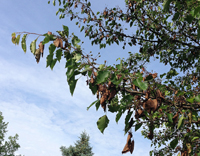 Fire blight is infecting flowering pear trees in large numbers in Indiana for the third consecutive year with a Purdue Extension specialist again urging homeowners to check their trees for symptoms.
Symptoms of the potentially deadly disease with no cure are wilting shoots, cankers on branches and blackened leaves, which give the disease its name because trees appear to be scorched.
Resources
Purdue Pest and Plant Diagnostic Laboratory
The Education Store
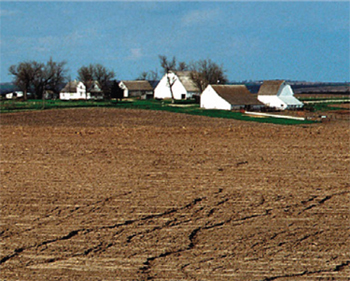 Because agriculture dominates the midwestern landscape, it has a huge impact on environmental quality. Agricultural producers are often advised to adopt practices that help to reduce the impact of agriculture on the environment. However, like all humans, they are often reluctant to change, which makes the work of conservation professionals extremely challenging. In this publication, we explore the myths and realities around what motivates farmers to adopt conservation practices. We draw on the authors’ combined research and applied practitioner experience with farmer adoption of conservation practices. Most evidence is based on studies and observations of traditional row-crop farmers in the midwestern United States.
Adoption of Agricultural Conservation Practices
The Education Store
Purdue Extension
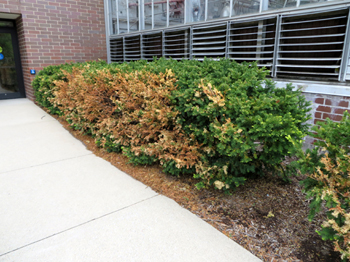 Extreme cold last winter, unrelenting winds and unusually large amounts of salt that were applied to roads, sidewalks and parking lots are taking their toll on landscape plants this spring, a group of Purdue University experts say.
They are seeing considerable damage and expect more this summer and beyond. While it is difficult to determine winter injury until bud break, they say it is now time for homeowners and others with ornamental plants to evaluate their plants for damage that needs to be corrected.
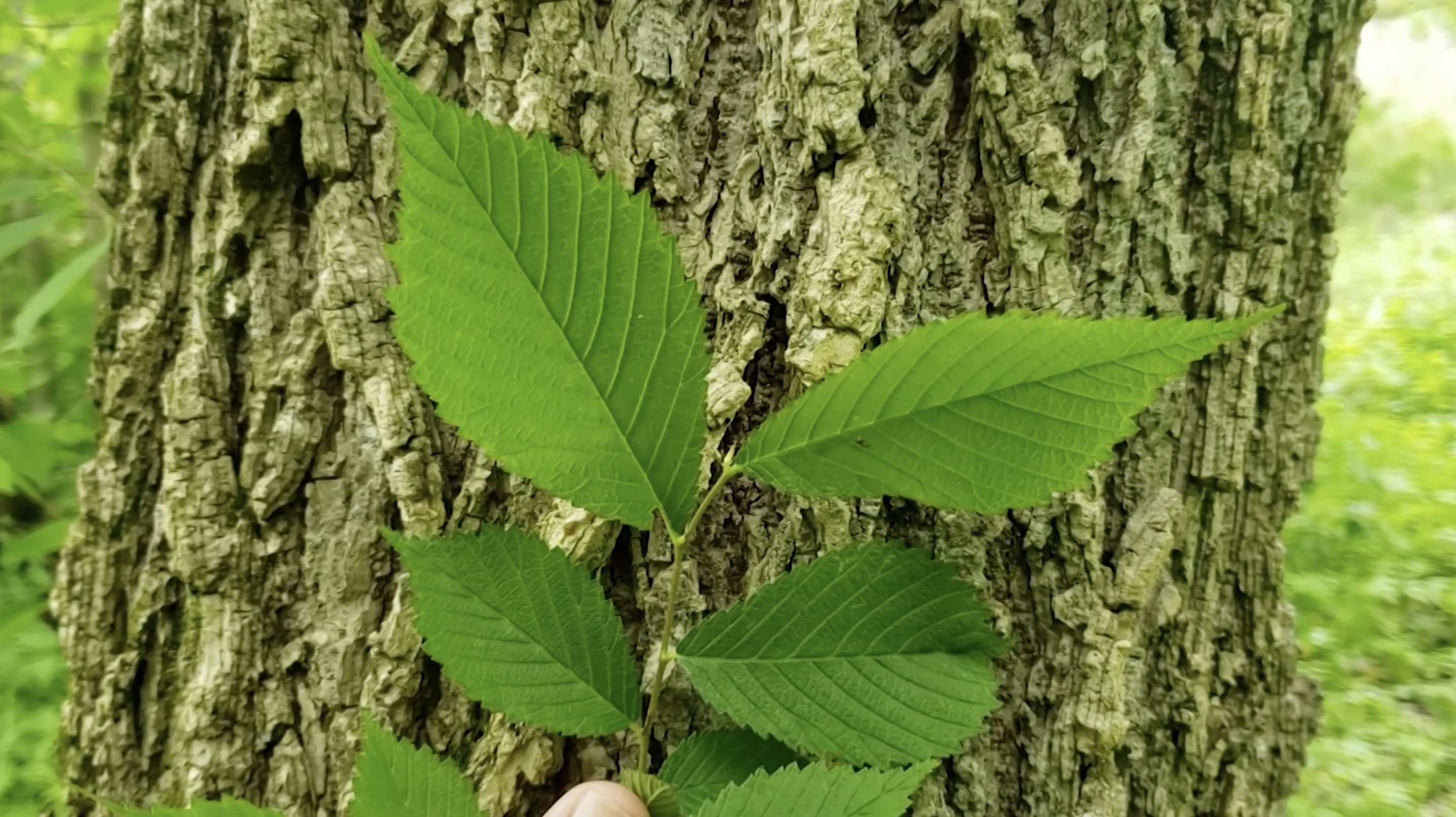 American elms have been the victim of a decimating disease known as DED or Dutch Elm Disease. However, there are a few that linger and remain, gracing our city streets with their majestic arching form. Many elms are mistakenly identified as American; however, there are many other “weedy” elms that have naturally inhabited our urban landscape. Due to the incredible interest in these trees, plant breeders have developed resistant American elms which are showing excellent results. Unfortunately, many of those trees proved to be susceptible to other diseases such as Elm Yellows.
Providing that the tree has been identified as an American elm, proper management is required to maintain its health and vigor to provide a sustainable tree in the landscape.
Strategies include:
Sanitation: Quick removal of diseased trees and symptomatic branches is necessary in managing this disease. Removal of the damaged parts reduces breeding sites for the elm bark beetle and removes the fungus from the vicinity. Branches with “flagging” symptoms should be removed, making a cut well behind (5-8 ft.) any visual symptoms.
Pesticide Applications:
Insecticides to kill bark beetle vectors – Attempt to control the insect vector population by applying an insecticide. Timing of the application may depend on the type of insecticide you have selected. Some insecticides may target the spring feeding sites while others target the overwintering sites and should be applied during late autumn. Use of this management option should be considered carefully. It is difficult to attempt control over this beetle population due to the timing factor, the complete coverage issue, expense and pesticide exposure.
Preventative fungicide injections – There are effective fungicides capable of protecting elm trees from infection, but this method of management should be considered carefully. Fungicide injection must be performed by someone trained in the technique and may be expensive. Protection lasts 1-3 years and then must be repeated. In addition, some researchers are concerned that repeated wounding of the tree (by drilling holes) for the injection may open trees to decay. If there is concern for infestation, it is critical to contact a reputable tree care company specializing in good plant healthcare. Always contact an International Society of Arboriculture Certified Arborist to help insure best practices. For more information on DED and management strategies, click on the links below.
Resources
Dutch Elm Disease
Diseases in Hardwood Tree Plantings
Pest Tracker: Dutch Elm Disease
Lindsey Purcell, Urban Forestry Specialist
Department of Forestry and Natural Resources, Purdue University
I am noticing several weeping cherries in the neighborhood which appear to be damaged, maybe dead over the winter. Forsythia bloom was poor, and my Cornus mas failed to bloom too. Will they recover?
Damage is just now starting to reveal itself due to the late growing season this year. Cherry trees appear to have been hit very hard, especially sweet cherries with over 90% of the crop damaged. Many landscape trees bloomed sporadically or not at all due to the extreme cold. Redbuds were light to no bloom but appear to be leafing out fine. Forsythia seems to be dependent on species and if they are planted in a protected area or microclimate. Many forsythia flowered well this spring, but many in open, exposed areas bloomed very little. Also it appears that Cornus mas is failing to bloom as well. Another consideration is impact of the drought from last year. I believe we will be seeing even greater impact with extreme cold providing an additional blow to our trees and shrubs. Plants may fail to bloom but still be alive.
The best suggestion is be patient and to provide good cultural practices with water when needed this spring and summer and provide the proper levels of mulch. Avoid fertilization and only lightly prune when necessary. Most likely trees are in stress conditions, still in recovery from the previous drought along with the extreme cold. Too much care can be lethal.
Resources
Pruning Ornamental Trees and Shrubs
Why Plants Fail to Bloom
Lindsey Purcell, Urban Forestry Specialist
Department of Forestry and Natural Resources, Purdue University
This winter was a brutal one for sure, but the emerald ash borer still has plenty of life left in it.
Although the Midwest experienced abnormally cold temperatures this winter, it is unlikely that populations of the highly destructive beetle were significantly affected by it, said Adam Witte, exotic forest pest educator in the Purdue University Department of Entomology.
“Headlines have been circulating, suggesting that EAB may have met its match,” Witte said. “But the EAB, as well as most insects in colder climates, is effective at surviving cold temperatures.”
EAB larvae overwintering within ash trees die when temperatures reach minus-28 degrees Fahrenheit below the bark, Witte said. U.S. Forest Service scientists predicting areas in North America where temperatures were cold enough to kill EAB larvae conclude that only parts of Minnesota and North Dakota historically have reached temperatures that low.
Contacts
Adam Witte, Exotic Forest Pest Educator
Department of Entomology
Matthew Ginzel, Associate Professor
Departments of Entomology & Forestry and Natural Resources

Recent Posts
- Opportunities for Prescribed and Wildland Fire Training
Posted: November 4, 2026 in Forestry, How To, Wildlife, Woodlands - Wildlife Issues and Solutions: A New Online Series
Posted: in Forestry, How To, Wildlife, Woodlands - Burning for Benefits: Where Fire Belongs in Indiana
Posted: in Forestry, Safety, Wildlife, Woodlands - Residents, Alumni Invited to Share Indiana Natural Resource, Spaces, Species Memories
Posted: in Forestry, Forests and Street Trees, Gardening, Urban Forestry, Wildlife - Now Is The Time To Control Non-Native Bush Honeysuckle
Posted: October 30, 2026 in Forestry, How To, Invasive Plant Species, Woodlands - Help Strengthen the Future of Indiana Maple Syrup
Posted: October 29, 2026 in Forestry, How To, Woodlands - Popular Landscape Shrub is Invasive
Posted: October 15, 2026 in Alert, Forestry, Forests and Street Trees, Invasive Plant Species, Plants, Woodlands - Purdue Extension’s Regional Teams Are Here: Connecting Communities with Expertise and Opportunity
Posted: October 14, 2026 in Community Development, Forestry, Forests and Street Trees, Gardening, How To, Timber Marketing, Urban Forestry, Wildlife, Woodlands - Why Do Our Trees Go From Green Leaves to Different Colors?
Posted: in Forestry, Forests and Street Trees, Urban Forestry, Woodlands - Deer and Turkey Archery Seasons Opening Soon, MyDNR
Posted: October 13, 2026 in Alert, Safety, Wildlife
Archives
Categories
- Alert
- Aquaculture/Fish
- Aquatic/Aquaculture Resources
- Ask the Expert
- Christmas Trees
- Community Development
- Disease
- Drought
- Forestry
- Forests and Street Trees
- Gardening
- Got Nature for Kids
- Great Lakes
- How To
- Invasive Animal Species
- Invasive Insects
- Invasive Plant Species
- Land Use
- Natural Resource Planning
- Nature of Teaching
- Plants
- Podcasts
- Ponds
- Publication
- Safety
- Spiders
- Timber Marketing
- Urban Forestry
- Webinar
- Wildlife
- Wood Products/Manufacturing
- Woodland Management Moment
- Woodlands