 Purdue University - Extension - Forestry and Natural Resources
Got Nature? Blog
Bats are often overlooked but data gathered by the Hardwood Ecosystem Experiment (HEE) 100 year, large-scale experimental study reminds us the key role they have in our forests as they eat insects and pests including mosquitoes, spiders and more.
Learn about the bat research that is happening as part of the HEE.
If you have any questions regarding trees, forests, wildlife, wood products or other natural resource topics, feel free to contact us by using our Ask an Expert web page.
Resources
Hardwood Ecosystem Experiment (HEE), Playlist, Purdue Extension – Forestry and Natural Resources
Hardwood Ecosystem Experiment, Website
Hardwood Ecosystem Experiment – Wildlife Responses to Timber Harvesting, Purdue Extension – Forestry and Natural Resources
The Hardwood Ecosystem Experiment: Indiana Forestry and Wildlife, The Education Store
Ask An Expert: Bats on the Hardwood Ecosystem Experiment, Video, Purdue Extension – Forestry and Natural Resources Facebook
Charlotte Owings, Hardwood Ecosystem Experiment Project Coordinator
Purdue University, Department of Forestry and Natural Resources
Learn about the methods of collection and the various research projects about birds that are currently happening on the Hardwood Ecosystem Experiment.
If you have any questions regarding trees, forests, wildlife, wood products or other natural resource topics, feel free to contact us by using our Ask an Expert web page.
Resources
Hardwood Ecosystem Experiment (HEE), Playlist, Purdue Extension – Forestry and Natural Resources
Hardwood Ecosystem Experiment, Website
Breeding Birds and Forest Management: the Hardwood Ecosystem Experiment and the Central Hardwoods Region, The Education Store, Purdue Extension – Forestry and Natural Resources
Forest Birds, YouTube, Purdue Extension
Managing Woodlands for Birds, YouTube, Purdue Extension
The Hardwood Ecosystem Experiment: Indiana Forestry and Wildlife, The Education Store
Charlotte Owings, Hardwood Ecosystem Experiment Project Coordinator
Purdue University, Department of Forestry and Natural Resources
Forest management in the eastern United States is faced with many modern challenges. Professional foresters have an innovative set of management options for the maintenance of healthy forest ecosystems. This 100-year study of forest management and its impact on plants and animals continues to guide professionals around the state and beyond.
If you have any questions regarding trees, forests, wildlife, wood products or other natural resource topics, feel free to contact us by using our Ask an Expert web page.
Resources
Hardwood Ecosystem Experiment (HEE), Playlist, Purdue Extension – Forestry and Natural Resources
Hardwood Ecosystem Experiment, Website
Hardwood Ecosystem Experiment – Wildlife Responses to Timber Harvesting, Purdue Extension – Forestry and Natural Resources
The Hardwood Ecosystem Experiment: Indiana Forestry and Wildlife, The Education Store
Charlotte Owings, Hardwood Ecosystem Experiment Project Coordinator
Purdue University, Department of Forestry and Natural Resources
Several things come into play when it comes to determining the colors that we find on leaves of our trees. In this video, we will talk about the several pigments that are found in trees and what changes from summer to fall that brings us the bright colors on leaves.
If you have any questions regarding trees, forests, wildlife, wood products or other natural resource topics, feel free to contact us by using our Ask an Expert web page.
Resources
Why Leaves Change Color, The Education Store, Purdue Extension Resource Center
Native Trees of the Midwest, Purdue University Press
ID That Tree, Playlist, Purdue Extension – Forestry and Natural Resources Youtube Channel
Urban Forestry, Playlist
Lenny Farlee, Sustaining Hardwood Extension Specialist
Purdue University Department of Forestry and Natural Resources
If you have any questions regarding trees, forests, wildlife, wood products or other natural resource topics, feel free to contact us by using our Ask an Expert web page.
Resources
Ask an Expert, Playlist, Purdue Extension – Forestry and Natural Resources Youtube Channel
Integrated Deer Management Project
Deer Exclosures, Video, Purdue Forestry and Natural Resources Youtube channel
Wildlife Habitat Hint: Trail Camera Tips and Tricks, Video, Purdue Extension – Forestry and Natural Resources Youtube channel
Wildlife Habitat Hint, Playlist
New Indiana Hunting & Trapping Guide, Got Nature? Blog, Purdue Extension – Forestry and Natural Resources
Trail camera survey for white-tailed deer, Got Nature? Blog
Handling Harvested Game: Episode 1, Field Dressing, Video
Handling Harvested Game: Episode 2, Hanging & Skinning, Video
Handling Harvested Game: Episode 3, Deboning, Video
Handling Harvested Game: Episode 4, Cutting, Grinding & Packaging, Video
Patrick McGovern, Project Coordinator
Purdue University, Department of Forestry and Natural Resources
Join Purdue Extension urban forester Lindsey Purcell, exotic forest pest educator Elizabeth Barnes and entomology extension specialist Cliff Sadof as they share about how to inspect trees, what to look for, who to contact, etc., as well what invasive pests and diseases you should keep your eye out for.
If you have any questions regarding trees, forests, wildlife, wood products or other natural resource topics, feel free to contact us by using our Ask an Expert web page.
Resources
Ask an Expert, Playlist, Purdue Extension – Forestry and Natural Resources Youtube Channel
Tree Risk Management – Got Nature? Blog, Purdue Extension – FNR
Tree Appraisal and the Value of Trees, The Educational Store
Surface Root Syndrome, The Education Store
Iron Chlorosis of Trees and Shrubs, The Education Store
Facebook Live – Ask The Expert: Pests in Your Woods, Got Nature? Blog, Purdue Extension – Forestry and Natural Resources
Fall webworms: Should you manage them, Got Nature? Blog
How to Identify Tree Defects and What to Do about It?, Got Nature? Blog
Lindsey Purcell, Urban Forestry Specialist
Purdue University, Department of Forestry and Natural Resources
Elizabeth Barnes, Exotic Forest Pest Educator
Purdue University, Department of Entomology
Cliff Sadof, Professor / Ornamental / Pest Management / Coordinator of Extension
Purdue University, Department of Entomology
Wildlife extension specialist Jarred Brooke explains why the shelterwood technique is one of his favorite ways to create food and cover in woodlands for wildlife. The benefits of creating this type of food source and cover increases a variety of wildlife species along with aiding the forest area with a healthy ground cover.
If you have any questions regarding wildlife, trees, forest management, wood products, natural resource planning or other natural resource topics, feel free to contact us by using our Ask an Expert web page.
Resources
Hardwood Ecosystem Experiment – Wildlife Responses to Timber Harvesting, Purdue Extension resource center
Hardwood Ecosystem Experiment – Sustaining Our Oak-Hickory Forests, Purdue Extension
Wildlife Habitat Hint, Playlist, Purdue Extension – Forestry and Natural Resources
Invasive Species, Playlist
A Woodland Management Moment, Playlist
Woodland Stewardship for Landowners, Playlist
Jarred Brooke, Wildlife Extension Specialist
Purdue Department of Forestry and Natural Resources
Purdue Landscape Report: Trees are incredible survivors in spite of the challenges from pests of all kinds, including us! They are vulnerable to injuries such as mechanical wounds from lawn equipment, vehicles and ice. Pruning results in an intentional wound which is of importance to consider. Tree owners and managers need to prune trees to maintain aesthetic characteristics, remove infected limbs, reduce risk, or improve structural stability. Proper pruning practice and understanding tree wounds can minimize the impact of creating wounds on trees.
Wounds attract pests due to the phytochemicals dispersed from exposed tissue. When tree tissue is damaged or wounded, the newly uncovered tissue is exposed and that is when to expect an attack. Insect pests are drawn to trees in distress, feeding on the tissue and weakening the tree. Diseases affecting trees will introduce enzymes into the cells, digesting living tissue responsible for food and water translocation (phloem and xylem) or structural support resulting in unhealthy, unsightly, or unsafe trees.
Wound wood Formation
Trees attempt to close wounds by sealing or compartmentalizing the affected area, naturally.
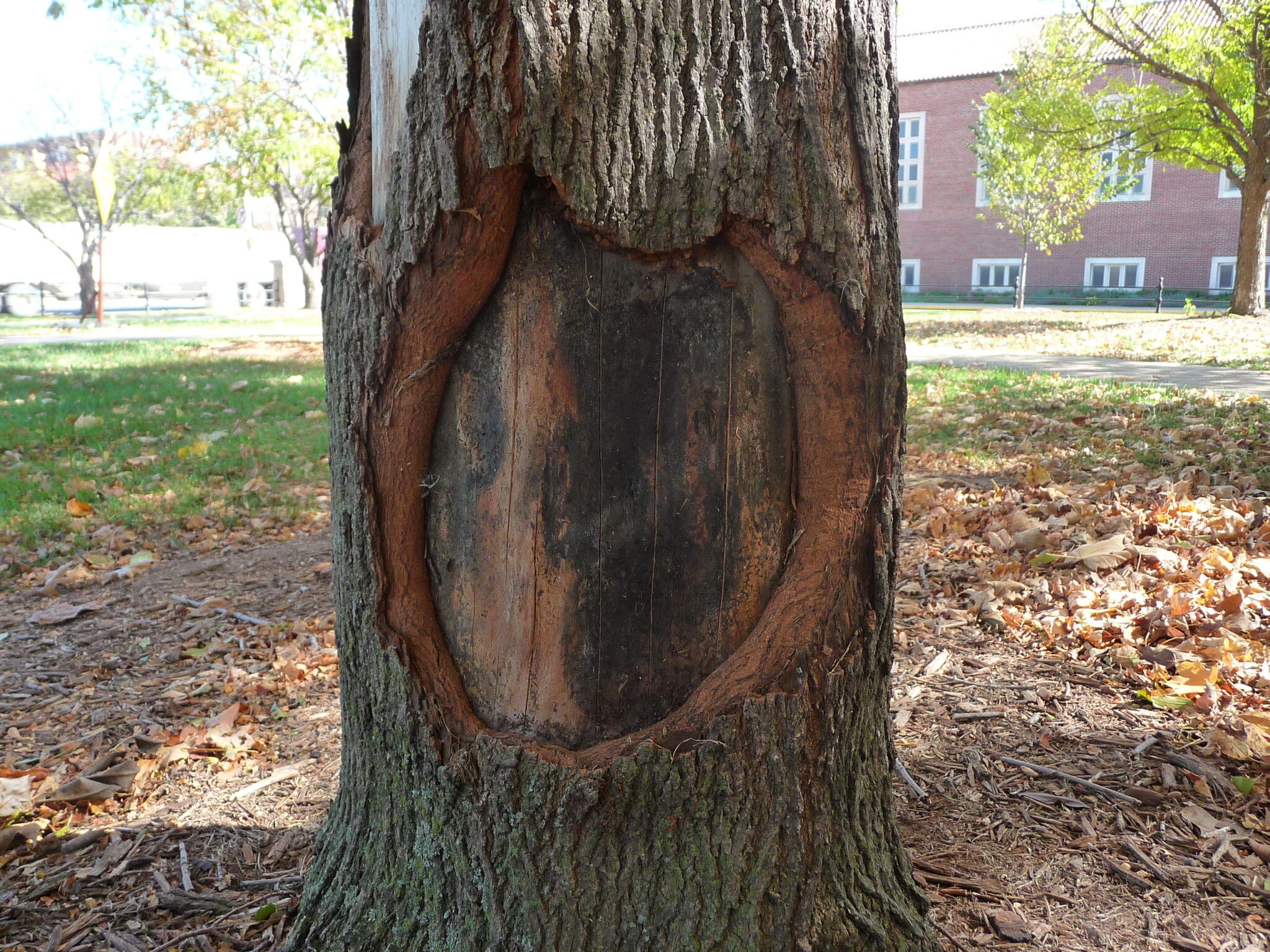
Tree trunk damaged by construction equipment developing wound wood around the edges to eventually seal the wound.
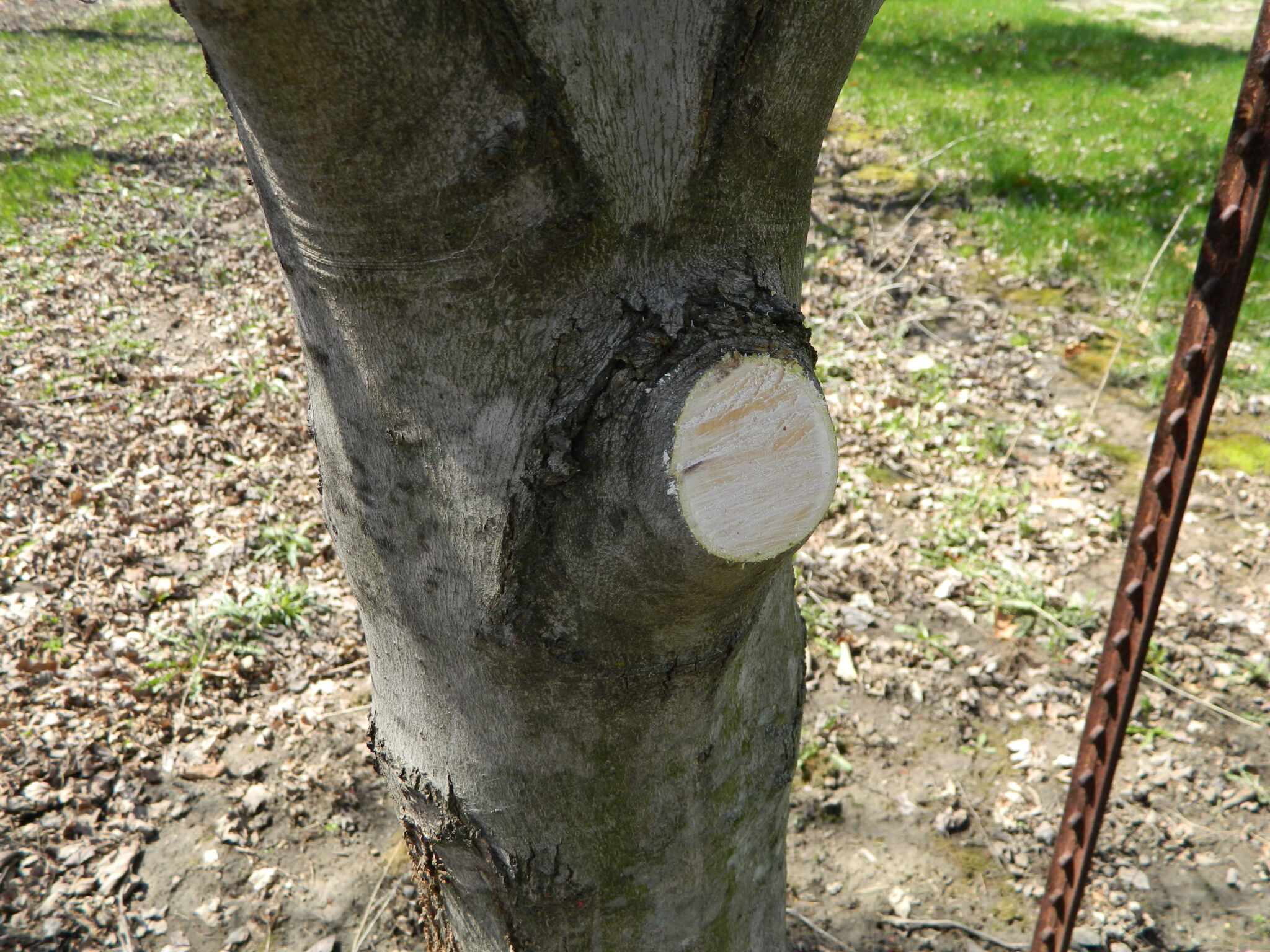
Pruning cuts will develop callus tissue on the exposed tissue giving rise to wound wood.
Wound recovery rates vary widely for different tree species. The speed of recuperation is greatly affected by developmental environmental conditions, vigor and health of the tree. Some trees may never completely close their wounds due to their genetic capacity or perhaps inadequate resources to keep the tree vigorous. However, numerous studies reveal that faster wound closure results in fewer health issues for the tree. Quick healing is always better!
A healthy tree will seal wounds faster and the same for younger trees as well. Trees that are planted in well-drained, quality soils, with good texture, structure, and containing adequate nutrition levels, grow in a way that favors the healing process. Thus, when planting trees, homeowners should be aware of the effects of site selection, soil quality, and other site factors that may impact tree growth.
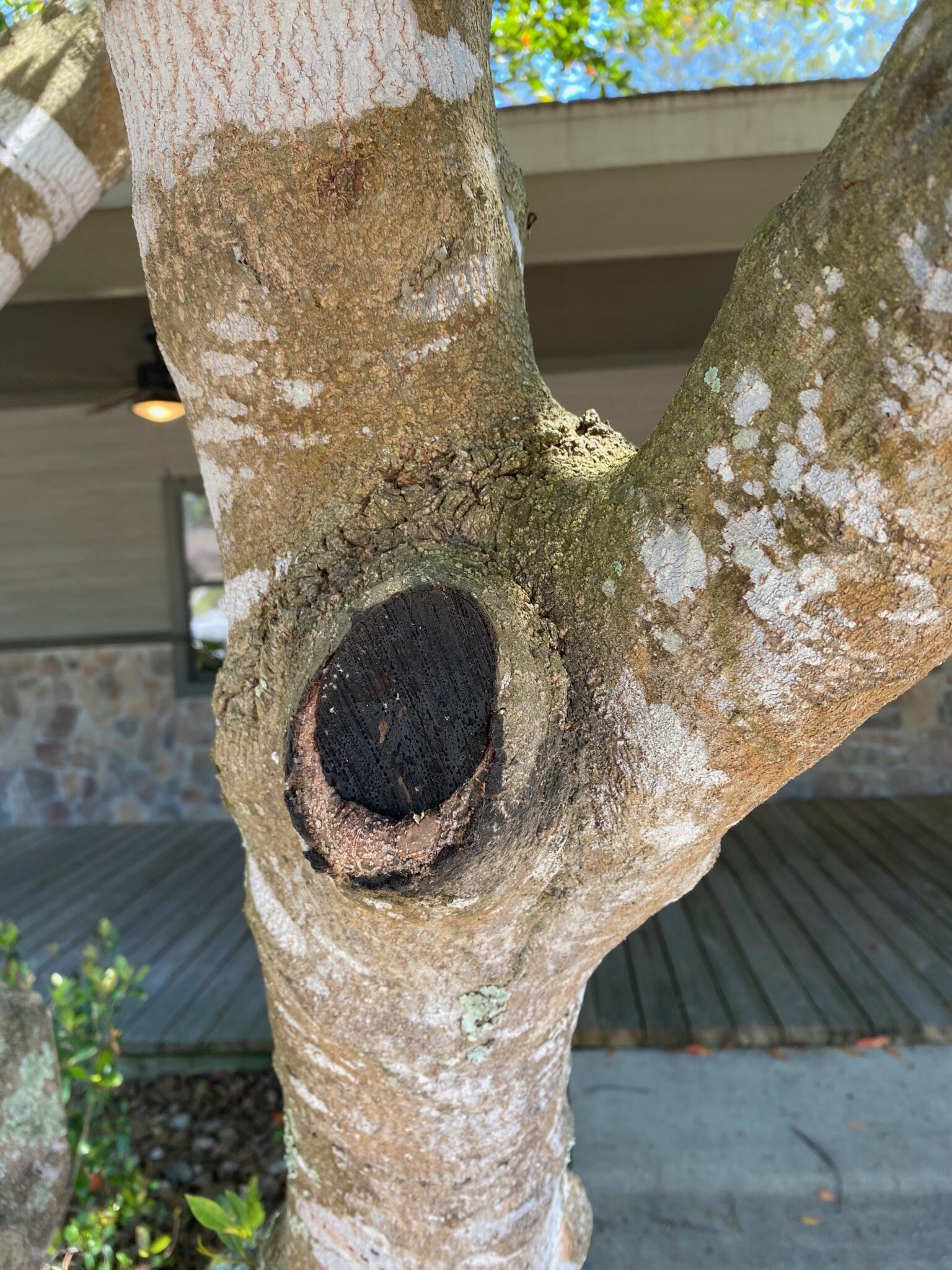
Wound dressings slow closure and can prevent healing.
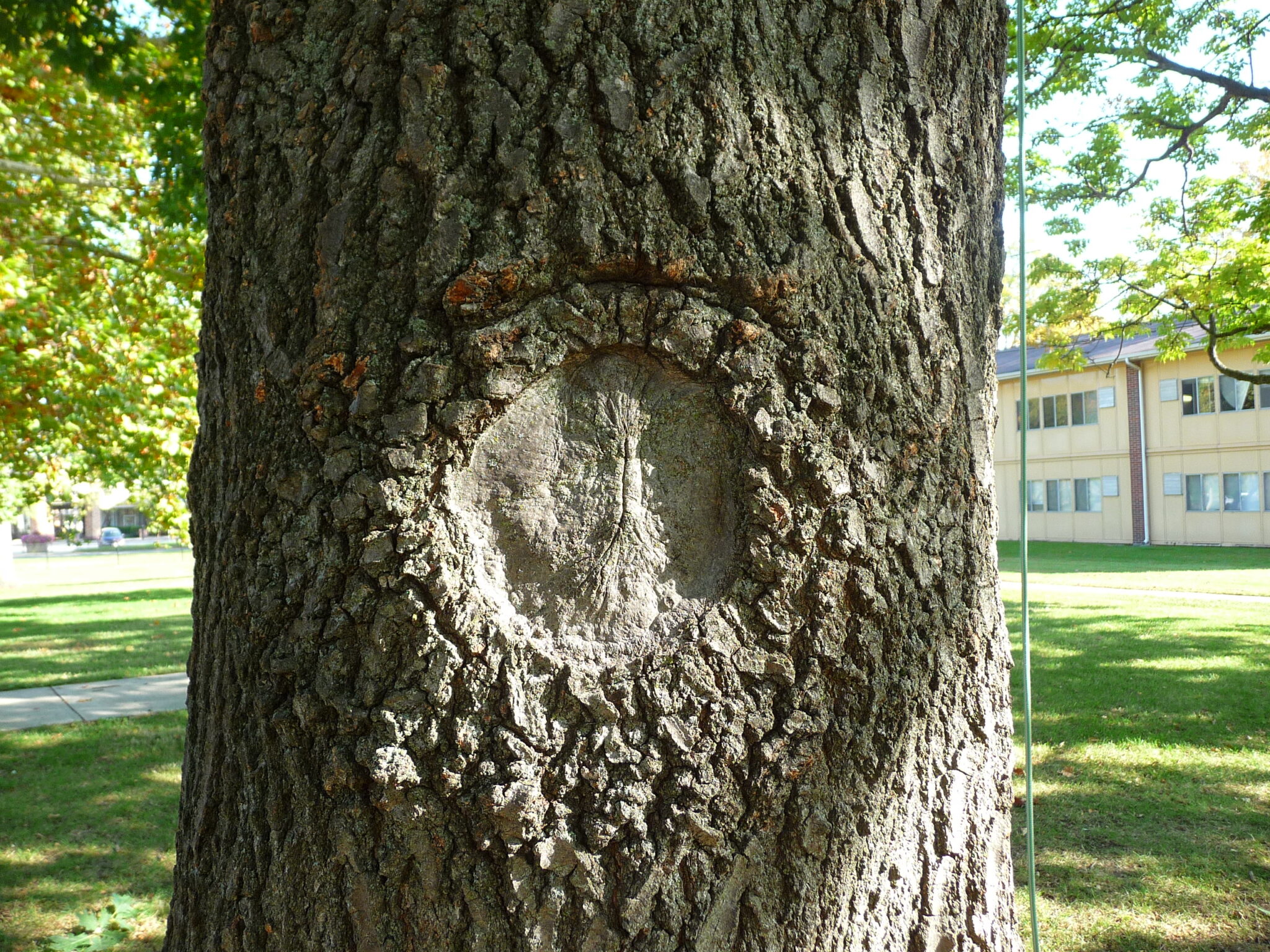
Complete wound closure improves tree health and slows decay.
There are few ways wound closure can be hastened, or at least not inhibited. First, it is essential to avoid limiting oxygen availability to the wounded tissues. Oxygen is necessary for proper recovery. For example, painting a wound with any kind of material that interferes or impedes oxygen will slow or even prevent wound closure by poor callus formation. Wound treatment with petroleum-based products is not recommended. In fact, research indicates any type of wound dressing can slow the healing process. There is one exception for treating wounds. This is in areas where oak wilt disease occurs, wound paints may be useful in preventing insect spread of the oak wilt fungal pathogen.
Basically, the best way to help insure proper wound closure and quick and effective sealing of the tissue is a proper pruning cut and preventing damage whenever possible.
Find a professional
Be sure to always hire an insured, tree care professional, preferably and ISA Certified Arborist with the experience, expertise, and equipment to provide proper tree care. Require proof of liability insurance to protect yourself as well.
Another easy way to find a tree care service provider in your area is to use the “Locate Your Local Tree Care Industry Association Member Companies” program. For more information refer to the publication Trees and Utilities at the Purdue Education Store.
Find an ISA Certified Arborist in your area by visiting the Trees Are Good website.
Resources
Tree Pruning Essentials, Publication & Video, The Education Store, Purdue Extension resource center
Tree Pruning: What Do Trees Think?, The Education Store
Mechanical Damage to Trees: Mowing and Maintenance Equipment, The Education Store
Tree Installation Process and Practices, The Education Store
Tree Pruning for the Landscape, Webinar, Purdue Extension – Forestry and Natural Resources Youtube channel
Lindsey Purcell, Chapter Executive Director
Indiana Arborist Association
Purdue Extension forester Lenny Farlee shares identifying characteristics of the black walnut tree, also known as the American black walnut or eastern black walnut, including pairs of leaflets running down each stem, long running ridges on the bark, and round nuts that have a very strong exterior. This sun-loving tree also needs high quality soil.
If you have any questions regarding trees, forests, wildlife, wood products or other natural resource topics, feel free to contact us by using our Ask an Expert web page.
Resources
Indiana Walnut Council, Industry Representatives include 45 states and 3 foreign countries
Why are my walnut trees dropping their leaves? Got Nature? Blog, Purdue Extension – Forestry and Natural Resources
Pecan, Native Trees of Indiana River Park, Purdue Fort Wayne
Investing in Indiana Woodlands, The Education Store
Forest Improvement Handbook, The Education Store
ID That Tree, Playlist, Purdue Extension – Forestry and Natural Resources Youtube Channel
A Woodland Management Moment, Playlist
Wildlife Habitat Hint: Oak Shelterwood, Video
Lenny Farlee, Sustaining Hardwood Extension Specialist
Purdue University Department of Forestry and Natural Resources
Purdue Extension forester Lenny Farlee shares about the pecan, one of Indiana’s native hickories. Learn how to identify this species by more than just its nut production.
If you have any questions regarding trees, forests, wildlife, wood products or other natural resource topics, feel free to contact us by using our Ask an Expert web page.
Resources
Hickory and Pecan Species, The Education Store, Purdue Extension resource center
Carya illinoinensis (Pecan), Purdue Arboretum Explorer
Pecan, Native Trees of Indiana River Park, Purdue Fort Wayne
Investing in Indiana Woodlands, The Education Store, Purdue Extension resource center
Forest Improvement Handbook, The Education Store
ID That Tree, Playlist, Purdue Extension – Forestry and Natural Resources Youtube Channel
A Woodland Management Moment, Playlist
Wildlife Habitat Hint: Oak Shelterwood, Video
Lenny Farlee, Sustaining Hardwood Extension Specialist
Purdue University Department of Forestry and Natural Resources

Recent Posts
- New Indiana Woodland Steward Newsletter
Posted: August 12, 2026 in Forestry, Urban Forestry, Wildlife, Woodlands - ID That Tree: Nannyberry Viburnum
Posted: July 22, 2026 in Forestry, Plants, Wildlife, Woodlands - ID That Tree: Eastern Swamp Privet
Posted: in Forestry, Plants, Wildlife, Woodlands - ID That Tree: Carolina Buckthorn
Posted: July 15, 2026 in Forestry, Wildlife, Woodlands - Identifying Evergreens
Posted: June 24, 2026 in Forestry, Wildlife, Woodlands - Pruning Highlight-Pollarding Trees: A Traditional Pruning Practice with Modern Uses
Posted: June 11, 2026 in Forestry, Forests and Street Trees, Urban Forestry, Wildlife, Woodlands - Danielle Howard Hired as FNR Extension Prescribed Fire Specialist
Posted: June 10, 2026 in Forestry, Wildlife, Woodlands - Flat-Faced Longhorn Beetle Found in Hardwood Logs – IDNR Division of Entomology
Posted: June 8, 2026 in Alert, Forestry, Forests and Street Trees, Invasive Insects, Urban Forestry, Wildlife, Woodlands - Connecting Research to Practice: Natural Resources & Land Use Spring Training
Posted: June 5, 2026 in Forestry, Forests and Street Trees, How To, Invasive Animal Species, Invasive Plant Species, Land Use, Natural Resource Planning, Urban Forestry, Wildlife, Woodlands - Spring Storms Are Coming: How to Reduce Tree Damage and Risk
Posted: May 1, 2026 in How To, Urban Forestry, Wildlife, Woodlands
Archives
Categories
- Alert
- Aquaculture/Fish
- Aquatic/Aquaculture Resources
- Ask the Expert
- Christmas Trees
- Community Development
- Disease
- Drought
- Forestry
- Forests and Street Trees
- Gardening
- Got Nature for Kids
- Great Lakes
- How To
- Invasive Animal Species
- Invasive Insects
- Invasive Plant Species
- Land Use
- Natural Resource Planning
- Nature of Teaching
- Plants
- Podcasts
- Ponds
- Publication
- Safety
- Spiders
- Timber Marketing
- Urban Forestry
- Webinar
- Wildlife
- Wood Products/Manufacturing
- Woodland Management Moment
- Woodlands