 Purdue University - Extension - Forestry and Natural Resources
Got Nature? Blog
Do you need to open up your woodlands in order to grow new species of trees/shrubs that need extra sunlight or to make for a better wildlife habitat? Forest openings allows us to regenerate species of trees and shrubs that demand full sunlight and also ensures good diversity of species on your property. In this Woodland Management Moment video, Purdue Extension forester Lenny Farlee talks about creating forest openings.
If you have any questions regarding trees, forests, wildlife, wood products or other natural resource topics, feel free to contact us by using our Ask an Expert web page.
Resources
Woodland Management Moment – Deer Fencing, Video, Purdue Extension – Forestry and Natural Resources Youtube Channel
Asian Bush Honeysuckle, Video, Purdue Extension Youtube Channel
Forest Improvement Handbook, The Education Store, Purdue Extension Resource Center
Woodland Stewardship for Landowners, invasive species along with timber resources, Purdue Extension-FNR YouTube Playlist
Managing Your Woods for White-Tailed Deer, The Education Store
Lenny Farlee, Sustaining Hardwood Extension Specialist
Purdue University Department of Forestry and Natural Resources
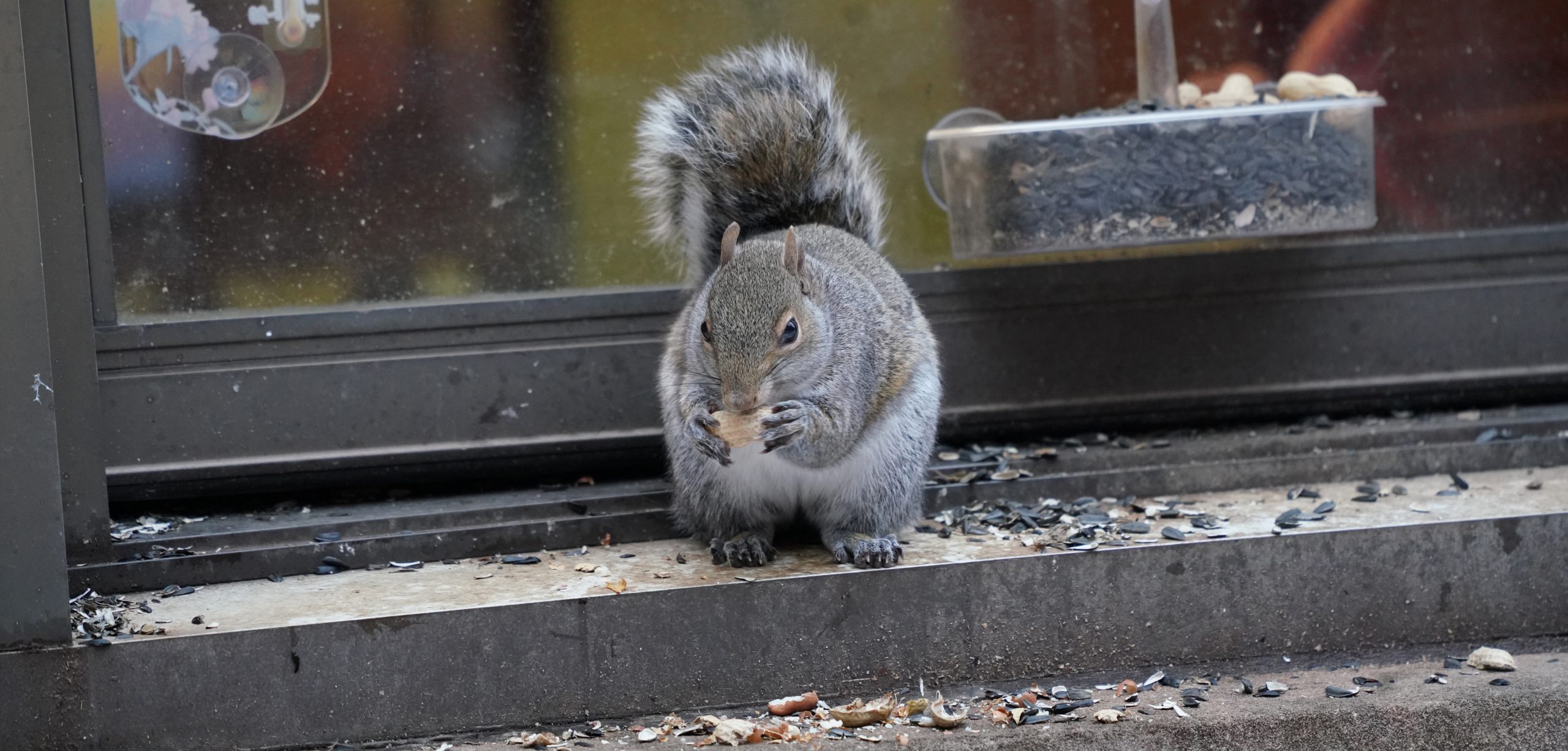
Question: We live in eastern Tippecanoe county and have a couple of adult squirrels that seem to be sick. They act like they are drunk — falling over frequently. We have two apple trees in blossom, and they come and nibble on fallen branches/blooms. As they sit on their hind legs to eat, they fall over on the ground like they are dead. Then after a few minutes/flip around and get up again, only to fall over “dead” again. This has been going on for a few weeks. We also have a baby that is not afraid of people – does not run away from me or our dog. This baby appears to have missing hair/or possible mange? We also had a raccoon in early March that came toward my husband in the yard – was not afraid of him. It did not appear rabid, but did not run away either. We do have several bird feeders, one of which squirrels and chipmunks sit on and eat the bird food. Is what they are eating making them “sick/drunk” or is this something else? I googled and found possible raccoon roundworm? What do YOU think this is — and could these cases be related? How should I dispose of any dead animals, and should I be concerned for us or our dog?
Answer: What you describe could be a number of wildlife diseases. The clinical signs of many of these diseases are often similar and infection can only be determined through specific examinations, tests or lab work. It may be canine distemper. Both squirrels and raccoon can carry canine distemper. The disease is spread by direct contact with body fluids or droppings of an infected animal. Humans cannot get distemper. However, it may also be another disease or a separate disease for each species. Your choices are really to 1) do nothing or 2) contact a wildlife rehabilitator (see below). In Indiana, wildlife rehabilitators have necessary state and federal permits to house and care for sick or injured wild animals. No federal or state agencies will provide care for sick and injured animals.
Since wild animals can carry diseases that are dangerous to people, direct contact with wildlife is discouraged. Just as the case with people, you can’t tell if an animal is sick just by looking at them. Expression of clinical signs of diseases are not the same for every animal. It may also take a period of time for clinical signs to present themselves. An animal that appears perfectly healthy may have a disease, and may be able to transmit the disease.
I could find no specific guidelines for the disposal of dead wild animals. The Indiana State Board of Animal Health lists allowable methods of dead animal disposal, but these do not apply to wildlife, which they specify as creatures not under someone’s care. This is guidance on the DNR website for:
Dead Birds: “According to Indiana State Department of Health guidelines, if you need to dispose of a dead bird, do not handle it with your bare hands. Use gloves or a plastic bag turned inside out over your hand to pick up the bird and dispose of the bird/bag in the trash. You can follow these recommended disposal procedures regardless of the cause of death, if testing is not available.”
Dead Bats: “Do NOT pick up a bat with your bare hands. Any wild animal can carry disease, therefore precautions should be taken if an animal needs to be moved. Wear heavy-duty leather gloves and scoop up the bat with a shovel or container. If the bat is alive move it to a tree branch, away from nearby buildings if possible. To dispose of a dead bat, scoop it into a plastic bag. Place it into another plastic bag, close it securely, spray with disinfectant, and dispose of it in your trash.”
• Indiana Licensed Wildlife Rehabilitators, Indiana Department of Natural Resources – Fish and Wildlife.
Other Resources
Protecting Yourself from Wildlife Diseases: Raccoon Roundworm (Baylisascaris procyonis), The Education Store, Purdue Extension resource center
Indiana Animal Disease Diagnostic Laboratory
Orphaned Wildlife, Got Nature? blog
Orphaned & Injured Animals, Indiana Department of Natural Resources (IDNR)
Purdue Extension – FNR: Ask An Expert, Video, Purdue Extension – Forestry and Natural Resources YouTube channel
Brian MacGowan, Wildlife Extension Specialist
Purdue University, Department of Forestry and Natural Resources
Are you noticing more birds in your backyard recently since sheltering at home? Do you wish you knew how to identify what you are seeing? Do you know what kind of food to put out to attract different species?
Dr. Barny Dunning, professor of wildlife ecology, and Purdue extension wildlife specialist Brian MacGowan offer advice on birdwatching for birders of all skill levels, including how to bring species to your yard, what apps you can use to identify them and other resources to help you learn more in this Facebook Ask the Expert.
Resources
Sibley Guide to Birds app
Merlin Bird App
Audubon Bird Guide App
Cornell University Ornithology Lab website
Migratory Bird Treaty Act
Project FeederWatch from The Cornell Lab
Nesting Box Information – National Wildlife Federation
Project Feeder Watch
Indiana Audubon Society
Sycamore Audubon Society
Attract Hummingbirds to Your Yard, Video, Purdue Extension YouTube Channel
Birds and residential window strikes: Tips for prevention, The Education Store, Purdue Extension Resource Center
No room at the inn: suburban backyards and migratory birds, The Education Store
Size Does Matter – Nest Boxes for Wildlife, The Education Store
John B Dunning, Professor of Wildlife Ecology
Purdue Forestry and Natural Resources
On May 5th, we held a Facebook LIVE: Ask an Expert with several FNR specialists and one of the questions that came in is a question I receive often.
One of the many benefits of interacting with farmers and land managers is I learn about the problems you face. A question came in around the 17:30 minute mark of how to deal with vole damage problems in their 3- to 5-acre pumpkin patch. I didn’t have an answer regarding registered pesticides (including taste repellents and toxicants) that are labeled for voles in pumpkins. Doing a broad search on the internet is helpful but it is hard to figure out what you can use in your state. Pesticides are often labeled for use in one state but not others. Luckily, anyone can search for registered pesticides online at on the National Pesticide Information Retrieval System. Most states, including Indiana, are included. You can search by EPA registration number, product name, company name, or active ingredient. A particular search can still yield many choices but this is a helpful way of finding out what is available. Each product has a link to the EPA website that includes product labels.
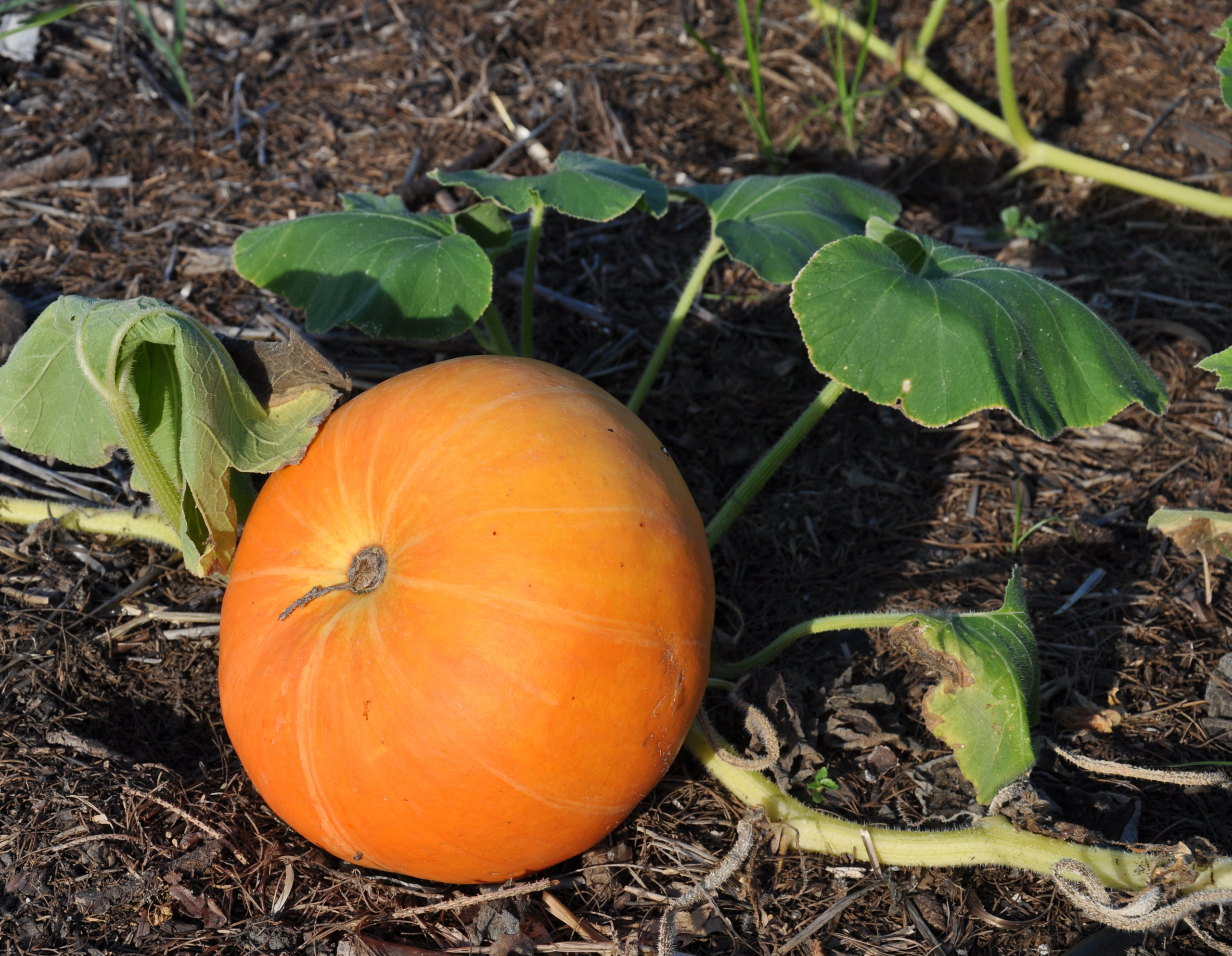
Since our program last week, I did some checking and found a product registered in Indiana labeled for voles in pumpkins as well as many other crops. Millers Hot Sauce is a taste repellent with an active ingredient of capsaicin (2.5% by weight), which is an irritant to animals, but one some people enjoy in hot peppers. Per label instructions adding an antitranspirant film former or a sticker may prolong the effectiveness of the product. Mix the product and additives with water according to label instructions. For heavy damage, start treatment after first true leaves appear and continue treatment every 7 days. If applying to transplants, start application one week after transplanting and continue every 7 days.
Always read the label completely before applying any pesticide. The efficacy of any repellent depends on a number of factors including animal population size and density, available food, and availability of cover. With voles, the year can be key because their populations tend to cycle. Combining other methods with repellents can often increase success. For example, soil cultivation within plant rows and in adjacent habitat can help reduce the habitat quality for voles. Cultivation can also directly kill some voles. There are of course tradeoffs and every situation is unique. Soil cultivation would not be an option in some cases (e.g., adjacent to water, steep slopes). I was unable to find a toxicant registered for voles in pumpkins. But depending on what the land cover is adjacent to the pumpkin patches, some of these may be appropriate in those areas.
With face-to-face Extension programs on hold for the foreseeable future, look for more live Q&A sessions and other programs on Facebook (PurdueFNR) or Twitter (@PurdueFNR).
Resources
National Pesticide Information Retrieval System
Midwest Fruit Pest Management Guide, The Education Store, Purdue Extension resource center
Hops Production in Indiana: Integrated Pest Management Guide for Hops in Indiana, The Education Store
Turfgrass Insects: Managing Black Cutworms in Turfgrass, The Education Store
Applied Research in Field Crop Pathology for Indiana – 2019, The Education Store
Managing Alfalfa Autotoxicity, The Education Store
Brian MacGowan, Wildlife Extensions Specialist
Purdue Forestry and Natural Resources
 Resourceful Animal Relationships is one unit in a series available from The Nature of Teaching – the place to go for teaching resources that focus on wildlife, food waste, health and wellness. In this series teachers can find free lesson plans, printables, posters, a photo library, information on upcoming workshops and more.
This lesson will teach third- through fifth-grade students about different kinds of organism interactions and how those interactions affect the ways in which organisms gain or lose resources. Students will learn how to describe the differences between mutualism, parasitism,
and competition along with how to explain the different effects that relationships have on an organism and their resources.
It meets several grade-appropriate Next Generation Science Standards, English/Language Arts Standards, and Math Standards. This 19-page pdf is written by Dr. Rod Williams.
For more resources, please check the Education Store.
Resources
Benefits of Connecting with Nature, The Education Store, Purdue Extension resource center
The Nature of Teaching: Ecotoxicology and Environmental Health, The Education Store
The Nature of Teaching: Disease Ecology, The Education Store
The Nature of Teaching: Adaptations for Aquatic Amphibians, The Education Store
Adaptations for Aquatic Amphibians Activity 2: Water Quality Sneak Peak, Video, Purdue Extension YouTube channel
Rod Williams, Professor of Wildlife Science
Purdue University Department of Forestry and Natural Resources
 The Nature of Teaching: Ecotoxicology and Environmental Health is one unit in a series available from The Nature of Teaching – the place to go for teaching resources that focus on wildlife, food waste, health and wellness. In this series teachers can find free lesson plans, printables, posters, a photo library, information on upcoming workshops and more.
This unit highlights the effect of environmental contaminants on the health of wildlife and ecosystems with two lessons filled with worksheets, activities, lab report grading rubric sheet and more.
Lesson 1: There’s Something in the Water!
Lesson 2: Investigating the Effects of Salt Contamination on Daphnia
This 33-page PDF is written by Dr. Jason Hoverman; Logan Billet, Rebecca Koetz and Dr. Rod Williams.
For more resources, please check the Education Store.
Resources
Benefits of Connecting with Nature, The Education Store, Purdue Extension resource center
The Nature of Teaching: Disease Ecology, The Education Store
Resourceful Animal Relationships, The Education Store
The Nature of Teaching: Food Waste and the Environment, The Education Store
Adaptations for Aquatic Amphibians Activity 2: Water Quality Sneak Peak, Video, Purdue Extension YouTube channel
Rod Williams, Professor of Wildlife Science
Purdue University Department of Forestry and Natural Resources
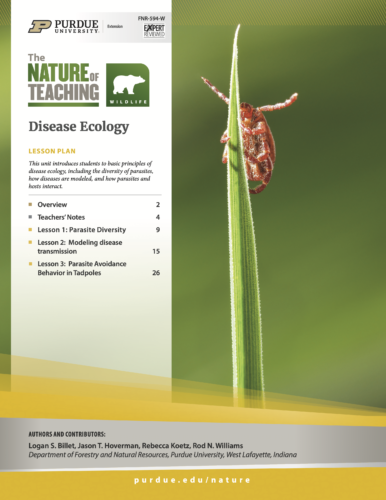 The Nature of Teaching: Disease Ecology is one unit in a series available from The Nature of Teaching – the place to go for teaching resources that focus on wildlife, food waste, health and wellness. In this series teachers can find free lesson plans, printables, posters, a photo library, information on upcoming workshops and more.
This unit introduces students to basic principles of disease ecology, including the diversity of parasites, how diseases are modeled, and how parasites and hosts interact. It includes three lessons with colorful animal cards to print along with worksheets and presentation.
Lesson 1: Parasite Diversity Activity
Lesson 2: Modeling Disease Transmission
Lesson 3: Parasite Avoidance Behavior in Tadpoles
This 33-page download PDF is written by Dr. Jason Hoverman; Logan Billet, Rebecca Koetz and Dr. Rod Williams.
For more resources, please check the Education Store.
Resources
Benefits of Connecting with Nature, The Education Store, Purdue Extension resource center
The Nature of Teaching: Ecotoxicology and Environmental Health, The Education Store
Resourceful Animal Relationships, The Education Store
The Nature of Teaching: Food Waste and the Environment, The Education Store
Rod Williams, Professor of Wildlife Science
Purdue University Department of Forestry and Natural Resources
With large amounts of white-tailed deer populating the area around forest land, getting your hardwood seedlings established can be difficult.
Purdue Extension forester Lenny Farlee, sustainable hardwood extension specialist, offers some tips on how to protect newly planted seedlings from browsing deer using plastic mesh fencing to exclude the animals from the area. He also mentions tree tubes and electrified fencing as potential options. Learn more in the video below.
If you have any questions regarding trees, forests, wildlife, wood products or other natural resource topics, feel free to contact us by using our Ask an Expert web page.
Resources
USDA Cost Assistance Programs for Conservation Practices
How to Build a Plastic Mesh Deer Exclusion Fence, The Education Store, Purdue Extension Resource Center
Electric Fences for Preventing Deer Browse Damage by White-Tailed Deer, The Education Store
Managing Your Woods for White-Tailed Deer, The Education Store
How to Score Your White-Tailed Deer, Video, Purdue Extension Youtube Channel
Lenny Farlee, Sustaining Hardwood Extension Specialist
Purdue University Department of Forestry and Natural Resources
For such a small creature, moles can cause big headaches. Their tunneling behavior can cause extensive damage to turf areas if left unchecked. While the damage is easy to identify, solving it can be tricky.

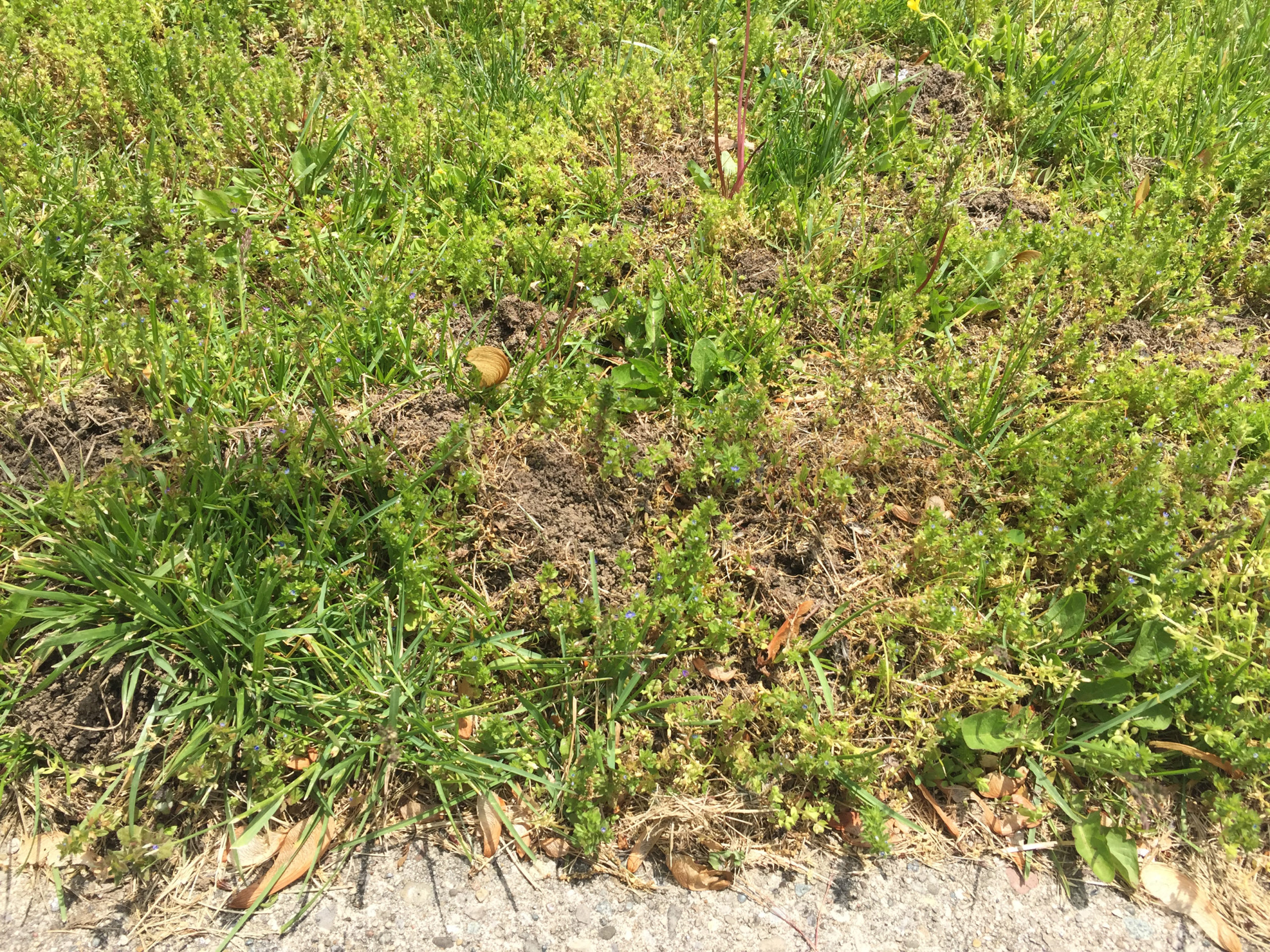
Purdue wildlife specialist, Brian MacGowan, shared tips and control techniques including trapping, repellents, toxicants, and cultural methods as well as answer your questions on the topic on Facebook LIVE, Thursday, May 14th.
You can view this topic along with question and answer time on the Purdue FNR Facebook page: https://www.facebook.com/PurdueFNR/videos/3372718849422210/.
If you have any further questions feel free to place your question in the comment section on our Purdue FNR Facebook page on the video link above or you can send your question by submitting an Ask An Expert form.
Resources
Moles, The Education Store, Purdue Extension resource center
Adjuvants and the Power of the Spray Droplet: Improving the Performance of Pesticide Applications, The Education Store
Preventing Wildlife Damage – Do You Need a Permit?, The Education Store
Attract Hummingbirds to Your Yard, Video, Purdue Extension Youtube Channel
How to Stop Woodland Animals from Digging in Your Flower Pots, Video, Purdue Extension Youtube Channel
Brian MacGowan, Wildlife Extension Specialist
Purdue Forestry and Natural Resources
Hummingbirds are a popular attraction in any backyard. The ruby-throated hummingbird is the only species of hummingbird that nests in the Hoosier state. These colorful visitors are migratory and arrive from their wintering grounds around mid-April. So now is the time to place the hummingbird feeders.
Watch this short video to see how easy it is to make and fill your hummingbird feeder along with resources showing when and where they migrate.
Resources
Attracting Hummingbirds to Your Yard (pdf), The Education Store-Purdue Extension
Preventing Wildlife Damage – Do You Need a Permit?, The Education Store, Purdue Extension resource center
Managing Woodlands for Birds, The Education Store
Selecting a Nuisance Wildlife Control Professional, The Education Store
How to Construct a Scent Station, The Education Store
Question: How do I properly relocate raccoons from my attic?, Got Nature? Blog, Purdue Extension FNR
Birds and Residential Window Strikes: Tips for Prevention, The Education Store
Nuisance Wildlife, Indiana Department of Natural Resources
Brian MacGowan, Wildlife Extension Specialist
Purdue Forestry and Natural Resources

Recent Posts
- Beetle that attacks Tree-of-Heaven found in Indiana, Purdue Landscape Report
Posted: March 20, 2026 in Invasive Insects, Wildlife, Woodlands - ID That Tree: Dwarf Chinkapin Oak
Posted: in Forestry, Urban Forestry, Wildlife, Woodlands - DNR Hiring for Indiana Conservation Officer Positions, MyDNR
Posted: March 9, 2026 in Urban Forestry, Wildlife, Woodlands - ID That Tree: Shumard Oak
Posted: in Plants, Urban Forestry, Wildlife, Woodlands - Uniting Indiana Residents Against Invasive Species
Posted: February 27, 2026 in Community Development, Invasive Insects, Wildlife - Have You Seen a Soaring Eagle Lately? Morning Ag Clips
Posted: February 25, 2026 in Urban Forestry, Wildlife - Register for Natural Resources Teacher Institute’s Class of 2026
Posted: February 19, 2026 in Forestry, Wildlife, Woodlands - ID That Tree: Fragrant Sumac
Posted: February 4, 2026 in Plants, Urban Forestry, Wildlife - Woodsy Owl Edition for Educational Learning, USDA – U.S. Forest Service
Posted: January 21, 2026 in Forestry, Forests and Street Trees, Got Nature for Kids, Urban Forestry, Wildlife - Opt-in to the Deer Management Survey, MyDNR
Posted: January 12, 2026 in Forestry, Wildlife
Archives
Categories
- Alert
- Aquaculture/Fish
- Aquatic/Aquaculture Resources
- Ask the Expert
- Christmas Trees
- Community Development
- Disease
- Drought
- Forestry
- Forests and Street Trees
- Gardening
- Got Nature for Kids
- Great Lakes
- How To
- Invasive Animal Species
- Invasive Insects
- Invasive Plant Species
- Land Use
- Natural Resource Planning
- Nature of Teaching
- Plants
- Podcasts
- Ponds
- Publication
- Safety
- Spiders
- Timber Marketing
- Uncategorized
- Urban Forestry
- Webinar
- Wildlife
- Wood Products/Manufacturing
- Woodland Management Moment
- Woodlands