 Purdue University - Extension - Forestry and Natural Resources
Got Nature? Blog
Purdue Landscape Report, What is Happening to the Weeping Willows?: While recent temperatures have been moderate in many parts of the state, rainfall has been lacking. (See The Annual Drought Article). There are chasms in the clay of my backyard that will swallow my kids and dogs whole. While I am not truly worried about the safety of my smaller family members, a lot of the plants that are not in shade are stressed. At the Purdue Plant and Pest Diagnostic Laboratory, we have received quite a few calls, emails, and samples about trees in decline. Trees that are already stressed, infected by a pathogen, or are infested by wood-boring insects will be showing their true colors in these drought conditions: chlorosis, leaf loss, and limb dieback.
Willow showing yellowing of older leaves on lower branches.
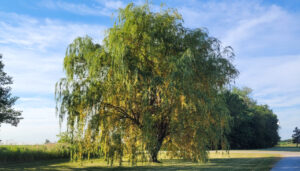 This month, one group of trees limps along to the top of our list of plants under stress due to lack of water: Willows. Salix spp. are not great landscape trees in general unless planted in locations that retain water. While they grow quickly and can appear beautiful for a number of years, when the soil becomes dry, these trees can very quickly develop limb dieback or cankers. In many cases, cankers become more obvious during these periods of stress because they were already present before the drought stress occurs. Damaged limbs die faster and multiple species of canker-causing fungi have been found to move faster in drought stressed wood of some tree species. We have found the fungi Cytospora, Botryosphaeria, and Colletotrichum associated with cankers on recent branch submissions to the lab.
Thinning of the branches, cracks/splits in the bark, and black lesions on green stems can indicate the presence of a canker which should be pruned out and destroyed, if at all possible. Supplemental irrigation may be required during dry spells for trees that are water loving or, at least, drought intolerant. Fungicides are not effective for these fungal pathogens that live inside the wood, where fungicides can’t penetrate. In most cases larger willow trees will not die because of these problems but they may suffer significant branch loss and may become disfigured. In some cases very young trees or shrub type willows may be killed.
For full article and photos view: What is Happening to the Weeping Willows?
Resources:
Summer Tree Care, Purdue Landscape Report
Drought? Don’t Forget the Trees!, The Education Store, Purdue Extension resource center
Extreme Heat, Purdue Extension – IN-PREPared
Drought Information, Indiana Department of Natural Resources
Planting Your Tree Part 1: Choosing Your Tree, Purdue Extension YouTube Channel
Tree Selection for the “Un-natural” Environment, The Education Store
Tree Pruning Essentials Video, Purdue Extension YouTube Channel
Tree Defect Identification, The Education Store
Tree Wound and Healing, Got Nature? Blog, Purdue Extension – Forestry and Natural Resources
Surface Root Syndrome, The Education Store
John Bonkowski, Plant Disease Diagnostician
Plant and Pest Diagnostic Laboratory
The classic and trusted book “Fifty Common Trees of Indiana” by T.E. Shaw was published in 1956 as a user-friendly guide to local species. Nearly 70 years later, the publication has been updated through a joint effort by the Purdue Department of Forestry and Natural Resources, Indiana 4-H, and the Indiana Department of Natural Resources, and reintroduced as “An Introduction to Trees of Indiana.”
The full publication is available for download for $7 in the Purdue Extension Education Store. The field guide helps identify common Indiana woodlot trees.
Each week, the Intro to Trees of Indiana web series will offer a sneak peek at one species from the book, paired with an ID That Tree video from Purdue Extension forester Lenny Farlee to help visualize each species as it stands in the woods. Threats to species health as well as also insight into the wood provided by the species, will be provided through additional resources as well as the Hardwoods of the Central Midwest exhibit of the Purdue Arboretum, if available.
This week, we introduce the flowering dogwood or Cornus florida.
This small native Indiana tree has beautiful white blossoms in the spring, and red to maroon foliage in the fall. It has opposite leaf arrangement with simple leaves featuring a venation pattern that sees the veins angle and sweep along the edges of the leaf and curve to the tip. The bark is a rough alligator hide texture that ranges from light to medium gray.
The showy white flowers, which appear in April or May, are followed by berry-like fruit clusters that are green at first, later turning red.
Flowering dogwood is the largest dogwood in the state of Indiana. It is shade tolerant, but it prefers good soil drainage and protection from the wind.
Flowering dogwood is a great alternative to the invasive callery pear.
According to Morton Arboretum, the flowering dogwood grows to 20 to 40 feet tall.
According to the Wood Database, flowering dogwood is commonly used in golf club heads, textile shuttles, bows for archery, mallets, pulleys and turned objects.
For full article with additional photos view: Intro to Trees of Indiana: Northern catalpa
Resources:
Flowering Dogwood, Native Trees of Indiana River Walk, Purdue Fort Wayne
Fifty Common Trees of Indiana
An Introduction to Trees of Indiana
Native Trees of the Midwest, The Education Store, Purdue Extension’s resource center
Shrubs and Woody Vines of Indiana and the Midwest, The Education Store
Investing in Indiana Woodlands, The Education Store
Forest Improvement Handbook, The Education Store
ID That Tree, Purdue Extension-Forestry and Natural Resources (FNR) YouTube Channel-playlist
Woodland Management Moment, Purdue Extension-FNR YouTube Channel-playlist
Wendy Mayer, FNR Communications Coordinator
Purdue University Department of Forestry and Natural Resources
Lenny Farlee, Sustaining Hardwood Extension Specialist
Purdue University Department of Forestry and Natural Resources
The classic and trusted book “Fifty Common Trees of Indiana” by T.E. Shaw was published in 1956 as a user-friendly guide to local species. Nearly 70 years later, the publication has been updated through a joint effort by the Purdue Department of Forestry and Natural Resources, Indiana 4-H, and the Indiana Department of Natural Resources, and reintroduced as “An Introduction to Trees of Indiana.”
The full publication is available for download for $7 in the Purdue Extension Education Store. The field guide helps identify common Indiana woodlot trees.
Each week, the Intro to Trees of Indiana web series will offer a sneak peek at one species from the book, paired with an ID That Tree video from Purdue Extension forester Lenny Farlee to help visualize each species as it stands in the woods. Threats to species health as well as also insight into the wood provided by the species, will be provided through additional resources as well as the Hardwoods of the Central Midwest exhibit of the Purdue Arboretum, if available.
This week, we introduce the Black cherry or Prunus serotina.
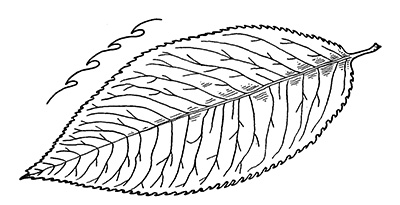 This species, also known as wild black cherry, is characterized by shiny, oblong leaves with finely toothed margins, arranged alternately on slender twigs, as well as very dark, flaky bark. The white flowers, which appear in early summer, develop into clusters of small cherries that ripen from red to black in July and August.
Black cherry, which is shade intolerant, is the only native, tree-sized cherry tree in Indiana. It is one of the quicker growing upland hardwood species in the state, and can grow to 60 to 80 feet tall and two to three feet in diameter.
The species is found from the Great Plains east and from Central Florida to the very southern portion of Ontario to New Brunswick. It also grows from central Arizona south through Mexico. Pennsylvania, parts of West Virginia and New York have developed a reputation for having the best veneer quality and relative gum free cherry.
Black cherry is susceptible to gummosis, or the depositing of resinous gum on the bark of the tree. Unfortunately, widespread gummosis caused by insect damage and other factors keeps many black cherry trees from reaching veneer quality, and reduces their value by as much as 90 percent (Cassens 2004). Black cherry trees are also susceptible to forest tent caterpillars and a variety of other insect attacks.
According to the Hardwoods of the Central Midwest exhibit, black cherry is most commonly used for fine furniture and cabinets. It is also used for high-end face veneer, furniture, molding, architectural millwork, wood paneling and toys. In the past, it was used for printer’s blocks, scientific instrument cases, pattern stock, and blocks for mounting electrotypes.
For full article with additional photos view: Intro to Trees of Indiana: Black Cherry
Resources:
Black Cherry, Hardwoods of the Central Midwest
Black Cherry, Hardwood Lumber and Veneer Series
Black Cherry, Native trees of Indiana River Walk, Purdue Fort Wayne
Case of Gummosis in Black Cherry, The Education Store, Purdue Extension’s resource center
Insects Affecting Hardwood Tree Plantings, The Education Store
Native Trees of the Midwest, The Education Store
Shrubs and Woody Vines of Indiana and the Midwest, The Education Store
Investing in Indiana Woodlands, The Education Store
Forest Improvement Handbook, The Education Store
Fifty Common Trees of Indiana
An Introduction to Trees of Indiana
ID That Tree, Purdue Extension-Forestry and Natural Resources (FNR) YouTube channel-playlist
Woodland Management Moment , Purdue Extension-FNR YouTube playlist
Wendy Mayer, FNR Communications Coordinator
Purdue University Department of Forestry and Natural Resources
Lenny Farlee, Sustaining Hardwood Extension Specialist
Purdue University Department of Forestry and Natural Resources
The classic and trusted book “Fifty Common Trees of Indiana” by T.E. Shaw was published in 1956 as a user-friendly guide to local species. Nearly 70 years later, the publication has been updated through a joint effort by the Purdue Department of Forestry and Natural Resources, Indiana 4-H, and the Indiana Department of Natural Resources, and reintroduced as “An Introduction to Trees of Indiana.”
The full publication is available for download for $7 in the Purdue Extension Education Store. The field guide helps identify common Indiana woodlot trees.
 Each week, the Intro to Trees of Indiana web series will offer a sneak peek at one species from the book, paired with an ID That Tree video from Purdue Extension forester Lenny Farlee to help visualize each species as it stands in the woods. Threats to species health as well as also insight into the wood provided by the species, will be provided through additional resources as well as the Hardwoods of the Central Midwest exhibit of the Purdue Arboretum, if available.
This week, we introduce the Northern catalpa or Catalpa speciose.
This species, which provides rot resistant wood great for outdoor usage such as fence posts, is native to southern Indiana along the Ohio River bottoms. It features huge heart-shaped leaves in whorled formation, long bean-like fruit pods and beautiful, large clusters of white tubular flower clusters in early summer.
The heart-shaped leaves may be held in either opposite or more commonly in whorled arrangement, meaning three leaves originate at the same point on the twig. The bean-like fruit pods, which contain papery winged seeds, can sometimes be more than two feet in length.
For full article with additional photos view: Intro to Trees of Indiana: Northern catalpa
Resources:
Northern Catalpa, Native Trees of Indiana River Walk, Purdue Fort Wayne
Fifty Common Trees of Indiana
An Introduction to Trees of Indiana
Native Trees of the Midwest, The Education Store, Purdue Extension’s resource center
Shrubs and Woody Vines of Indiana and the Midwest, The Education Store
Investing in Indiana Woodlands, The Education Store
Forest Improvement Handbook, The Education Store
ID That Tree, Purdue Extension-Forestry and Natural Resources (FNR) YouTube Channel-playlist
Woodland Management Moment, Purdue Extension-FNR YouTube Channel-playlist
Wendy Mayer, FNR Communications Coordinator
Purdue University Department of Forestry and Natural Resources
Lenny Farlee, Sustaining Hardwood Extension Specialist
Purdue University Department of Forestry and Natural Resources
The classic and trusted book “Fifty Common Trees of Indiana” by T.E. Shaw was published in 1956 as a user-friendly guide to local species. Nearly 70 years later, the publication has been updated through a joint effort by the Purdue Department of Forestry and Natural Resources, Indiana 4-H, and the Indiana Department of Natural Resources, and reintroduced as “An Introduction to Trees of Indiana.”
 The full publication is available for download for $7 in the Purdue Extension Education Store. The field guide helps identify common Indiana woodlot trees.
Each week, the Intro to Trees of Indiana web series will offer a sneak peek at one species from the book, paired with an ID That Tree video from Purdue Extension forester Lenny Farlee to help visualize each species as it stands in the woods. Threats to species health as well as also insight into the wood provided by the species, will be provided through additional resources as well as the Hardwoods of the Central Midwest exhibit of the Purdue Arboretum, if available.
This week, we introduce the Kentucky Coffeetree or Gymnocladus dioicus.
This native species, which is part of the broad legume family, historically provided a substitute for coffee, care of the dark bean like seeds held within its fruit, which is in the form of a wide, thick-shelled pod.
It is easily identifiable by its large seed pods, long doubly-compound leaves and textured, flaking/peeling bark with vertical ridges. Its compound leaves, sometimes two feet or more in length, are arranged alternately on very thick twigs that have a mottled color and a distinct, salmon-colored pith.
This tree is found in many parts of the state, but it is never a common tree and is usually widely scattered. According to the Morton Arboretum, Kentucky coffeetree is tolerant to pollution and a wide range of soils making it a suitable tree for urban environments.
This species can grow to up to 100 feet in height and as large as five and a half feet in diameter at breast height.
For full article with photos view: Intro to Trees of Indiana: Kentucky Coffeetree
Resources:
Kentucky Coffeetree, The Purdue Arboretum Explorer
Kentucky Coffeetree, Purdue Fort Wayne Native Trees of Indiana River Walk
Top 5 List for Tree Selection and Planting, Purdue Extension-Forestry & Natural Resources (FNR) Got Nature? Blog
Fifty Common Trees of Indiana
An Introduction to Trees of Indiana
Native Trees of the Midwest, The Education Store, Purdue Extension’s resource center
Shrubs and Woody Vines of Indiana and the Midwest, The Education Store
ID That Tree, Purdue Extension-FNR’s YouTube playlist
Woodland Management Moment , Purdue Extension-FNR’s YouTube playlist
Investing in Indiana Woodlands, The Education Store
Forest Improvement Handbook, The Education Store
Wendy Mayer, FNR Communications Coordinator
Purdue University Department of Forestry and Natural Resources
Lenny Farlee, Sustaining Hardwood Extension Specialist
Purdue University Department of Forestry and Natural Resources
 The classic and trusted book “Fifty Common Trees of Indiana” by T.E. Shaw was published in 1956 as a user-friendly guide to local species. Nearly 70 years later, the publication has been updated through a joint effort by the Purdue Department of Forestry and Natural Resources, Indiana 4-H, and the Indiana Department of Natural Resources, and reintroduced as “An Introduction to Trees of Indiana.”
The full publication is available for download for $7 in the Purdue Extension Education Store. The field guide helps identify common Indiana woodlot trees.
Each week, the Intro to Trees of Indiana web series will offer a sneak peek at one species from the book, paired with an ID That Tree video from Purdue Extension forester Lenny Farlee to help visualize each species as it stands in the woods. Threats to species health as well as also insight into the wood provided by the species, will be provided through additional resources as well as the Hardwoods of the Central Midwest exhibit of the Purdue Arboretum, if available.
This week, we introduce the Cottonwood or Populus deltoides.
This large bottomland tree’s scientific name deltoides comes from the delta shape of the leaves, which are triangular, often with prominent teeth that resemble saw blades along the edges. This species is also named for its early season fruit, which is a little tuft of white hairs that holds a small seed and is produced in large quantities and often blown far from the parent tree.
Leaves, which are bright green on top and paler below, extend from long flattened leaf stems, which allow the leaves to flutter in the wind. The bark of young cottonwoods is smooth and yellow-green; the old bark is medium gray/brown and rough, with thick, flat ridges that run up and down the trunk.
This tree is found in moist river bottoms and stream bottoms and areas where there is flooding and new soil is created. It shades the streams, holds the soil in place on river bottoms and provides diversity to Indiana forests. Cottonwood is found from Saskatchewan through the Great Plains and east to the Appalachians and the southeast coastal plains.
This species grows rapidly and can be well over 100 feet in height and as large as three or foot feet in diameter.
The wood of eastern cottonwood is very soft, but is strong for its weight. At 12 percent moisture content, it weighs 28 pounds per cubic foot, making it one of the lightest commercially available woods.
For full article with photos view: Intro to Trees of Indiana: Cottonwood
Resources:
Eastern Cottonwood, Tour Hardwoods of the Central Midwest
Eastern Cottonwood – Purdue Arboretum
Fifty Common Trees of Indiana
An Introduction to Trees of Indiana
Native Trees of the Midwest, The Education Store, Purdue Extension’s resource center
Shrubs and Woody Vines of Indiana and the Midwest, The Education Store
ID That Tree, Purdue Extension-FNR’s YouTube playlist
Woodland Management Moment , Purdue Extension-FNR’s YouTube playlist
Investing in Indiana Woodlands, The Education Store
Forest Improvement Handbook, The Education Store
Wendy Mayer, FNR Communications Coordinator
Purdue University Department of Forestry and Natural Resources
Lenny Farlee, Sustaining Hardwood Extension Specialist
Purdue University Department of Forestry and Natural Resources
Starting trees from seed requires knowing the germination requirements for the species you wish to grow. Most native tree seeds require treatments to break seed dormancy before the seed will germinate. These are done naturally by weather cycles, moisture, sunlight and wildlife in the forest environment. When we collect seeds, we will have to simulate these natural events to germinate the seeds successfully.
The Woody Plant Seed Manual, a U.S. Forest Service publication, gives detailed germination and nursery culture instructions by genus and species of trees. With over 450 seeds of woody plants in the United States, this manual continues to be popular both in this country and beyond. Seed data includes approximately 800 species, varieties, and sub-species in 188 genera, considerable more than the 420 species and 140 genera in this edition.
View this general germination guide for some common tree species.
Resources:
Frost Seeding to Establish Wildlife Food Plots & Native Grass and Forb Plantings – YouTube Video
Planting Hardwood Seedlings – The Education Store
Ordering Seedlings from the State Forest Nursery System, Got Nature? – Purdue Extension-FNR
Instructions for Ordering Tree Seedlings – Indiana DNR Division of Forestry
Importance of Hardwood Tree Planting – The Education Store, Purdue Extension Resource Center
Forest Improvement Handbook – The Education Store
Designing Hardwood Tree Plantings for Wildlife – The Education Store
National Nursery and Seed Directory – USDA Forest Service
Web Soil Survey – USDA Natural Resources Conservation Service
ID That Tree – YouTube Playlist
Diana Evans, Extension and Web Communication Specialist
Purdue University Department of Forestry and Natural Resources
Lenny Farlee, Sustaining Hardwood Extension Specialist
Purdue University Department of Forestry and Natural Resources
 The classic and trusted book “Fifty Common Trees of Indiana” by T.E. Shaw was published in 1956 as a user-friendly guide to local species. Nearly 70 years later, the publication has been updated through a joint effort by the Purdue Department of Forestry and Natural Resources, Indiana 4-H, and the Indiana Department of Natural Resources, and reintroduced as “An Introduction to Trees of Indiana.”
The full publication is available for download for $7 in the Purdue Extension Education Store. The field guide helps identify common Indiana woodlot trees.
Each week, the Intro to Trees of Indiana web series will offer a sneak peek at one species from the book, paired with an ID That Tree video from Purdue Extension forester Lenny Farlee to help visualize each species as it stands in the woods. Threats to species health as well as also insight into the wood provided by the species, will be provided through additional resources as well as the Hardwoods of the Central Midwest exhibit of the Purdue Arboretum, if available.
This week, we introduce Ohio Buckeye or Aesculus glabra.
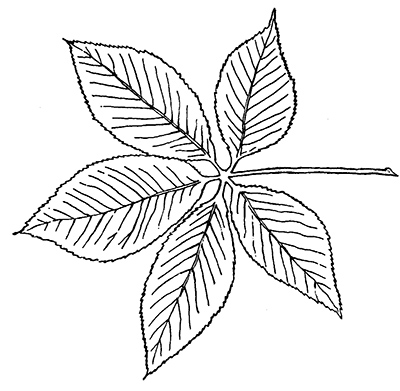
This understory tree is easily identifiable by its oppositely arranged compound leaves with five leaflets, placed like the fingers on your hand, that originate from one location on the long leaf stems. Ohio Buckeye features clusters of tubular yellow/green flowers borne on the end of the stems in the spring. In the winter, twigs show large white leaf scars where leaves were present the season prior. This tree produces round, shiny dark brown nuts, which are contained in a spiny shell.
 Ohio Buckeye is one of the first trees to leaf out in the spring, while its smooth buds also form early in the season. It is also one of the first trees to lose its leaves, typically at the end of the summer.
Ohio Buckeyes are found mostly in the understory, in the shade of other trees, on moist sites. They grow to be anywhere from 20 to 40 feet tall. According to the Morton Arboretum, Ohio Buckeyes are native from western Pennsylvania to Iowa and south to Alabama and Arkansas.
Ohio Buckeye is susceptible to a variety of pests and diseases from leaf blotch and powdery mildew to infestation by scale and Japanese beetles.
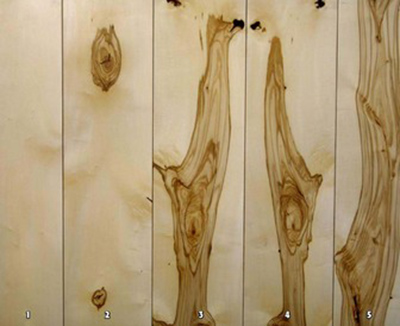
According to the Hardwoods of the Central Midwest exhibit, the sapwood is white to grayish with a darker irregular heartwood. The wood has uniformly distributed pores and its growth rings are slightly visible. With a 12 percent moisture content, buckeye weighs about 25 pounds per cubic foot, making it one of Indiana’s lightest weight woods.
The wood from Ohio Buckeye is very desirable for carving. In the past, it was used for artificial limbs. When the material is processed today, it is used for low-strength pallets and crates. It can also be used for paint grade molding.
For full article with photos view: Intro to Trees of Indiana: Ohio Buckeye
Resources:
Ohio Buckeye – Purdue Arboretum
ID That Tree Winter Edition: Opposite Leaf Arrangement – Ohio buckeye, Red maple, Purdue Extension-Forestry and Natural Resources’ YouTube playlist
Fifty Common Trees of Indiana
An Introduction to Trees of Indiana
Native Trees of the Midwest, The Education Store, Purdue Extension’s resource center
Shrubs and Woody Vines of Indiana and the Midwest, The Education Store
ID That Tree, Purdue Extension-FNR’s YouTube playlist
Woodland Management Moment , Purdue Extension-FNR’s YouTube playlist
Investing in Indiana Woodlands, The Education Store
Forest Improvement Handbook, The Education Store
Wendy Mayer, FNR Communications Coordinator
Purdue University Department of Forestry and Natural Resources
Lenny Farlee, Sustaining Hardwood Extension Specialist
Purdue University Department of Forestry and Natural Resources
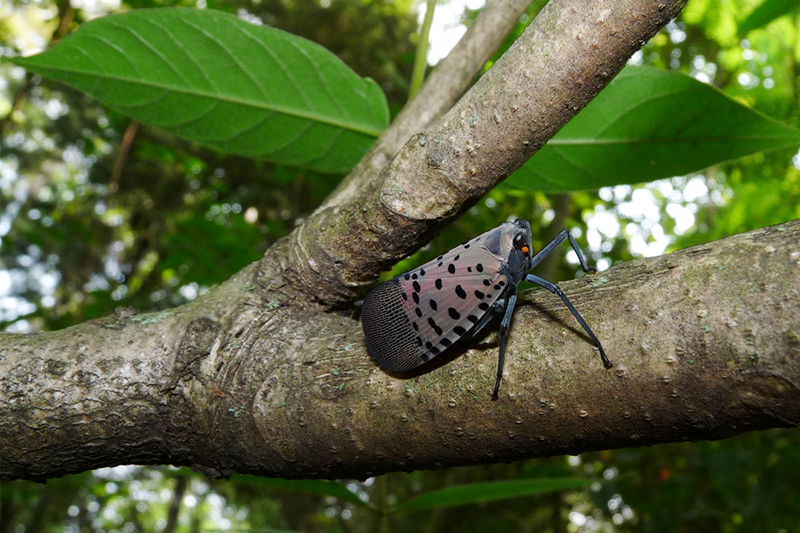 Spotted lanternfly is a major pest of concern across most of the United States. Spotted lanternfly (SLF) is an invasive planthopper native to China that was first detected in the United States in Pennsylvania in 2014. SLF feeds on over 70+ plant species including fruit, ornamental and woody trees with tree-of-heaven as its preferred host. Spotted lanternfly is a hitchhiker and can easily be moved long distances through human assisted movement.
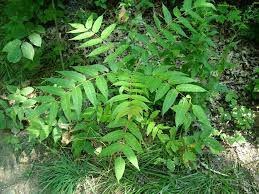
Tree of heaven (TOH) is the preferred host for the spotted lanternfly (SLF). The ability to identify TOH will be critical to monitoring the spread of this invasive pest as the 4th-stage nymphs and adult spotted lantern-flies show a strong preference for TOH.
Report a Sighting
- Take a picture and note your location.
- If you can, collect a sample of the insect by catching it and placing it in a freezer. You can use any container available as long as it has a tight seal (like a water bottle) so that the spotted lanternfly can’t escape.
- Report the sighting at DEPP@dnr.in.gov, eddmaps.org, or 1-866-663-9684.
 Stop the Spread
- Check your car and outdoor equipment for spotted lanternfly eggs, nymphs, and adults before driving or moving to a new location.
- Don’t move firewood because it can spread spotted lanternfly and many other invasive insects.
- Stay up to date with the latest spotted lanternfly information by subscribing to our newsletters (www.purduelandscapereport.org/ and www.in.gov/dnr/entomology/entomology-weekly- review/) and following us on Facebook, Twitter, and Instagram (@reportINvasive and @INdnrinvasive).
- Share your spotted lanternfly knowledge with others!
Resources:
Spotted Lanternfly, Indiana Department of Natural Resources Entomology
Spotted Lanternfly Found in Indiana, Purdue Landscape Report
Invasive plants: impact on environment and people, The Education Store, Purdue Extension’s resource center
Woodland Management Moment: Invasive Species Control Process, Video, Purdue Extension – Forestry and Natural Resources YouTube Channel
Invasive Species, Playlist, Purdue Extension – FNR YouTube Channel
What are invasive species and why should I care?, Got Nature? Blog, Purdue Extension – Forestry and Natural Resources
Report Invasive
Diana Evans, Extension and Web Communication Specialist
Purdue University Department of Forestry and Natural Resources
The classic and trusted book “Fifty Common Trees of Indiana” by T.E. Shaw was published in 1956 as a user-friendly guide to local species. Nearly 70 years later, the publication has been updated through a joint effort by the Purdue Department of Forestry and Natural Resources, Indiana 4-H, and the Indiana Department of Natural Resources, and reintroduced as “An Introduction to Trees of Indiana.”
The full publication is available for download for $7 in the Purdue Extension Education Store. The field guide helps identify common Indiana woodlot trees.
book, paired with an ID That Tree video from Purdue Extension forester Lenny Farlee to help visualize each species as it stands in the woods. Threats to species health as well as also insight into the wood provided by the species, will be provided through additional resources as well as the Hardwoods of the Central Midwest exhibit of the Purdue Arboretum, if available.
Each week, the Intro to Trees of Indiana web series will offer a sneak peek at one species from the
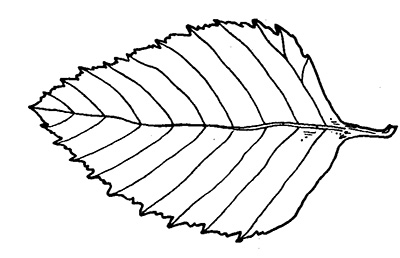
This week, we introduce River Birch or Betula nigra, which is also known as red birch.
As its name implies, it is found frequently in wet situations. It is often found need waterways and in moist soil areas across the state.
Full article also can be viewed with Purdue Forestry and Natural Resources News: Intro to Trees of Indiana: River Birch
Other Resources:
Birch – Hardwood Lumber and Veneer Series
Fifty Common Trees of Indiana
An Introduction to Trees of Indiana
Native Trees of the Midwest-The Education Store, Purdue Extension’s resource center
Shrubs and Woody Vines of Indiana and the Midwest– The Education Store
ID That Tree– YouTube playlist
Woodland Management Moment-YouTube playlist
Investing in Indiana Woodlands– The Education Store
Forest Improvement Handbook– The Education Store
Wendy Mayer, FNR Communications Coordinator
Purdue University Department of Forestry and Natural Resources
Lenny Farlee, Sustaining Hardwood Extension Specialist
Purdue University Department of Forestry and Natural Resources

Recent Posts
- Tree Silvics and Succession Webinar: A Biological Basis for Management
Posted: January 30, 2026 in Forests and Street Trees, Urban Forestry, Woodlands - Woodsy Owl Edition for Educational Learning, USDA – U.S. Forest Service
Posted: January 21, 2026 in Forestry, Forests and Street Trees, Got Nature for Kids, Urban Forestry, Wildlife - ID That Tree: Trumpet Creeper
Posted: January 20, 2026 in Forests and Street Trees, Urban Forestry, Woodlands - A Woodland Management Moment: Black Walnut in Pine Plantation
Posted: December 19, 2025 in Forestry, Forests and Street Trees, Urban Forestry, Woodlands - A Woodland Management Moment: Butternut Disease and Breeding
Posted: December 1, 2025 in Forestry, Forests and Street Trees, Woodland Management Moment, Woodlands - Why Do Our Trees Go From Green Leaves to Different Colors?
Posted: November 4, 2025 in Forestry, Forests and Street Trees, Urban Forestry, Woodlands - October Is Firewood Month: Protect Indiana’s Forests by Making Smart Choices
Posted: October 13, 2025 in Forestry, Forests and Street Trees, How To, Invasive Insects, Urban Forestry - Help Your Trees Transition Into Autumn, Purdue Landscape Report
Posted: October 7, 2025 in Forests and Street Trees, Urban Forestry, Woodlands - Marssonina Leaf Spot and Blotch of Poplar, Purdue Landscape Report
Posted: October 1, 2025 in Disease, Forests and Street Trees, Urban Forestry, Woodlands - Discover the Rich World of Oaks with Purdue Extension – FNR
Posted: September 26, 2025 in Ask the Expert, Forests and Street Trees, Wildlife, Woodlands
Archives
Categories
- Alert
- Aquaculture/Fish
- Aquatic/Aquaculture Resources
- Ask the Expert
- Christmas Trees
- Community Development
- Disease
- Drought
- Forestry
- Forests and Street Trees
- Gardening
- Got Nature for Kids
- Great Lakes
- How To
- Invasive Animal Species
- Invasive Insects
- Invasive Plant Species
- Land Use
- Natural Resource Planning
- Nature of Teaching
- Plants
- Podcasts
- Ponds
- Publication
- Safety
- Spiders
- Timber Marketing
- Uncategorized
- Urban Forestry
- Webinar
- Wildlife
- Wood Products/Manufacturing
- Woodland Management Moment
- Woodlands