 Purdue University - Extension - Forestry and Natural Resources
Got Nature? Blog
 Purdue Extension is proud to share the 2025 Impact Report, a showcase of the people, programs, and partnerships driving stronger, more resilient communities across Indiana. This year’s report highlights how research from Purdue’s College of Agriculture is being put into action, from addressing the spread of tar spot in corn, to monitoring invasive species, to supporting farmers navigating concerns around Highly Pathogenic Avian Influenza (bird flu).
Here is a quick snapshot of the great articles and information you will find:
- Saving One of Indiana’s Top Crops From Tar Spots
- 4-H Tech Changemakers Lead the Way in AI
- Teaching Small Steps to Achieve Healthier Lives
- Strengthening Financial Security Through Tax Preparation and Education
- Uniting Indiana Residents Against Invasive Species
Highlighting Lenny Farlee, Extension forester, and Henry Quesada, professor and assistant director of Extension. Check out all of our FNR resources listed below. - Supporting Childcare Providers to Create Stronger Communities
- Emergency Preparedness and Response to Highly Pathogenic Avian Flu
- Making the Best Better: Strengthening Teen Leadership Skills
- Check out program impacts
Explore the full report to see how Extension is making a difference statewide and beyond: Purdue Extension Impact Report 2025.
Resources:
What are Invasive Species and Why Should I Care?, Purdue Extension – Forestry & Natural Resources (FNR) Blog
Woodland Management Moment: Invasive Species Control Process, Purdue Extension – FNR YouTube channel
Asian Bush Honeysuckle, Purdue Extension – FNR YouTube channel
Burning Bush, Purdue Extension – FNR YouTube channel
Callery Pear, Purdue Extension – FNR YouTube channel
Multiflora Rose, Purdue Extension – FNR YouTube channel
Invasive Plants Threaten Our Forests Part 1: Invasive Plant Species Identification
Aquatic Invasive Species, Illinois-Indiana Sea Grant (IISG)
Indiana Invasive Species Council
Emerald Ash Borer Information Network, Purdue University and Partners
The GLEDN Phone App – Great Lakes Early Detection Network
EDDMaps – Early Detection and Distribution Mapping System
1-866 No EXOTIC (1-866-663-9684)
depp@dnr.IN.gov – Email Indiana Department of Natural Resources (DNR)
Woodland Stewardship for Landowners, Playlist, Purdue Extension – FNR YouTube channel
A Woodland Management Moment, Playlist, Purdue Extension – FNR YouTube channel
Subscribe to Purdue Extension – FNR YouTube channel YouTube channel
Nature of Teaching, Purdue College of Agriculture
Community Development, Purdue Extension
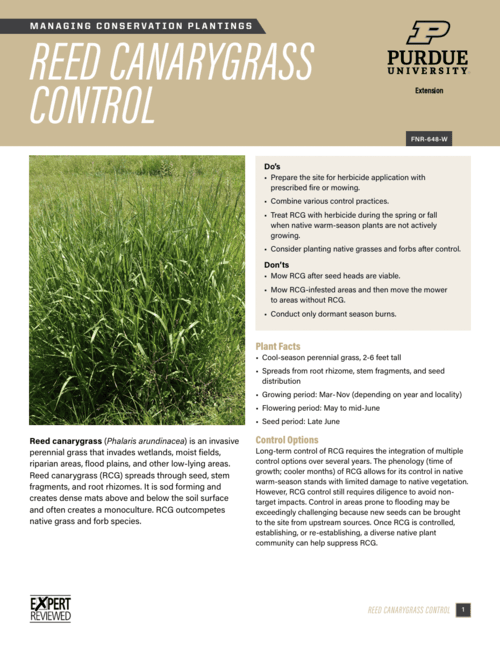 Uncover the challenges posed by reed canarygrass, an invasive perennial grass that threatens conservation plantings, wetlands and low-lying areas. This guide details control options for reed canarygrass. Essential for conservationists and land managers dedicated to preserving native ecosystems: Reed Canarygrass Control.
Check out the Managing Conservation Plantings Series which include details on how to control invasive species and other problematic plants in Conservation Reserve Program (CRP) plantings and native warm-season grass and wildflower conservation plantings.
Publications in this series include:
- Golden Rod Control
- Thinning Native Warm-Season Grasses
- Sericea Lespedeza Control
- Woody Encroachment and Woody Invasives
- Jonhsongrass Control
- Reed Canarygrass Control
- Teasel Control (Common and Cut Leaved)
- Controlling Introduced Cool-Season Grasses
- Crownvetch, Sweetclover and Birdsfoot Trefoil Control
Resources:
Deer Impact Toolbox & Grassland Management, Purdue Extension Pond and Wildlife Management
Pond and Wildlife Management, Purdue Extension
Forestry for the Birds Virtual Tour and Pocket Guide, Got Nature? Blog, Purdue Extension – FNR
Frost Seeding to Establish Wildlife Food Plots and Native Grass and Forb Plantings – Purdue Extension – FNR YouTube channel
Wildlife Habitat Hint: Tips for Evaluating a First Year Native Grass and Forb Plantings, Purdue Extension – FNR YouTube Channel
Drone Seeding Native Grasses and Forbs: Project Overview & Drone Setup, Purdue Extension – FNR YouTube channel
Ask an Expert: Wildlife Food Plots, video, Purdue Extension – FNR YouTube Channel
Handling Harvested Game: Episode 1, Field Dressing, video, Purdue Extension – FNR YouTube Channel
Managing Your Woods for White-Tailed Deer, The Education Store
Forest Improvement Handbook, The Education Store
Forest Management for Reptiles and Amphibians: A Technical Guide for the Midwest, The Education Store
A Template for Your Wildlife Habitat Management Plan, The Education Store
Woodland Stewardship for Landowners, Playlist, Purdue Extension – FNR YouTube channel
Nature of Teaching Unit 1: Animal Diversity and Tracking, The Education Store
Nature of Teaching, Purdue College of Agriculture
Invasive Species Playlist, Playlist, Purdue Extension – FNR YouTube Channel
Report Invasive, Purdue Extension
Subscribe Purdue Extension – Forestry and Natural Resources YouTube Channel
Jarred Brooke, Wildlife Extension Specialist
Purdue Department of Forestry and Natural Resources
 Discover how to manage non-native cool-season grasses like tall fescue and Kentucky bluegrass in native conservation plantings. This guide reveals how these invasive species form dense sod layers, which limits wildlife mobility, and also provides control options for these invasive species. Controlling Introduced Cool-Season Grasses is essential for anyone dedicated to preserving native ecosystems and enhancing biodiversity.
Check out the Managing Conservation Plantings Series which include details on how to control invasive species and other problematic plants in Conservation Reserve Program (CRP) plantings and native warm-season grass and wildflower conservation plantings.
Publications in this series include:
- Golden Rod Control
- Thinning Native Warm-Season Grasses
- Sericea Lespedeza Control
- Woody Encroachment and Woody Invasives
- Jonhsongrass Control
- Reed Canarygrass Control
- Teasel Control (Common and Cut Leaved)
- Controlling Introduced Cool-Season Grasses
- Crownvetch, Sweetclover and Birdsfoot Trefoil Control
Resources:
Deer Impact Toolbox & Grassland Management, Purdue Extension Pond and Wildlife Management
Pond and Wildlife Management, Purdue Extension
Forestry for the Birds Virtual Tour and Pocket Guide, Got Nature? Blog, Purdue Extension – FNR
Frost Seeding to Establish Wildlife Food Plots and Native Grass and Forb Plantings – Purdue Extension – FNR YouTube channel
Wildlife Habitat Hint: Tips for Evaluating a First Year Native Grass and Forb Plantings, Purdue Extension – FNR YouTube Channel
Drone Seeding Native Grasses and Forbs: Project Overview & Drone Setup, Purdue Extension – FNR YouTube channel
Ask an Expert: Wildlife Food Plots, video, Purdue Extension – FNR YouTube Channel
Handling Harvested Game: Episode 1, Field Dressing, video, Purdue Extension – FNR YouTube Channel
Managing Your Woods for White-Tailed Deer, The Education Store
Forest Improvement Handbook, The Education Store
Forest Management for Reptiles and Amphibians: A Technical Guide for the Midwest, The Education Store
A Template for Your Wildlife Habitat Management Plan, The Education Store
Woodland Stewardship for Landowners, Playlist, Purdue Extension – FNR YouTube channel
Nature of Teaching Unit 1: Animal Diversity and Tracking, The Education Store
Nature of Teaching, Purdue College of Agriculture
Invasive Species Playlist, Playlist, Purdue Extension – FNR YouTube Channel
Report Invasive, Purdue Extension
Subscribe Purdue Extension – Forestry and Natural Resources YouTube Channel
Jarred Brooke, Wildlife Extension Specialist
Purdue Department of Forestry and Natural Resources
Discover how to effectively manage the invasive common and cut-leaved teasel, which threatens open areas like prairies, savannas, sedge meadows, roadsides and conservation plantings. This publication provides essential information for exploring effective control options. Essential reading for conservationists and land managers interested in grassland ecosystems: Teasel Control (Common and Cut Leaved).
Check out the Managing Conservation Plantings Series which include details on how to control invasive species and other problematic plants in Conservation Reserve Program (CRP) plantings and native warm-season grass and wildflower conservation plantings.
Publications in this series include:
- Golden Rod Control
- Thinning Native Warm-Season Grasses
- Sericea Lespedeza Control
- Woody Encroachment and Woody Invasives
- Jonhsongrass Control
- Reed Canarygrass Control
- Teasel Control (Common and Cut Leaved)
- Controlling Introduced Cool-Season Grasses
- Crownvetch, Sweetclover and Birdsfoot Trefoil Control
Resources:
Deer Impact Toolbox & Grassland Management, Purdue Extension Pond and Wildlife Management
Pond and Wildlife Management, Purdue Extension
Forestry for the Birds Virtual Tour and Pocket Guide, Got Nature? Blog, Purdue Extension – FNR
Frost Seeding to Establish Wildlife Food Plots and Native Grass and Forb Plantings – Purdue Extension – FNR YouTube channel
Wildlife Habitat Hint: Tips for Evaluating a First Year Native Grass and Forb Plantings, Purdue Extension – FNR YouTube Channel
Drone Seeding Native Grasses and Forbs: Project Overview & Drone Setup, Purdue Extension – FNR YouTube channel
Ask an Expert: Wildlife Food Plots, video, Purdue Extension – FNR YouTube Channel
Handling Harvested Game: Episode 1, Field Dressing, video, Purdue Extension – FNR YouTube Channel
Managing Your Woods for White-Tailed Deer, The Education Store
Forest Improvement Handbook, The Education Store
Forest Management for Reptiles and Amphibians: A Technical Guide for the Midwest, The Education Store
A Template for Your Wildlife Habitat Management Plan, The Education Store
Woodland Stewardship for Landowners, Playlist, Purdue Extension – FNR YouTube channel
Nature of Teaching Unit 1: Animal Diversity and Tracking, The Education Store
Nature of Teaching, Purdue College of Agriculture
Invasive Species Playlist, Playlist, Purdue Extension – FNR YouTube Channel
Report Invasive, Purdue Extension
Subscribe Purdue Extension – Forestry and Natural Resources YouTube Channel
Jarred Brooke, Wildlife Extension Specialist
Purdue Department of Forestry and Natural Resources
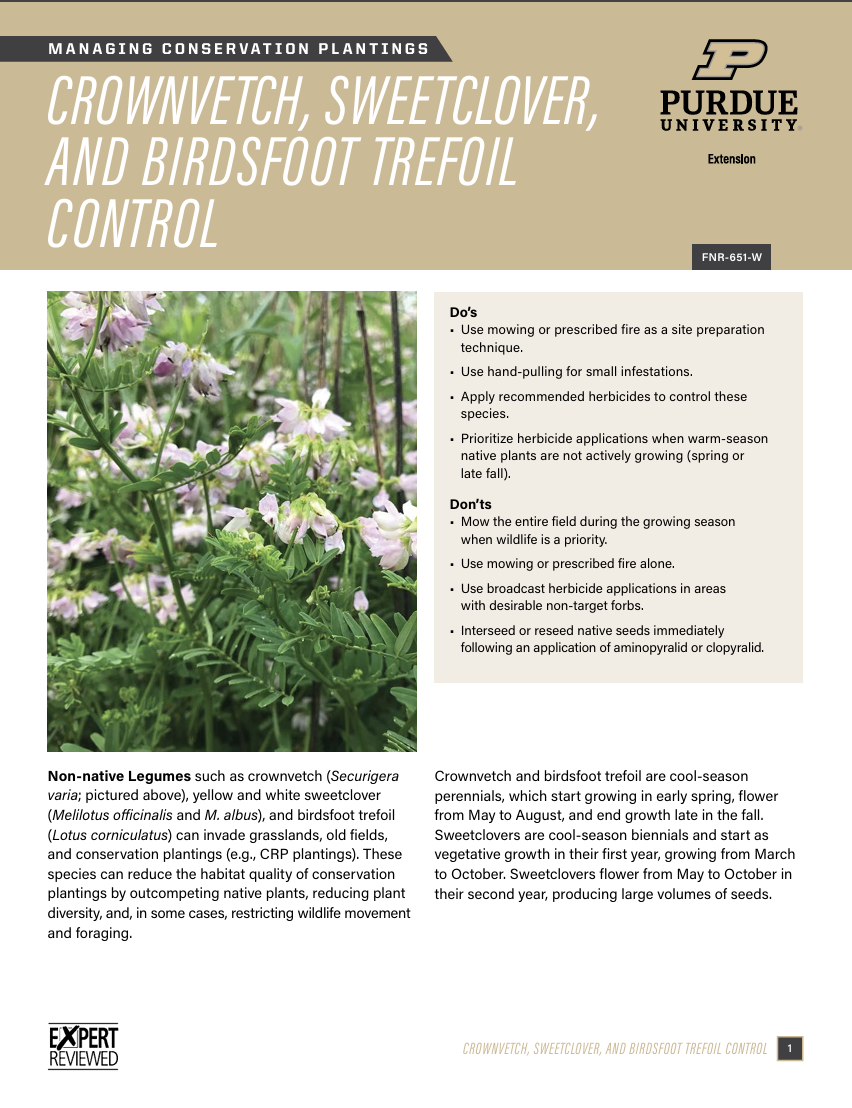 Discover the impact of non-native legumes like crownvetch, sweetclover, and birdsfoot trefoil on grasslands and conservation plantings. This guide provides control options for these non-native legumes. Essential reading for conservationists and land managers interested in grassland ecosystems: Crownvetch, Sweetclover and Birdsfoot Trefoil Control.
Check out the Managing Conservation Plantings Series which include details on how to control invasive species and other problematic plants in Conservation Reserve Program (CRP) plantings and native warm-season grass and wildflower conservation plantings.
Publications in this series include:
- Golden Rod Control
- Thinning Native Warm-Season Grasses
- Sericea Lespedeza Control
- Woody Encroachment and Woody Invasives
- Jonhsongrass Control
- Reed Canarygrass Control
- Teasel Control (Common and Cut Leaved)
- Controlling Introduced Cool-Season Grasses
- Crownvetch, Sweetclover and Birdsfoot Trefoil Control
Resources:
Deer Impact Toolbox & Grassland Management, Purdue Extension Pond and Wildlife Management
Pond and Wildlife Management, Purdue Extension
Forestry for the Birds Virtual Tour and Pocket Guide, Got Nature? Blog, Purdue Extension – FNR
Frost Seeding to Establish Wildlife Food Plots and Native Grass and Forb Plantings – Purdue Extension – FNR YouTube channel
Wildlife Habitat Hint: Tips for Evaluating a First Year Native Grass and Forb Plantings, Purdue Extension – FNR YouTube Channel
Drone Seeding Native Grasses and Forbs: Project Overview & Drone Setup, Purdue Extension – FNR YouTube channel
Ask an Expert: Wildlife Food Plots, video, Purdue Extension – FNR YouTube Channel
Handling Harvested Game: Episode 1, Field Dressing, video, Purdue Extension – FNR YouTube Channel
Managing Your Woods for White-Tailed Deer, The Education Store
Forest Improvement Handbook, The Education Store
Forest Management for Reptiles and Amphibians: A Technical Guide for the Midwest, The Education Store
A Template for Your Wildlife Habitat Management Plan, The Education Store
Woodland Stewardship for Landowners, Playlist, Purdue Extension – FNR YouTube channel
Nature of Teaching Unit 1: Animal Diversity and Tracking, The Education Store
Nature of Teaching, Purdue College of Agriculture
Invasive Species Playlist, Playlist, Purdue Extension – FNR YouTube Channel
Report Invasive, Purdue Extension
Subscribe Purdue Extension – Forestry and Natural Resources YouTube Channel
Jarred Brooke, Wildlife Extension Specialist
Purdue Department of Forestry and Natural Resources
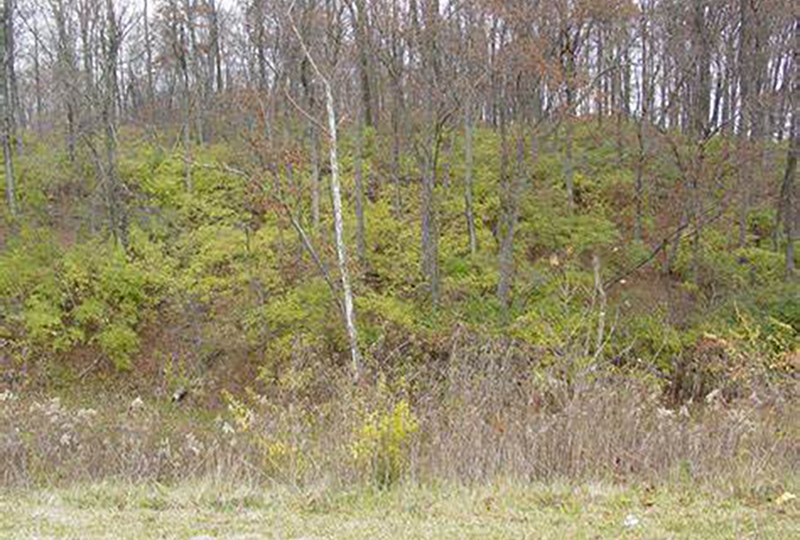
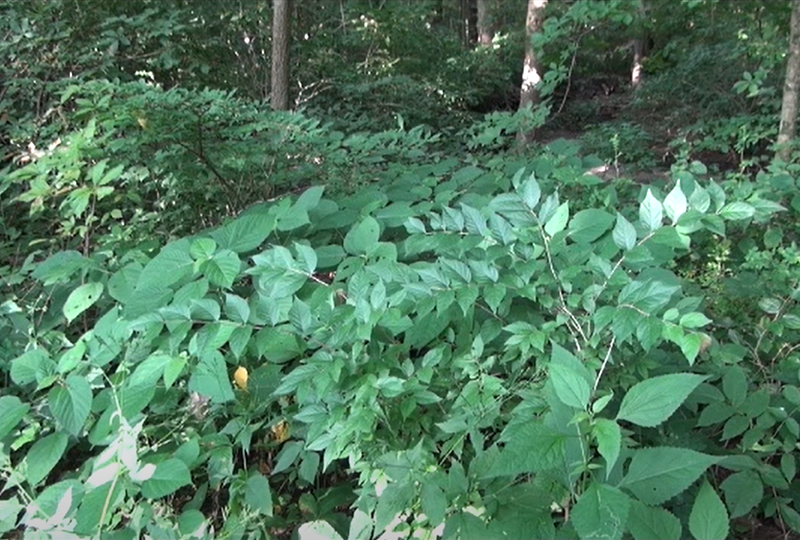
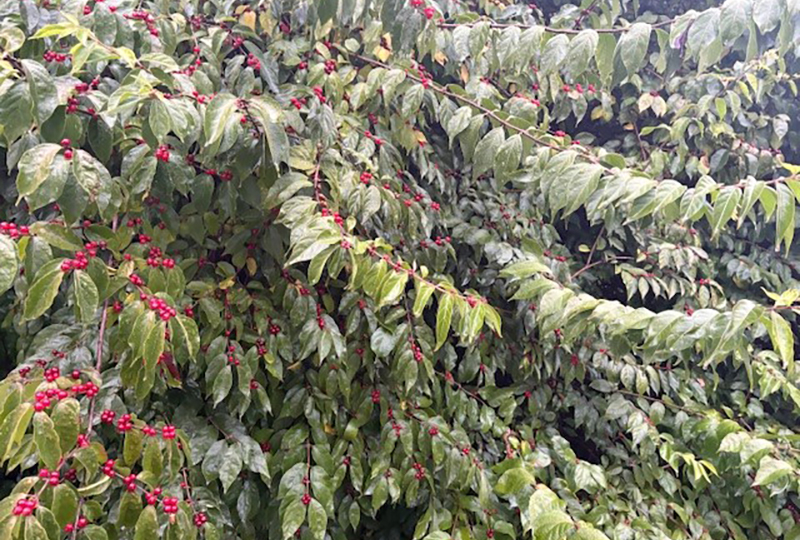
In early November, invasive bush honeysuckle is one of the only understory shrubs that are still green. While many of our native plants are dormant, Asian bush honeysuckle remains green longer making them easy to locate. Doing control measures this time of year also reduces impacts to non-target plants.
How do you control it? That depends on what resources you have available. Small plants can be easily pulled by hand; be sure to hang them on tree branch rather than laying them down on the ground so they don’t re-root. In most cases, some method of herbicide control will be necessary. Ohio State University has a good guide on various methods of control, Controlling Non-Native Invasive Plants in Ohio Forests: Bush Honeysuckle.
Not sure where to start on your property? One of the most daunting aspects of invasive plant control is where to begin. Ellen Jacquart, former Director of Stewardship for the Nature Conservancy in Indiana, wrote an article in the Indiana Woodland Steward. The Where do I Start?! Prioritizing Invasive Plant Control article describes how to plan your invasive plant control including prioritizing what to do first.
Click on the photos below for larger view to help as you identify Asian bush honeysuckle.

Resources:
Subscribe to the Indiana Woodland Steward Newsletter
Consider Fall Eradication of Asian Bush Honeysuckle, Purdue Landscape Report
Asian Bush Honeysuckle, Purdue Extension YouTube Video
A Woodland Moment: Asian Bush Honeysuckle, Purdue Extension – Forestry and Natural Resources (FNR) YouTube Video
Invasive Plants of the Eastern U.S.: An Introduction to the Problematic Non-Native Species, The Education Store, Purdue Extension’s resource center
Report Invasive Species, Purdue Invasive Species
Report Invasive Species: Asian Bush Honeysuckle, Purdue Invasive Species
The GLEDN Phone App – Great Lakes Early Detection Network
EDDMaps – Early Detection and Distribution Mapping System
Episode 11 – Exploring the challenges of Invasive Species, Habitat University-Natural Resource University
What Are Invasive Species and Why Should I Care?, Purdue Extension-FNR Got Nature? Blog
Emerald Ash Borer Information Network, Purdue University and Partners
Aquatic Invasive Species, Illinois-Indiana Sea Grant (IISG)
Invasive plants: impact on environment and people, The Education Store, Purdue Extension’s resource center
Subscribe Purdue Extension-Forestry and Natural Resources YouTube Channel
Brian MacGowan, Wildlife Extension Specialist
Department of Forestry and Natural Resources, Purdue University
Welcome to ID That Tree! In this episode, Purdue Extension Forester Lenny Farlee introduces us to multiflora, a non-native invasive shrub that has become widespread across Indiana. Once planted for practical purposes, it now creates big challenges for landowners and natural areas. Learn where you’re most likely to encounter it, why it spreads so aggressively and what makes it stand out on the landscape. Whether you’re a student, nature enthusiast or land manager, this video gives you a quick introduction to one of Indiana’s most troublesome invasive plants.
If you have any questions regarding wildlife, trees, forest management, wood products, natural resource planning or other natural resource topics, feel free to contact us by using our Ask an Expert web page.
Resources:
ID That Tree – Video Playlist, Purdue Extension – Forestry and Natural Resources (FNR) YouTube Channel
Purdue Arboretum Explorer
Conservation Tree Planting: Steps to Success, Purdue Extension – FNR YouTube Channel
A Woodland Management Moment, Playlist, Purdue Extension – FNR YouTube Channel
Woodland Stewardship for Landowners, Playlist, Purdue Extension – FNR YouTube Channel
Fifty Common Trees of Indiana, Purdue Extension – FNR
Indiana Invasive Species Council
Cooperative Invasive Species Management Area (CISMA)
Report Invasive, Purdue Extension
Habitat University, Episode 12 – Exploring the challenges of Invasive Species, Habitat University-Natural Resource University
Shrubs and Woody Vines of Indiana and the Midwest, Purdue University Press
Native Trees of the Midwest, Purdue University Press
Professional Forester, Indiana Forestry Woodland Owners Association
District Forester, Indiana Department of Natural Resources, 10+ acres
Find an Arborist, International Society of Arboriculture
Forest Improvement Handbook, The Education Store
Lenny Farlee, Extension Forester
Hardwood Tree Improvement and Regeneration Center
Purdue Department of Forestry & Natural Resources
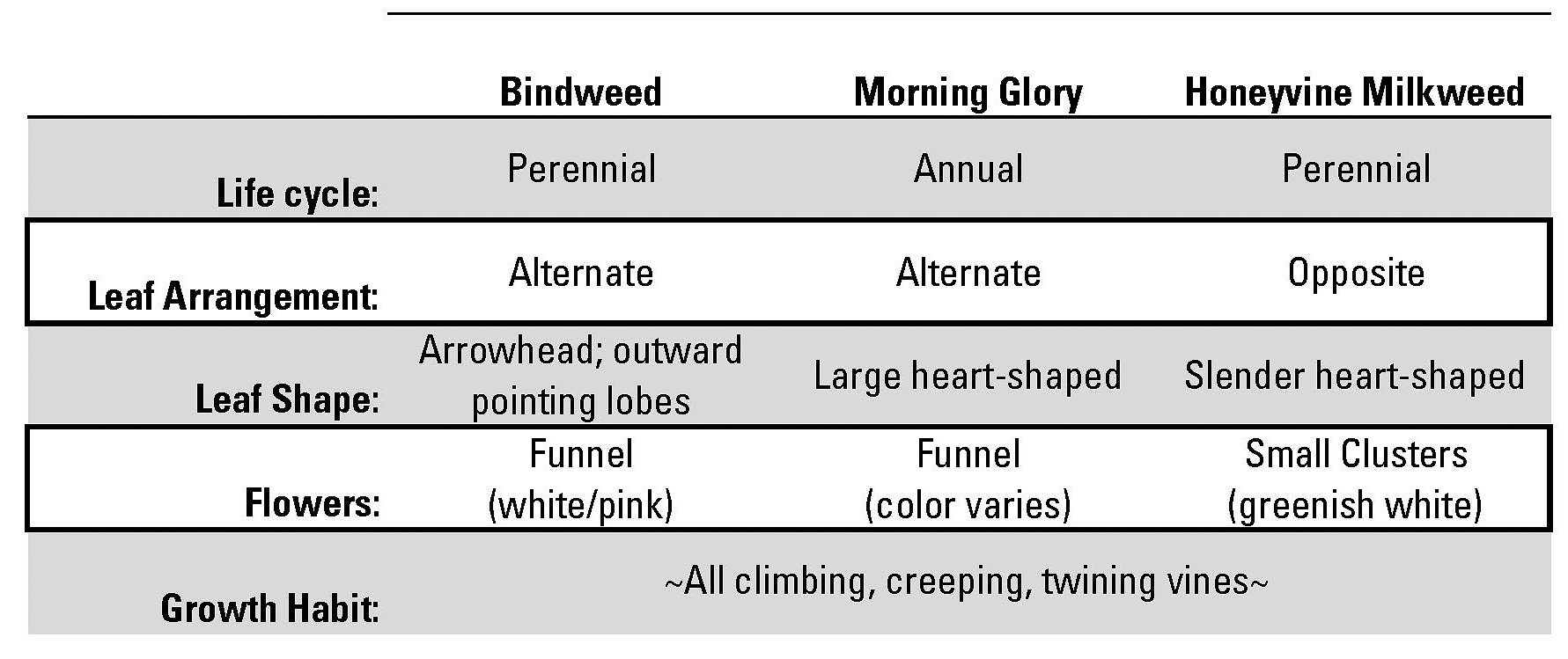
Figure 1. Chart comparing plant traits of bindweed, morning glory, and honeyvine milkweed. Credit: K. Mitchell
Purdue Landscape Report: Few garden problems cause as much frustration as untangling vines. Sometimes the vines are beautiful climbers planted with intention. Other times, they creep in uninvited and smother everything in their path. Among the most common, and the most confusing, vines in Indiana are bindweed, morning glory, and honeyvine milkweed. To the untrained eye, they look similar: all are fast-growing vines with heart-shaped leaves. However, there are noticeable differences in their physiological traits (Fig. 1) and ecological value. Recognizing the distinctions can improve management and help strike a balance between aesthetics, control, and ecological benefits.
Bindweed (Hedge bindweed: Calystegia sepium; Field bindweed: Convolvulus arvensis)
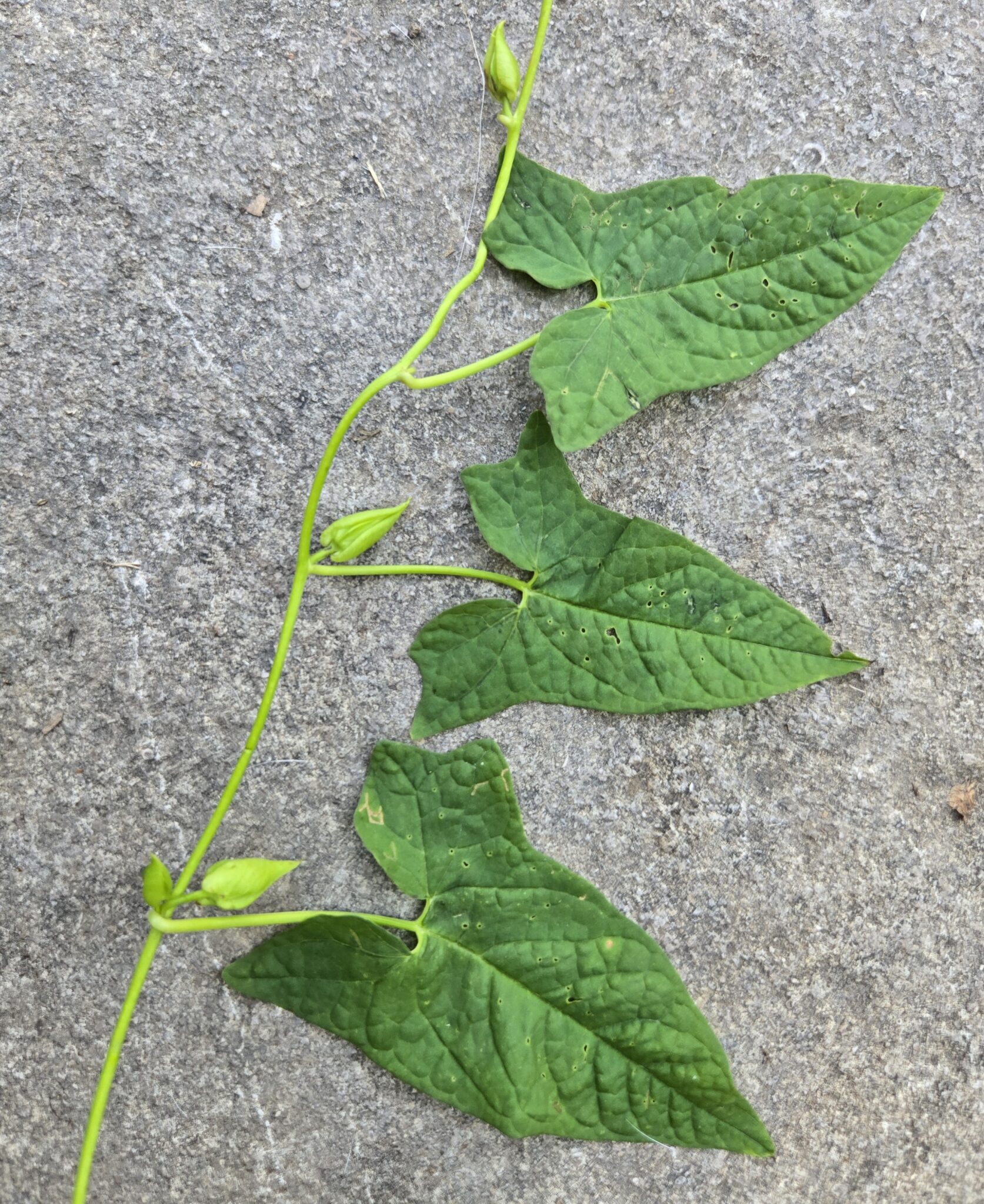
Bindweed is an aggressive vine with alternate, arrowhead-shaped leaves (Fig. 2) and small white or pink funnel-shaped flowers (Fig. 3). This perennial spreads readily from rhizomes (underground stems), forming vegetative colonies that become increasingly difficult to control. Hedge bindweed and field bindweed differ slightly in appearance, but both are aggressive invaders; in fact, field bindweed is listed as a prohibited noxious weed in Indiana. Cultural control methods, such as cultivation or light exclusion, can take 3 to 5 years to achieve eradication. The best results often come from combining these approaches with carefully timed herbicide applications.

Morning Glory (Ipomoea spp.)
Morning glories are a familiar vine often planted intentionally for their large, colorful flowers. Unlike bindweed, morning glory is an annual and dies off in winter. However, its abundant seed production allows it to return year after year. A single vigorous vine can produce hundreds of colorful, funnel-shaped flowers (Fig. 4) resulting in over a thousand seeds which may remain viable in the soil for decades. Morning glory will become weedy if left unmanaged. Thoughtful containment and regular deadheading can help to keep it under control.


Two types are most often seen (Fig. 5):
- Common morning glory (Ipomoea purpurea) has large, heart-shaped leaves and showy, funnel-shaped flowers in a wide variety of colors.
- Ivy-leaf morning glory (Ipomoea hederacea) has leaves with three distinct lobes that resemble ivy, and its smaller flowers are typically light blue or purple with white.
Honeyvine Milkweed (Cynanchum laeve)
Honeyvine milkweed has slender heart-shaped leaves like bindweed, but unlike bindweed, this native vine provides ecological value as a food source for monarch caterpillars. It’s easily distinguished from morning glory and bindweed by its opposite leaf arrangement (Fig. 6), small clusters of greenish-white flowers (Fig. 7), and long seed pods, typical of the milkweed family, that release hundreds of windblown seeds. While beneficial to pollinators, honeyvine can overwhelm a home landscape and should be contained to naturalized areas or pollinator gardens.


Correct identification is the first step toward effective management. Though bindweed, morning glory, and honeyvine milkweed are all fast-growing vines, they have key differences in their physiological traits and ecological value. Proper identification determines whether you are eradicating noxious weeds, containing ornamentals, or conserving natives where appropriate.
Quick Tips for Identification
- Leaf arrangement:
- Alternating leaves (only one leaf per node) – bindweed or morning glory
- Opposite leaves (two leaves per node) – honeyvine milkweed
- Flowers:
- White or pink funnel-shaped (~1 to 3 in) – bindweed
- Colorful funnel-shaped (2 to 4 in) – morning glory
- Small, greenish white clusters – honeyvine milkweed
- Seed pods:
- Tiny capsules – bindweed or morning glory
- Long pods with silky seeds – honeyvine milkweed
View the original article on the Purdue Landscape Report website: Untangling the Vines: Identifying Bindweed, Morning Glory, and Honeyvine Milkweed.
Subscribe and receive the newsletter: Purdue Landscape Report Newsletter.
Resources:
ReportINvasive, Purdue College of Agriculture
What are Invasive Species and Why Should I Care?, Got Nature? Blog, Purdue Extension – Forestry and Natural Resources
Large Spots on Maple Leaves that Look Like Tar, Purdue Extension News
Find an Arborist, International Society of Arboriculture
Fifty Common Trees of Indiana
An Introduction to Trees of Indiana
Native Trees of the Midwest, The Education Store
Shrubs and Woody Vines of Indiana and the Midwest, The Education Store
Tree Installation: Process and Practices, The Education Store
Planting Your Tree Part 1: Choosing Your Tree, Video, Purdue Extension – Forestry & Natural Resource (FNR) YouTube Channel
Investing in Indiana Woodlands, The Education Store
Forest Improvement Handbook, The Education Store
ID That Tree, Purdue Extension-FNR YouTube playlist
Purdue Plant and Pest Diagnostic Laboratory
Karen Mitchell, Consumer Horticulture Extension Specialist
Purdue Horticulture & Landscape Architecture
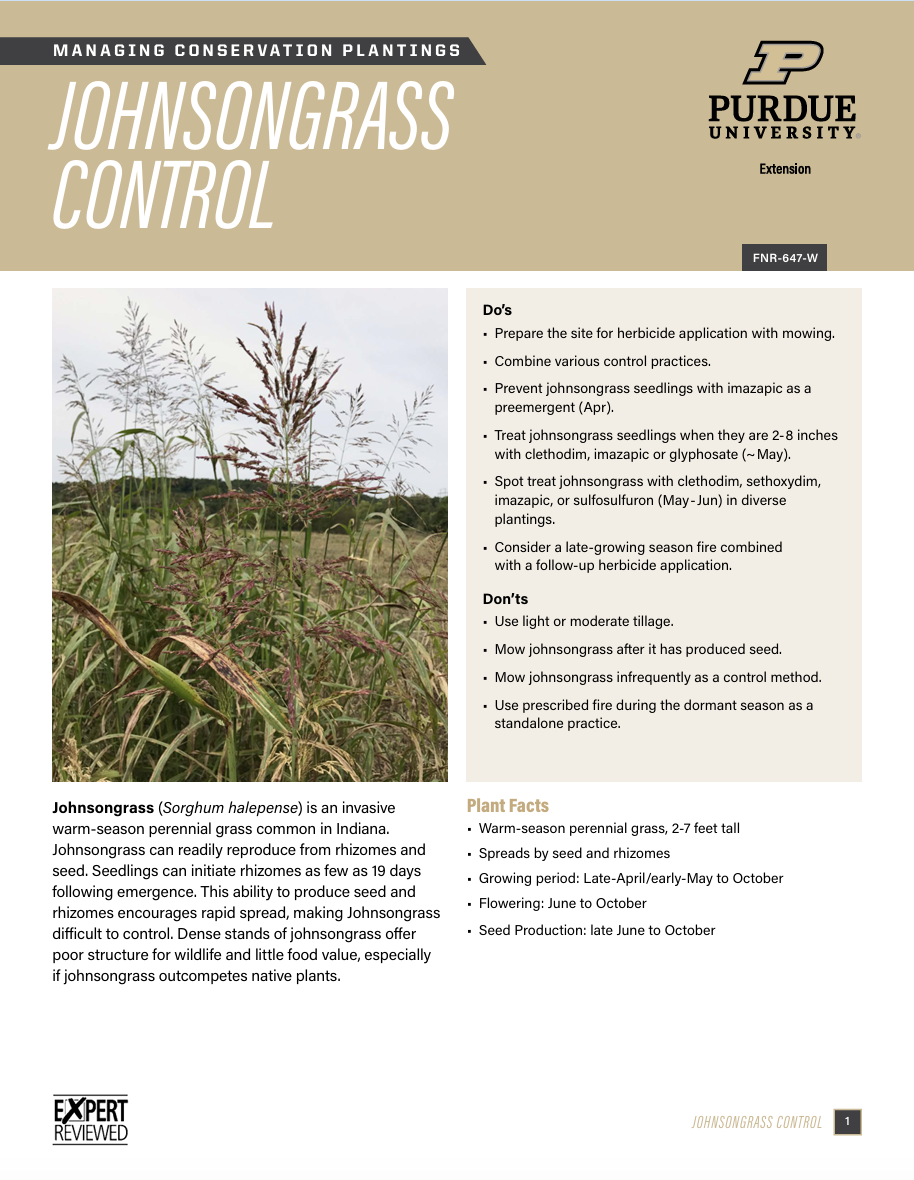 Discover effective strategies for controlling Johnsongrass, an invasive warm-season grass prevalent in Indiana. This guide explains several control options for johnsongrass issues in native conservation plantings. Essential reading for land managers and conservationists committed to maintaining healthy grassland ecosystems: Johnsongrass Control.
Check out the Managing Conservation Plantings Series which include details on how to control invasive species and other problematic plants in Conservation Reserve Program (CRP) plantings and native warm-season grass and wildflower conservation plantings.
Publications in this series include:
- Golden Rod Control
- Thinning Native Warm-Season Grasses
- Sericea Lespedeza Control
- Woody Encroachment and Woody Invasives
- Johnsongrass Control
- Reed Canarygrass Control
- Teasel Control (Common and Cut Leaved)
- Controlling Introduced Cool-season Grasses
- Crownvetch, Sweetclover and Birdsfoot Trefoil Control
Resources:
Deer Impact Toolbox & Grassland Management, Purdue Extension Pond and Wildlife Management
Pond and Wildlife Management, Purdue Extension
Forestry for the Birds Virtual Tour and Pocket Guide, Got Nature? Blog, Purdue Extension – FNR
Frost Seeding to Establish Wildlife Food Plots and Native Grass and Forb Plantings – Purdue Extension – FNR YouTube channel
Wildlife Habitat Hint: Tips for Evaluating a First Year Native Grass and Forb Plantings, Purdue Extension – FNR YouTube Channel
Drone Seeding Native Grasses and Forbs: Project Overview & Drone Setup, Purdue Extension – FNR YouTube channel
Ask an Expert: Wildlife Food Plots, video, Purdue Extension – FNR YouTube Channel
Handling Harvested Game: Episode 1, Field Dressing, video, Purdue Extension – FNR YouTube Channel
Managing Your Woods for White-Tailed Deer, The Education Store
Forest Improvement Handbook, The Education Store
Forest Management for Reptiles and Amphibians: A Technical Guide for the Midwest, The Education Store
A Template for Your Wildlife Habitat Management Plan, The Education Store
Woodland Stewardship for Landowners, Playlist, Purdue Extension – FNR YouTube channel
Nature of Teaching Unit 1: Animal Diversity and Tracking, The Education Store
Nature of Teaching, Purdue College of Agriculture
Invasive Species Playlist, Playlist, Purdue Extension – FNR YouTube Channel
Report Invasive, Purdue Extension
Subscribe Purdue Extension – Forestry and Natural Resources YouTube Channel
Jarred Brooke, Wildlife Extension Specialist
Purdue Department of Forestry and Natural Resources
 Explore the impact of tree and shrub encroachment on conservation plantings. This guide highlights how native woody species like blackberry and sumac can benefit wildlife, while invasives species and excessive woody encroachment can degrade habitat for species like Henslow’s sparrows. Learn how to manage woody invasives to preserve native grasses and wildflowers. Essential reading for conservationists and land managers interested in grassland ecosystems: Woody Encroachment and Woody Invasives.
This publication is part of a seven publication series The Managing Conservation Plantings Series which include details on how to control invasive species and other problematic plants in Conservation Reserve Program (CRP) plantings and native warm-season grass and wildflower conservation plantings.
Publications in this series include:
- Golden Rod Control
- Thinning Native Warm-Season Grasses
- Sericea Lespedeza Control
- Woody Encroachment and Woody Invasives
- Johnson Grass Control
- Reed Canarygrass Control
- Teasel Control (Common and Cut Leaved)
- Controlling Introduced Cool-season Grasses
- Crownvetch, Sweetclover and Birdsfoot Trefoil Control
Resources:
Deer Impact Toolbox & Grassland Management, Purdue Extension Pond and Wildlife Management
Pond and Wildlife Management, Purdue Extension
Forestry for the Birds Virtual Tour and Pocket Guide, Got Nature? Blog, Purdue Extension – FNR
Frost Seeding to Establish Wildlife Food Plots and Native Grass and Forb Plantings – Purdue Extension – FNR YouTube channel
Wildlife Habitat Hint: Tips for Evaluating a First Year Native Grass and Forb Plantings, Purdue Extension – FNR YouTube Channel
Drone Seeding Native Grasses and Forbs: Project Overview & Drone Setup, Purdue Extension – FNR YouTube channel
Ask an Expert: Wildlife Food Plots, video, Purdue Extension – FNR YouTube Channel
Handling Harvested Game: Episode 1, Field Dressing, video, Purdue Extension – FNR YouTube Channel
Managing Your Woods for White-Tailed Deer, The Education Store
Forest Improvement Handbook, The Education Store
Forest Management for Reptiles and Amphibians: A Technical Guide for the Midwest, The Education Store
A Template for Your Wildlife Habitat Management Plan, The Education Store
Woodland Stewardship for Landowners, Playlist, Purdue Extension – FNR YouTube channel
Nature of Teaching Unit 1: Animal Diversity and Tracking, The Education Store
Nature of Teaching, Purdue College of Agriculture
Invasive Species Playlist, Playlist, Purdue Extension – FNR YouTube Channel
Report Invasive, Purdue Extension
Subscribe Purdue Extension – Forestry and Natural Resources YouTube Channel
Jarred Brooke, Wildlife Extension Specialist
Purdue Department of Forestry and Natural Resources

Recent Posts
- Purdue Extension: Empowering Indiana Through Innovation, Education and Community Impact
Posted: January 28, 2026 in Community Development, How To, Invasive Insects, Invasive Plant Species, Natural Resource Planning, Woodlands - Learn How to Control Reed Canarygrass
Posted: December 8, 2025 in Forestry, Invasive Plant Species, Wildlife - Controlling Introduced Cool-Season Grasses
Posted: December 1, 2025 in Forestry, Invasive Plant Species, Wildlife - Managing Common and Cut Leaved Teasel
Posted: November 24, 2025 in Forestry, Invasive Plant Species, Wildlife - Crownvetch, Sweetclover and Birdsfoot Trefoil Control
Posted: November 17, 2025 in Forestry, Invasive Plant Species, Wildlife - Now Is The Time To Control Non-Native Bush Honeysuckle
Posted: October 30, 2025 in Forestry, How To, Invasive Plant Species, Woodlands - ID That Tree: Invasive Multiflora Rose
Posted: October 9, 2025 in Forestry, Invasive Plant Species, Urban Forestry, Wildlife - Untangling and Identifying Vines, Purdue Landscape Report
Posted: September 29, 2025 in Invasive Plant Species, Plants, Wildlife - Discover Effective Strategies for Controlling Johnsongrass
Posted: September 3, 2025 in Forestry, Invasive Plant Species, Wildlife - Publication – Woody Encroachment and Woody Invasives
Posted: August 29, 2025 in Forestry, Invasive Plant Species, Wildlife
Archives
Categories
- Alert
- Aquaculture/Fish
- Aquatic/Aquaculture Resources
- Ask the Expert
- Christmas Trees
- Community Development
- Disease
- Drought
- Forestry
- Forests and Street Trees
- Gardening
- Got Nature for Kids
- Great Lakes
- How To
- Invasive Animal Species
- Invasive Insects
- Invasive Plant Species
- Land Use
- Natural Resource Planning
- Nature of Teaching
- Plants
- Podcasts
- Ponds
- Publication
- Safety
- Spiders
- Timber Marketing
- Uncategorized
- Urban Forestry
- Webinar
- Wildlife
- Wood Products/Manufacturing
- Woodland Management Moment
- Woodlands