 Purdue University - Extension - Forestry and Natural Resources
Got Nature? Blog
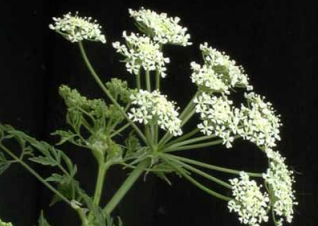
Photo credit: Pedro Tenorio-Lezama, Bugwood.org
Made infamous through the trial of Socrates, Shakespeare’s Hamlet and Macbeth, and several other works of classic literature, poison hemlock is an extremely toxic plant that will pose a risk this summer and should be handled with caution.
Poison hemlock is a biennial plant, meaning that it has a two year lifespan. Last summer, it went through vegetative growth and largely stayed out of sight. This summer, it will produce small white clusters of flowers and will be more likely to catch the attention of animals and people. Poison hemlock is a member of the parsley family and can sometimes be confused with wild carrot. However, its distinguishing feature is its hairless hollow stalks with purple blotches. If you see these, be careful!
The biggest risk with poison hemlock is ingestion. Lethal doses are fairly small, so it is important for animal owners or parents of young children to identify it in their area and remove it if possible. The toxins can also be absorbed through the skin and lungs, so be sure to wear gloves and a mask when handling these plants.
Symptoms of hemlock poisoning include dilation of the pupils, weakening or slowing pulse, blue coloration around the mouth and eventually paralysis of the central nervous system and muscles leading to death. Quick treatment can reverse the effects, so act quickly.
Resources
Invasive Plant Species Fact Sheets: Poison Hemlock, The Education Store, Purdue Extension Resource Center
Recognizing and Managing Poison Hemlock, Purdue Landscape Report
Poison Hemlock, Pest & Crop Newsletter, Purdue Extension – Entomology
Hemlock Woolly Adelgid: Distribution Update, Purdue Landscape Report
What are Invasive Species and Why Should I Care?, Purdue Extension – Forestry and Natural Resources (FNR)
Indiana Invasive Species Council
Report INvasive, Purdue Extension & Indiana Invasive Species Council
Poison Hemlock (Conium maculatum), United States Department of Agriculture (USDA)

Photo: Tom Campbell
Mushrooms are strange forms of life. Some can kill you within hours, some are psychedelic hallucinogens and others are just good on a pizza. There are estimated to be six to 20 times more species of fungi than plants, and a lot of them are still shrouded in mystery. Since the time of Carl Linnaeus in the 1700s, we have been searching for answers in the fungi kingdom, and recently, we just found a big one in the shape of an evolutionary mapping dubbed the “tree of life.”
Using collections of preserved fungal specimens called fungaria from Purdue’s Arthur Fungarium and Kew’s Fungarium in the Royal Botanic Gardens, two of the biggest and most important fungi collections in the world, mycologists like Catherine Aime were able to study well over 100 years’ worth of preserved specimens and apply modern DNA technology to piece together genomes and discover new connections linking mushroom species. This “tree of life” is the clearest and most comprehensive mapping to date of the evolutionary history of fungi.
Aime says that this study reinforces the importance of fungaria as we advance in the genomic age. These extensive collections are priceless, containing specimens as far back as some from Darwin himself, and documenting hundreds of thousands of species throughout the years. Some of these species might not exist in the future, and it is essential that we document and preserve them as we learn new ways to use them in the future.
The research paper documenting this ‘tree of life’ was published in the Biological Journal of the Linnean Society and is available for journal subscribers and readers at Purdue.
Read the full article.
Resources
DNA Samples From Purdue, Kew Fungi Collections Provide Key to Mushroom ‘Tree of Life’, Purdue Extension
Arthur Fungarium, Purdue Herbaria
Kew’s Fungarium, Kew Royal Botanic Gardens
Aime Lab, Purdue University Department of Botany and Plant Pathology
Fungi – In a Kingdom All By Themselves, Indiana Department of Natural Resources
Natalie van Hoose, Research News Writer
Purdue Extension
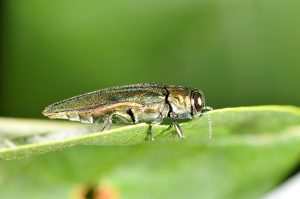
An adult emerald ash borer feeds off a leaf. (Purdue University Department of Entomology photo/John Obermeyer)
Article by Pat Munsey, taken from KokomoPerspective.com:
The ash borer beetle is a scourge that has spread across the Midwest for more than a decade, laying waste to trees as it burrows and feeds. Now it is in Howard County.
Ash trees in several areas of the community are showing signs of the inevitable death that comes with infestation, but citizens can stop the pest in its tracks.
According to the Indiana Department of Natural Resources (DNR), the beetles were first discovered in Indiana on April 21, 2004. Since that time, it has steadily spread across the state with heavy concentrations in the northeast. Evidence of the insects’ arrival locally began appearing two years ago, and according to Kristy McNeil, an associate at Salsbery Garden Center, it is vital that people take action now to prevent further damage.
Resources
Emerald Ash Borer, Indiana Department of Natural Resources (IDNR)
Emerald Ash Borer in Indiana, Purdue Extension
 Historically, forests dominated the land of Indiana, covering about 85% of Indiana prior to European contact and settlement. However, now less than 25% of our forested areas remain—and more than 85% of those areas are privately owned.
Urban woodlots are steadily in decline, both in number and size. The development of businesses and residential areas, highway construction and expansion and increases in cropland are all causes of destruction and reduction of these woodlots. When privately owned woodlots drop below 10 acres in size, they receive much less support and can’t qualify for the Classified Forest and Wildlands program through the Indiana Department of Natural Resources, forcing their owners to manage them on their own.
Owners of woodlots of all sizes can help protect and improve them with good management and stewardship practices. Adding trees and other plant life, taking care of diseases and other pests and harvesting products when needed are all great steps towards urban woodlot preservation.
The benefits of urban woodlots don’t just help their owners but the entire community around them. Forested areas reduce the impact of rainfall on land, decreasing flooding, erosion and the removal of topsoil. The quality of water is improved as sediment and pollutants are filtered out. Soil is added as plants decay. Air is improved as plants soak in carbon dioxide and other unwanted chemicals. Trees provide shade and reduce wind speed, reducing the need for burning fuel. And of course, woodlots provide habitats that many animals depend on.
Urban woodlots really are crucial for our environment. As it decreases around us, it is important that we know what we can do to protect and improve what we have left. Owners of private urban woodlots must stay informed to keep their property not only beneficial to them economically, but beneficial to our society as a whole.
For more information, view the free publication download titled Indiana’s Urban Woodlots.
Resources
Indiana’s Urban Woodlots, The Education Store, Purdue Extension Resource Center
Urban Forestry – Got Nature?, Department of Forestry and Natural Resources, Purdue University
The Indiana Woodlot Owner Series, Indiana Department of Natural Resources (IDNR)
Indiana Arborist Association (IAA)
Lindsey Purcell, Chapter Executive Director
Indiana Arborist Association
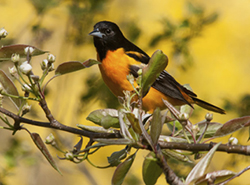 The focus of forest science is increasingly shifting to the management of forests as complex systems rather than as simple agricultural landscapes—with a much greater appreciation for the interactive ecosystem processes. In addition, now for many forest landowners, the ecological value of their land is at least as important as the economic return. It is, therefore, vital to understand how forest management affects not only timber production, but also the overall function of forested ecosystems.
This new publication, Breeding Birds and Forest Management: the Hardwood Ecosystem Experiment and the Central Hardwoods Region, summarizes the effects of forest management on bird species in the Midwest based on data collected as part of the Hardwood Ecosystem Experiment (HEE) in southern Indiana and other studies. We hope this summary provides a basis for understanding interactions between forest management and forest birds as well as guidelines for bird-friendly forest management in Indiana.
Resources
Hardwood Ecosystem Experiment
Hardwood Tree Improvement and Regeneration Center (HTIRC)
The Education Store, Purdue Extension Resource Center
Forests and woodlots are constantly changing. To get the most out of your property to meet your wildlife, recreational, aesthetic or economic goals, some type of regular management will be necessary. Getting the most out of your woods can be a challenge on your own. Fortunately, there are many resources available to help you.
A professional can help plot the best course of action for meeting your ownership objectives while keeping your woods healthy. Your selection of a professional depends on what services you need and the size of your property. Ten (10) acres is a threshold for where you go in Indiana.
More than 10 acres
- The Directory of Professional Foresters is a service provided by the Indiana Forestry & Woodland Owners Association. For this directory, the term “professional forester” means a person who has successfully completed a four year college level curriculum accredited by the Society of American Foresters and has received a Bachelor’s Degree in Forestry from that accredited institution.
- The Indiana DNR Division of Forestry provides private forestland management assistance through District Foresters who are professionally trained to manage forestland for the many resources it can provide. District foresters administer both state and federal programs that provide technical assistance, property tax incentives, and cost-sharing incentives for applying practices that accomplish sustainable management.
- Foresters can help answer some of your tax questions. The National Timber Tax Website is another good resource. The National Timber Tax Website was developed to be used by timberland owners, as well as a reference for accountants, attorneys, consulting foresters and other professionals who work with timberland owners regarding the tax treatment of timber related activities.
Less than 10 acres and Backyards
- The Indiana Division of Forestry has a woodlot owner series that provides basic information for anyone who owns a small woodlot or backyard woods.
- Because of the scale of operation, it can be difficult to get professional services from a forester for small woodlots. In most cases, tree harvests and other improvement cuts are set up directly with loggers. The Indiana Hardwood Lumberman’s Association has a Find a Logger database online.
Selling Timber
Selling timber from yards or small tracts of woodland present some challenges.
- Three Purdue publications provide suggestions on steps to take when selling timber:
Marketing Timber, The Education Store, Purdue Extension Resource Center.
Tips on How to Get the Most from Your Timber Harvest, The Education Store. - Some consulting and industrial foresters may be willing to assist you on small properties. Find foresters in your area at: www.findindianaforester.org.
- In some cases, tree harvests are conducted directly with loggers. The Indiana Hardwood Lumberman’s Association has a Find a Logger database online.
Forest Management for the Private Woodland Owner Course
The Forest Management for the Private Woodland Owner course provides forest landowners eight learning sessions designed to introduce them to the biology and management of forests, and the resources and professional assistance they can access to help them form their property management goals and pursue their objectives. Field experiences are integrated into the course to provide in-person, hands-on connections with the biology and management of Indiana forests. Connections made during the course and field tours introduce landowners to the foresters and other natural resource professionals who can help them with the management of their forestland. This course is offered in-person at varying locations around the state and also as an online version with live question-and-answer sessions. Courses normally run between January and April, so check the Purdue Extension – FNR Got Nature Blog and Upcoming Events sites for dates and registration information.
Explore the Rich World of Oaks with Purdue FNR Extension & Partners
Discover a comprehensive suite of oak-focused resources curated by Purdue Forestry and Natural Resources Extension to support landowners, educators and natural resource professionals. From expert-reviewed publications and engaging videos to insightful webinars and podcasts, our oak resources cover everything from species identification and forest stewardship to wildlife habitat management and oak regeneration techniques, Explore the Rich World of Oaks.
Get connected with other Indiana landowners!
Woodland owners often learn the most from people who are in their situation – fellow woodland owners. Several groups provide different ways to connect and have different resources. Explore the following to find out which group(s) fits your needs.
- Indiana Chapter, American Chestnut Foundation
- Indiana Forestry & Woodland Owners Association
- Indiana Tree Farm Program
- Indiana Woodland Steward Institute, Inc.
- Walnut Council
Invasive Species
Invasive species present a serious threat to the health and productivity of trees and forests. You can learn about recognition, reporting, and management of the invasive species found in forests at these sites:
- Purdue University Report Invasives
- Purdue FNR Got Nature Blog post, What Are Invasive Species and Why Should I Care?
- Indiana Invasive Species Council
Forestry Videos on Purdue Extension – FNR YouTube Channel
- Forests and Timber Playlist
- Invasive Species Playlist
- ID That Tree Playlist
- Subscribe to Purdue Extension – Forestry & Natural Resources (FNR) YouTube Channel and receive notice of when a new video is posted.
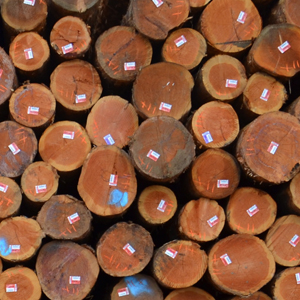 Article shared in NASF May 15, 2015, E-Newsletter
Lloyd Alter, Managing Editor
TreeHugger.com
As we continue to burn through our nonrenewable resources at an alarming rate, it is important that we never underestimate what we can do with our resources that can be replenished. One of these, wood, is an extremely valuable material but has been underutilized in construction for one big reason: fires. Every so often, a wood structure like the 188-unit apartment complex in Richmond, BC, burned down in 2010 goes up in a blaze and hinders the support of timber construction in a big way. While this is a valid concern, there are several things to consider before abandoning hope. Most of the big building fires covered by the news have been on uncompleted buildings still under construction. This means that fire suppression systems haven’t been installed yet, and oftentimes incomplete floors lacking fire-retardant drywall, or walls of any kind, give the fire huge ventilated areas to spread. This is hardly fair to mark these fires as a failure of wooden construction. In completed buildings, close to 80 percent of fires are contained to the rooms they are started in.
Furthermore, fire damage isn’t limited to wooden buildings. Structures made of concrete, steel or other construction materials can still weaken and collapse under the heat of a fire. In fact, heavy timber resists fire very well, burning slowly and creating a layer of char that helps to preserve the structural integrity of the inside wood.A recent advancement in timber technology to note is Cross-Laminate Timber, or CLT. CLT is made from stacks of industrially dried and fully glue-coated lumber. It is exceptionally strong, multi-purpose and lightweight. Construction using CLT is quick because it is easy to prefabricate and transport. Like heavy timber, CLT produces a layer of char when burned, and when used in construction, engineers factor in this layer and use enough wood to allow charring to form while still maintaining enough internal wood to be structurally sound. Also cosmetically, CLT looks pleasing and can be left exposed, reducing building cost. CLT has been considered the future of wood-based construction and for good reason.
So with some of the negative stigma of wooden construction debunked and the values of timber buildings explained, this leaves the biggest value of it all to think about: renewability. Timber is the only 100% renewable material for building construction. One billion cubic meters of logs are produced each year in North America and Europe alone, creating 200 million cubic meters of engineered timber and done in a careful way so that forests maintain their size. This is enough material to build 150,000 offices a year. Timber also locks up carbon that was absorbed by the tree during its growth, reducing pollution. As we look to the future, we should look to the trees. It’s time for timber construction.
Resources
NASF May 15, 2015 E-Newsletter, National Association of State Foresters
Making the Case for Wood Construction, Treehugger
Timber Offices: The Time Has Come, ARUP
The Education Store, Purdue Extension Resource Center (search “timber”)
What is Cross Laminated Timber? American Wood Council
2014 Indiana Forest Products Price Report and Trend Analysis, Indiana Department of Natural Resources
National Association of State Foresters
 Indiana Department of Natural Resources (INDNR) recently received an inquiry asking what to do with an abandoned animal. The INDNR web resource titled Orphaned and Injured Animals has steps to follow as you decide if the animal is truly abandoned.
Got Nature? Orphaned Animals author Brian MacGowan, extension wildlife specialist, Purdue University, says, “In most cases, the young animal is simply ‘spreading its wings’ and exploring or mom simply left it to get something to eat. Fawn deer are programmed to hide and remain motionless while mom is away. The fact is wildlife rarely abandons their young. They may leave briefly only to return.
Remember that you should never handle wild animals unless absolutely necessary. Any animal can bite you, and many harbor diseases and pests that can be transmitted to people.
In Indiana, wildlife rehabilitators have necessary state and federal permits to house and care for sick or injured wild animals. If you think you have found a sick or injured animal, you can find a list of licensed Wild Animal Rehabilitators in your area on the DNR Division of Fish and Wildlife’s website.”
Resources
Mammals of Indiana, J.O. Whitker and R.E. Mumford
Common Indiana Mammals, R.N. Chapman and R.N. Williams, publication number FNR-413-W
Indiana DNR Orphaned and Injured Animals
The Education Store (search keywords to find the resources you need)
 As we turn back time and take a look at the first eight years of this 100 year project, we can then help the existence and growth of Indiana trees and wildlife in the future. This new publication, The Hardwood Ecosystem Experiment: Indiana Forestry and Wildlife, shares imperative information to aid in the growth of tree species that are producing no seedlings.
Many of Indiana’s forests, especially in the southern part of the state, have been dominated by oak and hickory trees for thousands of years. In recent decades, forest researchers and managers in the east-central United States have recognized that these tree species are not replacing themselves with new seedlings. Recognizing this issue, many stakeholders concerned with the status of Indiana’s forests convened in the late 1990s to determine the best approach to understanding this transition and to develop strategies for maintaining our oak-hickory ecosystems. As a result of the meetings of this working group, the Hardwood Ecosystem Experiment (HEE) was initiated in 2006. The HEE is intended to last for 100 years because many of the changes that occur in these forests happen over decades. In fact, many of the strongest effects of the transition from oak and hickory forests may not even be observable until we near the end of the project. This is an analysis of the first eight years of the project.
Resources
Hardwood Ecosystem Experiment
Hardwood Tree Improvement and Regeneration Center (HTIRC)
The Education Store, Purdue Extension Resource Center
Question: I just finished cutting down the last of my backyard oaks due to oak wilt. I have also lost several redbuds due to verticillium wilt. I would like to replant a tree in the spot where the oaks and redbuds were, but I would like some advice on the most resistant tree I can find. I live in Crown Point, IN, primarily clay, on a slope, with heavy brush on my property lines. I know most people would say NEVER plant again once wilt has been detected, but I thought I might ask before giving up (and moving all my shade plants). Do you have information/research on an appropriate and sturdy replacement shade tree?
Response: In general, replanting of oaks in an old oak wilt disease center does not result in disease occurrence in the replanted trees. Root grafts are not thought to form with the dead, diseased oaks. It does not appear that the fungus is transmitted outside the primary phases of transmission: vector-borne via insects (e.g., Nitidulidae) and xylem-limited disease spread via live root grafts of infected trees (MacDonald et al., 2009). This does not mean, of course, that the young oak trees as they grow and age over time are immune to oak wilt; rather, it simply means that oak wilt is not sitting dormant in the soil waiting to attack newly planted or germinated oak seedlings.

Thus, it is only through insect spread from active oak wilt centers in the vicinity that disease would occur in replanted oaks. Healthy oak trees are not susceptible to oak wilt in an infected area. Bur oak, white oak and other members of the white oak family are resistant to the fungus and can be planted in oak wilt centers. For additional prevention measures, plant tree species other than Oaks to guarantee no infection from the disease.
Resources
Diseases in Hardwood Tree Plantings, The Education Store
Tree Installation: Process and Practices, The Education Store
Forest Health Problems Impacting Indiana Forest Resources, Indiana Department of Natural Resources
Lindsey Purcell, Urban Forestry Specialist
Department of Forestry and Natural Resources

Recent Posts
- Popular Landscape Shrub is Invasive
Posted: October 15, 2026 in Alert, Forestry, Forests and Street Trees, Invasive Plant Species, Plants, Woodlands - Purdue Extension’s Regional Teams Are Here: Connecting Communities with Expertise and Opportunity
Posted: October 14, 2026 in Community Development, Forestry, Forests and Street Trees, Gardening, How To, Timber Marketing, Urban Forestry, Wildlife, Woodlands - Why Do Our Trees Go From Green Leaves to Different Colors?
Posted: in Forestry, Forests and Street Trees, Urban Forestry, Woodlands - Distinguishing Dogwoods
Posted: October 13, 2026 in Forestry, Urban Forestry, Wildlife, Woodlands - It’s Not Too Early To Start Planning For Spring Tree Planting
Posted: in Forestry, How To - Can I Plant Trees in the Fall?
Posted: October 12, 2026 in Forestry, How To, Land Use, Plants, Urban Forestry, Wildlife - Burning for Benefits: Why Fire Belongs in Indiana
Posted: in Forestry, Safety, Woodlands - Disease May Cause Wilting and Eventual Death of Certain Trees and Shrubs, Purdue Landscape Report
Posted: October 5, 2026 in Disease, Forestry, Plants - October Is Firewood Month: Protect Indiana’s Forests by Making Smart Choices
Posted: October 1, 2026 in Forestry, Forests and Street Trees, How To, Invasive Insects, Urban Forestry - Woodland Flowers of Late Summer
Posted: September 14, 2026 in Forestry, Gardening, Wildlife, Woodlands
Archives
Categories
- Alert
- Aquaculture/Fish
- Aquatic/Aquaculture Resources
- Ask the Expert
- Christmas Trees
- Community Development
- Disease
- Drought
- Forestry
- Forests and Street Trees
- Gardening
- Got Nature for Kids
- Great Lakes
- How To
- Invasive Animal Species
- Invasive Insects
- Invasive Plant Species
- Land Use
- Natural Resource Planning
- Nature of Teaching
- Plants
- Podcasts
- Ponds
- Publication
- Safety
- Spiders
- Timber Marketing
- Urban Forestry
- Webinar
- Wildlife
- Wood Products/Manufacturing
- Woodland Management Moment
- Woodlands