 Purdue University - Extension - Forestry and Natural Resources
Got Nature? Blog
 A new sing-along music video has been added to the Help the Hellbender website. This provides a fun and catchy way for teachers and students to learn about hellbenders and see the researchers hard at work helping add to their numbers.
The Help the Hellbender website also has other resources for teachers and students including lesson plans, coloring pages and a Hellbender Havoc video game. Check out the site and sing along with the hellbenders!
Resources
Help the Hellbender, Purdue Extension
Purdue Partners With Indiana Zoos for Hellbender Conservation, Purdue Agriculture News
The Nature of Teaching: Discovering the Watershed, The Education Store, Purdue Extension Resource Center
Amphibians & Reptiles, Indiana Department of Natural Resources
Purdue Extension-Forestry and Natural Resources
 Historically, forests dominated the land of Indiana, covering about 85% of Indiana prior to European contact and settlement. However, now less than 25% of our forested areas remain—and more than 85% of those areas are privately owned.
Urban woodlots are steadily in decline, both in number and size. The development of businesses and residential areas, highway construction and expansion and increases in cropland are all causes of destruction and reduction of these woodlots. When privately owned woodlots drop below 10 acres in size, they receive much less support and can’t qualify for the Classified Forest and Wildlands program through the Indiana Department of Natural Resources, forcing their owners to manage them on their own.
Owners of woodlots of all sizes can help protect and improve them with good management and stewardship practices. Adding trees and other plant life, taking care of diseases and other pests and harvesting products when needed are all great steps towards urban woodlot preservation.
The benefits of urban woodlots don’t just help their owners but the entire community around them. Forested areas reduce the impact of rainfall on land, decreasing flooding, erosion and the removal of topsoil. The quality of water is improved as sediment and pollutants are filtered out. Soil is added as plants decay. Air is improved as plants soak in carbon dioxide and other unwanted chemicals. Trees provide shade and reduce wind speed, reducing the need for burning fuel. And of course, woodlots provide habitats that many animals depend on.
Urban woodlots really are crucial for our environment. As it decreases around us, it is important that we know what we can do to protect and improve what we have left. Owners of private urban woodlots must stay informed to keep their property not only beneficial to them economically, but beneficial to our society as a whole.
For more information, view the free publication download titled Indiana’s Urban Woodlots.
Resources
Indiana’s Urban Woodlots, The Education Store, Purdue Extension Resource Center
Urban Forestry – Got Nature?, Department of Forestry and Natural Resources, Purdue University
The Indiana Woodlot Owner Series, Indiana Department of Natural Resources (IDNR)
Indiana Arborist Association (IAA)
Lindsey Purcell, Chapter Executive Director
Indiana Arborist Association
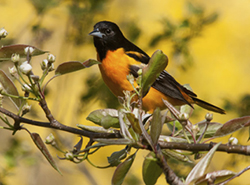 The focus of forest science is increasingly shifting to the management of forests as complex systems rather than as simple agricultural landscapes—with a much greater appreciation for the interactive ecosystem processes. In addition, now for many forest landowners, the ecological value of their land is at least as important as the economic return. It is, therefore, vital to understand how forest management affects not only timber production, but also the overall function of forested ecosystems.
This new publication, Breeding Birds and Forest Management: the Hardwood Ecosystem Experiment and the Central Hardwoods Region, summarizes the effects of forest management on bird species in the Midwest based on data collected as part of the Hardwood Ecosystem Experiment (HEE) in southern Indiana and other studies. We hope this summary provides a basis for understanding interactions between forest management and forest birds as well as guidelines for bird-friendly forest management in Indiana.
Resources
Hardwood Ecosystem Experiment
Hardwood Tree Improvement and Regeneration Center (HTIRC)
The Education Store, Purdue Extension Resource Center
 Mussels are a critical part of the ecosystem and work hard to keep our rivers clean. The Tippecanoe River hosts over 45 species of mussels, including six endangered ones. Mussel populations are in decline after being harvested by the millions in the 19th and 20th centuries. In an effort to restore the mussel population and keep the Tippecanoe River clean for wildlife populations as well as recreational activity, Purdue Extension has launched a new website about mussels called Heart of the Tippy.
This site provides detailed information on mussels and what we can do to help them. For example, carrying your canoe instead of dragging it over rocky-bottomed shallow water can save mussels from being crushed. It also offers an area where visitors can take a pledge to improve the Tippecanoe’s water quality and protect its mussel habitat.
Take the pledge today and help to protect the mussels and keep the Tippecanoe clean!
Resources
Extension Website Presents Ways to Help Protect Indiana’s Endangered Mussels, Purdue Agriculture News
Tippecanoe River, Indiana Department of Natural Resources

Recent Posts
- ID That Tree: Sugarberry
Posted: December 12, 2025 in Forestry, Wildlife, Woodlands - Powering Rural Futures: Purdue’s Agrivoltaics Initiative for Sustainable Growth
Posted: December 9, 2025 in Community Development, Wildlife - Learn How to Control Reed Canarygrass
Posted: December 8, 2025 in Forestry, Invasive Plant Species, Wildlife - Benefits of a Real Christmas Tree, Hoosier Ag Today Podcast
Posted: December 5, 2025 in Christmas Trees, Forestry, Woodlands - Succession Planning Resource: Secure your Future
Posted: December 2, 2025 in Community Development, Land Use, Woodlands - A Woodland Management Moment: Butternut Disease and Breeding
Posted: December 1, 2025 in Forestry, Forests and Street Trees, Woodland Management Moment, Woodlands - Controlling Introduced Cool-Season Grasses
Posted: in Forestry, Invasive Plant Species, Wildlife - Red in Winter – What Are Those Red Fruits I See?
Posted: in Forestry, Plants, Urban Forestry, Wildlife, Woodlands - Managing Common and Cut Leaved Teasel
Posted: November 24, 2025 in Forestry, Invasive Plant Species, Wildlife - Extension Team Wins Family Forests Comprehensive Education Award
Posted: November 21, 2025 in Forestry, Urban Forestry, Wildlife, Woodlands
Archives
Categories
- Alert
- Aquaculture/Fish
- Aquatic/Aquaculture Resources
- Ask the Expert
- Christmas Trees
- Community Development
- Disease
- Drought
- Forestry
- Forests and Street Trees
- Gardening
- Got Nature for Kids
- Great Lakes
- How To
- Invasive Animal Species
- Invasive Insects
- Invasive Plant Species
- Land Use
- Natural Resource Planning
- Nature of Teaching
- Plants
- Podcasts
- Ponds
- Publication
- Safety
- Spiders
- Timber Marketing
- Uncategorized
- Urban Forestry
- Webinar
- Wildlife
- Wood Products/Manufacturing
- Woodland Management Moment
- Woodlands