Cost Sharing Guidelines
Purdue University – Sponsored Program Services
Last updated April 2026
Introduction to Cost Sharing
Overview
Cost sharing occurs when part of a sponsored project isn't paid for by the sponsor but is instead covered by other resources from a department, college, research office, or a third party.
Another way of saying this is that cost sharing is the financial and non-financial support contributed by Purdue or third parties to sponsored projects.
This document explains the guidelines and steps for managing cost share commitments effectively. The main goal is to ensure compliance with federal regulations and institutional policies while getting the most out of sponsored projects.
Quantified cost sharing, whether provided by Purdue Cost Sharing or Non-Purdue Cost Sharing, is subject to audit and is a condition of the award when included in a proposal or award budget.
Therefore, it is crucial that any cost sharing commitments are accurately reflected in the project accounts once an award is received.
According to 2 CFR 200.306, Cost sharing, voluntary committed cost sharing is generally not expected under Federal research grants and should not be used as a factor during the merit review of applications unless specified by Federal statutes or agency regulations. For all Federal awards, the Federal agency or pass-through entity must accept any cost sharing funds, including cash and third-party in-kind contributions, as part of the recipient's or subrecipient's contributions to a program where the funds are:
Identifying cost sharing requirements (Federal awards). Cost sharing or matching should only be proposed when it is required by the sponsors Notice of Funding Opportunity (NOFO) or when the NOFO explicitly encourages voluntary committed cost sharing and confirms it will be evaluated as part of the merit review. If the NOFO does not state that cost sharing is required or evaluated, do not include quantified voluntary committed cost sharing in the proposal; instead, describe non-binding institutional support in the narrative as appropriate (see Institutional Support/Leverage).
-
Are verifiable in the recipient's or subrecipient's records
-
Are not included as contributions for any other Federal award
-
Are necessary and reasonable for achieving the objectives of the Federal award
-
Allowable under subpart E
-
Are not paid by the Federal Government under another Federal award, except where the program’s Federal authorizing statute specifically provides that Federal funds made available for the program can be applied to cost sharing requirements of other Federal programs
-
Are provided for in the approved budget when required by the Federal agency; and
-
Conform to other applicable provisions of this part
Audience
This guideline is intended for Sponsored Program Services (SPS) Pre-Award and Post-Award staff, and business offices involved in the administration of sponsored projects.
Purpose
The purpose of this document is to provide a comprehensive framework for requesting, awarding, and closing out cost share commitments. By following these guidelines, departments
can ensure that cost share obligations are met, properly documented, and reported, thereby maintaining high standards of account management and stewardship of funds.
Key Processes
-
Requesting Cost Share :
-
Understand the requirement and gather necessary commitments.
-
Document and approve cost share commitments through the appropriate channels.
-
-
Cost Share Awarded :
-
Set up cost share accounts based on the award notice terms and conditions.
-
Track and monitor cost share expenditures throughout the project lifecycle.
-
-
Cost Share Closeout :
-
Verify that cost share commitments have been met.
-
Document and report cost share commitments to the sponsor.
-
Benefits of Cost Sharing
Cost sharing can enhance the impact of projects by leveraging institutional or third-party resources when required by the sponsor or when explicitly evaluated as part of the sponsors review criteria. Because quantified cost sharing included in the proposal becomes a binding, auditable commitment upon award, voluntary committed cost sharing should generally be avoided unless it is mandatory or the funding opportunity explicitly states that voluntary committed cost sharing will be evaluated.
Compliance and Risks
Adhering to cost share guidelines is essential to avoid non-compliance risks, which can lead to financial penalties and jeopardize future funding opportunities. This document provides detailed instructions on compliance requirements and the roles and responsibilities of parties involved.
Cost Sharing Terminology
The section below includes definitions of commonly used terms related to cost sharing.
Cost Sharing by Commitment Type
Mandatory Cost Sharing - Mandatory cost sharing is cost sharing that is legally required by the awarding agency as a condition of the award. This type of cost sharing is auditable and reportable. It must be documented and is often specified in the application guidelines or award terms.
Voluntary Committed Cost Sharing - Voluntary committed cost sharing refers to cost sharing that is voluntarily proposed and formally committed in a proposal and becomes a binding commitment by the institution upon award. This type of cost sharing is not required by the sponsor but is included voluntarily by the applicant in the proposal's budget or narrative.
Voluntary Uncommitted Cost Sharing - Voluntary uncommitted cost sharing includes institutional support provided to the project but not included in the proposal. These resources are not pledged formally in the proposal but are subsequently made available upon receipt of the award and are not binding or auditable.
An example of recording voluntary cost sharing is when allowable expenditures need to be removed from a project and moved to unrestricted allocations. These expenditures should be moved using Commitment Item 527000 – Voluntary Cost Sharing. Utilizing this commitment item ensures that the expenditure moved off the grant can be reallocated back to the grant if other expenditures are later identified as unallowable.
Cost Sharing by Source/Mechanism
Purdue Internal Cost Share – represents non-federal cash expenditures funded by Purdue and committed as cost sharing for a sponsored project. These are allowable, allocable, documented costs recorded in Purdue’s financial system. Purdue cash match may include the value of University-paid personnel effort not reimbursed by the sponsor and direct project costs—such as salaries, fringe benefits, travel, or equipment—paid from unrestricted University funds.
Release Time - Release time is Purdue-funded salary for effort devoted to the project but not charged to the sponsor. This means that the institution continues to pay the salary of the individual while they are released from their regular duties to work on the sponsored project. This time is documented and reported as a cost share commitment.
Salary Cap - Salary cap cost sharing occurs when salary amounts charge to a grant but are above a sponsor-imposed cap (e.g., NIH). The portion of the salary that exceeds this cap is not covered by the sponsor and must be funded by the institution. This is only reported as cost share if required or allowed by the sponsor.
In-kind Match non-cash contributions that directly benefit a sponsored project and do not involve payment or reimbursement. These contributions may be provided by the recipient (internal) or by third parties and must be necessary, allowable, non-federal, and specifically identifiable to the sponsored project. Each contribution may be counted only once and may not be used to meet cost sharing requirements on multiple projects.
Examples of in-kind contributions include donated professional or volunteer services, donated or loaned equipment, donated supplies, or donated use of space. All in-kind contributions must be valued at fair market value at the time they are provided and must be adequately documented.
Subrecipient Match (Third-Party Cash Match) represents non-cash cost sharing provided by a subrecipient under the terms of a subaward agreement. The subrecipient institution is responsible for tracking, fulfilling, and documenting its own cost sharing and must be able to provide supporting documentation within a reasonable timeframe upon request. Subrecipient
in-kind contributions must meet all federal cost sharing requirements and must not be supported by other federal funds.
External Sponsored Match (Third—Party Cash Match) represents cash cost sharing provided by a separate, non-federal sponsored project in support of another award. The source award must permit use of funds for cost sharing, and the cash contribution must be clearly documented,
non-federal, and directly allocable to the benefiting project.
Facilities and Administrative (F&A) Cost Sharing
Unrecovered F&A – Facilities and Administrative (F&A) not recovered due to sponsor-imposed rate limitations, may be used as cost share if permitted.
Contributed F&A - Contributed F&A costs, also known as indirect costs, refer to the portion of the F&A costs associated with Purdue’s cost share direct costs that are not reimbursed by the sponsor but are instead covered by the institution. These are calculated using the negotiated rate. This can include costs such as utilities, maintenance, and administrative services that support the research environment. An example of contributed F&A is when the sponsoring agency does not allow Purdue’s negotiated F&A rate. The difference between what is allowed, and Purdue’s rate may be included as cost sharing as contributed F&A.
Not Cost Share
Institutional Support/Leverage - Institutional support or leverage refers to institutional resources mentioned in the proposal narrative or budget justification but not specified as mandatory by the sponsor. These are not allocated, not auditable and not reportable. This is often communicated to demonstrate the institution's capability to meet the project objectives. Such resources can be described quantitatively but they are not allocated to a specific project. Institutional support/leverage is communicated to demonstrate Purdue’s capacity or capability.
Criteria for the Allowability of Cost Share
To ensure that cost sharing commitments are compliant, auditable, and beneficial to the University and its sponsored projects, all cost sharing must meet the following criteria:
-
Verifiable and Auditable :
Cost sharing must be documented in a manner that is both verifiable and auditable within Purdue University’s official accounting system. All supporting documentation should clearly demonstrate that the cost share was incurred and allocated to the appropriate project.
-
Unique to the Project :
Cost sharing contributions must not be used to satisfy cost sharing requirements for any other federally assisted project or program. Each cost share commitment must be distinct and dedicated to the specific project for which it was proposed.
-
Necessary and Reasonable :
The cost sharing must be necessary and reasonable to accomplish the objectives of the project or program. Contributions should directly support the project’s goals and not exceed what is required for successful completion.
-
Allowable Under Applicable Policies :
All cost sharing must comply with the cost principles outlined in 2 CFR 200 (Uniform Guidance), the terms and conditions of the specific award agreement, and Purdue University’s internal costing policies. Only costs that are allowable, allocable, and reasonable under these guidelines may be included as cost share.
-
Funded from Non-Federal Sources :
Unless specifically authorized by Federal statute, cost sharing must be funded from non-Federal sources. Federal funds cannot be used to meet cost sharing requirements on other federally sponsored projects.
-
Incurred During the Award Period :
All cost sharing expenses must be incurred during the official term of the agreement. Costs incurred outside the project period are not eligible as cost share.
Cost Share Methods
Cost sharing commitments can be structured in several ways, depending on the requirements of the sponsor and the nature of the project. The three primary methods are:
-
Percent Effort
This method commits a specific percentage of an individual’s effort (such as faculty or staff time) to the project as cost share. The percent effort is tracked and documented throughout the project period to ensure the committed level is met. At closeout, the account is reviewed to confirm that the committed percent of effort was charged; if so, the budget can be reduced accordingly.
-
Dollar Commitment
A dollar commitment specifies a set monetary amount to be contributed as cost share. This may include salaries, equipment, supplies, or other allowable costs. The committed amount must be spent and documented as cost share during the project period. If the dollar commitment is not met, eligible expenses may need to be moved from sponsor funds to the cost share account, and exceptions may require sponsor approval.
-
Percent of Sponsor Award
This method commits a percentage of the total sponsor award as cost share. The required cost share is calculated as a proportion of the sponsor’s funding. At project closeout, if the percent commitment has been met—even if there is a remaining balance—no further action is needed. If the percent commitment is not met, expenses may need to be reallocated from sponsor funds to cost share, and the situation should be handled as with a dollar commitment.
These methods provide flexibility in meeting sponsor and institutional requirements, but all cost share commitments must be tracked, documented, and reviewed to ensure compliance at project closeout.
Funding University Cost Sharing
University cost sharing commitments must be funded by non-Federal sources. These sources include University general funds, gifts funds, PRF funds and non-Federal sponsored program funds. In general, the responsibility for funding the University cost sharing commitment lies with the department/school. The exceptions are as follows:
-
Funding to meet special or unusual cost sharing needs has been budgeted by the Office of Research (OOR). Requests for research cost sharing funds are initiated from the OOR Cost Sharing website or by emailing OR contact Kristyn Jewell, kristynj@purdue.edu, (765)
494-2876; Pre-Award Center contact: Amanda Hamaker, ahamaker@purdue.edu, (765) 496-9647; or Business Office contact: Erica Cox, ericacox@purdue.edu; (765) 496-7307.
-
PI’s will need to provide general information related to PI and co-PI faculty, granting agency, participating units, category of cost sharing requested, and external partners.
-
Requests to department, school, and colleges should be in place prior to obtaining OR approvals.
-
The OR will assist investigators and department heads in developing a cost sharing package for each proposal. All requests for cost sharing from the OR should originate with
the PI in collaboration with their department head and associate dean for research in accordance with intra-collegiate/school/department cost sharing processes or procedures.
-
Contact by the department, school and college with the OR must be initiated early for the required negotiations to take place.
-
The Facilities and Administrative costs applicable to mandatory cost sharing is funded by a fund source that is chargeable for fringe benefits and/or Facilities and Administrative costs, then that fund source will be responsible for the fringe benefits and/or Facilities and Administrative costs associated with the cost sharing.
Cost Sharing Roles & Expectations
In general, cost sharing is the responsibility of the units proposing the work. However, in some instances, the Office of Research, SPS Pre-Award, SPS Post Award or departmental business offices may be involved in the processing and tracking of cost share. The roles and responsibilities shown below ensure that cost sharing is managed effectively and in compliance with institutional and sponsor requirements.
Timeline expectation (proposal development). Cost sharing discussions and approvals should begin as early as possible and involve the PI(s), department head(s), associate dean(s) for research, and SPS/Office of Research as applicable, but no later than three weeks prior to the proposal due date (earlier for complex or high-dollar proposals).
-
Office of Research :
a Facilitates cost sharing approvals during proposal development and assists in administering cost-sharing commitments for awards. The office also provides funds for partial support of sponsored program cost sharing. By centralizing the function, the Office of Research helps to ensure that cost-sharing is targeted to Purdue's strategic research goals.
-
Associate Dean for Research (ADR) :
-
Ensures that the college follows best practices in the management and oversight of funded research initiatives.
-
Responsible for stimulating new and continued research activity
-
-
Principal Investigator (PI):
-
PIs and Co-PIs are responsible for contacting their respective Department Heads, Deans, and the Office of Research if they are requesting cost share from these units. See Cost Sharing - Office of Research for more details.
-
Initiate cost sharing discussions early and secure any required unit commitments/approvals no later than three weeks prior to the proposal due date (earlier for complex or high-dollar proposals).
-
-
Sponsored Program Services Pre Award (SPS)
-
Pre-Award Specialist :
-
Communicate with the PI to create the budget and gather required documents.
-
Works with the Office of Research on cost share commitments.
-
Works with Finance staff and/or the applicable deans or department heads on college and/or department commitments.
-
Works with PIs and Co-PIs to obtain and document cost share commitments.
-
-
Pre-Award Manager:
-
Reviews the cost share commitments while reviewing the proposal and submits the proposal to the sponsor.
-
Reviews and confirms the cost share is required by the sponsor prior to submission.
-
Confirm cost share commitments and required approvals are complete no later than three weeks prior to the proposal due date (earlier for complex or high-dollar proposals).
-
-
-
Departmental Business Office Staff :
-
Proposal Time
-
Works with the Office of Research on cost share commitments as needed.
-
-
Life of an Account
-
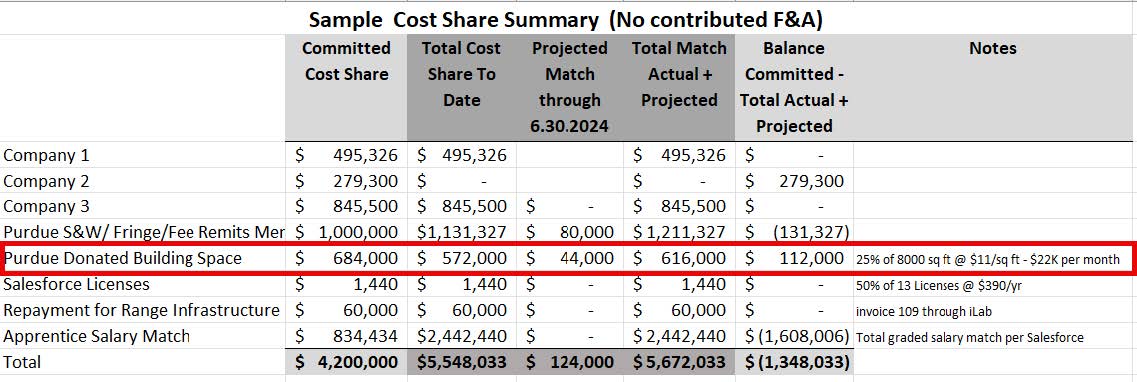
Tracks actual cost share to committed cost share throughout the life of the project. See examples of complex cost sharing commitment spreadsheets in Appendix A.
-
Works with PIs and Co-PIs to ensure cost share commitments, including third-party or memo match cost sharing, are met and properly documented during the life of the project.
-
Obtains documentation of memo match on an annual basis, sometimes more frequently depending on reporting needs. Note: Does not include Subrecipient cost share.
-
Works with SPS Account Management staff to gather cost share figures for reports submitted to the sponsor.
-
-
Closing Time
-
Works with PIs and Co-PIs to ensure cost share commitments, including third-party or memo match cost sharing, are met and properly documented at the end of a project.
-
Ensure backup documentation is present and matches any cost sharing figures shared with the sponsor.
-
-
-
Sponsored Program Services Post Award (SPS) :
-
Set Up Team (SU)
-
Establishes the cost share accounts and gathers the cost share budget allocations from the business office.
-
-
Account Management Team (AM)
-
Completes the Cost Share Commitment Tab in SAP to ensure accurate cost sharing is being tracked and reported.
-
Uploads the cost share budget in SAP.
-
Ensures that F&A (Facilities and Administrative) costs are not budgeted or charged to internal GM funds associated with cost sharing but are calculated for reporting and billing purposes
-
Enters Reporting Requirements for Memo Match at least annually (or more frequently per sponsor requirement) to ensure documentation is maintained between the business office and SPS.
-
Works with Departmental Business Office staff to gather cost share figures for reports submitted to the sponsor.
-
Enters the contributed F&A into the Cost Share Commitment Tab so that it is calculated and tracked.
-
Enters Memo Match amounts committed into the Cost Share Commitment Tab in SAP.
-
Enters Memo Match amounts expended into the Cost Share Commitment Tab.
-
Updates memo match expended on the Cost Share Commitment Tab at least annually (sometimes more frequently due to sponsor reporting) and at closeout.
-
Works with Departmental Business Office staff to ensure cost sharing commitments are met and documented before closing.
-
Send emails to business office 90-120 days prior to expiration to remind of the mandatory memo match commitment.
-
Reviews Subrecipient cost share.
-
Assure all documentation is received and placed in the SPS project file.
-
Confirms all memo match documentation has appropriate certifications.
-
-
Subaward Team
-
Obtains the cost share committed amounts from the subrecipients.
-
Ensures cost share commitments are met through the life of the project and at closeout.
-
Cost Share Documentation
Cost share documentation is crucial for several reasons. Firstly, it ensures transparency and accountability in the management of project funds, demonstrating that the organization is meeting its financial commitments as agreed upon with the sponsor. Accurate documentation helps in tracking and verifying the contributions made by the organization or third parties, which is essential for audits and compliance with regulatory requirements. Additionally, well-maintained cost share records support the integrity of financial reporting and can be instrumental in securing future funding by showcasing the organization's ability to manage and document cost sharing effectively. Proper documentation also facilitates internal reviews and helps in identifying any discrepancies or areas needing improvement, thereby enhancing overall financial management and project success.
The University has the following obligations regarding the documentation of cost sharing:
-
Proposal commitments to cost share, when accepted, become a condition of the award agreement established by the University and the sponsor.
-
If no effort for the Principal Investigator is included in the budget to the sponsor, then voluntary cost sharing should be noted so the faculty effort is appropriately classified for purposes of the University's facilities and administrative cost proposal.
-
All cost sharing must be verifiable and auditable within the University's accounting system.
Consistent with these obligations, University cost sharing will be documented as follows:
-
Mandatory cost sharing will be documented by utilizing the University's single account cost sharing procedures.
-
Mandatory cost sharing funded by non-federal restricted funds will be documented annually and at closing by memorandum cost sharing procedures. The memorandum documenting the cost sharing will be prepared and certified by the Project Director within thirty days of the completion of each annual budget period and within sixty days of the completion of the entire project period. The memo will be maintained in the Sponsored Program Services project file for audit purposes.
-
Cost sharing involving donated items or volunteer services will be valued and documented in accordance with the guidance provided by OMB Uniform Guidance 2 CFR 200.
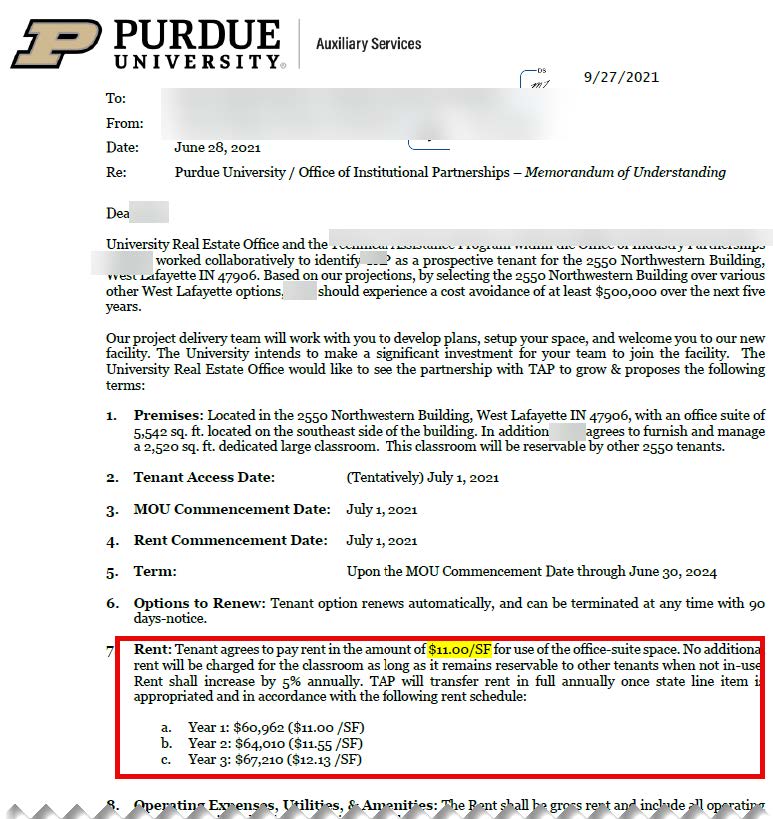
Financial transactions associated with third party in-kind contributions are not represented in the university’s accounting system. Consequently, it can be a challenge to determine the value of the contribution and document that the commitment has been fulfilled. With a third-party in-kind contribution, it is essential to document in writing the method for determining its value. The departmental business office will work with PIs and Co-PIs to obtain this documentation. See Appendix B for an example of cost share tracking and backup documentation including valuation of the memo match.
Cost Sharing at Proposal Time
Any University commitment to share in the cost of a project should be identified early in the proposal process. Proposal budgets should be fully costed prior to determining cost sharing commitments to ensure that any mandatory or voluntary committed cost sharing is clearly identified, documented, and approved before submission. Cost sharing discussions should begin as early as possible and involve the investigator(s), department head(s), associate dean(s) for research, and Sponsored Program Services/Office of Research as applicable, but no later than three weeks prior to the proposal due date (earlier for complex or high-dollar proposals).
-
The University commitment and the cost associated with the commitment are in accordance with University policy.
-
The University commitment complies, in all ways, with the Criteria for the Acceptability of Cost Sharing.
-
The funding source(s) for the University commitment have been identified and authorized.
Based on the Cost Share Process Guide (PERA) and Create a Cost Share Budget documents, below is a summary of the steps in the cost share process in order of processing.
-
Identify the type of cost share.
-
If necessary, complete the Salary Cap Spreadsheet.
-
If required and requesting cost share support from department, college and/or Office of Research, the PI or CoPI should contact the decision-making parties and secure agreement to contribute toward the cost share commitment.
-
Pre-Award will complete the Cost Share Spreadsheet document based on the final budget. Multiple versions may be required as the specifics of the cost share are negotiated with the contributing units.
-
Pre-Award will secure and document final approval from the contributing units.
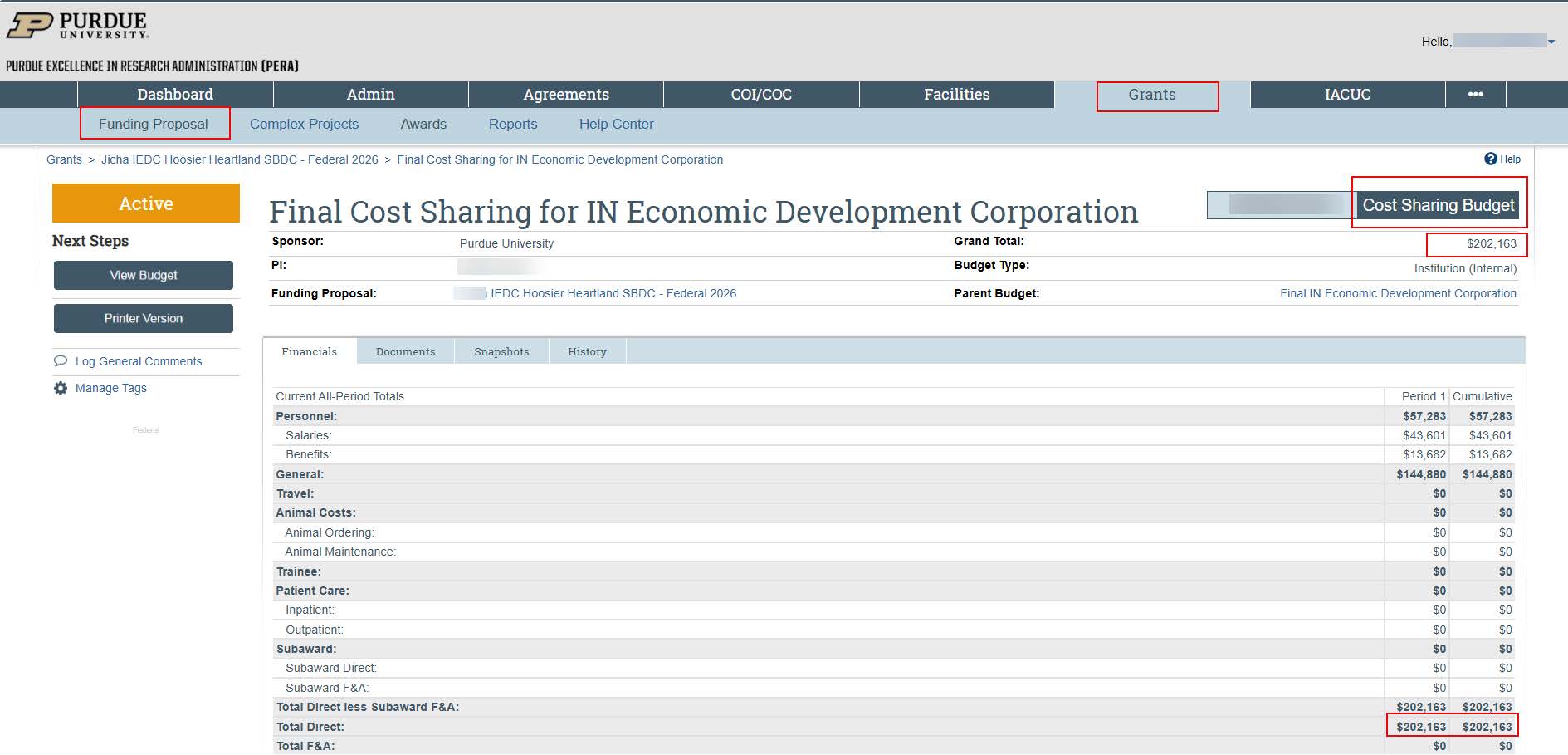
PERA Proposal Cost Share Budget 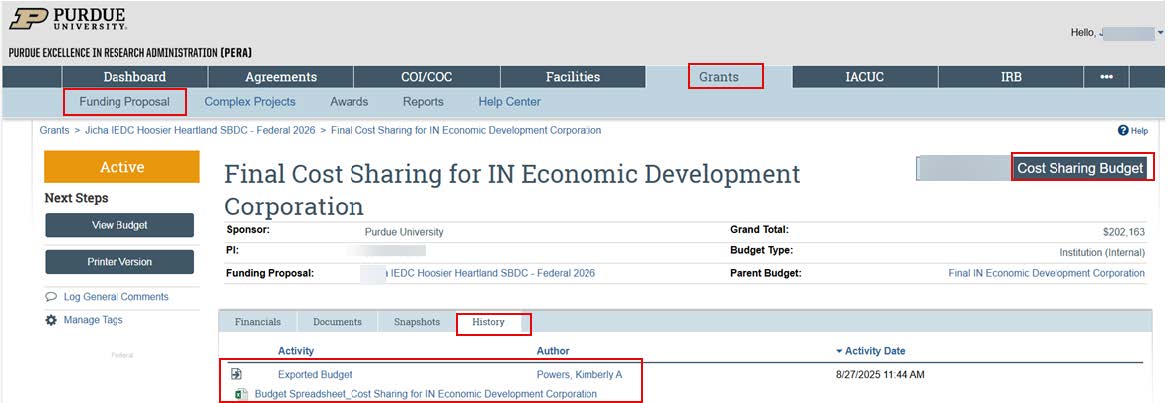
PERA Proposal Cost Share Budget See Cost Share Budgets - Investigator - (PERA) in the PERA training materials for details on preparing cost sharing at the time the proposal is prepared and submitted.
Some types of cost share will require more documentation at the time of the proposal being submitted.
Memo Match Documentation at Proposal Time
-
Memo match cost sharing must have backup documentation of the cost sharing source. I.E., a letter from the company providing equipment or committing an in-kind contribution.
-
If the memo match is an SPS external account (state, industrial, PRF fellowship/assistantships), the appropriate SPS Pre-Award Manager must approve after confirming the funding with the appropriate SPS Post-Award Manager.
-
SPS reviews the commitment and ensures the memo match is documented and attached with the appropriate signatures prior to submitting the proposal.
-
The Sponsored Program Pre-Award Manager should review the proposal for:
-
Are the funds available (funds can only be used once for matching)?
-
Are the funds allowable as matching under applicable guidelines (i.e., sponsor, agency, Uniform Guidance 2 CFR 200)?
-
Have all publication, ownership, or license issues been resolved?
-
Is the project period of the match within the proposal project period?
-
Release Time at Proposal Time
-
A department head or appropriate administrator with authority over the principal investigator acknowledges that the individual will be allocated the time necessary to complete the work of the project.
-
Release time included as committed cost share is granted at the time of proposal by the approval of the Cost Share Approval Ancillary Review by the department head, or delegated authority, on the PERA Funding Proposal.
-
Release time in the form of VCS only applies when NO effort for the PI is budgeted on the project as either sponsor funds or cost share. This type of cost share is documented by noting VCS in the Funding Proposal Comments. An email approving a waiver of the departmentally required minimum AY salary budget should be included as an attachment to the PERA Funding Proposal if applicable.
-
SPS staff should review the proposal for release time and ensure proper documentation is placed in the proposal record.
Cost Sharing at Time of Award
Cost Sharing in PERA
The Post Award Set Up Team will follow the Creating an Award guide. Questions 13 & 14 on the Financial Set Up section collect information related to Cost Share. This information will be imported into SAP. In the Budget Allocations section of the PERA guide number 15 is where the Cost Share Source of Internal Order or Department WBSE is collected.
Cost Sharing in SAP
Determination of Responsible Cost Center and needed WBSE/Sponsored Programs
When there is cost share associated with an award, SPS staff should always contact the Business Office of the Responsible Cost Center (RCC) for the Grant in determining the appropriate number of WBSE/Sponsored Programs (SP) to be established. The following factors should be considered:
-
There can only be one RCC per WBSE/SP.
-
When determining who the RCC should be, the Business Office should take into consideration who is processing the documents to incur expenses.
-
For situations where the Grant is a Discovery Park District Centers and Institutes account, credit is determined by the reporting units entered on the SP and not by who the RCC is on the WBSE/SP.
-
If there are multiple sources of cost sharing funds for a grant the business office needs to provide the source accounts on the Cost Share Budget Worksheet but all budget can go in one WBSE/SP if desired.
This information guides the Post Award Set-Up Team on how to proceed with cost share account setup and enter the cost sharing information into SAP.
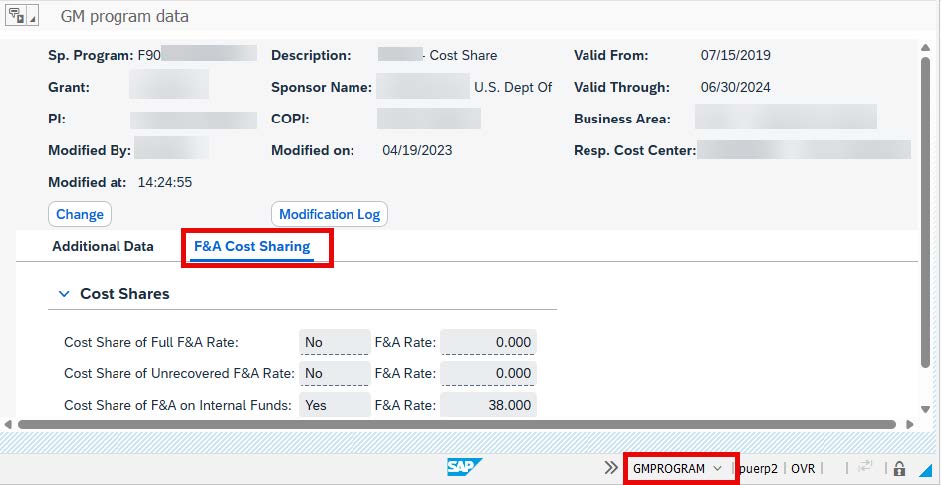
Cost Sharing Attributes on Contributed F&A
The Post Award Set Up team will set up the applicable F&A on the Sponsored Program in SAP as shown below.
The contributed F&A fields should be completed as appropriate:
-
Cost Share of Full F&A Rate : This field is applicable when the sponsor does not allow F&A on sponsor (external) funds but specifically states in the agreement or guidelines that the University full F&A rate can be counted as cost share.
-
Cost Share of Unrecovered F&A : This field in applicable is situations where the sponsor allows an F&A rate less than the appropriate University full F&A rate on sponsor funds and they specifically state the differential can be counted as cost share (Ex. Research on-campus project (52%) and sponsor limits F&A to 20% - the difference – 32% would be counted as cost share).
-
Cost Share of F&A on Internal Funds : This field is applicable when F&A has been included as a commitment at proposal time on the direct cost portion of the cost share funds
Cost Sharing Commitment Tab
The Cost Share Commitment tab in SAP is used to track whether memo match cost share is applicable to the specific grant. This tab is also used to track all cost sharing committed and expended.
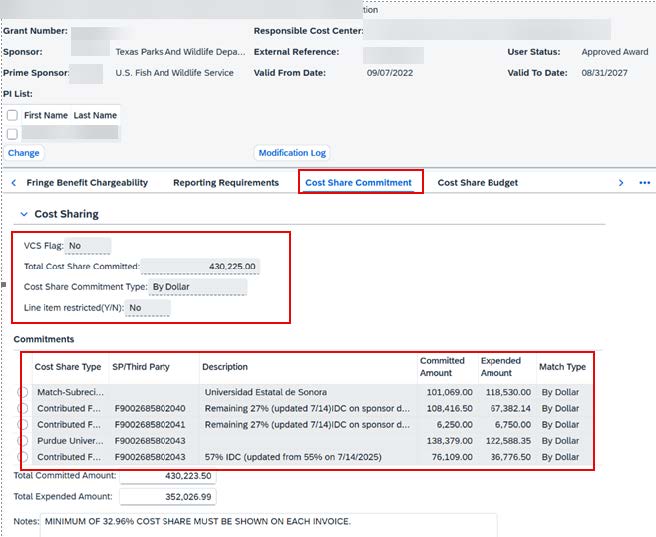
VCS Flag (Voluntary Cost Sharing) – Indicates if voluntary cost sharing is applicable. Voluntary Cost Sharing refers to situations where a PI’s effort is expended on a grant, but no salary is charged to the grant. Note: Does not factor into any of the other cost share information on this tab.
Total Cost Share Value field - The amount should be the total cost share committed (on the proposal). The Cost Share Commitment Type - Is the actual commitment the sponsor requires (i.e. percent of award or dollar commitment)
Table Entries:
-
Purdue University is selected for any Sponsored Program (SP) established in the grant as cost share. In the SP/Third Party column indicates the SP (no dots). The associated F&A will be reflected in a separate entry. The cost share type for this entry will be Purdue University and the description can be F&A, Department or any other identifiable information. A manual entry is needed for the Committed amount (which should match the budgeted amount).
-
Match – Subrecipient : This type is used for any cost share commitment from an entity with a Subaward agreement on the grant. In the SP/Third Party column you will indicate the SP setup for that subcontract and place the name of the Subrecipient in the Description column. The Committed and Expended Amount columns will be pulled from the subrecipient calculator.
-
Match – Third Party : This type is used for any cost share coming from another sponsor/vendor or Purdue match that isn’t budgeted in the grant.
-
State or Industrial Grant (can NOT have any federal funding component). The SP/Third Party column should indicate the SP (no dots) and indicate the grant number in the Description column. A manual entry is needed for the Committed amount.
-
Donation from a third-party vendor. The source column should indicate the company name.
-
Equipment from a third-party vendor. The source column should indicate the company name.
NOTE: there may be instances where Purdue funds may need to be collected as memo match vs. setting up cost share IO. In these CASES, please see your supervisor for direction.
-
-
Contributed F&A would be selected if the sponsor restricts F&A and any or all of the F&A can be used as cost share and for F&A on Purdue cost share in the grant. The amount that would have been charged to sponsor funds is the amount that would be documented in the committed amount and expended amount columns. A manual entry is needed for the committed amount.
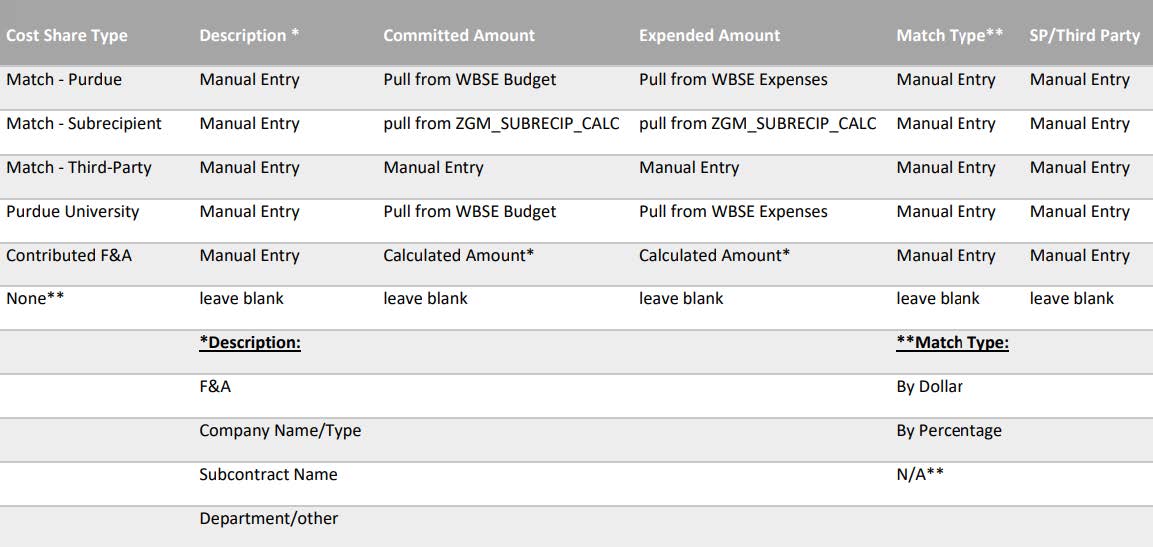
Cost Share Commitment Tab Values

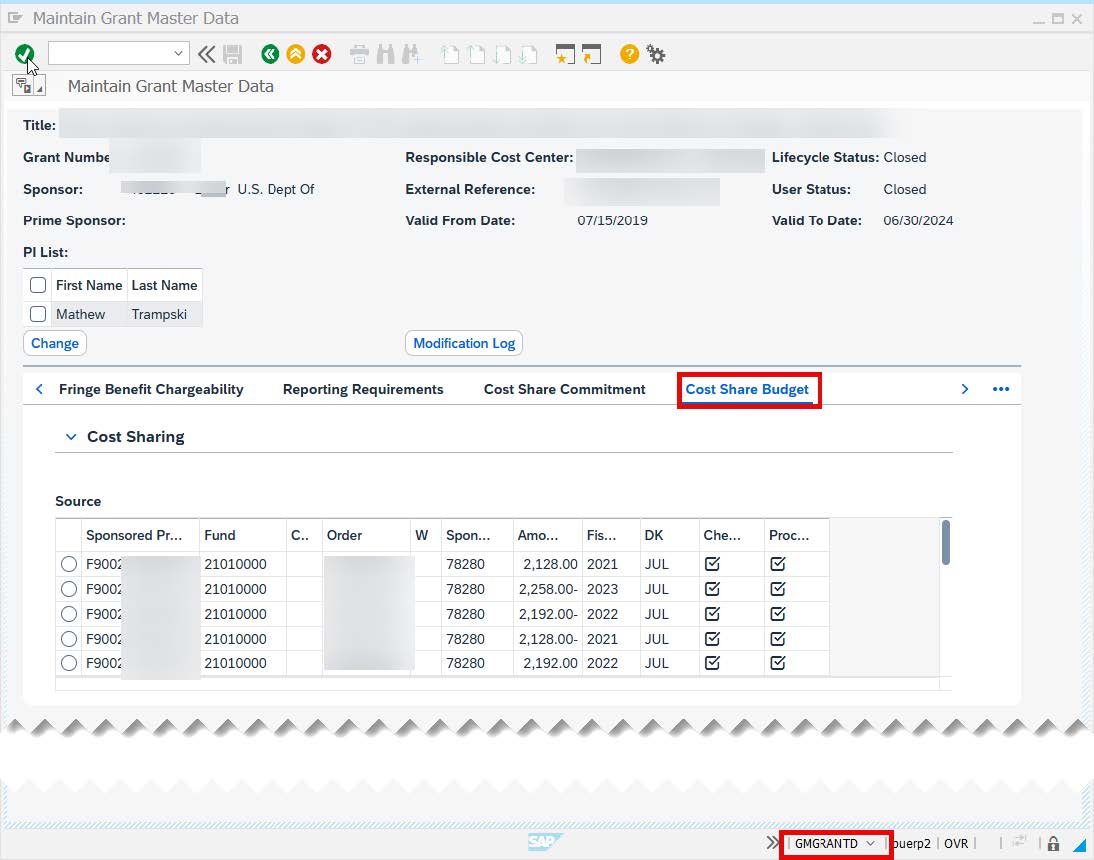
Establishment of Cost Share Budget on Internal Funds
The budget for cost share is uploaded into SAP by Sponsored Program Services (SPS) Post Award. The budget entry is then reviewed and approved. The Cost Share budget program runs nightly to post all approved cost share budgets. This program posts the budget in the GM (grant relevant) module which automatically pushes to the FM (not relevant grant) module for all entries and posts a JV to transfer cash from the funding source (IO or WBSE) to the grant for the current fiscal year.
-
Multi-Year Proposals : All years of a multi-year proposal will be budgeted once it is awarded.
-
Budget Establishment : The budget will be established on the WBSE/SP designated for cost share and pulled from the sources committing the cost share. Future fiscal year budgets will post once uploaded, but the cash entry will not post until July of that fiscal year.
-
Facilities and Administrative (F&A) Costs :
F&A costs will not be budgeted or charged to cost share sponsored programs. However, they will be calculated for reporting and billing purposes. F&A will be calculated based on how the F&A Cost Sharing tab in the Sponsored Program is completed.
-
Memo Match SPS Account :
State, Industrial and PRF sponsored program accounts may be used as memo match cost sharing provided the original source of funds is not from a federal agency and it has not been previously used. Departmental Business Office staff need to establish how the memo match will be tracked. The proper grant number should be identified as the source funding.
-
Memo Match – Third Party:
Cost sharing provided by a third party should have backup documentation of the cost sharing source. For example, a letter from the company providing equipment, or committing an in-kind contribution. The letter provided by the third party should include the dollar amount/value of cost sharing being committed, dates, and identify if the cost sharing will be cash, equipment, and/or an in-kind contribution.
-
Projections : Departments need to be aware of this when doing projections, especially for mandatory dollar amount cost sharing commitments.
Cost Sharing Report
Cost Share Summary (Cognos Report)
The Cost Share Summary report in Cognos is a critical tool for business office staff and research account specialists involved in the management of sponsored projects. This report streamlines the process of planning for committed departmental funds and reconciling cost sharing on grants throughout the project lifecycle.
Purpose and Use
The Cost Share Summary report provides a comprehensive overview of cost share commitments, cost share budget transfers and cost share expenditures associated with grants. It enables users to:
-
Validate that cost-share budgets align with submitted budget templates and sponsor requirements.
-
Monitor the fulfillment of cost share commitments over the life of a project.
-
Reconcile actual cost share expenditures against commitments, ensuring compliance with institutional and sponsor policies.
-
Support annual and ad hoc reporting needs, including sponsor audits and internal reviews.
Who Should Use This Report
This report is designed for:
-
Business office personnel responsible for grant financial management.
-
Research account specialists who oversee cost share tracking and reporting.
-
Departmental administrators who need to verify the source and use of cost share funds.
Where to Find the Report
The report can be found in Cognos under Team Content / Standard Content / SPS / Cost Share Summary or by using the following link: Cost Share Summary Report
Report Layouts
The Cost Share Summary report offers two primary layouts to meet different reporting needs:
-
Cost Share Budget : Presents the planned or committed cost share amounts by category, allowing users to review budgeted commitments at a glance.
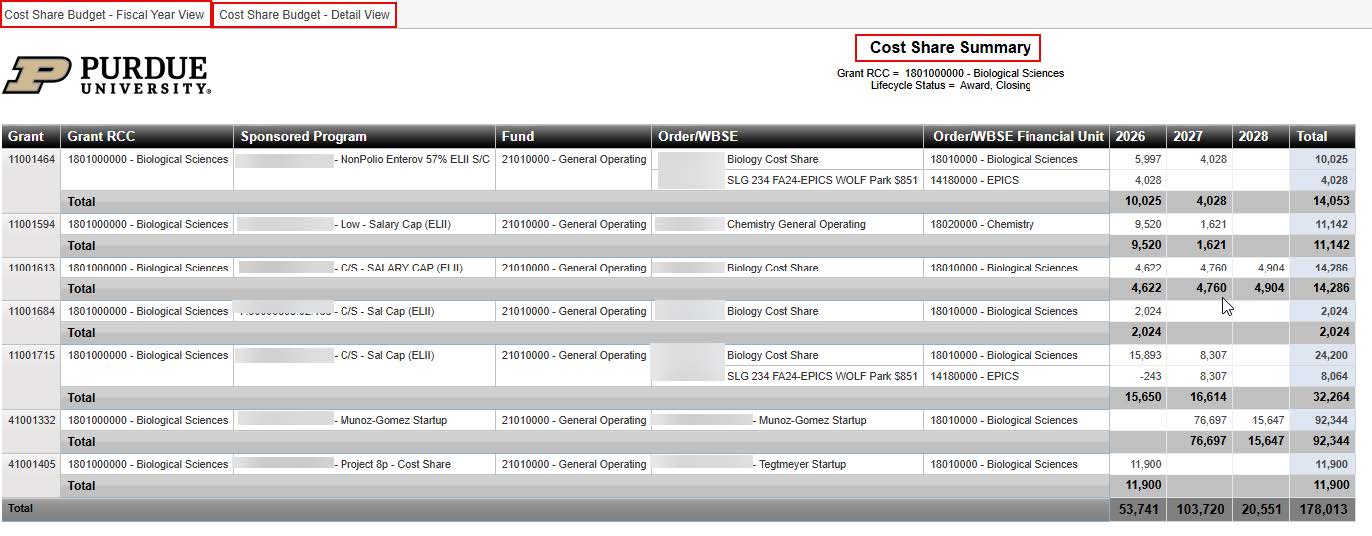
Cost Share Summary Report -
Cost Share Commitments : Displays cost share commitments, actual cost share expenditures and their status, supporting reconciliation and compliance monitoring.
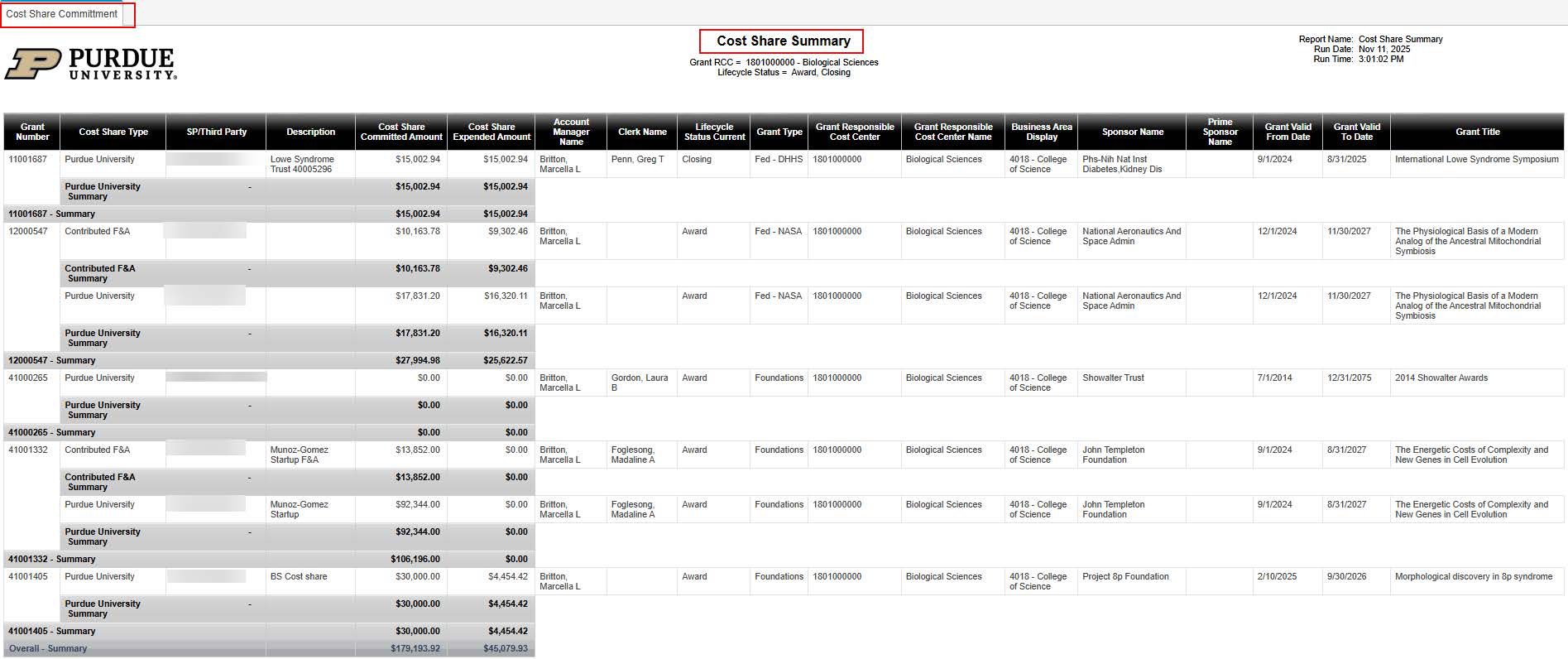
Cost Share Summary Report – Cost Share Commitments Layout Users can select the layout that best fits their current task—whether planning, monitoring, or reconciling cost share activity.
Flexible Filtering Options
To facilitate targeted analysis, the report can be run using a variety of master data elements, including:
-
Fiscal Year
-
Grant Responsible Campus
-
Business Area
-
Cost Center
-
Grant Number
-
Source Account Business Area
These filters allow users to generate summary or detailed views tailored to specific grants, departments, or reporting periods.
Best Practices
-
Run the Cost Share Summary report regularly to ensure all cost share commitments are being met and properly documented.
-
Use the Budget layout for planning and the Commitments layout for reconciliation and audit preparation.
-
Coordinate with principal investigators and department leadership to address any discrepancies or outstanding commitments promptly.
-
Retain supporting documentation for all cost share transactions, as these may be subject to sponsor or internal audit.
Additional Resources
For step-by-step instructions on running and interpreting the Cost Share Summary report, refer to your institution’s Cognos training materials or contact your Sponsored Program Services (SPS) team for guidance.
Cost Sharing During the Life of the Project
Management Expectations for Projected Balances on Cost Share Accounts
Department Business Office staff should review the projected balances on a regular basis. SPS Account Management team Administrators should review cost share commitments on interim financial reports and billings and notify the Business Office when there is insufficient progress towards meeting the cost share commitment.
-
If the cost share account is projected to have a balance, the type of cost share commitment must be reviewed in order to take appropriate action. Since F&A is not budgeted or charged to cost share accounts, remember to include the calculated F&A for projections (when applicable).
-
If the cost share commitment is a specific dollar amount:
-
Additional allocable effort or charges must be expended. There may be situations where a specific item (equipment, supplies, etc.) was not purchased or was less than budgeted. Exceptions to meeting the commitment will be reviewed by SPS on a case-by-case basis.
-
-
If the cost share commitment is a percentage of effort for an individual(s):
-
A projection of total effort for the individual(s) should be calculated to make sure the cost sharing commitment is met.
-
If the percentage of effort is not projected to meet the required commitment, additional allocable effort or additional allocable charges must be expended to ensure the commitment is met.
-
-
If the cost share commitment is a percentage of sponsor dollars awarded (i.e. one-to-one match; 25% of sponsor budget, etc.):
-
A projection of the total sponsor expenditure should be calculated to make sure the cost sharing commitment is met.
-
If the projection does not meet the required commitment, additional allocable effort or charges must be expended to ensure the commitment is met.
-
Expectations for Memo Match During the Life of the Project
SPS Post Award Account Management Staff Expectations
SPS staff will run the reporting requirements for Memo Match monthly and if appropriate send an email reminder to the Department Business Office requesting documentation of memo match for multi-year projects. SPS will ensure that all documentation is received and placed in the SPS project (SPS external account (state, industrial, PRF fellowship/assistantships) files if applicable.
On Memo match, make sure to list the source of the match and assign the type accordingly (see below).
NOTE: IF THE MATCH IS ANOTHER SPS GRANT (INDUSTRIAL OR STATE) MAKE SURE TO INCLUDE ANY F&A OR GRAD FEE REMITS THAT MAY NEED MANUALLY CALCULATED.
SPS Post Award will update the Cost Share Commitment Tab when memo match documentation is received (at least annually or at closeout). Grants with complex cost sharing should be keeping spreadsheets that reconcile cost sharing throughout the life of the project. See Appendix B for sample cost sharing documentation for complex projects.
Departmental Business Office Staff Expectations
Departments are expected to document the memo match during the life of the project. Reports are available and can be processed to identify the accounts that have memo match to help ensure the expectations are met.
Examples of Documentation Required
| # | Sample Description | Required Documentation |
|---|---|---|
| 1 | Equipment from a Third Party | Gift & Loan Report |
| 2 | SPS External Account (State, Industrial, PU/PRF fellowship/assistantships) | AIMs Report, Project Status Report (FSSR) or Line Item Display |
| 3 | Other | Letter from Donor/Company documenting the type of actual matching and its dollar value. |
Per the May 18, 2015 memo from Chris Martin and Ken Sandel, memo match will be documented annually and included in the SPS file. The Department Business Manager is responsible for the
documentation of the memo match. The SPS Account Manager is responsible for assisting in the documentation and assuring it is placed in the SPS file.
Cost Sharing at Closing
SPS Post Award Account Management team will work with the Departmental Business Office to review and ensure all commitments are met. The Departmental Business Office will work with the PI and Co-PI to gather and preserve all documentation of the cost sharing on the grant.
Cost Sharing at Closing: Addressing Percent Commitment and Balances
At the close of a project, it is important to verify that the required cost sharing has been met.
What If the Percent of Sponsor Award Is Not Met?
If the required percentage of cost sharing commitment, based on the sponsor award, is not achieved at project closeout, the following steps should be taken:
-
Verify the Percent Commitment :
Confirm whether the percent commitment was tied to specific budget items or overall project expenditures. If the actual expenses charged to sponsor funds do not align with the intended cost share percentage, this may result in a shortfall.
-
Reallocate Expenses if Needed :
If eligible expenses were charged to sponsor funds but could appropriately be counted as cost share, it may be necessary to move those expenses from sponsor funds to the cost share account to fulfill the percentage commitment.
-
Acceptable Balances :
A remaining balance on the cost share account is acceptable as long as the committed percentage of cost sharing has been met. Similarly, if there is a percentage of the award left as a balance, this is also acceptable provided the percent commitment has been fulfilled.
-
Addressing Shortfalls :
If the required percent commitment has not been achieved, the situation should be handled in the same manner as if a dollar commitment has not been met—by identifying and documenting additional eligible cost share or taking corrective action as required by University policy and sponsor guidelines.
What If the Dollar Commitment Is Not Met?
If the required dollar amount of cost sharing is not achieved at project closeout, the following steps should be taken:
-
Verify the Nature of the Commitment:
Determine whether the dollar commitment was tied to a specific item (such as equipment, supplies, or other designated costs). If the actual cost of the item was less than budgeted, this may explain the shortfall.
-
Reallocate Expenses if Needed:
If eligible expenses were charged to sponsor funds but could appropriately be counted as
cost share, it may be necessary to move those expenses from sponsor funds to the cost share account to fulfill the commitment.
-
Sponsor Approval for Exceptions:
If the dollar commitment cannot be met due to circumstances such as lower actual costs or other justifiable reasons, an exception may be possible. However, this typically requires sponsor approval. Consult the terms of the award and University policy to determine the appropriate process for requesting an exception.
What If the Memo Match Commitment Is Not Fulfilled?
If the amount of memo match committed is not met, the options for resolution are similar to those for a dollar commitment shortfall:
-
Review and Reallocate:
Assess whether eligible expenses can be reclassified to meet the memo match requirement.
-
Follow Exception Procedures:
If the commitment cannot be met, follow the same procedures as for a dollar commitment, which may include seeking sponsor approval for an exception or identifying additional eligible costs.
Closing Expectations for Balances on Cost Share Accounts
NOTE: If there is a balance remaining and the commitment has been met, please consult with the department to determine if a budget decrease should be done for budgets associated with internal funds. This decision needs to be made by the department since it is actually set up in FM on their funds.
If the Cost Share account has a balance, the type of cost share commitment should be reviewed to take appropriate action. Since F&A is no longer budgeted or charged to cost share accounts, remember to include the calculated F&A.
-
If the cost share commitment is a specific dollar amount: This dollar amount must be met! The department needs to discuss the situation with PI and SPS. There may be situations where a specific item (equipment, supplies, etc.) was not purchased or the cost was less than budgeted. Exceptions to meeting the commitment will be reviewed by SPS on a case-by-case basis.
-
If the cost share commitment is a percentage of sponsor dollars awarded (i.e. one-to-one match; 25% of sponsor budget, etc.): A balance is acceptable if the commitment has been met.
-
If the cost share commitment is a percentage of effort for an individual(s), as stated in the award document, balance is acceptable as long as the commitment has been met.
Once cost share is reported to the sponsor (typically on an FFR/SF-425 or other required financial report), it becomes:
-
Part of the official award record
-
Subject to audit (internal, sponsor, or federal auditors)
-
Locked in as certified institutional contribution
-
At that point, any amount reported in excess of the committed cost share is also auditable and is treated as having been voluntarily committed by the institution. Sponsors and auditors generally view reported cost share as intentional, regardless of whether it exceeded the original commitment.
Closing Expectations for Overdrafts in Cost Share Accounts
If the Cost Share account is overdrafted and the charges are allowable and within the project period, the department may decide to leave the charges on the account and request a budget increase. Otherwise, the charges need to be removed.
Expectations of Memo Match in Closeout
SPS staff will run the reporting requirements for Memo Match monthly and if appropriate send an email reminder to the Department Business Office requesting documentation of memo match for closeout of the project. Departments are expected to send documentation of the memo match to SPS within 60 days after the expiration. SPS will ensure that all documentation is received and placed in the project file. SPS Post Award will update the Cost Share Commitment Tab when memo match documentation is received at closeout.
PI certification may be required if there is not a basis for allocability of the cost sharing.
| # | Sample Description | Required Documentation |
|---|---|---|
| 1 | Equipment from a Third Party | Gift & Loan Report |
| 2 | SPS External Account (State, Industrial, PU/PRF fellowship/assistantships) | AIMs Report, Project Status Report (FSSR) or Line-Item Display |
| 3 | Other | Letter from Donor/Company documenting the type of actual matching and its dollar value. |
Cost Sharing Resources
| Topic | Link |
|---|---|
| Sponsored Program Services Post Award Cost Sharing Page | Cost Sharing - Sponsored Program Services - Purdue University |
| Cost Share Guidelines/Policy | Cost Share Guidelines/Policy - Sponsored Program Services - Purdue University |
| Memo defining expectations related to Memo Match Cost Sharing | Defining Memo Match Cost Sharing Expectations |
| Cost Share Summary (Cognos Report) | Cost Share Summary Report |
Appendix A – Sample Cost Share Tracking
Cost Share Tracking Sample 1
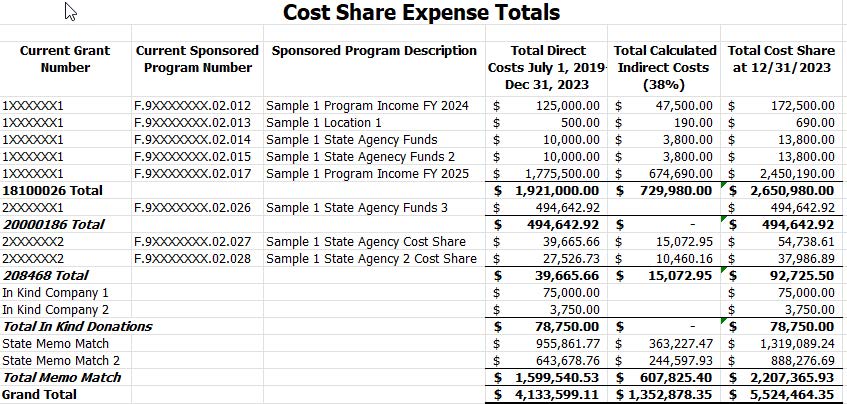
Sample 2
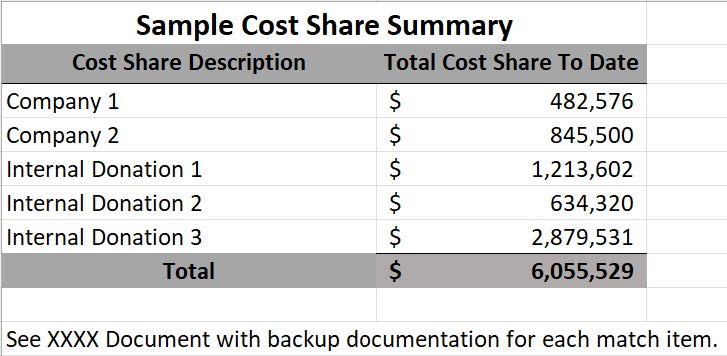
Items to consider when tracking complex Cost Sharing
When working with complex cost sharing, there are several important items to consider to ensure clarity, fairness, and efficiency. Here are some key points:
-
Clear Definitions: Clearly define what costs are to be shared and the basis for sharing them. This includes direct and indirect costs, fixed and variable costs, and any specific exclusions.
-
Allocation Methods: Determine the method for allocating costs among parties. Common methods include proportional allocation based on usage, revenue, or another relevant metric.
-
Documentation: Maintain thorough documentation of all agreements, calculations, and assumptions. This helps in resolving disputes and ensuring transparency.
-
Regular Reviews: Periodically review the cost-sharing arrangement to ensure it remains fair and relevant. Adjustments may be needed due to changes in costs, usage, or other factors.
-
Communication: Maintain open and regular communication among all parties involved in the cost-sharing arrangement. This helps in addressing concerns promptly and maintaining trust.
Appendix B – Memo Match Sample