Category: Gardening

Timing of hydrangea pruning varies by species

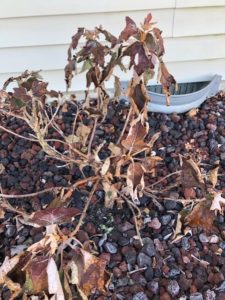
Q: Attached is a photo of our current hydrangea plant in front of our house. Should I cut it back now or leave it alone until spring? Or do you think it’s a lost plant? – R.G., Henry County, Indiana A: A number of hydrangea species are grown in Indiana. The proper time of pruning depends on the species. Your photo appears to be Hydrangea quercifolia, more commonly known as oakleaf hydrangea, one of our…Read more about Timing of hydrangea pruning varies by species[Read More]

Snow Is Good for Gardens

Though your aching back may not agree, recent heavy snows actually will be good for your garden and landscape. Snow provides moisture as well as protection from cold and wind. Snow is an excellent insulator against low temperatures and excessive winds. The extent of protection depends on the depth of snow. In addition, the soil gives off some heat so that the temperature at the soil surface can be much warmer than the air temperature….Read more about Snow Is Good for Gardens[Read More]


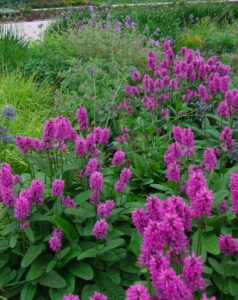
Pollinators are abuzz for the 2019 Perennial of the Year

By selecting Stachys officinalis ‘Hummelo’ as its 2019 Perennial Plant of the Year, the Perennial Plant Association once again continued its focus on pollinator-friendly plants. ‘Hummelo’ is a compact, clump-forming perennial, reaching 1.5 to 2 feet tall and wide. Over time, the plants will form a dense mat, spreading slowly from creeping underground stems. Showy magenta flower spikes rise well above the foliage in midsummer and are quite attractive to butterflies and other pollinators. Plants are hardy in…Read more about Pollinators are abuzz for the 2019 Perennial of the Year[Read More]


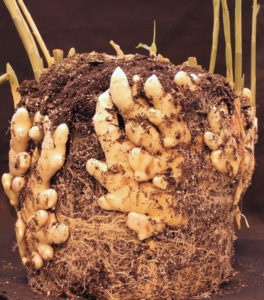
Spice Up Your Holidays

Some of the most popular spices used this time of year are harvested from various parts of exotic tropical plants, lending a special flavor to holiday recipes. Ginger is harvested from the rhizomes (underground stems) of a tropical/sub-tropical herbaceous plant, Zingiber officinale. Ginger is native to tropical Asia and is grown commercially in Hawaii and many other countries, including China, India, Thailand and Brazil. The rhizomes are harvested after the first year of the plant’s…Read more about Spice Up Your Holidays[Read More]


Gardeners worn down; clearweed may be culprit

Q: I have had a garden on our property for about 14 years. Naturally, we’ve always had to deal with weeds, but until last year they had been the usual crabgrass and other types that could be controlled if you kept ahead of them. But last year, some type of weed or ground cover has sprung up, and it’s infuriating!! There is absolutely no way to weed it out by hand because it comes up almost…Read more about Gardeners worn down; clearweed may be culprit[Read More]


Time to Harvest Sweet Potatoes

  Although some folks may be sad to see summer coming to a close, many gardeners are looking forward to harvesting their sweet potato treasures. Sweet potatoes are warm-season plants that are very sensitive to cold temperatures. The tuberous roots should be harvested by the time frost kills the vines or soon thereafter. Sweet potato roots continue to grow until frost kills the vines. Roots can be left in the ground for a short while;…Read more about Time to Harvest Sweet Potatoes[Read More]


Oedema Is a Corky Quirk

Plants that experience extremes in soil moisture may develop spots on their leaves, called “oedema” (also spelled “edema”). The spots may first appear as a blister or raised spot, particularly on the undersides of leaves, but may occur on the top side as well as on the stems. Eventually, the blister develops a rust-colored, cork-like scab. Oedema is most commonly seen in the greenhouse on ivy-leaf geraniums but also on pansies, jade, and other thick-leaved…Read more about Oedema Is a Corky Quirk[Read More]


Use Caution With Spreading Plants

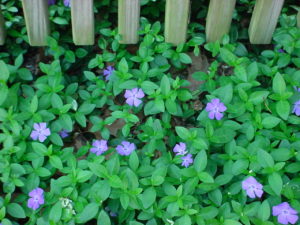
People often select plants first for their beauty and second for their functionality in the garden. Frequently, we don’t know or don’t consider a plant’s behavior when we’re selecting them. Almost by definition, a species that is an effective ground cover will have a spreading habit. But does that make the species aggressive or invasive? There can be much confusion about the meaning of the terms aggressive and invasive. Some plants, given their optimal habitat,…Read more about Use Caution With Spreading Plants[Read More]


Indiana’s State Tree is a Popular Landscape Choice

If you’ve ever had to work on a tree leaf collection, no doubt you included a leaf from Indiana’s state tree. Also known as tulip poplar and yellow poplar, the tuliptree is actually not a poplar at all. It is a member of the magnolia family known botanically as Liriodendron tulipifera. The tuliptree is native to most of the eastern half of the United States and prefers rich, moist, well-drained, loamy soil. It is found throughout…Read more about Indiana’s State Tree is a Popular Landscape Choice[Read More]


Know When to Harvest Your Asparagus

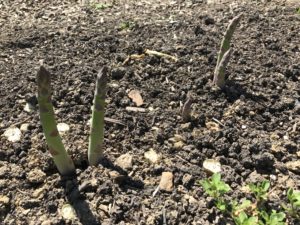
Q. I planted a new asparagus patch last year. I just have a few spears up so far. Do you think the cold weather injured the plants this winter? Is it OK to harvest these spears? Someone told me I shouldn’t harvest at all the first year. A. Asparagus is pretty cold hardy, so if the plants were in good health going into winter, they should be OK. This chilly spring was very slow for…Read more about Know When to Harvest Your Asparagus[Read More]


Page last modified: May 11, 2018

Indiana Yard and Garden – Purdue Consumer Horticulture - Horticulture & Landscape Architecture, 625 Agriculture Mall, West Lafayette, IN 47907

© 2026 Purdue UniversityAn equal access/equal opportunity universityCopyright ComplaintsMaintained by Indiana Yard and Garden – Purdue Consumer Horticulture

If you have trouble accessing this page because of a disability, please contact Indiana Yard and Garden – Purdue Consumer Horticulture at homehort@purdue.eduAccessibility Resources