Category: Integrated Pest Management

Creeping Charlie in the Garden

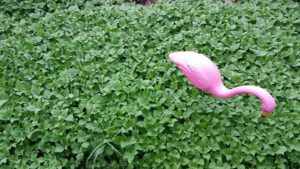
Creeping Charlie has square stems with opposite leaves. Photo Credit: Dr. Aaron Patton, Purdue University Q: I can control creeping charlie in my yard. How can I safely control/stop creeping charlie in the garden? A:I share this never-ending challenge to keep creeping Charlie (also known as ground ivy) out of my garden beds. Creeping Charlie is an herbaceous perennial that spreads by seed as well as horizontal, above-ground stems called stolons or runners. These runners…Read more about Creeping Charlie in the Garden[Read More]
Pokeweed is on the low end of the toxicity scale

Q: I have a lot of these plants growing in the field near my home. Can you identify this plant for me? And is it poisonous? I have horses and am concerned that this could make them sick. A: This is a very common weed called pokeweed. It is native to much of Eastern North America, including Indiana. All parts of the pokeweed plant are poisonous, especially roots and seeds, but its toxicity is generally…Read more about Pokeweed is on the low end of the toxicity scale[Read More]


Mugwort, wormwood – by either name, a real problem

Q. I am curious if you have an idea about a weed that grows in our yard every year. It spreads very rapidly, seems invasive and grows to a pretty high level as summer goes along. We have asked many people, and they are quite stumped. My wife does not like it, and we pull it and spray it, but it just keeps coming back, spreading and invading. Also, it seems to transplant to other…Read more about Mugwort, wormwood – by either name, a real problem[Read More]


Purdue Extension Online Resources for Gardeners

Looking for opportunities to learn from home?  The following online resources cover a wide range of information for gardening and taking care of your yard. General Yard & Garden Purdue Extension Indiana Yard & Garden Website Purdue Yard & Garden News Purdue In The Grow Question & Answer Purdue Extension Master Gardener Program Purdue Plant & Pest Diagnostic Lab (PPDL) Submit a Sample PPDL Picture of the Week Purdue Plant Doctor apps Purdue Extension Education…Read more about Purdue Extension Online Resources for Gardeners[Read More]


It’s For The Birds

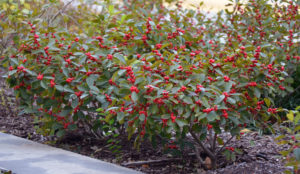
Q: I would like to plant bushes that will attract birds in fall and winter. I’m thinking of something that produces a berry they eat? – J.W., Winfield, Indiana A: Birds require not only food such as fruits and seeds, but also shelter and water. Planting a variety of plants that offer these resources across the seasons will help attract more birds to your yard. Some native shrubs to consider include: Aronia (chokeberry) Callicarpa (beautyberry)…Read more about It’s For The Birds[Read More]


What’s killing the oak trees?

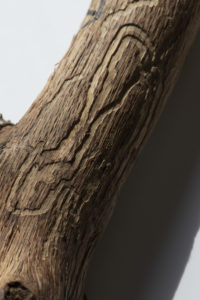
Q. In 22 years I’ve had more than a dozen oaks die because of a grub or larvae. Symptoms: First the leaves die and turn brown at the top of the tree. It slowly spreads down the tree until all the leaves are brown and have fallen off. Then the bark begins to peel away from the trunk, and then it falls off pieces at a time. You can see where it cuts off the…Read more about What’s killing the oak trees?[Read More]

 Categories:

Gardeners worn down; clearweed may be culprit

Q: I have had a garden on our property for about 14 years. Naturally, we’ve always had to deal with weeds, but until last year they had been the usual crabgrass and other types that could be controlled if you kept ahead of them. But last year, some type of weed or ground cover has sprung up, and it’s infuriating!! There is absolutely no way to weed it out by hand because it comes up almost…Read more about Gardeners worn down; clearweed may be culprit[Read More]


Blue spruce not a great choice for Hoosiers

Q: We have 5.5 acres with several hundred white pines, 7 blue spruce, and 2 red pines. Several of the blue spruce are dying. Several years ago, two started dying from the bottom up. We put evergreen spikes around them, and after a year or so they came back to normal. Presently some of the large ones are now dying from the bottom to the top. We put spikes around two large and one small,…Read more about Blue spruce not a great choice for Hoosiers[Read More]


Damage control for the yellowstriped armyworm; Transplanting trees from the woods

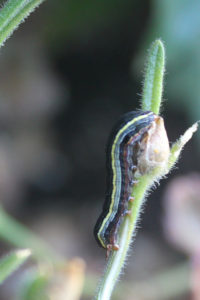
Q. I have a worm eating my flowers. The flowers are in a tall planter so I am wondering if I need to add something to the base of the planter to keep them from coming up the plants OR are they hatching out on the plants? Some of the damage is caused by small slugs as well.Can you tell me what kind of worm this is? Also, what do you recommend to deter them? –…Read more about Damage control for the yellowstriped armyworm; Transplanting trees from the woods[Read More]


Peeling sycamore tree bark is normal; Top heavy hydrangea plants; Should I treat my lawn for Japanese Beetles

Q.  We have a large sycamore tree in our yard. Every summer it sheds its bark over a few weeks’ time. I think as it grows it is growing new bark and losing the old bark. Am I correct? – J.C., Walton, Ind. A.  You’re on the right track. Peeling bark is normal, and is a key ornamental characteristic for a sycamore, also known as American planetree. The bark starts out a bit gray-brown and as the…Read more about Peeling sycamore tree bark is normal; Top heavy hydrangea plants; Should I treat my lawn for Japanese Beetles[Read More]


Page last modified: August 4, 2017

Indiana Yard and Garden – Purdue Consumer Horticulture - Horticulture & Landscape Architecture, 625 Agriculture Mall, West Lafayette, IN 47907

© 2026 Purdue UniversityAn equal access/equal opportunity universityCopyright ComplaintsMaintained by Indiana Yard and Garden – Purdue Consumer Horticulture

If you have trouble accessing this page because of a disability, please contact Indiana Yard and Garden – Purdue Consumer Horticulture at homehort@purdue.eduAccessibility Resources