Category: Gardening

Larch Needle Blight/White Ash Woes/Top-setting Onions

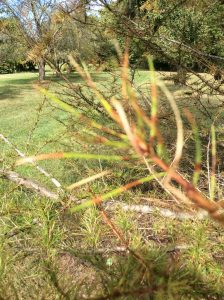
Q. I have noticed lately that our three big, lovely larches are losing needles on their bottom half. The needles have a banded pattern of color, and I fear larch needle blight. How can I confirm or reject this hypothesis? Is there anything we can do to treat them? – JC A. Specific diagnosis will require more than just these photos. I recommend sending samples of your trees to the Purdue Plant and Pest Diagnostic…Read more about Larch Needle Blight/White Ash Woes/Top-setting Onions[Read More]
Water Now to Minimize Winter Injury

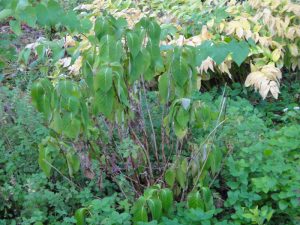
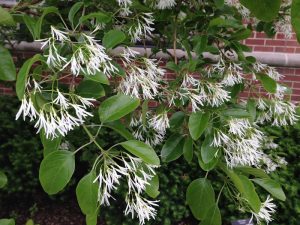
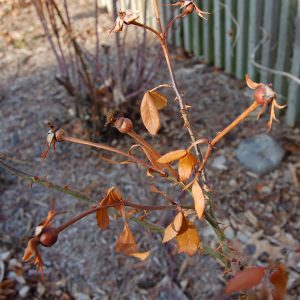
Dry summers are not that unusual in the Midwest. But this year the dry spell followed an unusually wet spring and early summer in many areas. Of particular concern this year is that the dry spell is lasting well into autumn, putting plants in poor condition to get through the winter when water will be unavailable due to frozen soil. Newly planted trees, shrubs and perennial flowers will be at most risk of winter injury…Read more about Water Now to Minimize Winter Injury[Read More]


Some Shrubs Best Pruned After Flowering

Although late winter is generally the ideal time for pruning chores, many of our spring-blooming shrubs are best pruned immediately after flowers have faded. Trees and shrubs that bloom in early spring, such as forsythia, lilac, honeysuckle, quince and spirea, set their flower buds the previous fall, referred to as “flowering on old wood.” If you prune in late winter, some or all of the bloom potential for spring is sacrificed. By waiting until after…Read more about Some Shrubs Best Pruned After Flowering[Read More]


Plants for Steep Slopes

Perhaps the most challenging landscaping problem is that of what to plant on a steep slope. Slopes require plants that can establish quickly, tolerant of fluctuating soil moisture and potentially poor nutrient availability, and require little care once established. You’re likely looking for small plants for filling this rather tall order! Turf grass is one of the most popular ground covers for keeping soil in place, but mowing on an incline is inconvenient at best…Read more about Plants for Steep Slopes[Read More]


Putting Vegetables By for Winter

Remember when your grandmother talked about putting food “by” for winter? There are several methods of preserving and storing our garden produce for later enjoyment, including freezing, canning and cold storage. The method of choice depends on the specific produce item, as well as more personal factors such as taste preferences, amount of time available and know-how. For busy gardeners, storing produce may provide a relatively easy, quick way to enjoy your harvest in winter…Read more about Putting Vegetables By for Winter[Read More]


Question and Answer

07-05-12 Question and Answer Q. Two years ago, we lost a lilac bush that was over 90 years old. At the time, there were shoots of small lilacs coming up from the ground around the old bush. We took out the dead bush but left the shoots. Will these shoots ever bloom? They haven’t in all the years they have been there. If they aren’t going to bloom, I’d like to remove them. A. The…Read more about Question and Answer[Read More]


Question and Answer

Q. Saw your article the other day about bulbs blooming in winter. I’ve never seen January budding snowdrops. When do they normally bloom? My daffodil’s are up about 3 inches! Also, I would like info on flowers to plant in clay-like soil. I would like perennials that bloom quite a bit of the summer and in partial shade or full sun. I have planted many flowers and half don’t live or don’t come up the next…Read more about Question and Answer[Read More]


Question and Answer

Q. I had to harvest quite a few tomatoes that weren’t quite ripe yet to avoid the frost. What can I do with these now? A. Tomatoes will continue to ripen off the vine if they have reached the critical stage of development called mature green. If the tomatoes have not hit that stage yet, they will remain green once removed from the plant. Mature green tomatoes are about normal size and have a whitish-green…Read more about Question and Answer[Read More]


Question and Answer

Q. I lost every one of my rhubarb plants late last summer and fall. The plants started dying at one end of the row and just worked on down the row to the opposite end. Someone told me it was due to grubs; another told me that it was moles eating the grubs. Since this is a plant I intend to eat, whatever I use needs to be food safe. A. It is unlikely that…Read more about Question and Answer[Read More]


Spring Pruning of Roses

Now’s the time to prepare your garden roses for the coming growing season. The three primary purposes of pruning are to remove damaged and unwanted canes, promote optimum blooming and reduce size of the plant, if needed. Roses are best pruned before the new foliage emerges so that you can easily assess winter damage. Winter mulch and foam covers should be removed as soon as new growth becomes apparent. Since a spring freeze is still…Read more about Spring Pruning of Roses[Read More]


Page last modified: October 13, 2016

Indiana Yard and Garden – Purdue Consumer Horticulture - Horticulture & Landscape Architecture, 625 Agriculture Mall, West Lafayette, IN 47907

© 2026 Purdue UniversityAn equal access/equal opportunity universityCopyright ComplaintsMaintained by Indiana Yard and Garden – Purdue Consumer Horticulture

If you have trouble accessing this page because of a disability, please contact Indiana Yard and Garden – Purdue Consumer Horticulture at homehort@purdue.eduAccessibility Resources