Amid a surge in mental health conditions, the Disability Resource Center continues to serve thousands of Purdue students
Last updated: March 7, 2022
Since 2015, there has been a sizeable increase in the reporting of mental health conditions, especially among young people. Compounded by impacts from the ongoing pandemic, mental health has become one of the most substantial problems in the U.S. During the 2014-2015 academic year at Purdue, there were 240 students registered with the Disability Resource Center (DRC) who identified mental health conditions. In 2021, that number rose to 1,035, and it continues to grow.
The DRC has experienced similar growth in the number of students served each semester. Not only has the sheer volume of students identifying with mental health conditions grown, but for many, the severity of the condition has also increased, leading to a surge of students whose mental health experiences qualify as a disabling condition.
As part of Disability Awareness Month, which takes place in March, the DRC is sharing information about its process and how they partner with staff and faculty in supporting access for disabled Pudue students.
The DRC’s first step is to listen to each student, validate their experience and work to find the appropriate accommodation to ensure that a disability doesn’t block a student’s access.
To identify appropriate accommodations for each student, the DRC works through a detailed process. The student fills out an Accommodation Request Form on the DRC’s website. This form asks students about their experience, what accommodation they may be requesting and other questions that help the student’s DRC access consultant gain a better understanding of how an individual’s disability impacts their life. At this stage, students are asked to present any existing documentation, which can help speed up the process.
Once the accommodation request form is submitted, a staff member will review the student’s application, along with any documentation, and then meet with the student. From this meeting, they determine the appropriate accommodation(s) and work to ensure they are put in place for the student. DRC staff and the decision-making process are informed by Disability Rights Laws, specifically section 504 of the Rehabilitation Act of 1973 and the Americans with Disabilities Act as Amended (ADAA), when making their decisions.
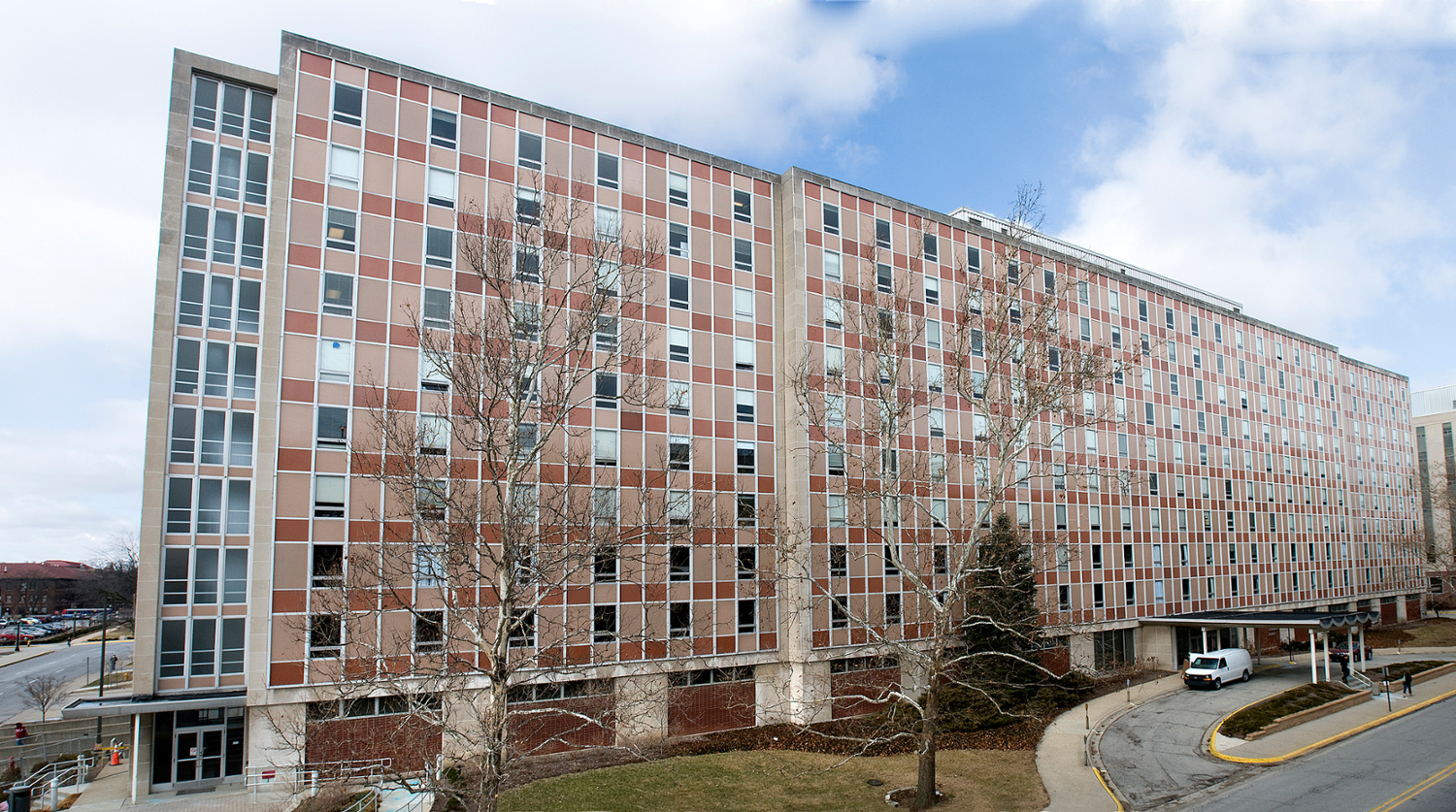
Outside of Young Hall, which houses the main offices for Purdue's Disability Resource Center
Staff members of the DRC prioritize listening to each student to come to a solution that is tailored to the student. Every student is different, and just because two people have the same disability, that doesn’t mean they will need the same accommodation.
“Most of our staff time goes into talking to students and trying to understand what they’re working through and what their experience is,” said Paul Harwell, DRC senior assistant director.
For Lauren Schimelman, Purdue student and DRC testing center student employee, the DRC has been a constant support since she visited campus as a prospective student.
“When I was here for STAR (Purdue's Student Transition, Advising and Registration orientation program), I actually had a meeting with the DRC and I met with my first access consultant and we just kind of broke down what I needed to bring, like different letters I needed from my doctor and how to transition a 504 plan into a plan that worked on Purdue’s system,” said Schimelman.
When she ran into problems with her schoolwork during periods of hospitalization, Schimelman could rely on the DRC to help her keep current in her classes.
“There were a couple of times where I was hospitalized and I’ll just reach out to my access consultant and they’re like ‘if you can’t reach out to professors, I will do that for you,’” Schimelman said. “They’re kind of there more as a buffer for me and a support system in case I do have any issues.”
The DRC also works with students with temporary disabilities, such as a broken arm, or with students who haven’t been diagnosed with a disability. For students experiencing temporary disabilities, there are drop-in hours available every day to talk with a staff member about appropriate accommodations.
Other students may be struggling in school and question if they have an undiagnosed disability. While DRC staff don’t diagnose or act as counselors for the student, they can help the student understand the process and point them to resources such as CAPS (Counseling and Psychological Services at Purdue), PUSH (Purdue University Student Health Center) or encourage them to visit a health care provider.
The DRC’s job is not to help a student earn an A in a course or ensure they meet a specific grade point average. While staff do connect students with resources that can help achieve this goal, the only role of the DRC is to guarantee access to those who need it, giving them equal opportunity with their peers.
“In higher [education], we talk about access, which is really more the opportunity,” said Harwell. “We’ll connect you with resources that every other student would use to navigate things like time management or whatever else at Purdue, but it’s still up to students to complete the work.”

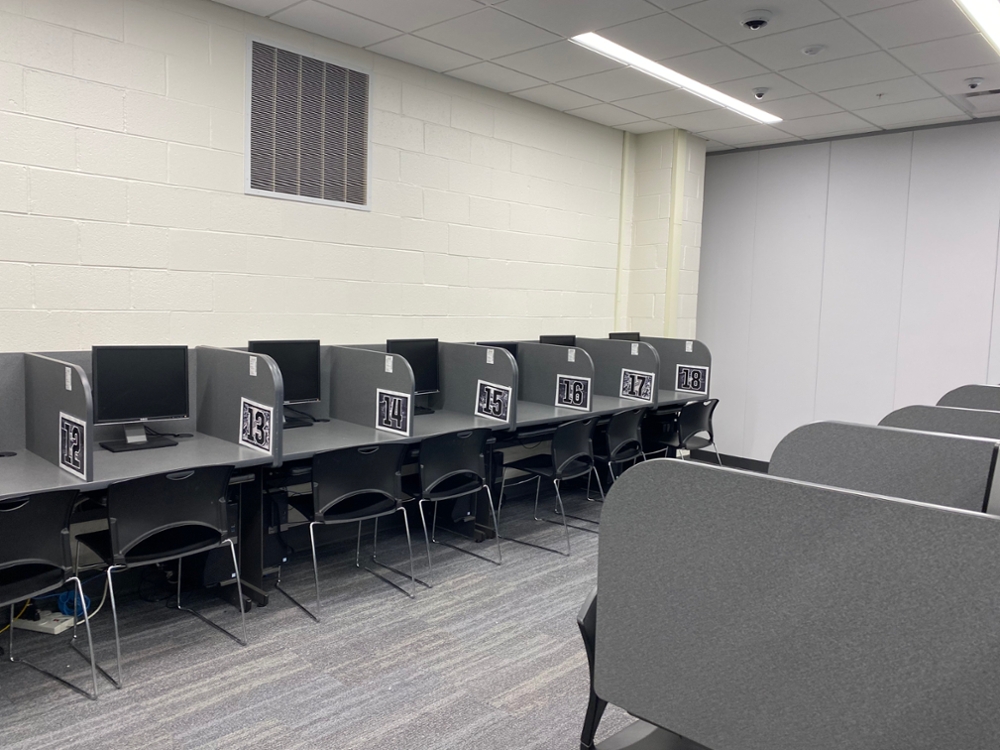
A student checks in to the DRC Testing Center, which is located in Stewart Center. The DRC is located in Young Hall.
Accommodations often look different for each student, and can also vary across each course the student is enrolled in. Every course has learning objectives that instructors develop, and if an accommodation interferes with those objectives, the student no longer has access to the same learning opportunities as their peers.
“An easy way to understand it is our work is based 100 percent on the design and delivery of the course,” said Randall Ward, Disability Resource Center director and associate director of Student Success. “So then, when we get unique accommodation requests, we often have to work with course instructors, because they’re the experts who designed the course with specific outcomes in mind, and we have to honor that.”
The DRC also provides support to instructors who want to make their course more accessible by design, or those who may have questions about implementing accommodations. An important step in making the accommodation process successful is communication between all parties.
When students send their accommodation letters out, the DRC always provides the name of the access consultant assigned to each student. This ensures that if faculty have questions about the accommodation, they can speak directly with the DRC staff member who came to that conclusion and who knows the student best.
The DRC encourages faculty to reach out if they have questions or want to talk about their concerns regarding accessibility in their courses.
“Our goal is to be as collaborative as we can to support faculty and staff and to make sure Purdue is making access happen,” Harwell said. “Ultimately, that benefits us all, but it’s not always an easy equation.”
To learn more about the Disability Resource Center, which is part of Student Success Programs, visit the DRC website.
Writer: Molly Gilbride, Student Communications Assistant, Student Success Programs, mgilbrid@purdue.edu
Last updated: March 7, 2022