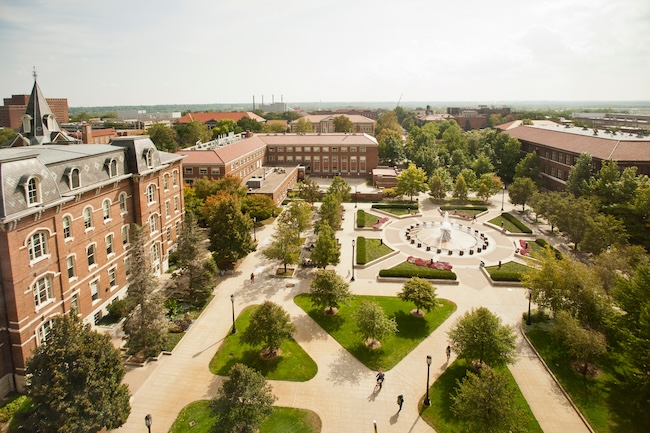
On Purdue University’s campus, a network of faculty, staff and students collaborate to help provide students with support. From improving the design of science labs to providing educational accommodations in the classroom, these efforts represent a broad commitment to creating a university where disabled students can thrive.
Redefining research
Brad Duerstock, professor of practice with a joint appointment in the Edwardson School of Industrial Engineering and Weldon School of Biomedical Engineering, shares that Purdue has made significant progress in accessibility since he started at the university in 1990.
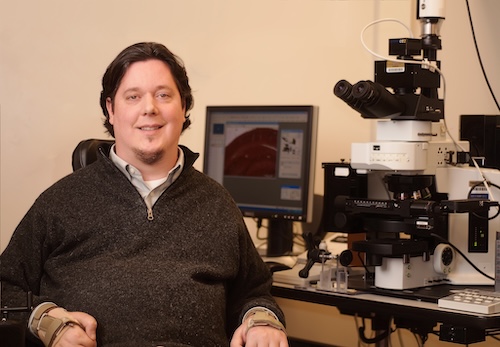
Pictured: Brad Duerstock, professor of practice in the Edwardson School of Industrial Engineering and Weldon School of Biomedical Engineering, focuses his research on improving the lives of people with disabilities.
As a disabled student who navigated his undergraduate, graduate and doctoral studies at Purdue, Duerstock reflects on the role of faculty in creating a supportive learning environment.
“We’re here to serve the educational needs of all students,” Duerstock shares. “Not just the ones who can easily digest the information we’re teaching.”
While it’s important for students to physically access the classroom, Duerstock explains that the active participation of students with disabilities in lab courses is equally necessary.
"Some students come to Purdue without knowing how to do their laundry or cook for themselves," Duerstock explains. "In addition to these challenges, students with disabilities have to navigate transportation, housing and other logistical concerns.”
In 2010, Duerstock received a grant from the National Institutes of Health (NIH) to advance his work in assistive technology and architectural access. His research focuses on improving the design of physical spaces and using software to help people with disabilities navigate their environments.
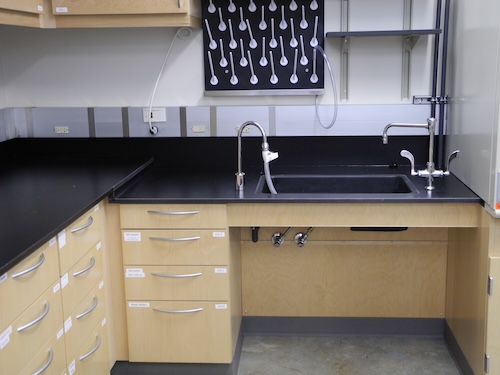
Pictured: An accessible laboratory sink developed by Duerstock and fellow researchers.
“The lab isn’t currently used for coursework, but these ideals generate ideas,” Duerstock explains. “We can share them with other groups on campus to understand how to make student spaces more approachable.”
Empowering students with DRC support
Mandie Greiwe, director of Purdue’s Disability Resource Center (DRC), explains how small actions make a big difference.
Some of her common suggestions for faculty and staff include avoiding harsh lighting or scents, removing physical barriers to entering office spaces and choosing mindful language to discuss disability.
Greiwe, who previously worked as an access consultant and assistant director at the DRC before returning as its director years later, has witnessed a growing emphasis on the DRC as a resource at Purdue.
“Before, we were seen simply as a student resource center where students came to set up accommodations,” Greiwe explains. “Now, we’re recognized as a resource-driven supporter for students, faculty and staff.”
She shares that the DRC is always open to collaborating on initiatives that support student accessibility at Purdue. In 2023, one such initiative helped make the Knowledge Lab — a space designed to help students bring innovative ideas to life — more accessible.
“Whether you’re a staff member supporting students, faculty teaching at Purdue or a student wanting to advocate for accessibility on campus, the first task is referring students to our office,” Greiwe emphasizes. “Connecting with students helps us reduce the stigma surrounding our services.”
Students shaping supportive environments
Geromy Cunningham, a nontraditional student and veteran, previously attended Purdue over a decade ago. Now, studying electrical and computer engineering at Purdue University in Indianapolis, he notes a great difference in support.
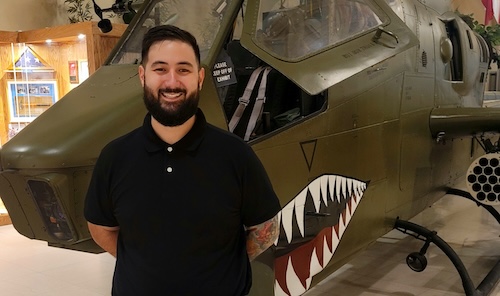
Pictured: Geromy Cunningham, a nontraditional veteran studying at Purdue in Indianapolis.
Cunningham explains that access goes beyond physical spaces — such as ramps and extra seating for people with disabilities — and also includes digital support, like note-taking assistance and extended exam time.
“When I first went to school, professors didn’t regularly share PowerPoints. If you missed out, you had to depend on someone else’s notes,” Cunningham shares. “The difference in how they provide resources now is like night and day.”
He advises students to speak up about their needs, as needed accommodations can be overlooked.
“It’s never a bad thing to sit down and have that conversation about the accommodations you need,” Cunningham shares.
Additionally, Cunningham shares the challenge of making accessibility more proactive rather than reactive. Given the pace of technological change, he emphasizes the importance of evaluating the usability of campus spaces, policies and technologies.
“Sometimes, outdated technology can be challenging for someone who has never encountered it before,” he explains. “There have been times when I picked up a piece of lab equipment and started using it immediately, while one of my younger peers might have no idea how to use it.”
Claire Maurer, a senior studying pharmaceutical sciences at Purdue, strives to create an accessible environment both at work and in her extracurricular activities.
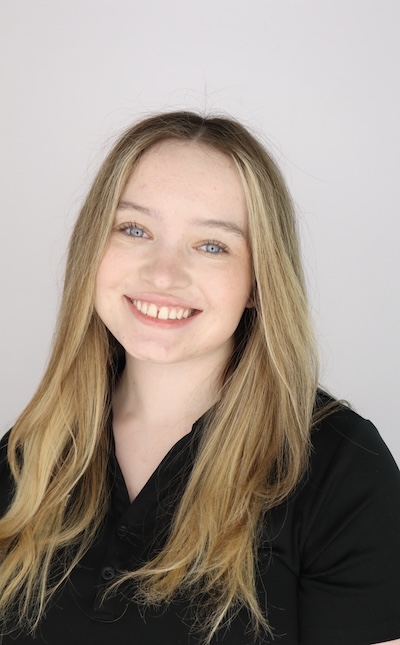
Pictured: Claire Maurer, a senior studying pharmaceutical sciences.
A member of Purdue Student Government ’s Disability Ad Hoc Community, Maurer believes education and advocacy are crucial roles students can take on to improve support.
“Increasing educational initiatives would completely change the way our campus handles accessibility,” she explains.
Many people on campus may not realize how many students at Purdue have disabilities, Maurer shares, especially since the majority of students registered with the DRC have invisible disabilities.
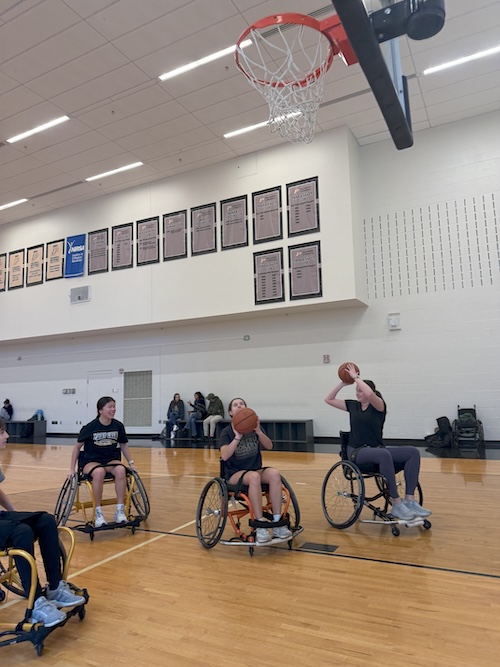
Pictured: Students attend a Reinventing the Interface of Inclusivity, Sports, and Engineering (RIISE) wheelchair basketball clinic during Disability Awareness Month.
“Learn about different disabilities,” Maurer suggests. “Learn about how they affect students, and think about how you can make a change.”
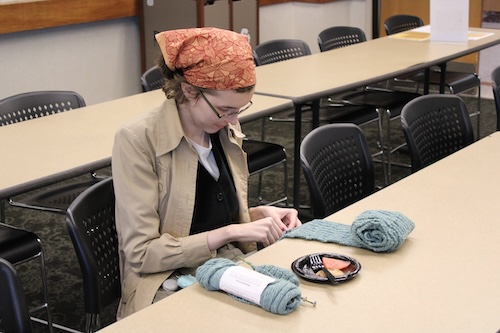
Pictured: A student participates in a DRC crafting event during Disability Awareness Month.
Taking action is an essential part of making that change. One way students can contribute is through the TAPDINTO-STEM Alliance , which works to expand pathways for students with disabilities by enhancing accessibility in higher education. Duerstock, who leads Purdue’s program, encourages interested students to visit the website to learn more about joining.
March, which is Disability Awareness Month, offers an ideal time for students to get involved. Join the DRC at tabling events, workshops and celebrations at both the West Lafayette and Indianapolis locations. For information about accessibility year-round, visit the DRC’s website .
Mina Reising
Senior Communication Assistant for Teaching and Learning, tlcoms@purdue.edu