PULSe Academics
Interdisciplinary Life Science
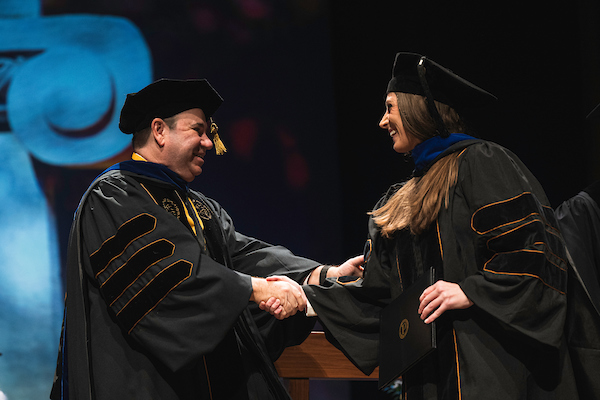
As part of this top-tier Ph.D. curriculum, students complete a combination of core graduate courses, training group–specific survey courses, and hands-on laboratory rotations. The unique structure ensures exposure to a broad range of disciplines while offering flexibility within the academic plan that meets individual career and research goals.
The PULSe curriculum has been designed to provide students with the basic information they will need to succeed in the PULSe Training Groups during their Ph.D. work. In addition, the curriculum provides a broad and interdisciplinary program of study with the maximum possible flexibility so that students may tailor their programs to their individual needs and explore several training areas before deciding on one for their thesis program. The core requirements are a combination of general courses, Training Group specific survey courses, and laboratory rotations.
Credit Hours: The core requirements comprise 16-19 credits;
69900 research credits (number of 69900 hours taken are determined on an individual basis by the PULSe Office each semester; note that a total of 90 credit hours are required for the Ph.D.)
The student’s research progress will be monitored for its ability to meet demands for publication in a peer-reviewed journal. This is one component of the Advisory Committee evaluation performed each year.
*The Biotechnology and Computational and Systems Biology Training Groups have additional core and credit hour requirements.
One of the following courses must be taken at any time during PULSe graduate training.
One of the following courses must be completed before the end of Year 2 of PULSe graduate training; however, the proposal writing class should not be taken during the first year.
This requirement is designed to train students from a variety of backgrounds in methods of acquiring and/or analyzing data in any of the various disciplines within PULSe. As such, there is a menu of courses from which students (and TGs) can choose depending on the individual student or TG needs. These courses and their descriptions are listed below. Students must satisfy this requirement by the end of Year 2. Students in the Biotechnology TG take an additional 9-12 Math/Statistics credit hour requirements.
With the specific purpose of helping students upgrade the quality of research by critical discussion, an Advisory Committee meeting is scheduled by the student at least once a year commencing at the start of the second calendar year of residence.
Students will be responsible for arranging their meetings and may schedule the meeting anytime during the month prior to the deadline. Upon scheduling, meeting information must be submitted online.
A typed Student Advisory Committee Report is to be prepared and distributed to the advisory committee at least two weeks prior to each meeting. Please follow the detailed instructions for the Student Advisory Committee Report.
The Student Advisory Committee Report must be uploaded online and will not be accepted via email. Failure to do so will result in a hold being placed on your account and you will be unable to register for the following semester. In order for this hold to be removed, students will need to submit the Committee Meeting Form and upload the Committee Meeting Report.
The electronic Advisory Committee Evaluation Form will be completed by each committee member. Each committee member is responsible for sharing the evaluations with the student. Evaluations must be submitted prior to the semester deadline.
Following your committee meeting, each member of your Advisory Committee will need to submit a meeting evaluation online. Upon completion of the evaluation, each member will have to ability to print/save the evaluation. The members are responsible for sharing the evaluations.
Graduation deadlines can be found on the Office of the Vice Provost for Graduate Students and Postdoctoral Scholars Calendar.
All candidates must meet certain requirements in thesis preparation. Thesis format requirements have been separated into two categories:
General guidelines for completing the final examination and thesis are: