March 31, 2021
For sports fans, nothing beats seeing their favorite athletes compete at the top of their game. But a shoulder injury such as a badly torn rotator cuff threatens to pause or end the career of any athlete in sports ranging from football, basketball and baseball to golf and tennis.
March 11, 2021
“Battery life technology, for the most part, has not been able to keep up with the other technology that requires the battery,” said Saeed Mohammadi, a professor of electrical and computer engineering in Purdue’s College of Engineering. “Complementary metal-oxide semiconductor [CMOS] is a battery-powered semiconductor chip inside computers and devices that stores information. CMOS requires a lot of power from the computer which, in turn, reduces the battery life.”
March 10, 2021
Purdue University technology to assist nonverbal children on the autism spectrum is helping families around the world during the COVID-19 pandemic, which has forced schools and clinics to rely more on remote options.
Mobile Technology Helps Give Voice to Nonverbal Autistic Children during Pandemic
December 10, 2020
SpeechVive is being showcased at the Association of Public and Land-grant Universities and the Association of American Universities’ third-annual University Innovation and Entrepreneurship Showcase, taking place virtually through Friday (Dec. 11). The showcase is spotlighting 22 startup companies from across the nation that have created products and services using federally funded, university-based research.
Innovative Research Helping People with Parkinson’s Disease Communicate Better
December 3, 2020
A prototype developed by Purdue University engineers would essentially let your body act as the link between your card or smartphone and the reader or scanner, making it possible for you to transmit information just by touching a surface.
Tech Makes it Possible to Digitally Communicate Through Human Touch
November 19, 2020
The long-term health challenges arising from sepsis and other potential complications experienced by patients recovering from the severe cases of COVID-19 are devastating, but medical professionals and researchers are diligently working to reduce these cardiovascular and neurological aftereffects.
November 19, 2020
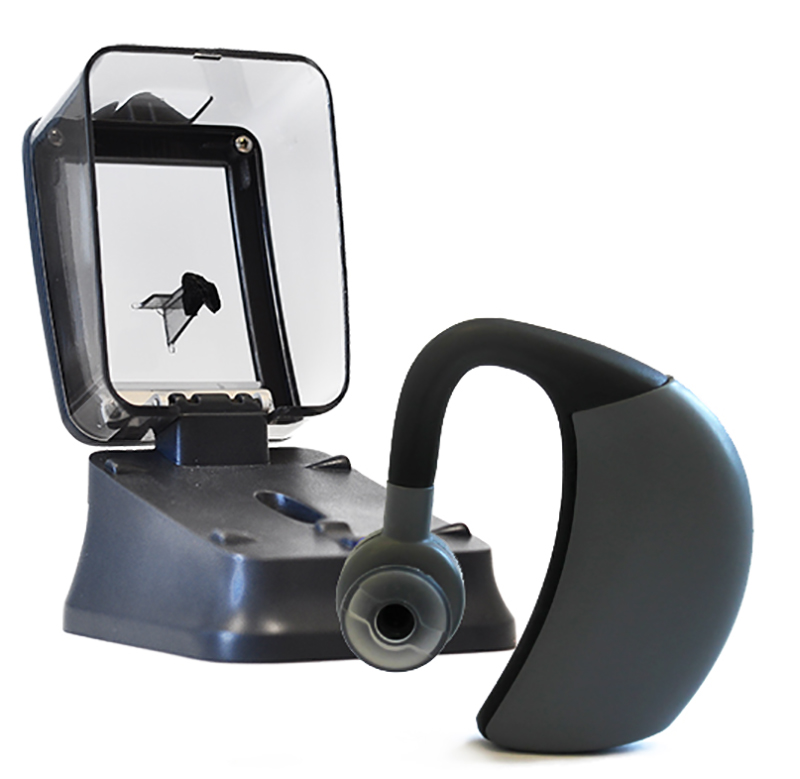
Jessica Huber, a professor of speech, language, and hearing sciences and associate dean for research in Purdue University’s College of Health and Human Sciences, decided to investigate the use of remote technology to calibrate the SpeechVive, an ear-worn device that provides immediate speech volume and clarity improvement for people with Parkinson’s disease. Huber wanted to find a way to serve patients in rural and remote areas.
Parkinson’s patients use telehealth access for immediate speech improvement during COVID-19 pandemic

October 1, 2020
Shriram Ramanathan, Hyowon “Hugh” Lee, and Alexander Chubykin discover a new material that may help scientists learn more about neurological disorders and possibly take some big steps toward brain-machine interfaces.

September 29, 2020
In the midst of a global pandemic, Purdue's Department of Chemistry had to accelerate its “next-generation digital learning environment for chemistry.” This led to a futuristic lab for the students, complete with digital lab manuals and notebooks.

September 10, 2020
A pair of Purdue University researchers developed small molecules to combat deadly, drug-resistant enterococcus. Vancomycin-resistant enterococcus (VRE) is among the leading causes of hospital-acquired infections in the United States.
