When Good Proteins Go Wrong, Can AI rescue us?
There are moments that change everything. For me, it was one morning at the hospital when I met a five-year-old whose life had been turned upside down by a stroke. Half his body didn’t work anymore. He had sickle cell disease, a condition where some proteins in his body had gone tragically wrong.
This little boy isn’t alone. Every year in the United States, about 2,000 babies are born with sickle cell disease. One in every 365 black babies is born with the disease. This is a staggering number that reveals just how common this “rare” disease really is. Globally, hundreds of thousands of children are born with sickle cell disease annually, particularly in sub-Saharan Africa.
But sickle cell disease isn’t the only villain in this story. Think about your grandparents, or perhaps an elderly neighbor you’ve grown fond of. Many of us have watched someone we love slowly disappear behind the fog of dementia. Currently, millions of Americans over 65 live with Alzheimer’s disease, and worldwide, 57 million people battle dementia. By 2050, 152 million people could lose pieces of themselves to a disease that steals memories, personalities, and the ability to recognize loved ones.
What do a child’s stroke and a grandmother’s forgotten memories have in common? The answer lies in something so small you’d need powerful microscopes to see it: proteins that have lost their way.
Think of proteins as nature’s complex origami. They’re long chains of building blocks that fold into precise 3D shapes, creating molecular machines that keep us alive. Just like a key needs the right shape to fit a lock, proteins need their correct shape to do their jobs—whether that’s carrying oxygen through your blood, helping you digest food, or maintaining the memories that make you who you are.
In sickle cell disease, a tiny change in one protein causes red blood cells to twist into rigid, crescent shapes that clog blood vessels and cause strokes. In Alzheimer’s disease, proteins fold wrongly and clump together in the brain, destroying the networks that hold our thoughts and memories. These diseases, along with many others such as Parkinson’s, all share this common thread: proteins that do not fold or work correctly.
To understand why proteins fold and work correctly and why they sometimes don’t comes down to the science of energy and stability (thermodynamics). Picture a ball rolling down a hill. It naturally wants to settle at the bottom because that’s the most suitable, lowest-energy spot. Proteins work the same way, folding into shapes that require the least energy to maintain while still being flexible enough to do their work.
But here’s the challenge: figuring out exactly how thousands of atoms move and interact as a protein folds is very complex. For decades, scientists could only study small pieces of this puzzle at a time, like trying to understand a symphony by listening to one note.
This is where our work with artificial intelligence comes in. Modern AI can process and analyze vast amounts of data far beyond human ability. My research develops and uses AI to understand how much energy proteins take up as they warm, and how much heat they can hold. These heat changes influence whether they fold into the right shape or misfold and cause disease when they go rogue. Currently, our models get about 80% of our predictions right.
So, think of this as giving scientists a crystal ball. Instead of spending years in the laboratory trying to understand why proteins go wrong, we can use AI to predict when and how these changes happen. We can also design new proteins with specific shapes and functions, essentially creating molecular machines tailored to fight disease.
This technology could help us understand exactly how that five-year-old’s hemoglobin changes made his cells twist into sickle shapes and how to help him. It could help us design treatments that keep the proteins in our brains folded correctly, preserving the memories and personalities of millions facing dementia.
The Promise Ahead
The blend between AI and human scientists is opening doors we are only beginning to imagine. We are not only studying nature’s molecular machines, but we are also learning to build better ones. Each protein we model correctly brings us closer to treatments for diseases that have plagued humanity for millennia.
That little boy with sickle cell disease deserves a future where his condition is preventable or easily treatable. Families watching loved ones slip away to dementia deserve hope that goes beyond simply slowing the inevitable.
The answers might lie in the smallest details in understanding exactly how proteins explore their energy landscapes and what makes them stumble. With the help of AI, we are finally equipped to solve puzzles that once seemed impossibly complex.
About the Author:
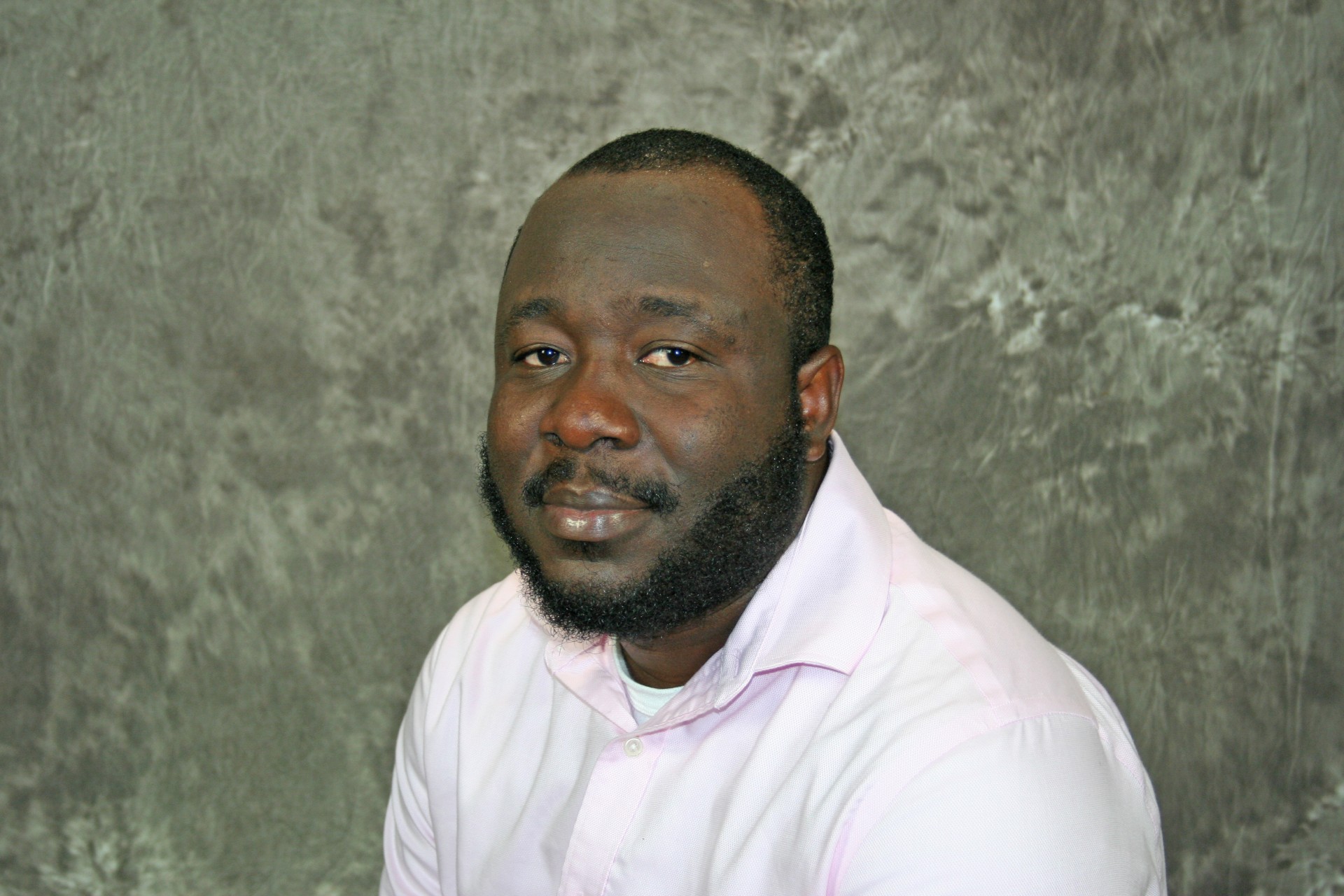
Ismaila Adams is a PhD candidate in Medicinal Chemistry and Molecular Pharmacology at Purdue University, where he specializes in using machine learning to understand protein thermodynamics and stability. He is a graduate research assistant in the Post Lab and currently serves as the President of the MCMP Graduate Student Organization at the Purdue University College of Pharmacy.
Want to participate in the competition?