
September 1, 2020
Julia Chester, professor of psychological sciences at Purdue University, who studies stress and drinking behaviors, said that pandemic-related social stressors could point to an increase in alcohol consumption and drinking behaviors. According to survey results from an RTI International study, the average daily alcohol intake increased from approximately 0.74 drinks in February to 0.94 drinks in April. Current social stressors include persistent changes in relation to safety guidelines and isolation from quarantining or social distancing.
August 14, 2020
The Purdue team developed a fully implantable radio-frequency transmitter chip for wireless sensor nodes and biomedical devices. The research is published in the journal IEEE Transactions on Circuits and Systems II. The transmitter chip consumes lowest amount of energy per digital bit published to date.
Implantable transmitter provides wireless option for biomedical devices

August 11, 2020
A $2 million grant from the National Institute on Aging at the National Institutes of Health to Neurodon, a Purdue University-affiliated startup, will help fast-track molecules that could improve memory and reduce Alzheimer’s disease neurodegeneration.
NIH grant to help fast-track Neurodon’s Alzheimer’s drug development research
August 11, 2020
Doug Brubaker, a Purdue assistant professor of biomedical engineering, uses computational and experimental approaches to study host-microbiome interactions in cancers and inflammatory diseases.
Computational model could improve success in translating drugs from animal studies to humans
August 10, 2020
Dr. Shi specializes in uncovering the mechanisms of central nervous system trauma and diseases and instituting new treatments through innovative experimentation and pioneering new strategies in the field. In addition to being a professor of basic medical sciences in the Purdue College of Veterinary Medicine, he holds a courtesy appointment in Purdue’s Weldon School of Biomedical Engineering. In 2019, Shi was appointed director of the Center for Paralysis Research at Purdue. Shi is the author or co-author of 167 published papers and is the recipient of 12 issued patents. Two of his therapies have gone to clinical trials for spinal cord and head trauma, and one has gained FDA approval for patients with multiple sclerosis.
July 23, 2020
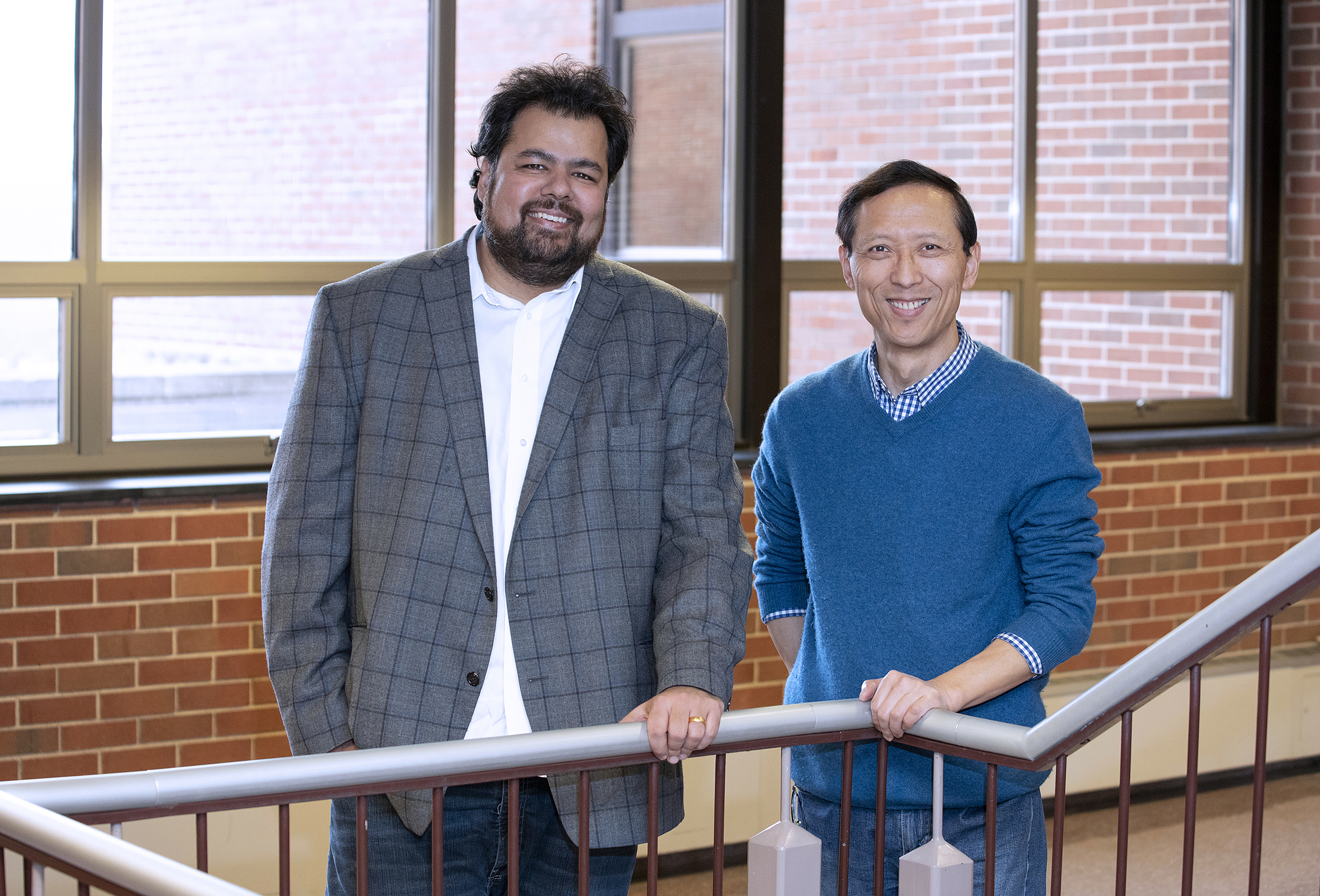
PIIN members, Dr. Gaurav Chopra and Riyi Shi, professors at Purdue University, have received new support as they research traumatic brain injury and Alzheimer’s disease.
July 13, 2020
The Medical Scientist Training Program (MSTP) offers fellowships and full-tuition scholarships to physician-engineer trainees in the IUSM-Purdue University MD-PhD BME combined degree program. One of PIIN’s goals is to increase the number of MSTP trainees pursuing their degree in PIIN laboratories. Not only would such an outcome strengthen the Institute’s research programs by engaging an outstanding pool of MD/Ph.D. students, but it would also foster the development of collaborations between PIIN faculty members and colleagues at IUSM.
Read More about "PIIN provides support for the Medical Scientist Training Program (MSTP)"

July 8, 2020
Georgia Malandraki, associate professor of speech, language, and hearing sciences at Purdue University, is uncovering the relationship between the brain and swallowing to develop treatments for children and adults who have difficulty swallowing. This condition, also known as dysphagia, affects 10 million adults and more than a half million children in the United States every year.
June 18, 2020
Intelligent technologies have begun to affect nearly every corner of our lives. At the same time, people 65 years and older have become the fastest-growing age group worldwide. While there are many benefits of a future enabled by smart tools, older adults have typically been left out of the product design conversation, which has not taken into account their capabilities, limitations, expectations, and usability issues.
June 1, 2020
HIV stands for human immunodeficiency virus – a virus that makes your immune system weak so that it cannot fight off infection. It’s not easy to detect HIV in the first few weeks after infection, but it’s actually very important so the person can begin treatment and prevent transmission to another person.
