April 20, 2018
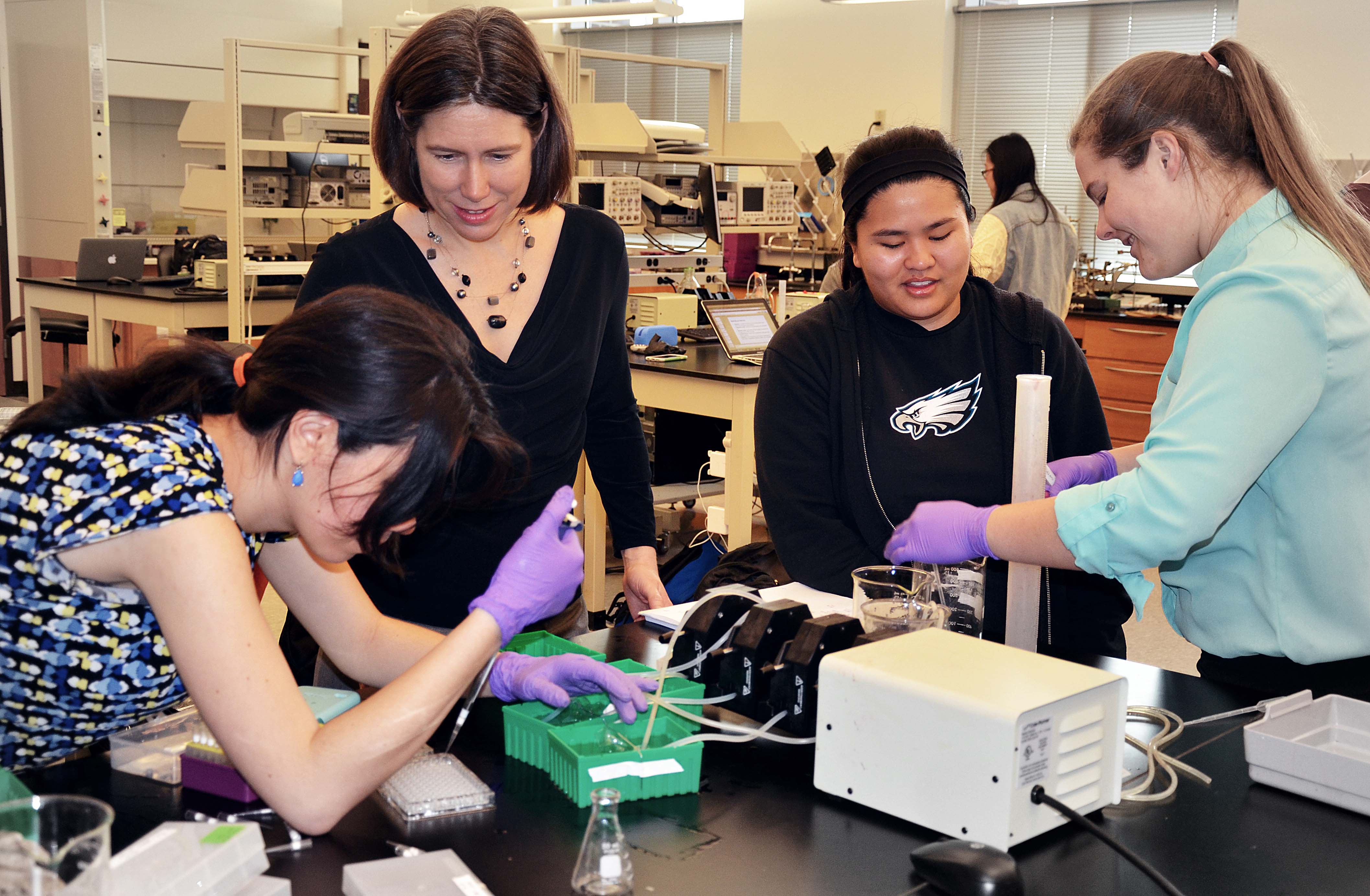
For the educational component of the NSF CAREER award, Tamara Kinzer-Ursem, an assistant professor of biomedical engineering, will develop a new educational pathway to prepare Weldon School students for careers in biotechnology and biomedical engineering.
April 20, 2018
Advancements in microfabrication has enabled manufacturing of microscopic neurostimulation electrodes with smaller footprint than ever possible. The smaller electrodes can potentially reduce tissue damage and allow better spatial resolution for neural stimulation. Although electrodes of any shape can easily be fabricated, substantial effort have been focused on identification and characterization of new materials and surface morphology for efficient charge injection, while maintaining simple circular or rectangular Euclidean electrode geometries. In this work we provide a systematic electrochemical evaluation of charge injection capacities of serpentine and fractal-shaped platinum microelectrodes and compare their performance with traditional circular microelectrodes. Our findings indicate that the increase in electrode perimeter leads to an increase in maximum charge injection capacity. Furthermore, we found that the electrode geometry can have even more significant impact on electrode performance than having a larger perimeter for a given surface area. The fractal shaped microelectrodes, despite having smaller perimeter than other designs, demonstrated superior charge injection capacity. Our results suggest that electrode design can significantly affect both Faradaic and non-Faradaic electrochemical processes, which may be optimized to enable a more energy efficient design for neurostimulation.
Electrode shape improves neurostimulation for small targets- Dr. Hugh Lee
April 5, 2018
As part of its Integrative Data Science Initiative, Purdue is launching an internal funding opportunity for ambitious proposals that apply data science to pressing, socially relevant issues. The funding will leverage the University's existing strengths in data analytics to help position Purdue as a leader in science-enabled research, says Tomás Díaz de la Rubia, chief scientist and executive director of Discovery Park, who is spearheading the research thrust of the initiative.
Discovery Park announces request for proposals to support data science initiative
April 5, 2018
As part of its Integrative Data Science Initiative, Purdue is launching an internal funding opportunity for ambitious proposals that will expand data science education across campus. Initiated by Jay Akridge, provost and executive vice president for academic affairs and diversity, and Suresh Garimella, executive vice president for research and partnerships, the initiative has been formulated through two cross-campus working groups, forums and input from campus-wide discussions.
April 5, 2018
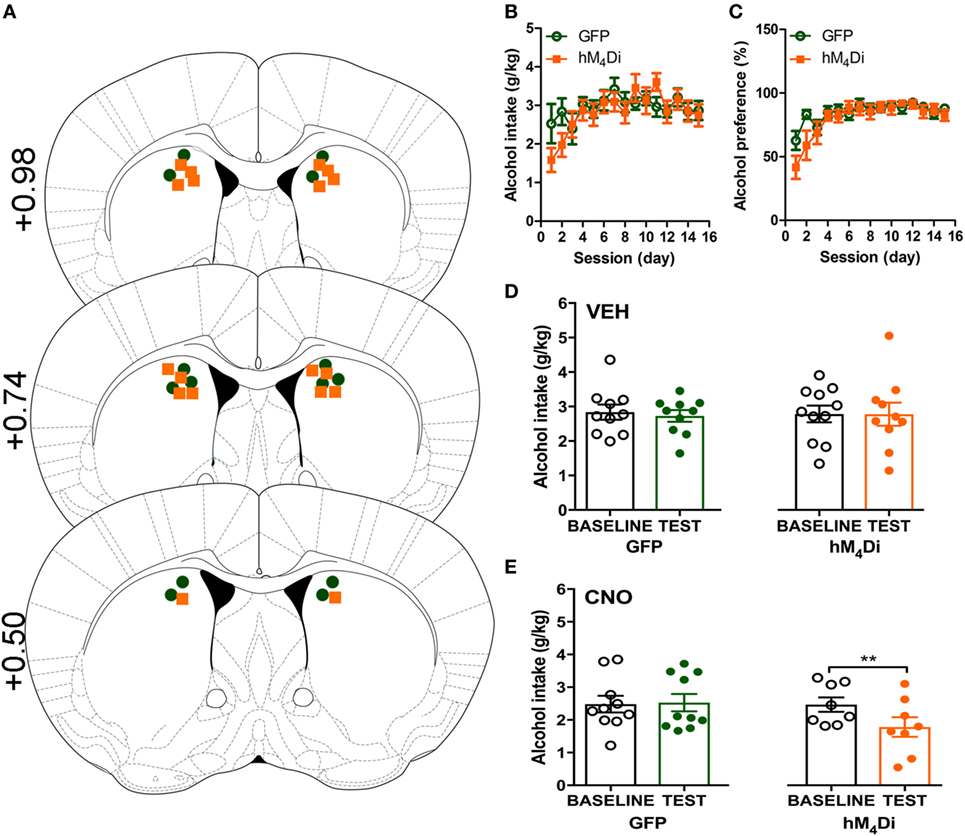
Richard van Dijn from the Purdue College of Pharmacy, along with Meridith T. Robins, Terrance Chiang, Kendall L. Mores, and Doungkamol Alongkronrusmee have explored the hypothesis that dorsal striatal Gi/o-protein activation is sufficient to reduce voluntary alcohol intake. Using a voluntary, limited-access, two-bottle choice, drink-in-the-dark model of alcohol (10%) consumption, they validated the importance of Gi/o signaling in this region by locally expressing neuron-specific, adeno-associated-virus encoded Gi/o-coupled muscarinic M4 designer receptors exclusively activated by designer drugs (DREADD) in the dorsal striatum and observed a decrease in alcohol intake upon DREADD activation. Overall, these results suggest that activation Gi/o-coupled GPCRs expressed in the dorsal striatum, such as the DOR, by G-protein biased agonists may be a potential strategy to decrease voluntary alcohol consumption and ?-arrestin recruitment is to be avoided.

March 28, 2018
The IUPUI School of Science is hosting a "Computational & Systems Neuroscience: from theory to clinical applications" Symposium on April 27, 2018. The symposium will bring together researchers in computational and systems neuroscience from multiple universities and campuses in Indiana. It features internationally renowned neuroscientists presenting leading-edge interdisciplinary research that bridges theoretical, experimental and clinical directions. A limited number of poster presentations will be accepted.
March 28, 2018
Dr. Hyowon Lee (PIIN), Assistant Professor of Biomedical Engineering, recently published his latest study “Electrochemical Evaluations of Fractal Microelectrodes for Energy Efficient Neurostimulation” in the journal Scientific Reports. The findings suggest that electrode design can significantly affect both Faradaic and non-Faradaic electrochemical processes, which may be optimized to enable a more energy efficient design for neurostimulation.
March 28, 2018
Dr. Richard M. van Rijn (PIIN), Assistant Professor of Medicinal Chemistry and Molecular Pharmacology recently published their latest study “Behavioral Characterization of ?-Arrestin 1 Knockout Mice in Anxiety-Like and Alcohol Behaviors” in the journal Frontiers in Behavioral Neuroscience. In this study Dr. Van Rijn laboratory characterized a genetic knockout mice strain lacking the beta-arrestin1 gene in behavioral models associated with anxiety and reward, finding that female knockout mice have a tendency to drink higher amounts of alcohol, suggestive of a protective role for this protein in alcohol use.
March 28, 2018
Dr. Zhongming Liu (PIIN), Assistant Professor of Biomedical Engineering and Electrical & Computer Engineering, recently published two of their latest studies, “Deep residual network predicts cortical representation and organization of visual features for rapid categorization” in the journal Scientific Reports and “Electrophysiological source imaging: a non-invasive window to brain dynamics” in the journal Annual Review of Biomedical Engineering. These two publications aim to identify an underlying computational basis of vision and its application to artificial intelligence.
March 28, 2018
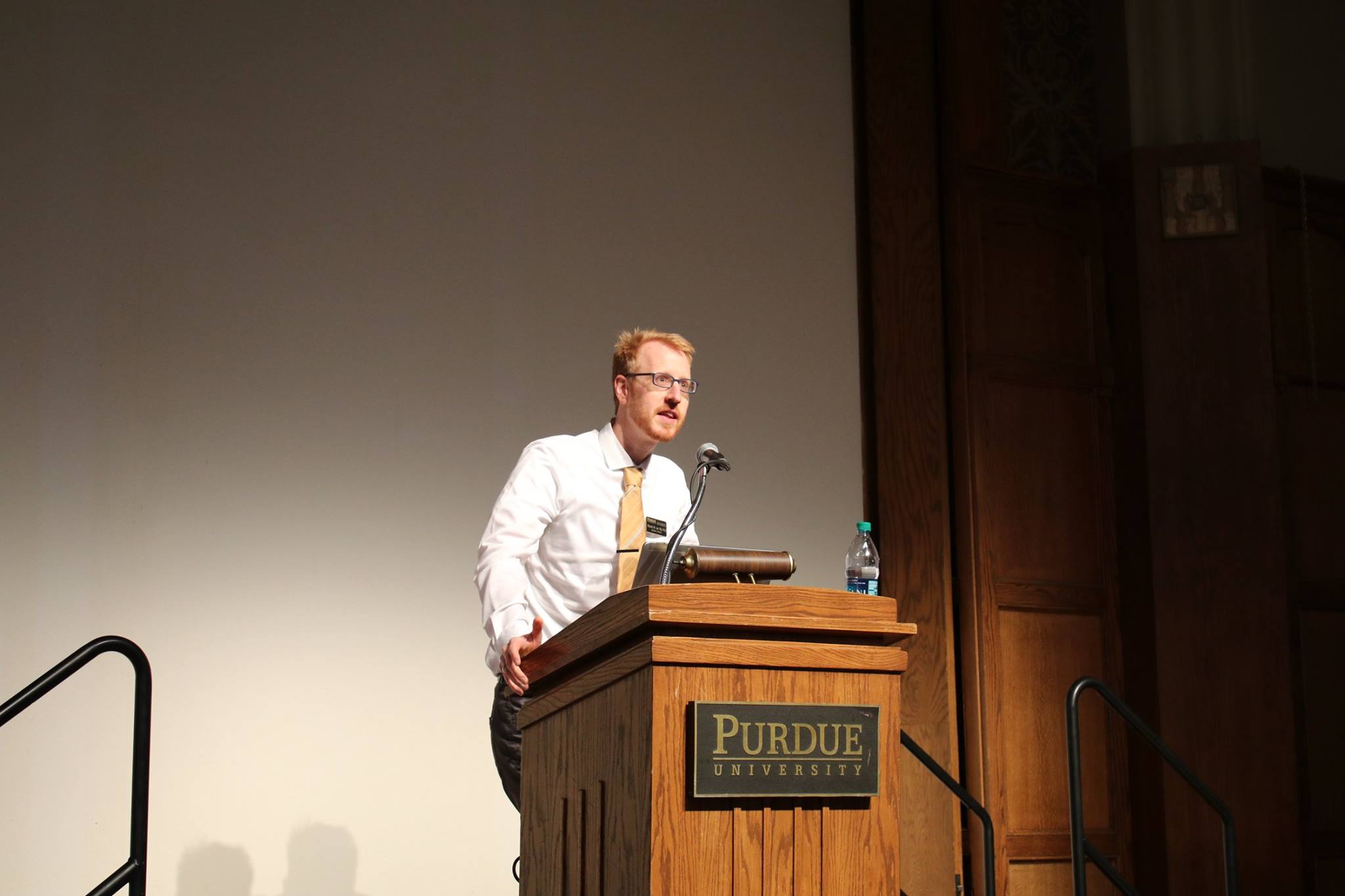
Dr. Richard M. van Rijn (PIIN), Assistant Professor of Medicinal Chemistry and Molecular Pharmacology (MCMP) recently received a 2-year R03 for $149,324 from National Institute on Drug Abuse. Dr. Van Rijn along with his collaborator Dr. Markus Lill from MCMP. The primary goals of the grant are to synthesize novel agonists of the delta opioid receptor that has strong preference to signal via G-proteins using computer-assisted drug design, characterize the novel compounds in cellular models to ensure potency and selectivity, and then test the top three drugs for their analgesic ability in reducing inflammatory pain.
