66 Search Result(s) For "wood ash"


July Garden Calendar

HOME (Houseplants and indoor activities) Closely watch houseplants that have been set outdoors. They need more water than they did indoors. They can dry out rapidly in hot, summer breezes. Propagate houseplants by taking cuttings from vigorously growing plants. Place the cut end in rooting media (such as perlite, vermiculite, or peat moss soil mix). Enclose in plastic and keep out of direct sunlight. YARD (Lawns, woody ornamentals, and fruits) Keep newly established plants watered…Read more about July Garden Calendar[Read More]
Watering the Garden Just Right

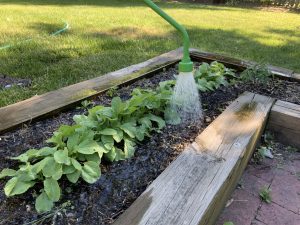
Although recent rains have relieved some gardeners from their watering chores, the respite is sure to be temporary. Seasonal thunderstorms may deluge some gardens with water while other areas, even those close by, may stay fairly dry. Most garden plants will need 1-1.5 inches of water per week to maintain healthy leaves, flowers and fruit. When Mother Nature does not provide enough, it’s up to the gardener to supply the rest. Not too little, not…Read more about Watering the Garden Just Right[Read More]


Spice Up Your Holidays

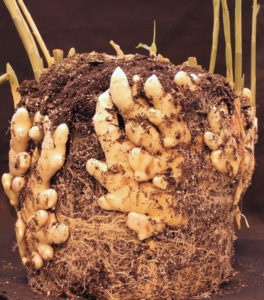
Some of the most popular spices used this time of year are harvested from various parts of exotic tropical plants, lending a special flavor to holiday recipes. Ginger is harvested from the rhizomes (underground stems) of a tropical/sub-tropical herbaceous plant, Zingiber officinale. Ginger is native to tropical Asia and is grown commercially in Hawaii and many other countries, including China, India, Thailand and Brazil. The rhizomes are harvested after the first year of the plant’s…Read more about Spice Up Your Holidays[Read More]


Sour mulch can burn tender plants

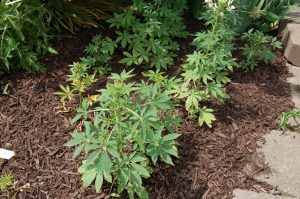
Although the benefits of mulching garden plants are many, wood mulch that has been improperly stockpiled can lead to plant injury or even death. Young herbaceous plants are the most susceptible to such injury, which becomes obvious shortly after applying a hardwood bark mulch. Plants may look like they have been burned with fertilizer or pesticides, or possibly, are under severe water stress. All of the above could potentially be a problem, but apparently, we…Read more about Sour mulch can burn tender plants[Read More]


Peony Showtime

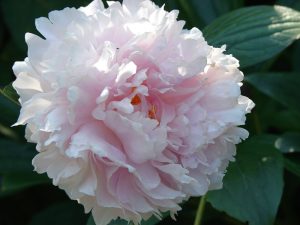
To admire a peony in full bloom is a fitting way to celebrate our full arrival into spring and preview a hint of the colors that summer will bring to our gardens. Although it is native to Asia, the peony has become a staple of Midwestern flower gardens – so much so that the Indiana Legislature in 1957 adopted the peony as the state flower. Zinnia was the state flower from 1931 to 1957 and…Read more about Peony Showtime[Read More]


Common culprits of tree damage-April 2016

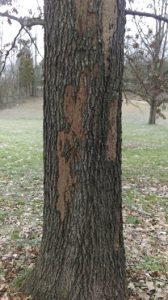
Question & Answer Common culprits of tree damage Q.  This is a very beautiful large tree that I lost last year. It’s the second one I have lost in the past seven years. Would you be able to see from the photo what might be happening to my trees? I have more beautiful trees on my property that I would like to save if I can. – L.P., Elizabeth, Indiana A. While I can’t be certain…Read more about Common culprits of tree damage-April 2016[Read More]

 Categories:

Leaves of Three, Let It Be’ Should Be ‘Leaflets of Three

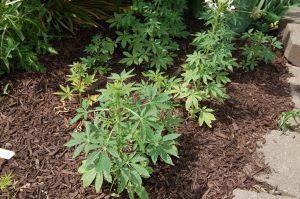
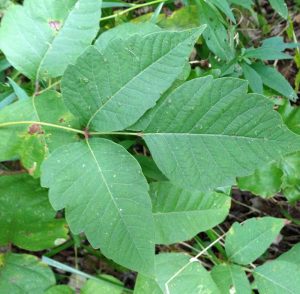
Most gardeners have heard of the wise advice “leaves of three, let it be” referring to the pest plant poison ivy. While not quite as catchy, the saying really should be “leaflets of three, let it be.” Poison ivy leaves are compound rather than simple – a single leaf is divided into three separate portions, called leaflets. Plants with three leaflets are often referred to as being trifoliate. Another key identifying characteristic is that one…Read more about Leaves of Three, Let It Be’ Should Be ‘Leaflets of Three[Read More]


Hydrangea Popular, but Confusing

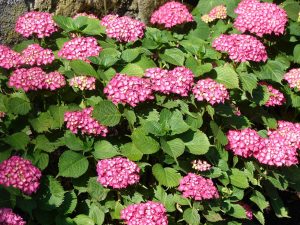
Hydrangeas are popular, but understandably confusing! There are about 25 species, though only five are primarily grown in the U.S. There are literally thousands of cultivars. Some species are classified as either mophead (all large, sterile florets) or lacecap (fertile, center florets surrounded by larger, sterile florets), depending on cultivar. The showiest part of the flower cluster is actually the bracts rather than petals. The bracts persist long after the petals drop and are often…Read more about Hydrangea Popular, but Confusing[Read More]


Sour Mulch Can Burn Tender Plants

Although the benefits of mulching garden plants are many, wood mulch that has been improperly stockpiled can lead to plant injury or even death. Young herbaceous plants are the most susceptible to such injury, which becomes obvious shortly after applying a hardwood bark mulch. Plants may look like they have been burned with fertilizer or pesticides, or possibly, are under severe water stress. All of the above could potentially be a problem, but, apparently, we…Read more about Sour Mulch Can Burn Tender Plants[Read More]


Page last modified: October 4, 2016

Indiana Yard and Garden – Purdue Consumer Horticulture - Horticulture & Landscape Architecture, 625 Agriculture Mall, West Lafayette, IN 47907

© 2026 Purdue UniversityAn equal access/equal opportunity universityCopyright ComplaintsMaintained by Indiana Yard and Garden – Purdue Consumer Horticulture

If you have trouble accessing this page because of a disability, please contact Indiana Yard and Garden – Purdue Consumer Horticulture at homehort@purdue.eduAccessibility Resources