Yard and Garden News

The following news stories are written by Rosie Lerner, Extension Consumer Horticulture Specialist, and are distributed to news media around the state by Agricultural Communication Service, at Purdue University.


Temporary Shelter for Bare-Root Landscape Plants

New landscape plants are best planted as soon as possible after they arrive, but gardeners often need to delay planting due to early shipping, weather delays or simply lack of time in busy schedules. So gardeners may need temporary shelter for holding the plants until proper planting can be arranged. When plants first arrive, open the packing material to check on plant condition. Dormant plants are typically shipped bare-root (without soil) this time of year….Read more about Temporary Shelter for Bare-Root Landscape Plants[Read More]

New Garden Vegetables for 2008

Perhaps the only thing vegetable gardeners enjoy more than harvesting their crops is making plans for the coming growing season. Garden catalogs fill the mailbox and online seed houses come alive with tempting photos of luscious ripe harvests, which makes this a perfect time to plan the spring garden! Here’s a look at what’s new for vegetable gardeners in 2008. Bean ‘Gold Dust’ bears butter-yellow wax pods set high on upright bush plants. Good disease…Read more about New Garden Vegetables for 2008[Read More]


Gardeners’ Glossary

Gardening enthusiasts have their own jargon, as do many other hobbyists. Some of these terms can be confusing, especially to the gardening newcomer. So here’s a brief list of terms that all gardeners should be familiar with. Annual — Plant that completes its life cycle from seed germination to seed production in one growing season. Biennial — Plant that completes its life cycle over two growing seasons; usually produces only vegetation its first season, then…Read more about Gardeners’ Glossary[Read More]


Geranium ‘Rozanne’ the 2008 Perennial of the Year

The Perennial Plant Association named the hardy Geranium ‘Rozanne’ as its 2008 Perennial Plant of the Year. Also known as Cranesbill, perennial geraniums have long been a staple on the gardeners’ palette.  The cultivar Rozanne is relatively new on the scene and was selected for outstanding flower size, unique color, and long blooming season. ‘Rozanne’ was originally discovered by a couple in their Sommerset, England garden, a result of collecting seed from existing plants and…Read more about Geranium ‘Rozanne’ the 2008 Perennial of the Year[Read More]


Potatoes Turning Green

Whether store-bought or homegrown, potatoes will turn green when they are exposed to light. Most folks know that they shouldn’t eat potatoes that have turned green, or at least cut away the affected portion. But it’s not actually the green color that is the problem. The green color comes from the pigment chlorophyll, produced as a response to light. The potato tuber that we eat is actually a modified stem structure that grows underground. The…Read more about Potatoes Turning Green[Read More]


Composting Turns Trash to Treasure

Autumn frosts usually means lots of clean up around the yard and garden. Why not turn that yard waste into treasure? Composting is a naturally occurring process that breaks down organic materials into an excellent soil amendment that improves soil structure, as well as adds some nutrients. Composting will help you recycle your garden wastes, improve your soil and reduce disposal costs. All organic materials will break down eventually, but gardeners can speed up the…Read more about Composting Turns Trash to Treasure[Read More]


Fascinating Fasciation

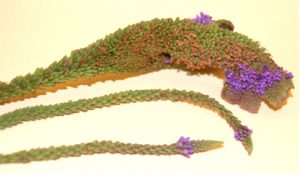
Every so often, gardeners find a deformed-looking flower or stem that appears as if the plant has bulked up on steroids. The stem or flower stalk will appear somewhat squashed and splayed, sometimes splitting in two or more sections. Or it may appear that two or more stalks have merged together to form one distorted structure. This odd growth is called fasciation, which literally translates to banding or bundling. Fasciation is thought to be caused…Read more about Fascinating Fasciation[Read More]


All-American Selections New Flowers and Vegetables for 2008

Only three new garden plants were chosen for All America Selections (AAS) 2008, based on superior performance in test gardens all over the country. Osteospermum (a.k.a. cape daisy) ‘Asti White’ is this year’s bedding plant winner, selected for its outstanding bright white 2 – 2.5 inch daisy flowers with blue centers that continue blooming all summer.  The compact plants, reaching up to 20 inches tall and wide, are ideal for container gardens and will tolerate…Read more about All-American Selections New Flowers and Vegetables for 2008[Read More]


Showy Foliage for Shade Gardens

You don’t have to live in the tropics to have a stunning foliage display in your shade garden. Midwest gardeners have a wonderful foliage palette that can fill in areas among other perennials, or even star as the focal point. Of course, everyone thinks of hosta for showy shade-loving foliage, and there are an awesome number of cultivars to choose from. They come in various shades of green and blue and accented with white, cream…Read more about Showy Foliage for Shade Gardens[Read More]


Help Your Garden Cope with Dry Spell

Dry summers are not unusual in Indiana. In fact, I addressed dry conditions in this column just two years ago. Gardeners struggle hard enough to maintain healthy plants when extreme high temperatures are accompanied by lack of rain. What compounds the stress of this year’s dry weather is that it follows the wild weather extremes experienced earlier this year. March brought unseasonably warm temperatures to lure plants out of dormancy, and then April put the…Read more about Help Your Garden Cope with Dry Spell[Read More]


Page last modified: October 25, 2016

Indiana Yard and Garden – Purdue Consumer Horticulture - Horticulture & Landscape Architecture, 625 Agriculture Mall, West Lafayette, IN 47907

© 2026 Purdue UniversityAn equal access/equal opportunity universityCopyright ComplaintsMaintained by Indiana Yard and Garden – Purdue Consumer Horticulture

If you have trouble accessing this page because of a disability, please contact Indiana Yard and Garden – Purdue Consumer Horticulture at homehort@purdue.eduAccessibility Resources