Category: Integrated Pest Management

Roses: A Feast For Many Insects/Mystery Plant ID/Why Hydrangea Flowers Fade Pink to Tan

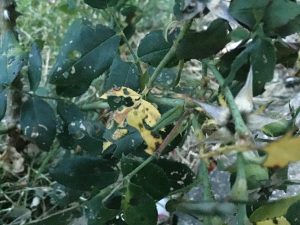
Q. How can I keep the beetles away and keep the invisible insects from eating holes in my rose leaves? The beetles have not been too bad the last couple of years, but the holes in the leaves never stop. I have tried so many different kinds of insecticides but to no avail. Our soil is not too sandy, but it is not all dirt either. Drainage does not seem to be a problem as…Read more about Roses: A Feast For Many Insects/Mystery Plant ID/Why Hydrangea Flowers Fade Pink to Tan[Read More]
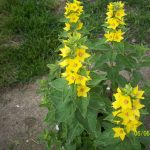
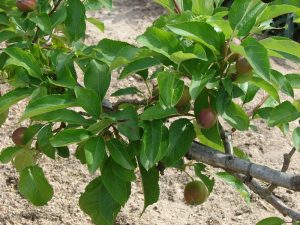
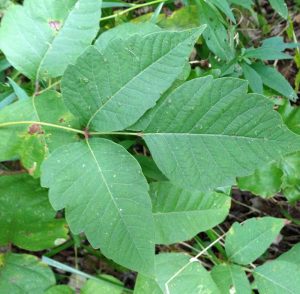
Weed or flower? Sometimes it’s in the eye of the beholder

Q) This flower/weed came up in my flower garden this year. I know that I did not plant it and two other people said that they have it growing in their yards also. I took it to our local nursery. They did not know what it was and looked it up in their books but could not find it. They gave me a few suggestions but when I looked them up on the internet, they…Read more about Weed or flower? Sometimes it’s in the eye of the beholder[Read More]


Best fruit tree for central Indiana / What to do about moles?

Q. Do you have a suggestion of a good/easy to grow fruit trees in the Indianapolis area? Any tips on the “how to” will be appreciated. – N.D. A. A dwarf, scab- resistant apple cultivar would likely be the best adapted of the fruit trees for the central Indiana area. There are quite a few cultivars to choose from. Most apple cultivars require cross pollination from a compatible cultivar in order to reliably set fruit. It…Read more about Best fruit tree for central Indiana / What to do about moles?[Read More]


Leaves of Three, Let It Be’ Should Be ‘Leaflets of Three

Most gardeners have heard of the wise advice “leaves of three, let it be” referring to the pest plant poison ivy. While not quite as catchy, the saying really should be “leaflets of three, let it be.” Poison ivy leaves are compound rather than simple – a single leaf is divided into three separate portions, called leaflets. Plants with three leaflets are often referred to as being trifoliate. Another key identifying characteristic is that one…Read more about Leaves of Three, Let It Be’ Should Be ‘Leaflets of Three[Read More]


Many possible reasons for early loss of white oak leaves / Marestail Control

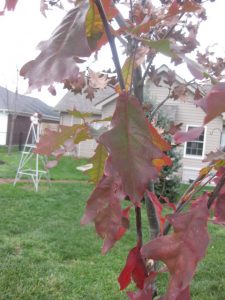
Q. I have a white oak tree that lost about half of its leaves to a varmint. I’m guessing June bugs that were in a bunch about 15 feet away. The tree did not put out any new growth except late in the summer on the end of the tallest limb. Meantime, a new tree sprung up. I’ll include some pictures that will show the leaves and their color. I have no idea what flavor…Read more about Many possible reasons for early loss of white oak leaves / Marestail Control[Read More]


Jury still out on use of rubber mulch

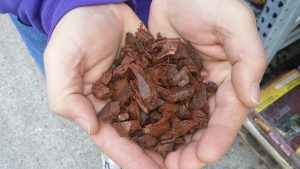
Q. Our HOA is considering using rubber mulch in a large area. In your experience, what is the up side or down side? I have read that as it deteriorates the chemical and all ingredients break down and go into the soil. Any thoughts?  – LK, Lafayette, IN A. This is a really great question that unfortunately does not yet have a clear answer. There are many questions remaining regarding the long-term safety of using recycled shredded or crumb…Read more about Jury still out on use of rubber mulch[Read More]


Larch Needle Blight/White Ash Woes/Top-setting Onions

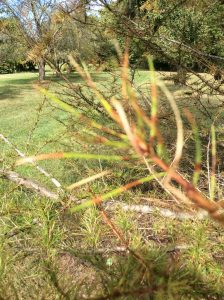
Q. I have noticed lately that our three big, lovely larches are losing needles on their bottom half. The needles have a banded pattern of color, and I fear larch needle blight. How can I confirm or reject this hypothesis? Is there anything we can do to treat them? – JC A. Specific diagnosis will require more than just these photos. I recommend sending samples of your trees to the Purdue Plant and Pest Diagnostic…Read more about Larch Needle Blight/White Ash Woes/Top-setting Onions[Read More]


Question and Answer

Q. I lost every one of my rhubarb plants late last summer and fall. The plants started dying at one end of the row and just worked on down the row to the opposite end. Someone told me it was due to grubs; another told me that it was moles eating the grubs. Since this is a plant I intend to eat, whatever I use needs to be food safe. A. It is unlikely that…Read more about Question and Answer[Read More]


Question and Answer

Q. In an earlier In The Grow Column you were writing about possible replacements for white pine trees in Indiana. Yet you did not mention Eastern red cedar as a possibility. Is there something wrong with the native species of evergreens? A. Eastern redcedar is actually a species of Juniper rather than a true cedar. It is widely adaptable to various stresses, especially drought, so it can be very useful for group plantings, windbreaks and…Read more about Question and Answer[Read More]


Question and Answer

Q. For the last two years my Nandina has produced a lot of flowers that promised to berry, but the berries seem to drop off before fruition. It has berried beautifully in the past, and there has been no change in environment. A. Nandina is marginally hardy to southern Indiana, but it is considered to be an invasive, weedy species in the southeastern United States where it forms vigorous spreading colonies. Although commonly called heavenly…Read more about Question and Answer[Read More]


Page last modified: March 11, 2026

Indiana Yard and Garden – Purdue Consumer Horticulture - Horticulture & Landscape Architecture, 625 Agriculture Mall, West Lafayette, IN 47907

© 2026 Purdue UniversityAn equal access/equal opportunity universityCopyright ComplaintsMaintained by Indiana Yard and Garden – Purdue Consumer Horticulture

If you have trouble accessing this page because of a disability, please contact Indiana Yard and Garden – Purdue Consumer Horticulture at homehort@purdue.eduAccessibility Resources