Category: Gardening

Honeyvine – a native plant that can be both friend and foe.

Q: This vine has perennially volunteered in my garden for a few years now. I let it grow because it seemed to please the butterflies, and the small white flowers smelled nice. At present it has grown chartreuse seed pods. Can you tell me what this vine is? Is it something I should destroy? – W.B. A: Ah, beauty and function are in the eye of the beholder. I believe your plant is what is…Read more about Honeyvine – a native plant that can be both friend and foe.[Read More]
 Categories:

Cut Back Perennials Now or Later?

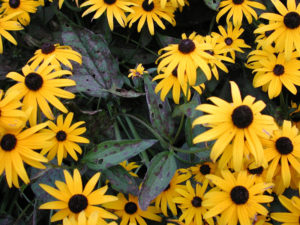
Gardeners often ask, “When is the best time to cut back the dead tops of herbaceous perennials (stems die back to the ground each year)? Should we cut them in fall as the tops fade? Or wait until spring, just before new growth begins?” The answers depend, in part, on the specific plant and whether disease or insect pests are a factor. For most healthy plants, leaving plant tops over winter is fine and, in…Read more about Cut Back Perennials Now or Later?[Read More]


Don’t let sap-sucking squash bugs get old

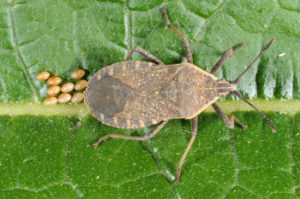
Q: We have been battling squash bugs for years. This year we went to preventive measures. Well, they are back. I now need to know what can we do to apply to kill them on contact. We are totally organic here. – T.H., Bremen, Indiana A: Squash bugs can be a persistent pest on all of the cucurbits, but especially on squash and pumpkins. This pest overwinters as adults in crop residue or nearby weeds, then fly to…Read more about Don’t let sap-sucking squash bugs get old[Read More]


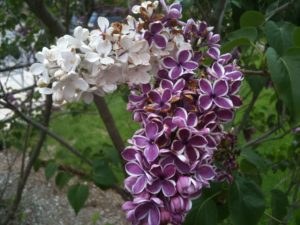
Her ‘Sensation’ lilac looks different this year. Enjoy!

Q: I have had a ‘Sensation’ lilac for several years. It has always produced lovely pinkish purple flowers edged in white. But this year it produced a few odd clusters that had only pale pink flowers. What causes this to happen? Should I prune off the odd branches? A: Many horticultural cultivars of plants, particularly those with interesting color variegation, begin as genetic mutations (sometimes called sports) of the species. If the sport with the…Read more about Her ‘Sensation’ lilac looks different this year. Enjoy![Read More]


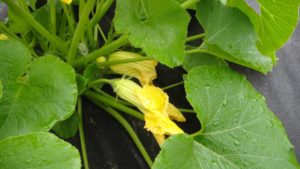
Squash blossoms drop, and sometimes that’s normal

A common complaint among vegetable gardeners is that their squash plants have a lot of flowers, but many of them just fall off without producing any fruit. This same observation can be made of cucumbers, melons, pumpkins and gourds, all of which are collectively known as “vine” crops to home gardeners. These plants are all members of the Cucurbitaceae family and are also commonly referred to as “cucurbits.” All of these vine crops produce separate…Read more about Squash blossoms drop, and sometimes that’s normal[Read More]


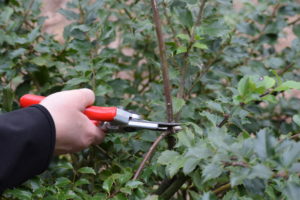
Renewal pruning has immediate, delayed rewards

Q:  I have 2 Forsythias, 2 Spireas, a Ninebark and a variegated Dogwood that appear to be half dead. My thought is to cut them down now to regrow so they’ll have all summer to do this. What are your thoughts? Last year all of these bushes were lush and full. A: Although it could be done now, late winter is the ideal time of year to completely cut the shrubs to the ground. But…Read more about Renewal pruning has immediate, delayed rewards[Read More]


Bee proactive in protecting pollinators

Gardeners play a critical role in the nurturing and conservation of both native and introduced pollinators. Gardens and landscapes provide pollinators with food, water, shelter and habitat to complete their life cycles. Urban areas typically feature large areas of pavement and buildings and offer little in the way of food or shelter for pollinators. Garden plantings can help bridge the gap. By federal proclamation, June 17-23, 2019, is National Pollinator Week. Now in its 12th…Read more about Bee proactive in protecting pollinators[Read More]


Leafy vegetables ready for short, cool growing season

Leafy vegetables are more nutritious and have fewer calories than most other vegetables, and they’re easy to grow. Most greens can be grown in relatively short, cool growing seasons, making them available for fresh harvest earlier than most other crops. If properly planned, fresh, leafy greens can be harvested all season long. Leafy vegetables adapted to cool Indiana spring and fall growing conditions include lettuce, spinach, mustard, collards, endive, and kale. Many new cultivars of…Read more about Leafy vegetables ready for short, cool growing season[Read More]


Rhubarb is prone to bolting. Here’s what to do

We humans can be so difficult to please. When plants flower when we want them to, we call it blooming. But when plants flower when we don’t want them to, we call it bolting. Flowering is an undesirable trait when growing rhubarb; therefore, bolting describes the event. Gardeners frequently ask why their rhubarb is bolting. Well, if you think of it from the plant’s perspective, it is just a part of the plant’s natural life…Read more about Rhubarb is prone to bolting. Here’s what to do[Read More]


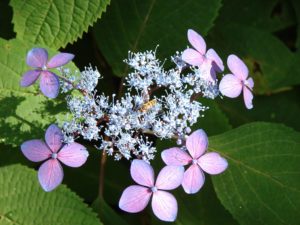
Early spring pruning will tame this hydrangea

Q: I have a hydrangea that is overgrown. It’s falling over and is too tall and wide. I would like it not to block the window. But I don’t know how/when/how much to prune to a smaller size. — T.B., Morgan County A: Pruning time and technique depends on the particular species of hydrangea. Yours appears to be the panicle hydrangea, Hydrangea paniculata. Panicle hydrangea blooms on new wood, meaning the flower buds are produced on new…Read more about Early spring pruning will tame this hydrangea[Read More]


Page last modified: March 6, 2019

Indiana Yard and Garden – Purdue Consumer Horticulture - Horticulture & Landscape Architecture, 625 Agriculture Mall, West Lafayette, IN 47907

© 2026 Purdue UniversityAn equal access/equal opportunity universityCopyright ComplaintsMaintained by Indiana Yard and Garden – Purdue Consumer Horticulture

If you have trouble accessing this page because of a disability, please contact Indiana Yard and Garden – Purdue Consumer Horticulture at homehort@purdue.eduAccessibility Resources