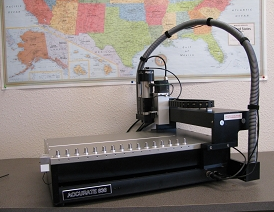
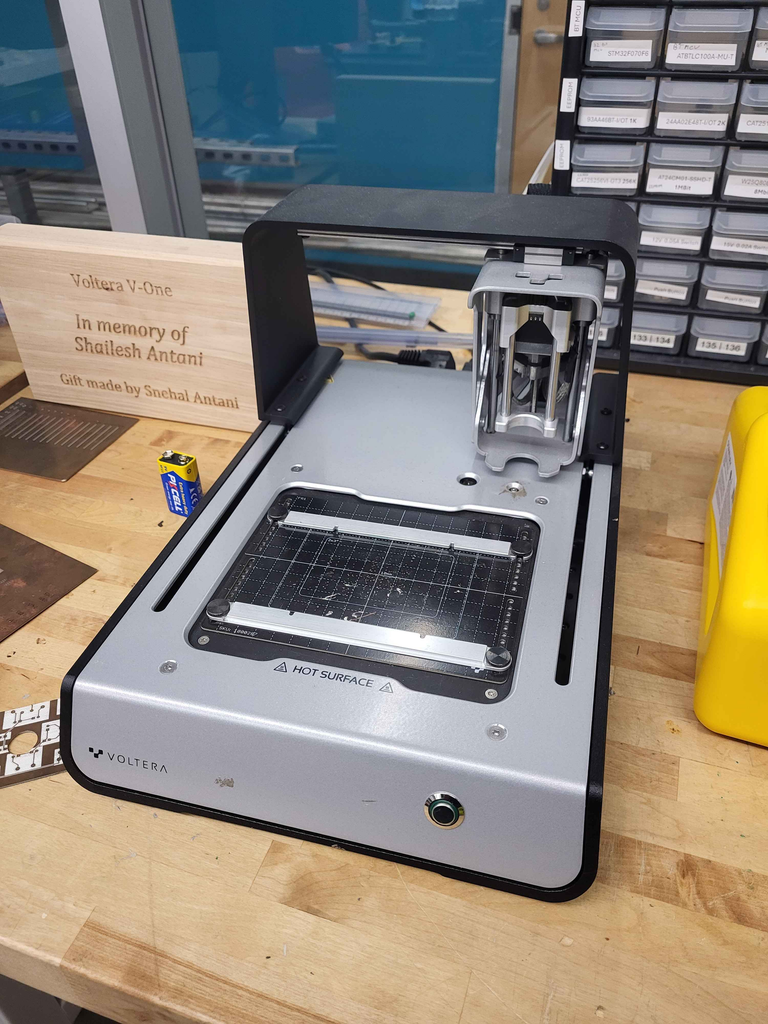
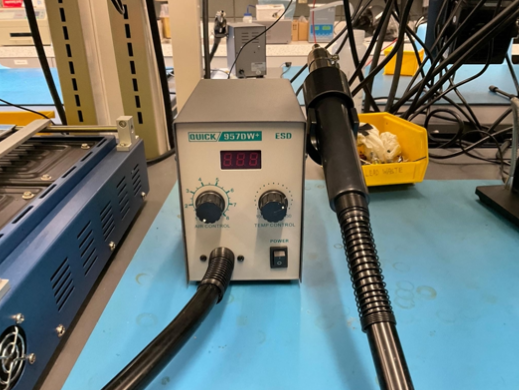
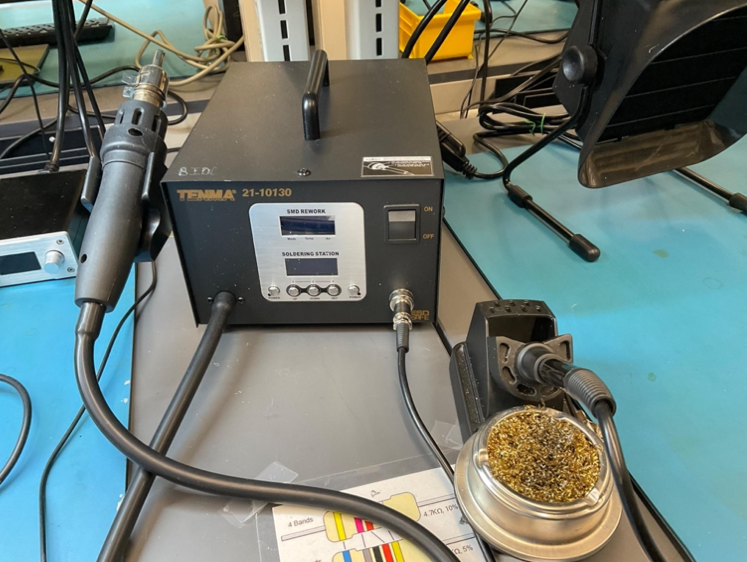
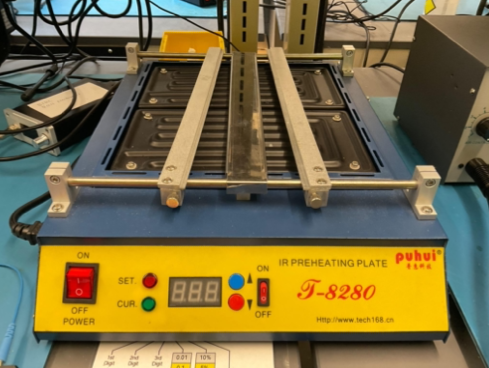
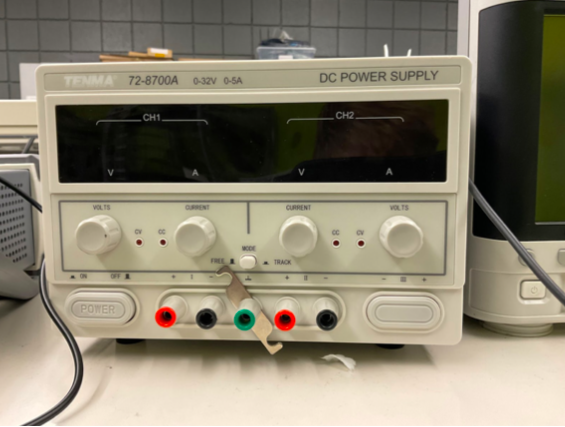
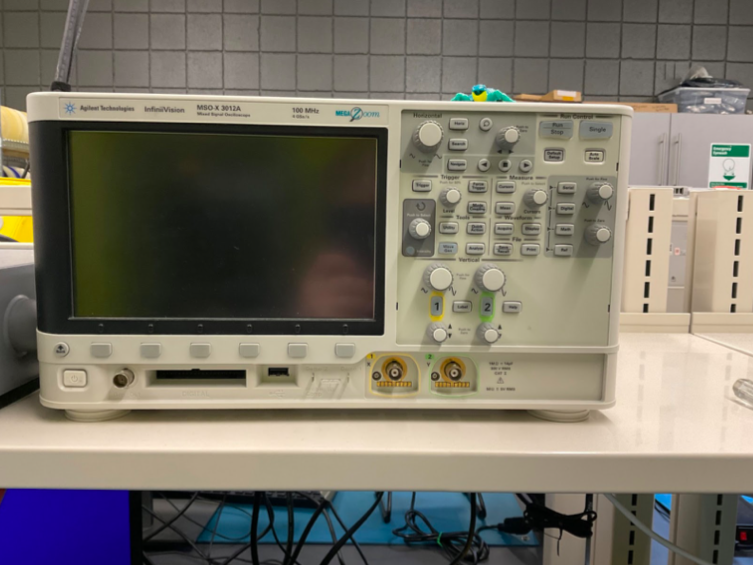
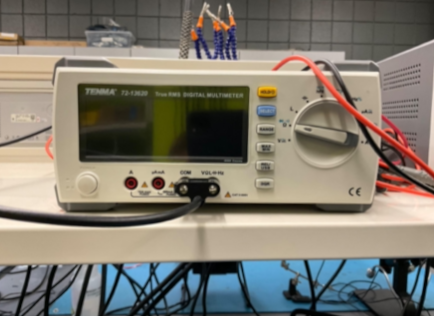
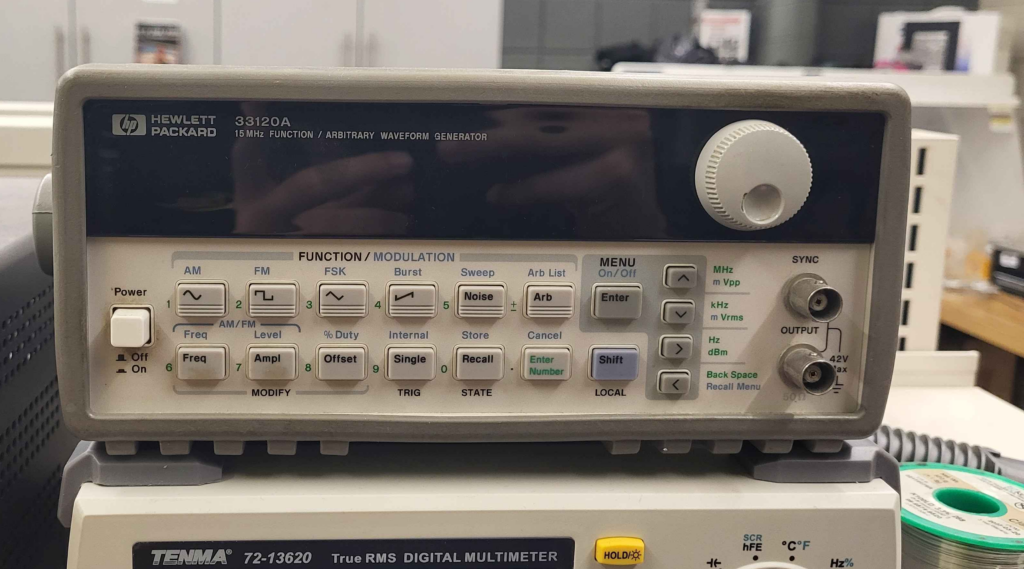
The Electronics Lab has a wide variety of electrical manufacturing equipment, including soldering irons, desoldering stations, a PCB mill, a reflow oven, and all the consumables needed to build a circuit board from start to finish. Users will also find oscilloscopes, signal generators, power supplies, and multimeters to help test and troubleshoot common electrical components. We’re happy to answer questions, and we hope to see you in the lab!
Key Specs: Max Spindle Speed: 100,000 RPM Max Drilling Speed: 180 hole/min Working Area: 16″ x 11″ x 1.3″ Cuts Single- and Double-Sided Boards Uses Standard Gerber Files
Key Specs: 100 MHz 2 Analog Plus 16 Digital Channels 4 million-point memory Built-in serial bus decoders and protocol checkers for I2C, UART, CAN, etc. Notes: To use the 16 Digital Channels, ask for the ribbon cable – take incredibly good care of it; they cost >$500 each Calibrate probes to each scope channel – critical if measuring one signal vs. another. Set any switch to X10 and use the calibrate menu under the channel menu (page 70)
Key Specs: Measures capacitance, inductance, and frequency (C, H, and Hz) Two current sockets on the DMM, one for 0-600mA and one for 600mA-10A If you exceed these limits, it will blow a fuse, but the DMM will still work for voltage and resistance Detect a blown current fuse in the DMM by measuring its resistance – if open circuit, fuse blown