February 1, 2021
Expert: How Biden-Harris administration could build resilience to natural disasters and climate change
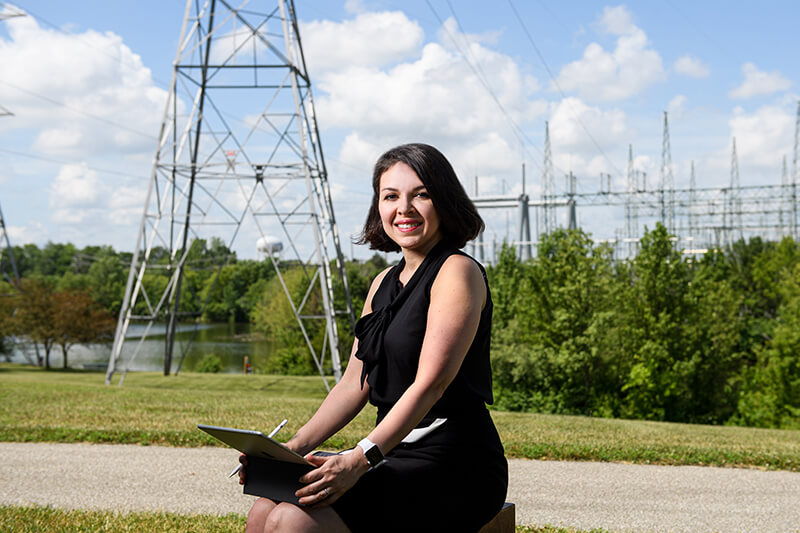
Roshanak “Roshi” Nateghi, Purdue assistant professor of industrial engineering (Purdue University photo/Rebecca Wilcox)
WHAT: A Purdue University professor’s policy memo detailing how to help vulnerable communities build resilience to the effects of climate change in the age of big data is among 100 science and technology ideas that the Day One Project will present for consideration to the Biden-Harris administration.
The memo recommends the following road map to the administration:
- Exploit the power of big data for devising cost-effective and equitable strategies that would enhance resilience to climate change from local to national levels.
- Invest in interdisciplinary research to advance fundamental understanding of how the rising risk of concurrent natural disasters interacts with engineering infrastructure use and design, social norms and local and federal policies.
- Build capacity for more proactive anticipation of how demand for critical services could change due to climate change.
- Increase knowledge sharing across the planning and management of urban infrastructure.
EXPERT: Roshanak “Roshi” Nateghi, the author of the memo and a Purdue assistant professor of industrial engineering, looks to uncover gaps and assumptions in critical infrastructure research that have led to underestimating the effects of climate change. Her research focuses on studying the interdependence of urban infrastructure, such as between electricity and water utilities, and developing predictive models to estimate the impact climate change could have on the energy use of a community or region.
QUOTE: “The frequency and cost of billion-dollar climate disasters such as floods, fires, heat waves and hurricanes have sharply increased over the past 20 years. We also see that accelerated urbanization and climate change continue to exacerbate communities’ vulnerability to climate disasters, which may render our current disaster policies untenable in the near future.
“The Biden-Harris administration should focus on building data-driven capabilities to enhance disaster preparation and response efforts as well as inform effective and equitable resource allocation. Doing so would help mitigate the growing risks of compound climate disasters and climate change.”
ADDITIONAL INFORMATION: Read more about Nateghi’s research here.
About Purdue University
Purdue University is a top public research institution developing practical solutions to today’s toughest challenges. Ranked the No. 5 Most Innovative University in the United States by U.S. News & World Report, Purdue delivers world-changing research and out-of-this-world discovery. Committed to hands-on and online, real-world learning, Purdue offers a transformative education to all. Committed to affordability and accessibility, Purdue has frozen tuition and most fees at 2012-13 levels, enabling more students than ever to graduate debt-free. See how Purdue never stops in the persistent pursuit of the next giant leap at https://purdue.edu/.
Writer, Media contact: Kayla Wiles, 765-494-2432, wiles5@purdue.edu
Source: Roshanak “Roshi” Nateghi, rnateghi@purdue.edu
Journalists visiting campus: Journalists should follow Protect Purdue protocols and the following guidelines:
- Campus is open, but the number of people in spaces may be limited. We will be as accommodating as possible, but you may be asked to step out or report from another location.
- To enable access, particularly to campus buildings, we recommend you contact the Purdue News Service media contact listed on the release to let them know the nature of the visit and where you will be visiting. A News Service representative can facilitate safe access and may escort you on campus.
- Correctly wear face masks inside any campus building, and correctly wear face masks outdoors when social distancing of at least six feet is not possible.
Note to journalists: A photo of Roshanak “Roshi” Nateghi and visuals of her predictive modeling work are available in a Google Drive folder. Journalists visiting campus should follow visitor health guidelines.