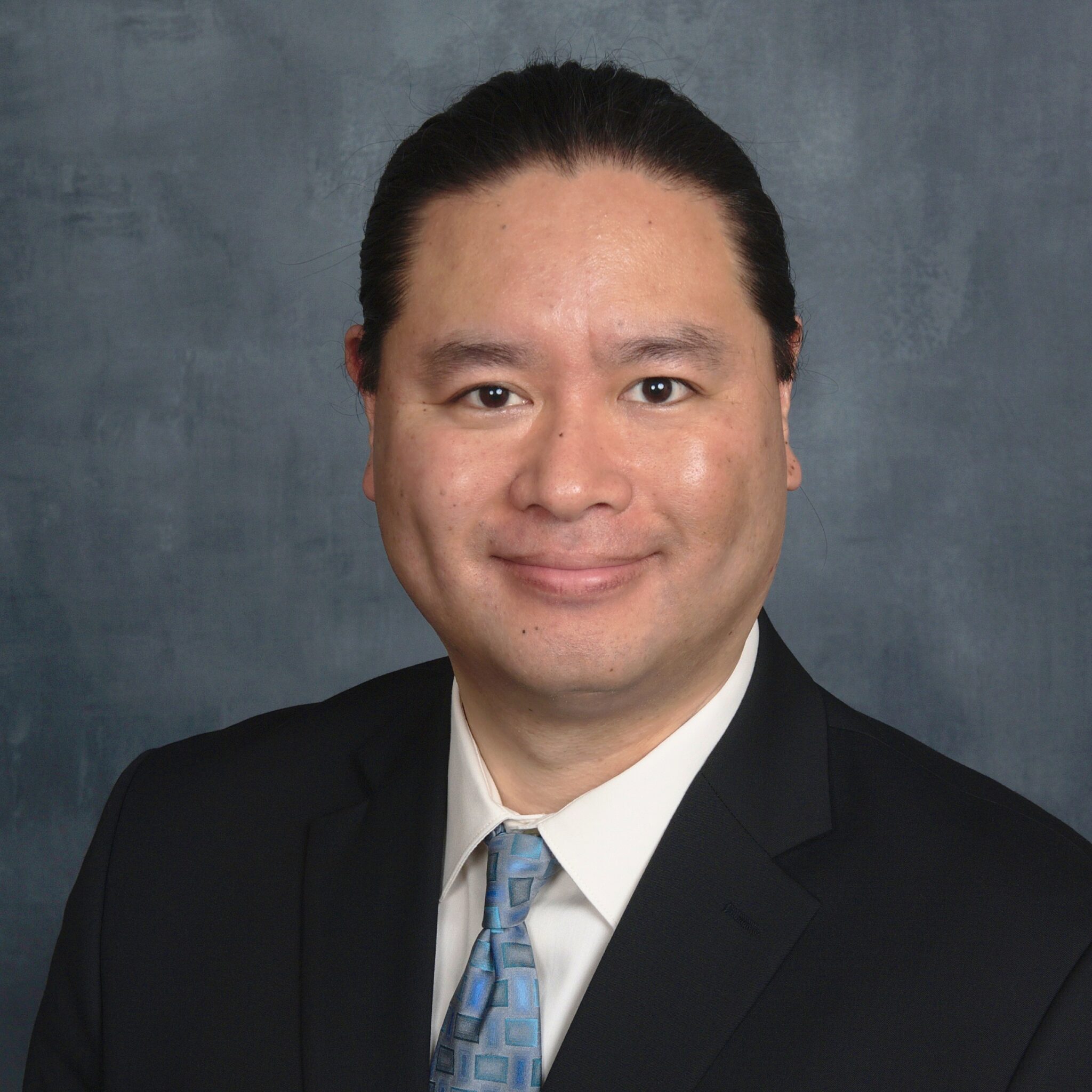
Waterloo Tsutsui
College of EngineeringWhen the School of Aeronautics & Astronautics nominated Waterloo Tsutsui for the College of Engineering Excellence in Instruction Award for Lecturers, it made special note of his implementation of virtual labs.
Prior to the pandemic, the lecturer and lab coordinator set up virtual lab environments for AAE 20401 and AAE 35201. Piloted in the summer of 2019, the virtual labs allow students to complete experiments before coming into the physical lab space. This allows all students access to needed laboratory experience, even as enrollment increases.
Tsutsui also introduced weekly supervised homework sessions for AAE 20400 and AAE 35200 with the aim of instilling in students an understanding of theories and how they can apply those theories to engineering problems. He has authored and co-authored numerous peer-reviewed conference proceedings on his instructional strategies.
In teaching undergraduate lecture and laboratory courses with an emphasis on structures and materials, Tsutsui focuses on training students to think as engineers with the power to read, write, express thoughts, and address complex problems.
He sees teaching as a professional activity based on pedagogical research and conducting scholarship of teaching and learning as his responsibility as an educator. For his efforts, Tsutsui previously received the Outstanding Teachers Recognition from the College of Engineering and the W.A. Gustafson Award from the School of Aeronautics and Astronautics. He was also recognized with the Graduate School Excellence in Teaching Award.
How has your teaching evolved over the last five years?
For instance, the delivery of lectures has evolved to be much more student-oriented, wherein in addition to the in-person delivery of lectures in the classroom, the recordings of the lecture are provided to students (i.e., Purdue BoilerCast, Kaltura, and Video Express) and posted on the Brightspace learning management system. Students can ask questions online (i.e., Piazza) and submit homework assignments online (i.e., Gradescope). For students to prepare for the hands-on labs and/or to revisit the concept that they acquired through the hands-on labs, they can now conduct experiments online (i.e., Virtual Labs).
To sum up, teaching technology changed a bit in the last five years even though the thesis of teaching remains the same.
What changes to your teaching during the pandemic did you take with you going forward?
What I can take going forward is to look for the needs of students and act accordingly.
What suggestions do you have to Purdue instructors who want to improve their teaching and/or their students’ learning?
To do so, we need to 1) identify what output of the teaching should be before the instruction of the subject matter, 2) assess the students’ reactions and learning evidence during/after the semester, and 3) create/modify the pedagogy and learning experience for students in a subsequent semester.
Instructors will need to repeat these steps throughout their teaching career so that they will get better as they accumulate more teaching experience. It is a continuous improvement process, not a one-time process.
What motivates you to do your best work in a student-centered learning environment?
Then, when they really want to know more and decide to go a step further, it is no longer equilibrium. They want to know more beyond what I taught in the classroom, so they feel that something is missing. This is when students start asking certain types of questions that motivate me as a technical educator because, at this point, I can confirm that I taught what they need to know correctly because they are ready to move on to the next level (e.g., advanced-level courses, research in graduate school, etc.).
Second, after the course, I enjoy hearing from former students. Every semester, I receive e-mails from students who took my engineering courses. Some are still in university as undergraduate or graduate students, and others have graduated and are already practicing engineering as professionals. I very much enjoy reading their e-mails, letting me know how they are doing in whatever paths they choose to pursue. This motivates me as a “sensei” in its most basic sense of being a teacher because I contributed positively to their professional careers.
The Excellence in Instruction Award for Lecturers recognizes academic staff with the rank of lecturer or senior lecturer. It is among several PWL-wide teaching honors awarded annually in the spring semester. Each college/school selects and advances its own nominee the previous fall as a model in outstanding undergraduate education and includes input from its students. For other nominee interviews, see the Insights webpage. Further details on the award and selection procedure and university awardees are available on the Office of the Provost website.