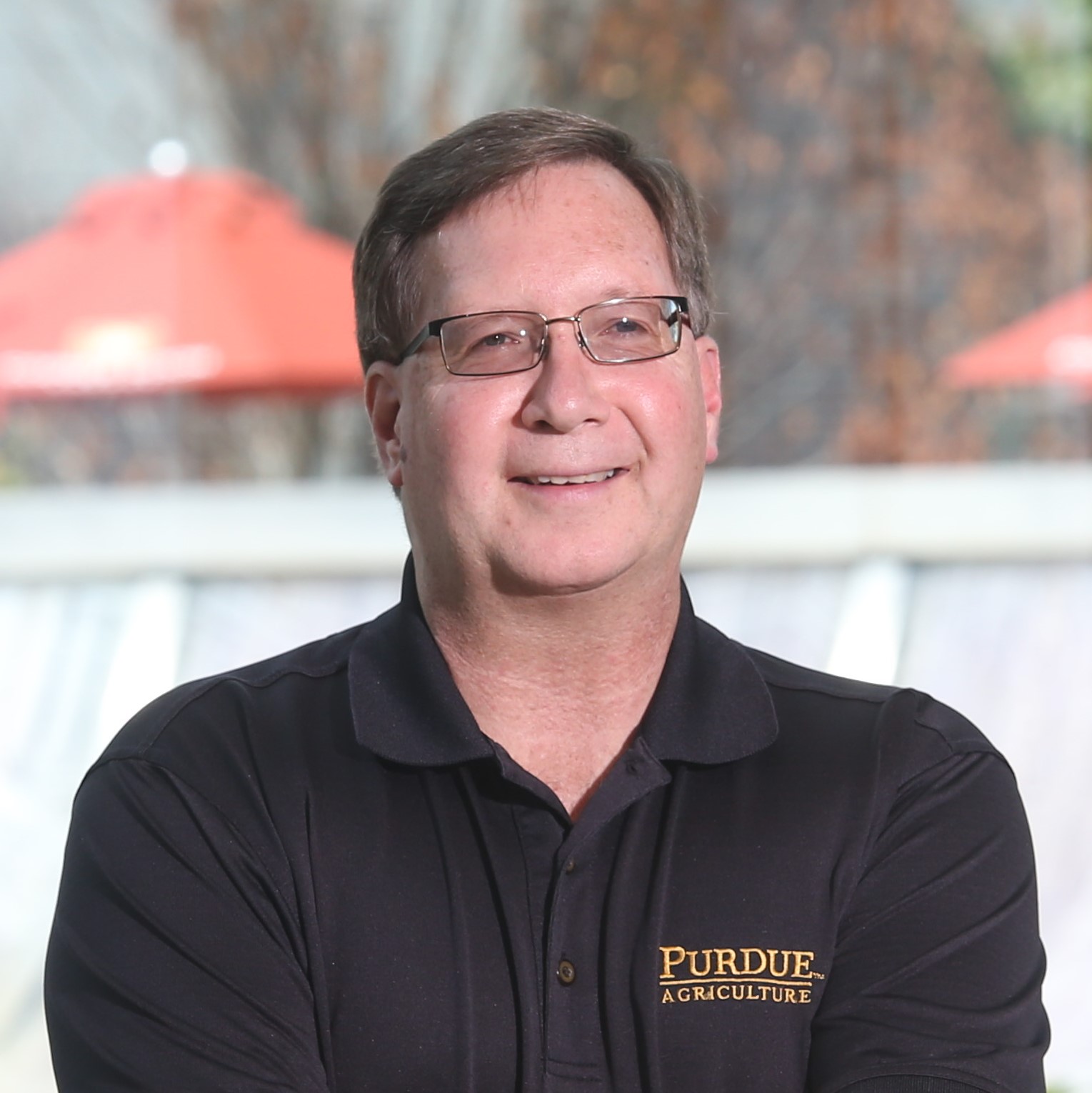
Dennis R. Buckmaster
College of AgricultureStudents want to connect with instructors and alumni, and catch a glimpse of their potential futures through those connections, according to Dennis R. Buckmaster, professor of agricultural & biological engineering and the Dean’s Fellow for Digital Agriculture, who was the 2021 Murphy nominee from the College of Agriculture.
The challenge of forging those links in today’s instructional environments can be mitigated with some digital and pedagogical solutions, and an expanded approach to “near peers,” Buckmaster says. Part of his transformation of the ASM 42100 Senior Seminar was to expand the use and digital delivery of messages from of former students and alumni. Buckmaster introduced a blend of in-person, virtual, and recorded testimonials to speak to current students about the course’s applicability to later courses, internships, and employment.
Further details on Buckmaster’s selection and instructional strategies are available in his 2021 Kohls presentation to the College of Agriculture Celebration of Teaching Excellence on YouTube
How has your teaching evolved over the last five years?
Regarding content, the importance of data science and digital agriculture is, no doubt, growing. As a result, there is a renewed energy and enthusiasm in the ASM 10500 Computing Technology with Applications course that I teach and the AGR 10800 Ag Tech and Innovation course. We have some funding from the USDA National Institute of Food and Agriculture (USDA/NIFA) related to this type of education and training, and that is influencing content.I have also infused the learnings from a book by Fredmund Malik (2015), Managing Performing Living: Effective Management for a New World, into the ASM 42100 Senior Seminar. These students aren’t usually the reading type, but the content of the book is so directly related to their career that I think they appreciate the focus for the impact it can have. Regarding approach, I have been inspired by simplicity and impact of the Transparency in Learning and Teaching (TILT) project.
What changes to your teaching during the pandemic did you take with you going forward?
In earlier years, I had occasionally had “alumni” from the course (upper division students or graduated alumni) visit the course to provide a bit of motivational commentary about the course applicability to later courses, internships, or their full-time employment. I intensified this a bit in 2020 and I believe it paid off. For students to hear from near peers about the value of the content and approaches seemed to motivate better than another professor story or speech. I will likely still use a blend of students and alumni and a blend of in-person and virtual or recorded messages.
What suggestions do you have to Purdue instructors who want to improve their teaching and/or their students’ learning?
The TILT project came to my attention through a very short and simple article in one of the teaching newsletters I receive. I was struck by the simplicity of Purpose, Task, and Criteria as three words that can improve our teaching. I encourage other faculty to check out that program and simply add a wee bit to some of their early assignments in each course on these things.
These three words help to level the playing field for students – enabling those that weren’t “naturally good” students to become more naturally good.
Purpose – simply explain why we are having students do this assignment. It is a fair question for students to ask this and we, as instructors, ought to have a good answer.
Task – that’s the assignment itself. What are we asking them to do? Historically, that is all we gave them.
Criteria – we should communicate to the students what factors will be taken into consideration as we assess their work. An extreme of this would be a full rubric. A simple version might just be a list of the things we might count as incorrect or poor.
This levels the playing field because we are being more explicit about what is important – and we need to remember that not all students have a knack for this (until we groom them to do so).
What motivates you to do your best work in a student-centered learning environment?
I like the research and outreach that I do as a university professor. But there is no doubt in my mind that the biggest impact I have in my work life is through students becoming alumni. My part in their preparation and education is small, but if I do it well, they will leverage that with an abundance of other knowledge and skill to make a difference. They are multipliers of what I might know. Sharing in the best way possible is just the right thing to do.
The Charles B. Murphy Outstanding Undergraduate Teaching Award is Purdue West Lafayette’s highest undergraduate teaching honor and awarded annually in the spring semester. Each College selects and advances its own nominee the previous fall as a model in excellent undergraduate education and includes input from its students. For other nominee interviews, see the Insights webpage. Further details on the award and selection procedure and university awardees are available on the Office of the Provost website.