In the Grow (Q & A)

The following question and answer columns are currently written by B. Rosie Lerner, Purdue Consumer Horticulture Extension Specialist and are distributed to news media around the state by the Purdue University Agricultural Communications. Columns from June 1995 - January 2006 were authored by Bev Shaw, Advanced Master Gardener.


Roses: A Feast For Many Insects/Mystery Plant ID/Why Hydrangea Flowers Fade Pink to Tan

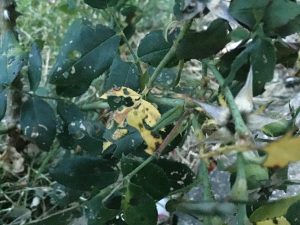
Q. How can I keep the beetles away and keep the invisible insects from eating holes in my rose leaves? The beetles have not been too bad the last couple of years, but the holes in the leaves never stop. I have tried so many different kinds of insecticides but to no avail. Our soil is not too sandy, but it is not all dirt either. Drainage does not seem to be a problem as…Read more about Roses: A Feast For Many Insects/Mystery Plant ID/Why Hydrangea Flowers Fade Pink to Tan[Read More]
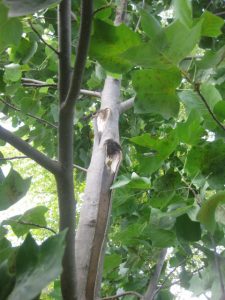
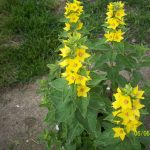
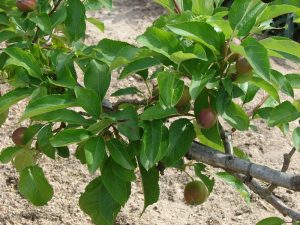
Callery pear volunteers should be removed

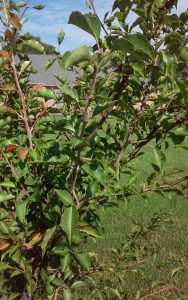
Q) I had this tree volunteer in my flowerbed. I transplanted in my yard but I don’t know what it is. It does have thorns. Any info would be appreciated. – P.P., Farmersburg, IN A) This looks to be a seedling ornamental callery pear. For many years, the cultivar Bradford dominated the landscape and was not self-fruitful. But as newer, improved cultivars were introduced to landscapes, they were cross-fruitful with Bradford. So now “volunteer” callery…Read more about Callery pear volunteers should be removed[Read More]


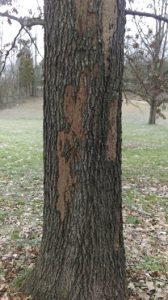
Large wounds in tuliptrees not likely to heal

Large wounds in tuliptrees not likely to heal Q) I’ve attached a photo of one of my trees. I’m concerned that the tree will not heal, and if it does will be too weakened. Also, you gave me a contact for a state arborist last time we visited. I have lost that info. – G.F., Jeffersonville, Indiana A) Looks like perhaps this was storm-related damage? Tuliptrees are somewhat weak-wooded and can be susceptible to limb…Read more about Large wounds in tuliptrees not likely to heal[Read More]


Weed or flower? Sometimes it’s in the eye of the beholder

Q) This flower/weed came up in my flower garden this year. I know that I did not plant it and two other people said that they have it growing in their yards also. I took it to our local nursery. They did not know what it was and looked it up in their books but could not find it. They gave me a few suggestions but when I looked them up on the internet, they…Read more about Weed or flower? Sometimes it’s in the eye of the beholder[Read More]


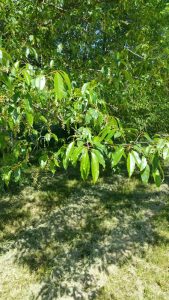
Beware of black cherry toxicity; it’s weedy, too

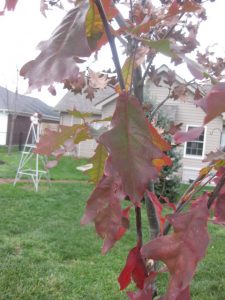
Beware of black cherry toxicity; it’s weedy, too Q. Was wondering if you could identify what species of tree this is from the photo? – RLW, Galveston, IN A. This is black cherry, known botanically as Prunus serotina. This is a large, fast-growing native tree that can become quite weedy due to prolific fruit that is prized by birds and other wildlife. The foliage and twigs can be toxic when eaten by livestock and pets….Read more about Beware of black cherry toxicity; it’s weedy, too[Read More]


Best fruit tree for central Indiana / What to do about moles?

Q. Do you have a suggestion of a good/easy to grow fruit trees in the Indianapolis area? Any tips on the “how to” will be appreciated. – N.D. A. A dwarf, scab- resistant apple cultivar would likely be the best adapted of the fruit trees for the central Indiana area. There are quite a few cultivars to choose from. Most apple cultivars require cross pollination from a compatible cultivar in order to reliably set fruit. It…Read more about Best fruit tree for central Indiana / What to do about moles?[Read More]


Common culprits of tree damage-April 2016

Question & Answer Common culprits of tree damage Q.  This is a very beautiful large tree that I lost last year. It’s the second one I have lost in the past seven years. Would you be able to see from the photo what might be happening to my trees? I have more beautiful trees on my property that I would like to save if I can. – L.P., Elizabeth, Indiana A. While I can’t be certain…Read more about Common culprits of tree damage-April 2016[Read More]

 Categories:

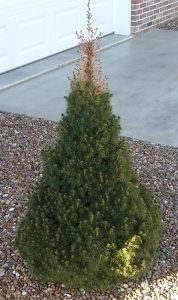
Likely culprits of dieback-March 2016

Question & Answer Likely culprits of dieback Q. This is one of our two dwarf Alberta spruce trees. In the fall we noticed the very top of one turning brown; it kept getting worse from top down, and we noticed white webs. We took a picture of it, took it to a local nursery and showed them the picture. They said it was spider mites. We bought a systemic insect control and used per directions…Read more about Likely culprits of dieback-March 2016[Read More]

 Categories:

Many possible reasons for early loss of white oak leaves / Marestail Control

Q. I have a white oak tree that lost about half of its leaves to a varmint. I’m guessing June bugs that were in a bunch about 15 feet away. The tree did not put out any new growth except late in the summer on the end of the tallest limb. Meantime, a new tree sprung up. I’ll include some pictures that will show the leaves and their color. I have no idea what flavor…Read more about Many possible reasons for early loss of white oak leaves / Marestail Control[Read More]


Spider lily likes moist conditions – but not too much

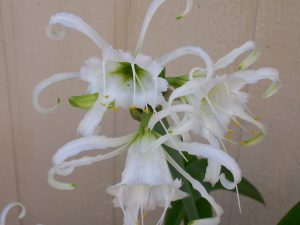
Spider lily likes moist conditions – but not too much Q. This flower was in my yard when I bought my house, and it was the most beautiful plant I have ever seen. It bloomed for the first two years that I was here, but for the last two it hasn’t. It has become so weak that the stems don’t stand up straight anymore and grow pretty much laying down. Do you know how I…Read more about Spider lily likes moist conditions – but not too much[Read More]

 Categories:

Page last modified: June 1, 2022

Indiana Yard and Garden – Purdue Consumer Horticulture - Horticulture & Landscape Architecture, 625 Agriculture Mall, West Lafayette, IN 47907

© 2026 Purdue UniversityAn equal access/equal opportunity universityCopyright ComplaintsMaintained by Indiana Yard and Garden – Purdue Consumer Horticulture

If you have trouble accessing this page because of a disability, please contact Indiana Yard and Garden – Purdue Consumer Horticulture at homehort@purdue.eduAccessibility Resources