Category: Trees

Common Winter Injury Symptoms We Saw this Spring

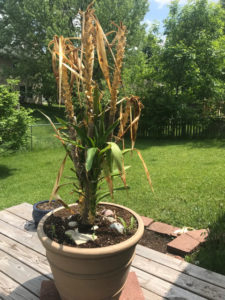
Q. I have a yucca tree that is 5-6 years old. What was a small plant has become a mature tree. I transplanted my yucca to a larger pot last summer. There was a significant explosion in growth. If you look at the picture you can see the growth. Unfortunately, it suffered through this past winter indoors. Much of the new growth witnessed last year is gone. Please see the attached photo — I think it…Read more about Common Winter Injury Symptoms We Saw this Spring[Read More]

 Categories:

Indiana’s State Tree is a Popular Landscape Choice

If you’ve ever had to work on a tree leaf collection, no doubt you included a leaf from Indiana’s state tree. Also known as tulip poplar and yellow poplar, the tuliptree is actually not a poplar at all. It is a member of the magnolia family known botanically as Liriodendron tulipifera. The tuliptree is native to most of the eastern half of the United States and prefers rich, moist, well-drained, loamy soil. It is found throughout…Read more about Indiana’s State Tree is a Popular Landscape Choice[Read More]


When to Remove Maple Tree Sucker

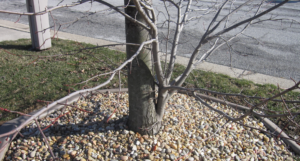
Q. I have a maple tree (it is either an ‘October Glory’ or ‘Autumn Blaze’) that has (what I assume to be) a rather large sucker at the bottom. The diameter of the sucker is about 2 inches, and the tree trunk is 7 inches in diameter. I have attached pictures of it from different angles. I would like to know if it is OK to remove it? I’ve read quite a bit about these…Read more about When to Remove Maple Tree Sucker[Read More]

 Categories:

Mystery plants identified

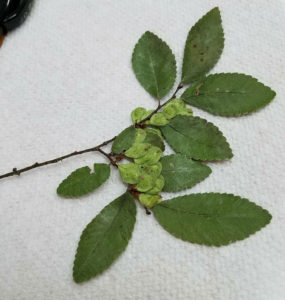
Q. I have some leaves from a tree I would like to identify. It is roughly 8 to 12 inches in diameter and fairly tall. The leaves are alternating with lengths of 1.5 to 2 inches long. The leaf stalks are all really short compared to the leaf length. Can you identify? – M.R., Brookville, Indiana A. This appears to be Ulmus parvifolia – common name Chinese elm or lacebark elm. This species is quite…Read more about Mystery plants identified[Read More]

 Categories:

Blooming out of sequence is cool!

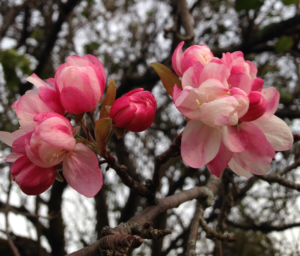
What is that crabapple doing reblooming in October and November? Actually, it might be more correct to think of it as jumping the gun on next spring rather than reblooming. Although it happens to some extent many years, there seem to be more reports thas usual of landscape plants blooming out of sequence this fall. Rhododendrons, crabapples, and saucer magnolias are the most commonly reported species blooming this fall. Spring-blooming woody plants initiate flower buds…Read more about Blooming out of sequence is cool![Read More]

 Categories:

Damage control for the yellowstriped armyworm; Transplanting trees from the woods

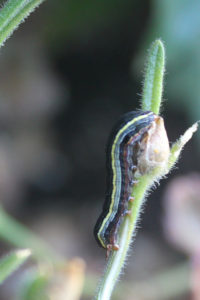
Q. I have a worm eating my flowers. The flowers are in a tall planter so I am wondering if I need to add something to the base of the planter to keep them from coming up the plants OR are they hatching out on the plants? Some of the damage is caused by small slugs as well.Can you tell me what kind of worm this is? Also, what do you recommend to deter them? –…Read more about Damage control for the yellowstriped armyworm; Transplanting trees from the woods[Read More]


Peeling sycamore tree bark is normal; Top heavy hydrangea plants; Should I treat my lawn for Japanese Beetles

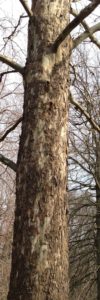
Q.  We have a large sycamore tree in our yard. Every summer it sheds its bark over a few weeks’ time. I think as it grows it is growing new bark and losing the old bark. Am I correct? – J.C., Walton, Ind. A.  You’re on the right track. Peeling bark is normal, and is a key ornamental characteristic for a sycamore, also known as American planetree. The bark starts out a bit gray-brown and as the…Read more about Peeling sycamore tree bark is normal; Top heavy hydrangea plants; Should I treat my lawn for Japanese Beetles[Read More]


Caring for storm-damaged trees/How to Acidify Soil in the Yard

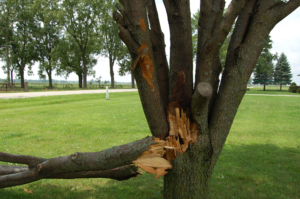
Q. Several trees on my property were damaged during recent storms. Some just lost a few limbs, but others are split along the trunk. How can I tell whether the trees can be saved or if they should be cut down? What kind of pruning paint should I use on the broken branches? – I.P., Bartholomew County, Ind. A. It can be difficult to decide whether trees with severe damage should be removed. The first…Read more about Caring for storm-damaged trees/How to Acidify Soil in the Yard[Read More]

 Categories:

Rotten apples and Indiana Big Tree Register

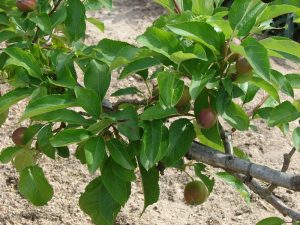
Q. We have fruit trees, including Yellow Delicious, Red Delicious, McIntosh and Northern Spy. We use an all-purpose spray. The Northern Spy has very large apples, and they all rot. This past season, we didn’t get one good apple from it although it was loaded. What spray could we use for this, and what is this disease called? – W.F., Portland, Ind. A. Apples can fall victim to a number of different soft rot diseases….Read more about Rotten apples and Indiana Big Tree Register[Read More]


Best fruit tree for central Indiana / What to do about moles?

Q. Do you have a suggestion of a good/easy to grow fruit trees in the Indianapolis area? Any tips on the “how to” will be appreciated. – N.D. A. A dwarf, scab- resistant apple cultivar would likely be the best adapted of the fruit trees for the central Indiana area. There are quite a few cultivars to choose from. Most apple cultivars require cross pollination from a compatible cultivar in order to reliably set fruit. It…Read more about Best fruit tree for central Indiana / What to do about moles?[Read More]


Page last modified: June 1, 2022

Indiana Yard and Garden – Purdue Consumer Horticulture - Horticulture & Landscape Architecture, 625 Agriculture Mall, West Lafayette, IN 47907

© 2026 Purdue UniversityAn equal access/equal opportunity universityCopyright ComplaintsMaintained by Indiana Yard and Garden – Purdue Consumer Horticulture

If you have trouble accessing this page because of a disability, please contact Indiana Yard and Garden – Purdue Consumer Horticulture at homehort@purdue.eduAccessibility Resources