Category: Trees

January Garden Calendar

Home (indoor plants and activities) Keep holiday poinsettias and other plants near a bright window. Water as top of soil becomes dry. Increase humidity around houseplants by grouping plants together, placing them on a pebble-water tray or running a humidifier. Check stored produce and tender flower bulbs and roots for rot, shriveling or excess moisture. Remove and discard damaged material. Repot houseplants as they outgrow current pots. Yard (lawns, woody ornamentals and fruits) Check young…Read more about January Garden Calendar[Read More]
What’s killing the oak trees?

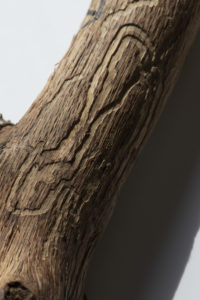
Q. In 22 years I’ve had more than a dozen oaks die because of a grub or larvae. Symptoms: First the leaves die and turn brown at the top of the tree. It slowly spreads down the tree until all the leaves are brown and have fallen off. Then the bark begins to peel away from the trunk, and then it falls off pieces at a time. You can see where it cuts off the…Read more about What’s killing the oak trees?[Read More]

 Categories:

Remove errant branches to save ‘weird’ tree

Q: Please don’t think I’m totally crazy, but I couldn’t get anyone around here to answer this question and I thought someone at Purdue could. I have two trees in my backyard that are growing branches that are completely different from the rest of the trees. It is NOT another tree coming up under them, which is what most people tell me. Am I correct in guessing this is a cultivar that went wrong? Do we…Read more about Remove errant branches to save ‘weird’ tree[Read More]


When lightning strikes, is the tree out?

When lightning strikes a tree, it will most certainly leave a calling card, but it can be difficult to predict whether that injury is strike one, two or three. There are many variables to consider, including the species, moisture content, relative health of the tree at the time of the strike, and the intensity of the strike. Lightning can strike just about anything tall, but trees do seem to be a frequent target. And the…Read more about When lightning strikes, is the tree out?[Read More]


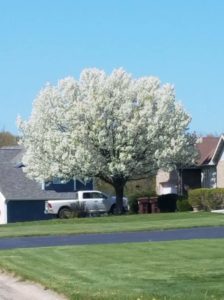
Ornamental Pear Fallout

Q: I’ve attached pictures of the only tree we have on our property. Because it is our only tree, I am deeply concerned with the possibilities of irreparable damage to it. As you can see, one of the branches broke off during a November windstorm. Unfortunately, that left a bare gap on the trunk. Please let me know how to treat this damaged area so no further damage is done to it and tell me…Read more about Ornamental Pear Fallout[Read More]

 Categories:

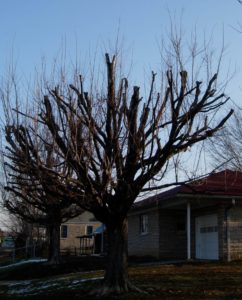
Please Don’t Top Your Trees

Topping a tree is an all-too-common practice among homeowners, particularly when their trees become too tall and pose a possible threat to the house or overhead power lines. Some have the trees topped because they believe, or are led to believe, that topping is a good pruning practice. Some situations obviously require the removal of large limbs for the sake of safety. But topping is a drastic step that ultimately endangers the tree’s life. Removing…Read more about Please Don’t Top Your Trees[Read More]


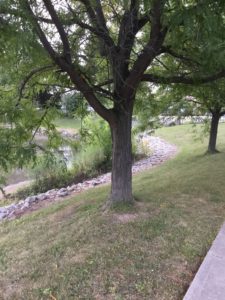
In The Grow Question and Answer – High winds can be tough on trees

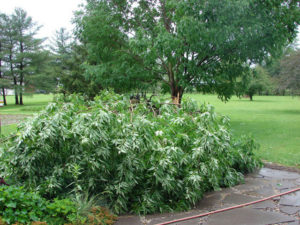
Q. Can you tell me what kind of tree this is? They were planted near our community lake 25 years ago. K.M., Indianapolis A. This is a honey locust tree, known botanically as Gleditsia triacanthos. The species is native to the eastern US. It has large seed pods and trunks that are armed with wicked thorns. Fortunately, most plants sold for landscape specimens are cultivars that are both seedless and thornless. But even these improved…Read more about In The Grow Question and Answer – High winds can be tough on trees[Read More]

 Categories:

Blue spruce not a great choice for Hoosiers

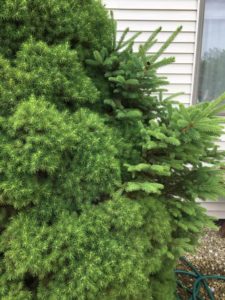
Q: We have 5.5 acres with several hundred white pines, 7 blue spruce, and 2 red pines. Several of the blue spruce are dying. Several years ago, two started dying from the bottom up. We put evergreen spikes around them, and after a year or so they came back to normal. Presently some of the large ones are now dying from the bottom to the top. We put spikes around two large and one small,…Read more about Blue spruce not a great choice for Hoosiers[Read More]


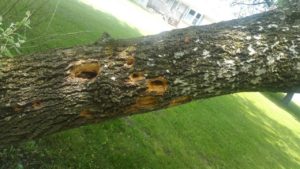
Gaping wounds likely a woodpecker’s work

Q. I saw these holes in my tree and am wondering what they are from. This tree is the only one I have seen them on. – M.S., Chesterton Some species of woodpeckers cause large holes in tree trunks. A. The holes are likely from woodpecker injury, but the tree may have some other issues. Has the tree been in a state of decline for a while? Perhaps branch dieback, leaf drop or other symptoms?…Read more about Gaping wounds likely a woodpecker’s work[Read More]

 Categories:

Eastern Red Cedars Volunteer Way Too Often

Q. I am wondering what you might know about the small “red cedar trees” that seem to be invading fencerows and highways, especially U.S. 31 north of Kokomo. I think a column from you would be worthwhile, since I can`t seem to get my neighbors to control the “pretty little trees,” which are much like Canadian thistle and kudzu. — E.W., Kokomo A. The eastern red cedar is a juniper, rather than a true cedar. Known…Read more about Eastern Red Cedars Volunteer Way Too Often[Read More]


Page last modified: August 3, 2018

Indiana Yard and Garden – Purdue Consumer Horticulture - Horticulture & Landscape Architecture, 625 Agriculture Mall, West Lafayette, IN 47907

© 2026 Purdue UniversityAn equal access/equal opportunity universityCopyright ComplaintsMaintained by Indiana Yard and Garden – Purdue Consumer Horticulture

If you have trouble accessing this page because of a disability, please contact Indiana Yard and Garden – Purdue Consumer Horticulture at homehort@purdue.eduAccessibility Resources