Posts Archives
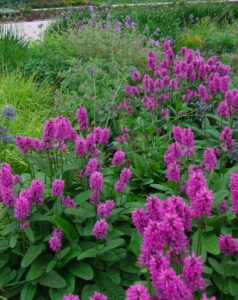
Pollinators are abuzz for the 2019 Perennial of the Year
By selecting Stachys officinalis ‘Hummelo’ as its 2019 Perennial Plant of the Year, the Perennial Plant Association once again continued its focus on pollinator-friendly plants. ‘Hummelo’ is a compact, clump-forming perennial, reaching 1.5 to 2 feet tall and wide. Over time, the plants will form a dense mat, spreading slowly from creeping underground stems. Showy magenta flower spikes rise well above the foliage in midsummer and are quite attractive to butterflies and other pollinators. Plants are hardy in […]
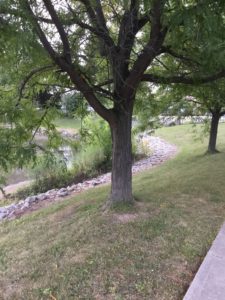
In The Grow Question and Answer – High winds can be tough on trees
Q. Can you tell me what kind of tree this is? They were planted near our community lake 25 years ago. K.M., Indianapolis A. This is a honey locust tree, known botanically as Gleditsia triacanthos. The species is native to the eastern US. It has large seed pods and trunks that are armed with wicked thorns. Fortunately, most plants sold for landscape specimens are cultivars that are both seedless and thornless. But even these improved […]
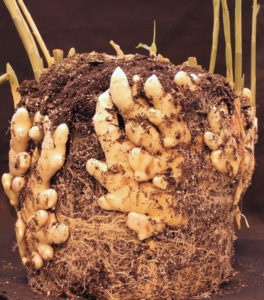
Spice Up Your Holidays
Some of the most popular spices used this time of year are harvested from various parts of exotic tropical plants, lending a special flavor to holiday recipes. Ginger is harvested from the rhizomes (underground stems) of a tropical/sub-tropical herbaceous plant, Zingiber officinale. Ginger is native to tropical Asia and is grown commercially in Hawaii and many other countries, including China, India, Thailand and Brazil. The rhizomes are harvested after the first year of the plant’s […]
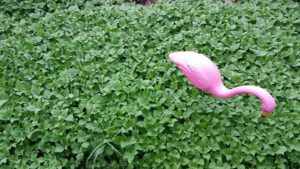
Gardeners worn down; clearweed may be culprit
Q: I have had a garden on our property for about 14 years. Naturally, we’ve always had to deal with weeds, but until last year they had been the usual crabgrass and other types that could be controlled if you kept ahead of them. But last year, some type of weed or ground cover has sprung up, and it’s infuriating!! There is absolutely no way to weed it out by hand because it comes up almost […]

New Resource for Identifying Common Yard and Garden Plants
Want to know more about common yard and garden plants? Meet the new Purdue Plant ID Pal. The web-based resource is easy to use. 4-H and FFA youth will find it especially helpful as they learn to identify ornamentals, fruits, and vegetables for local, state and national competitions. Purdue Plant ID Pal has four sections: ornamentals (woody plants) flowers and indoor plants fruits and nuts vegetables You’ll find more than 850 photos of nearly 200 […]
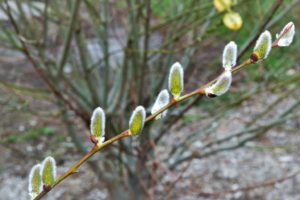
Pussy willow shrubs can thrive in well-drained soil
Q: I am writing about a pussy willow tree I planted in my backyard in early August 2018. I have wanted one for some time and found one on sale at a discount department store. It didn’t have much info on what it takes to grow by ponds or lakes. So, if you could give me any information, it would be appreciated. A: A number of willow shrub species are commonly called pussy willows, so […]

Time to Harvest Sweet Potatoes
Although some folks may be sad to see summer coming to a close, many gardeners are looking forward to harvesting their sweet potato treasures. Sweet potatoes are warm-season plants that are very sensitive to cold temperatures. The tuberous roots should be harvested by the time frost kills the vines or soon thereafter. Sweet potato roots continue to grow until frost kills the vines. Roots can be left in the ground for a short while; […]

Blue spruce not a great choice for Hoosiers
Q: We have 5.5 acres with several hundred white pines, 7 blue spruce, and 2 red pines. Several of the blue spruce are dying. Several years ago, two started dying from the bottom up. We put evergreen spikes around them, and after a year or so they came back to normal. Presently some of the large ones are now dying from the bottom to the top. We put spikes around two large and one small, […]
Oedema Is a Corky Quirk
Plants that experience extremes in soil moisture may develop spots on their leaves, called “oedema” (also spelled “edema”). The spots may first appear as a blister or raised spot, particularly on the undersides of leaves, but may occur on the top side as well as on the stems. Eventually, the blister develops a rust-colored, cork-like scab. Oedema is most commonly seen in the greenhouse on ivy-leaf geraniums but also on pansies, jade, and other thick-leaved […]
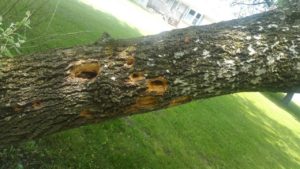
Gaping wounds likely a woodpecker’s work
Q. I saw these holes in my tree and am wondering what they are from. This tree is the only one I have seen them on. – M.S., Chesterton Some species of woodpeckers cause large holes in tree trunks. A. The holes are likely from woodpecker injury, but the tree may have some other issues. Has the tree been in a state of decline for a while? Perhaps branch dieback, leaf drop or other symptoms? […]