In the Grow (Q & A)

The following question and answer columns are currently written by B. Rosie Lerner, Purdue Consumer Horticulture Extension Specialist and are distributed to news media around the state by the Purdue University Agricultural Communications. Columns from June 1995 - January 2006 were authored by Bev Shaw, Advanced Master Gardener.


How to tame a slope

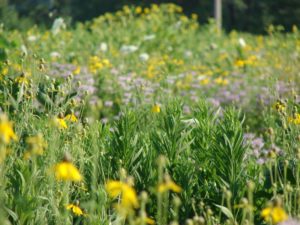
Q: Behind my house I have about 3/4 acre that is on an incline of about 30 degrees and all sand. It is about 330 feet long and about 75 feet up the slope. I have had all the mulberry trees, bushes, vines, and poison ivy removed and would like to have some kind of cover crop. What would you suggest? The slope is too steep to mow, so I have spent more than  300…Read more about How to tame a slope[Read More]

It’s For The Birds

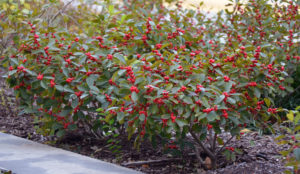
Q: I would like to plant bushes that will attract birds in fall and winter. I’m thinking of something that produces a berry they eat? – J.W., Winfield, Indiana A: Birds require not only food such as fruits and seeds, but also shelter and water. Planting a variety of plants that offer these resources across the seasons will help attract more birds to your yard. Some native shrubs to consider include: Aronia (chokeberry) Callicarpa (beautyberry)…Read more about It’s For The Birds[Read More]


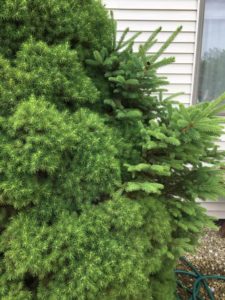
What’s killing the oak trees?

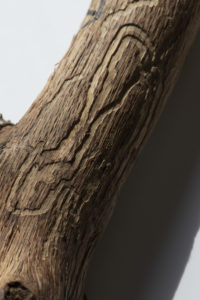
Q. In 22 years I’ve had more than a dozen oaks die because of a grub or larvae. Symptoms: First the leaves die and turn brown at the top of the tree. It slowly spreads down the tree until all the leaves are brown and have fallen off. Then the bark begins to peel away from the trunk, and then it falls off pieces at a time. You can see where it cuts off the…Read more about What’s killing the oak trees?[Read More]

 Categories:

Honeyvine – a native plant that can be both friend and foe.

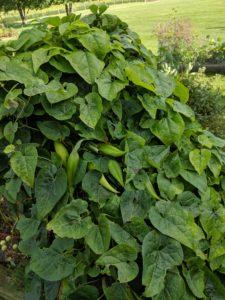
Q: This vine has perennially volunteered in my garden for a few years now. I let it grow because it seemed to please the butterflies, and the small white flowers smelled nice. At present it has grown chartreuse seed pods. Can you tell me what this vine is? Is it something I should destroy? – W.B. A: Ah, beauty and function are in the eye of the beholder. I believe your plant is what is…Read more about Honeyvine – a native plant that can be both friend and foe.[Read More]

 Categories:

Mystery plant likely a flowering quince

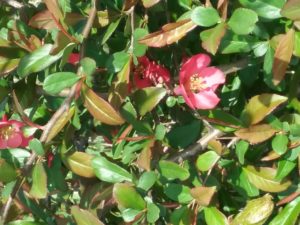
Q: Can you help me identify this shrub that flowered this spring? We’ve lived on this property for over 10 years but have never noticed it because it is on a part of the property that is not mowed. I only noticed it because of the bright red flowers. – T.G., Noble County A: This looks to be one of the flowering quince species, most likely the common flowering quince Chaenomeles speciosa. Although the plant…Read more about Mystery plant likely a flowering quince[Read More]

 Categories:

Don’t let sap-sucking squash bugs get old

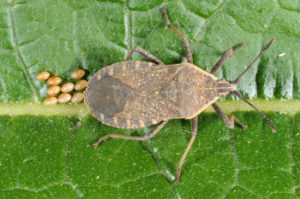
Q: We have been battling squash bugs for years. This year we went to preventive measures. Well, they are back. I now need to know what can we do to apply to kill them on contact. We are totally organic here. – T.H., Bremen, Indiana A: Squash bugs can be a persistent pest on all of the cucurbits, but especially on squash and pumpkins. This pest overwinters as adults in crop residue or nearby weeds, then fly to…Read more about Don’t let sap-sucking squash bugs get old[Read More]


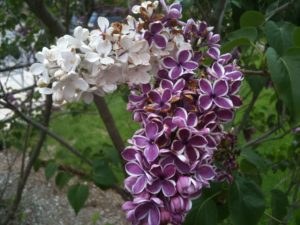
Her ‘Sensation’ lilac looks different this year. Enjoy!

Q: I have had a ‘Sensation’ lilac for several years. It has always produced lovely pinkish purple flowers edged in white. But this year it produced a few odd clusters that had only pale pink flowers. What causes this to happen? Should I prune off the odd branches? A: Many horticultural cultivars of plants, particularly those with interesting color variegation, begin as genetic mutations (sometimes called sports) of the species. If the sport with the…Read more about Her ‘Sensation’ lilac looks different this year. Enjoy![Read More]


Remove errant branches to save ‘weird’ tree

Q: Please don’t think I’m totally crazy, but I couldn’t get anyone around here to answer this question and I thought someone at Purdue could. I have two trees in my backyard that are growing branches that are completely different from the rest of the trees. It is NOT another tree coming up under them, which is what most people tell me. Am I correct in guessing this is a cultivar that went wrong? Do we…Read more about Remove errant branches to save ‘weird’ tree[Read More]


Renewal pruning has immediate, delayed rewards

Q:  I have 2 Forsythias, 2 Spireas, a Ninebark and a variegated Dogwood that appear to be half dead. My thought is to cut them down now to regrow so they’ll have all summer to do this. What are your thoughts? Last year all of these bushes were lush and full. A: Although it could be done now, late winter is the ideal time of year to completely cut the shrubs to the ground. But…Read more about Renewal pruning has immediate, delayed rewards[Read More]


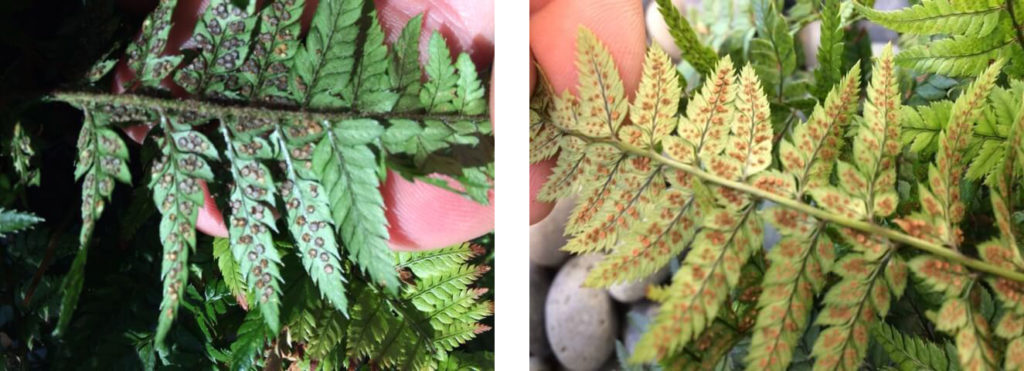
Fern is healthier than it appears

  Q: I received a potted fern as a gift from a friend, and it has done well in my home for over a year. But now it has what looks like a fungus on the bottom side of the leaves. Is there anything I can apply to prevent this from killing my plant? A: The growths on your fern are not from a fungus. They are fern spore cases and are not harmful to…Read more about Fern is healthier than it appears[Read More]


Page last modified: May 9, 2019

Indiana Yard and Garden – Purdue Consumer Horticulture - Horticulture & Landscape Architecture, 625 Agriculture Mall, West Lafayette, IN 47907

© 2026 Purdue UniversityAn equal access/equal opportunity universityCopyright ComplaintsMaintained by Indiana Yard and Garden – Purdue Consumer Horticulture

If you have trouble accessing this page because of a disability, please contact Indiana Yard and Garden – Purdue Consumer Horticulture at homehort@purdue.eduAccessibility Resources