Category: Vegetables

Showy hibiscus and mystery feathers

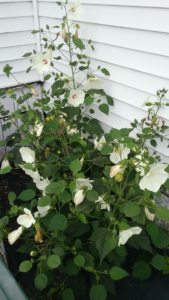
Q. Was wondering if you can identify this volunteer flowering plant. This is the second year it has come up. – H.G., Shipshewana, Ind. A. This is the perennial garden flower known commonly as hibiscus or rose mallow, botanical name Hibiscus moscheutos. This type of hibiscus is a hardy perennial that dies back to the ground each winter, and returns in the spring, reaching 3 to 5 feet tall or more. They usually begin blooming in midsummer and…Read more about Showy hibiscus and mystery feathers[Read More]

Early pumpkins may need temporary storage

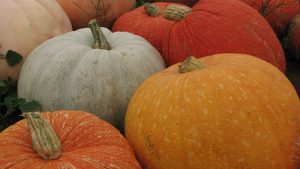
It seems that pumpkins often mature much earlier than we would like, and this year may be one of those times. Although the season got off to a slow start, the second half of summer was extremely warm and may have brought the pumpkins on in a hurry. And unfortunately, the dry weather that we experienced earlier might contribute to an early end for the pumpkin plants, unless you were able to irrigate on a…Read more about Early pumpkins may need temporary storage[Read More]


Three new vegetables chosen for All-America Selections 2017

Three exciting new vegetables were chosen as All-America Selections (AAS) winners for 2017, based on superior performance in test gardens throughout the country. Okra: “Candle Fire” was chosen for its unique pods — round rather than ribbed — and for its color, a brighter red than the reddish-burgundy okras currently available. The judges gave it high marks for productivity, taste, texture and tenderness, as well as for the ornamental value of red pods on red stems….Read more about Three new vegetables chosen for All-America Selections 2017[Read More]


Weed or flower? Sometimes it’s in the eye of the beholder

Q) This flower/weed came up in my flower garden this year. I know that I did not plant it and two other people said that they have it growing in their yards also. I took it to our local nursery. They did not know what it was and looked it up in their books but could not find it. They gave me a few suggestions but when I looked them up on the internet, they…Read more about Weed or flower? Sometimes it’s in the eye of the beholder[Read More]


Bid farewell to asparagus and rhubarb season

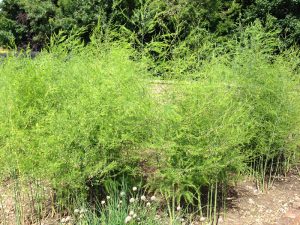
Reluctantly, it is time to see the end of this year’s asparagus and rhubarb harvest. Because of their perennial growth habit, asparagus and rhubarb must be given a chance to rebuild food reserves so that a bumper crop can be produced again next year. A good rule of thumb is to stop harvesting about the middle of June. In the case of asparagus, this allows the spears to produce tall, fern-like growth. Often, asparagus plants…Read more about Bid farewell to asparagus and rhubarb season[Read More]


Larch Needle Blight/White Ash Woes/Top-setting Onions

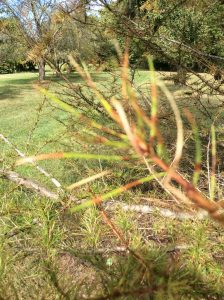
Q. I have noticed lately that our three big, lovely larches are losing needles on their bottom half. The needles have a banded pattern of color, and I fear larch needle blight. How can I confirm or reject this hypothesis? Is there anything we can do to treat them? – JC A. Specific diagnosis will require more than just these photos. I recommend sending samples of your trees to the Purdue Plant and Pest Diagnostic…Read more about Larch Needle Blight/White Ash Woes/Top-setting Onions[Read More]


Consistent Soil Moisture Helps Prevent Blossom-End Rot

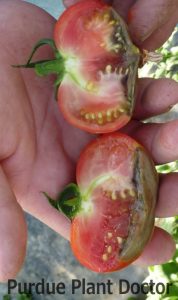
Q. I was wondering if you had any solutions for tomato rot. I throw my grass clippings on the soil to keep the weeds out. Does that have anything to do with it? – RM, Tinley Park, Illinois. A. Blossom-end rot is a common problem of tomatoes; it’s named for the black, leathery scar that develops on the blossom end of the fruit opposite the point of stem attachment. The black scar tissue is caused…Read more about Consistent Soil Moisture Helps Prevent Blossom-End Rot[Read More]

 Categories:

It’s Rhubarb Time!

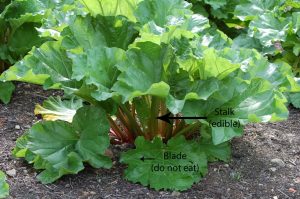
Rhubarb, also known as pieplant, is an herbaceous perennial grown for its unique, tart flavor of the thick leaf stalks (petioles). Rhubarb sends up its thick, edible stalks early in the spring, a much-anticipated harbinger of the coming growing season. Harvest can begin as soon as the stalks are large enough to cut and continues on through late spring. You can cut the stalks with a sharp knife, but be careful not to injure any…Read more about It’s Rhubarb Time![Read More]


Sweet Potato or Yam?

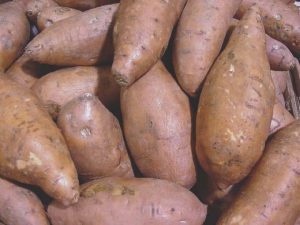
Will you be eating sweet potatoes or yams at your Thanksgiving dinner? While many folks use the terms interchangeably, they are distinct. Botanically speaking, the sweet potato is known as Ipomoea batatasand belongs to the morning glory family (Convolvulaceae). True yams belong to one of several species of Dioscoreain the yam family (Dioscoreace), and their production is limited to tropical climates. So most likely you will be eating sweet potatoes rather than true yams. There…Read more about Sweet Potato or Yam?[Read More]


Heat Wave Plus Drought Equals Double Whammy for Gardeners

The early arrival of summer’s extreme heat coupled with drought for many weeks now is tough on garden plants as well as their caretakers. Just as flowers and landscape plants have been gasping for water in much of the state, some vegetable crops are also struggling to stay productive. Tomatoes, peppers, melons, squash, pumpkins, cucumbers and green beans typically drop their blossoms without setting fruit when day temperatures are above 90 F, even if not…Read more about Heat Wave Plus Drought Equals Double Whammy for Gardeners[Read More]


Page last modified: October 6, 2016

Indiana Yard and Garden – Purdue Consumer Horticulture - Horticulture & Landscape Architecture, 625 Agriculture Mall, West Lafayette, IN 47907

© 2026 Purdue UniversityAn equal access/equal opportunity universityCopyright ComplaintsMaintained by Indiana Yard and Garden – Purdue Consumer Horticulture

If you have trouble accessing this page because of a disability, please contact Indiana Yard and Garden – Purdue Consumer Horticulture at homehort@purdue.eduAccessibility Resources