Category: Shrubs

Where Have All the Flowers Gone?

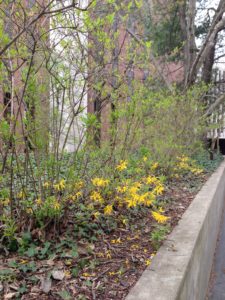
Winter 2017-18 was pretty harsh compared to most years. Much of central and northern Indiana experienced 13 or more days well below zero, while southern Indiana had four to five days just a few degrees below zero. In addition, gusty winds further injured plants by desiccating buds and twigs. The consequences remain to be seen. While some spring flowering trees and shrubs may perform admirably this season, some species will have few or no blooms…Read more about Where Have All the Flowers Gone?[Read More]
 Categories:

Mystery plants identified

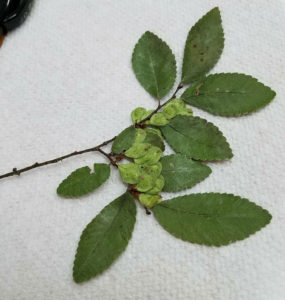
Q. I have some leaves from a tree I would like to identify. It is roughly 8 to 12 inches in diameter and fairly tall. The leaves are alternating with lengths of 1.5 to 2 inches long. The leaf stalks are all really short compared to the leaf length. Can you identify? – M.R., Brookville, Indiana A. This appears to be Ulmus parvifolia – common name Chinese elm or lacebark elm. This species is quite…Read more about Mystery plants identified[Read More]

 Categories:

Blooming out of sequence is cool!

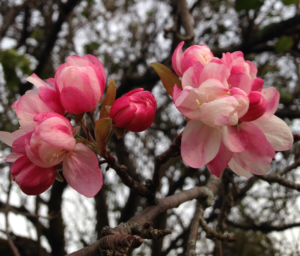
What is that crabapple doing reblooming in October and November? Actually, it might be more correct to think of it as jumping the gun on next spring rather than reblooming. Although it happens to some extent many years, there seem to be more reports thas usual of landscape plants blooming out of sequence this fall. Rhododendrons, crabapples, and saucer magnolias are the most commonly reported species blooming this fall. Spring-blooming woody plants initiate flower buds…Read more about Blooming out of sequence is cool![Read More]

 Categories:

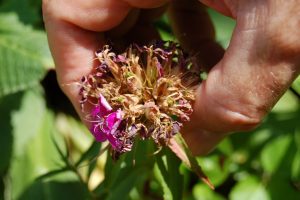
Roses: A Feast For Many Insects/Mystery Plant ID/Why Hydrangea Flowers Fade Pink to Tan

Q. How can I keep the beetles away and keep the invisible insects from eating holes in my rose leaves? The beetles have not been too bad the last couple of years, but the holes in the leaves never stop. I have tried so many different kinds of insecticides but to no avail. Our soil is not too sandy, but it is not all dirt either. Drainage does not seem to be a problem as…Read more about Roses: A Feast For Many Insects/Mystery Plant ID/Why Hydrangea Flowers Fade Pink to Tan[Read More]


Water Now to Minimize Winter Injury

Dry summers are not that unusual in the Midwest. But this year the dry spell followed an unusually wet spring and early summer in many areas. Of particular concern this year is that the dry spell is lasting well into autumn, putting plants in poor condition to get through the winter when water will be unavailable due to frozen soil. Newly planted trees, shrubs and perennial flowers will be at most risk of winter injury…Read more about Water Now to Minimize Winter Injury[Read More]


The Purple Landscape

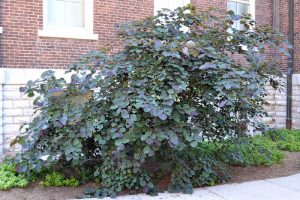
Trees and shrubs with colorful foliage can add a steady supply of interest in the landscape throughout the growing season. Purple foliage is quite popular among plant breeders and garden enthusiasts.  Here’s a look at some possibilities to consider. Small to Medium Trees Japanese Maple – There are many cultivars available in the trade. Some have purple foliage all summer while others may be purple only in spring and/or autumn. Redbud “Forest Pansy” – This…Read more about The Purple Landscape[Read More]


Some Shrubs Best Pruned After Flowering

Although late winter is generally the ideal time for pruning chores, many of our spring-blooming shrubs are best pruned immediately after flowers have faded. Trees and shrubs that bloom in early spring, such as forsythia, lilac, honeysuckle, quince and spirea, set their flower buds the previous fall, referred to as “flowering on old wood.” If you prune in late winter, some or all of the bloom potential for spring is sacrificed. By waiting until after…Read more about Some Shrubs Best Pruned After Flowering[Read More]


Hydrangea Popular, but Confusing

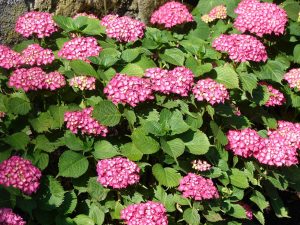
Hydrangeas are popular, but understandably confusing! There are about 25 species, though only five are primarily grown in the U.S. There are literally thousands of cultivars. Some species are classified as either mophead (all large, sterile florets) or lacecap (fertile, center florets surrounded by larger, sterile florets), depending on cultivar. The showiest part of the flower cluster is actually the bracts rather than petals. The bracts persist long after the petals drop and are often…Read more about Hydrangea Popular, but Confusing[Read More]


Off with their heads!

Removing spent blossoms from your shrubs and garden flowers can be tedious work, but often pays big dividends. The removal of spent flowers is often referred to as “deadheading.” Pinching or pruning off dead flowers is not just a matter of aesthetics – it can also encourage additional blooming. Many plants – petunia, geranium, marigold, speedwell, and coreopsis, among them – will re-bloom after deadheading. For these plants, the formation of fruit and seed signals…Read more about Off with their heads![Read More]


Fall Good Time to Replace Trees and Shrubs

Many Indiana gardeners lost landscape plants this year; particularly plants that were already in trouble and perhaps were dealt a fatal blow by summer’s extreme heat and drought. Cooler temperatures and more adequate rainfall can make fall an ideal time to replace or add to your woody plant collection. But keep the following notes in mind. Plants that are most successful for fall planting include most shrubs, crabapple, hackberry, hawthorn, honeylocust, linden, most maples, sycamore,…Read more about Fall Good Time to Replace Trees and Shrubs[Read More]


Page last modified: May 25, 2022

Indiana Yard and Garden – Purdue Consumer Horticulture - Horticulture & Landscape Architecture, 625 Agriculture Mall, West Lafayette, IN 47907

© 2026 Purdue UniversityAn equal access/equal opportunity universityCopyright ComplaintsMaintained by Indiana Yard and Garden – Purdue Consumer Horticulture

If you have trouble accessing this page because of a disability, please contact Indiana Yard and Garden – Purdue Consumer Horticulture at homehort@purdue.eduAccessibility Resources