
Rosie Lerner

716 articles by this author

Posts List

Blue spruce not a great choice for Hoosiers

Q: We have 5.5 acres with several hundred white pines, 7 blue spruce, and 2 red pines. Several of the blue spruce are dying. Several years ago, two started dying from the bottom up. We put evergreen spikes around them, and after a year or so they came back to normal. Presently some of the large ones are now dying from the bottom to the top. We put spikes around two large and one small,…Read more about Blue spruce not a great choice for Hoosiers[Read More]

Oedema Is a Corky Quirk

Plants that experience extremes in soil moisture may develop spots on their leaves, called “oedema” (also spelled “edema”). The spots may first appear as a blister or raised spot, particularly on the undersides of leaves, but may occur on the top side as well as on the stems. Eventually, the blister develops a rust-colored, cork-like scab. Oedema is most commonly seen in the greenhouse on ivy-leaf geraniums but also on pansies, jade, and other thick-leaved…Read more about Oedema Is a Corky Quirk[Read More]


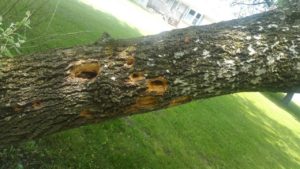
Gaping wounds likely a woodpecker’s work

Q. I saw these holes in my tree and am wondering what they are from. This tree is the only one I have seen them on. – M.S., Chesterton Some species of woodpeckers cause large holes in tree trunks. A. The holes are likely from woodpecker injury, but the tree may have some other issues. Has the tree been in a state of decline for a while? Perhaps branch dieback, leaf drop or other symptoms?…Read more about Gaping wounds likely a woodpecker’s work[Read More]

 Categories:

Perennials for Shady Gardens

Plants differ in their adaptability to different growing conditions. Sunshine is one of the most significant factors. We often think of light as being either sunny or shady, but, in fact, there are many “shades” of light in between. Your garden may experience light shade, such as that filtered through an overhanging tree; dense shade, such as that found in woodlands; or intermittent shade from an object, such as a building that blocks the sun…Read more about Perennials for Shady Gardens[Read More]


Eastern Red Cedars Volunteer Way Too Often

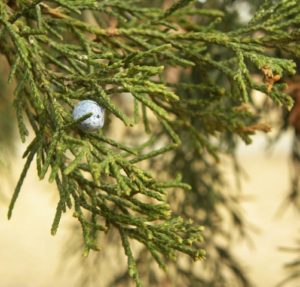
Q. I am wondering what you might know about the small “red cedar trees” that seem to be invading fencerows and highways, especially U.S. 31 north of Kokomo. I think a column from you would be worthwhile, since I can`t seem to get my neighbors to control the “pretty little trees,” which are much like Canadian thistle and kudzu. — E.W., Kokomo A. The eastern red cedar is a juniper, rather than a true cedar. Known…Read more about Eastern Red Cedars Volunteer Way Too Often[Read More]


Use Caution With Spreading Plants

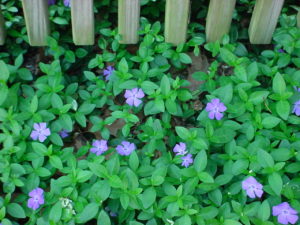
People often select plants first for their beauty and second for their functionality in the garden. Frequently, we don’t know or don’t consider a plant’s behavior when we’re selecting them. Almost by definition, a species that is an effective ground cover will have a spreading habit. But does that make the species aggressive or invasive? There can be much confusion about the meaning of the terms aggressive and invasive. Some plants, given their optimal habitat,…Read more about Use Caution With Spreading Plants[Read More]


Common Winter Injury Symptoms We Saw this Spring

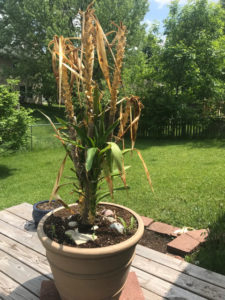
Q. I have a yucca tree that is 5-6 years old. What was a small plant has become a mature tree. I transplanted my yucca to a larger pot last summer. There was a significant explosion in growth. If you look at the picture you can see the growth. Unfortunately, it suffered through this past winter indoors. Much of the new growth witnessed last year is gone. Please see the attached photo — I think it…Read more about Common Winter Injury Symptoms We Saw this Spring[Read More]

 Categories: