Rosie Lerner

716 articles by this author

Posts List

Easter Lily Heralds Arrival of Spring

Easter lilies are the perfect symbol to mark the beginning of the spring season. The large, white, trumpet-shaped flowers bring a bit of spring fragrance into the home but can also be enjoyed outdoors later in the season. Like other lilies, the Easter lily grows from a bulb in the soil. This bulb stores food reserves that are used by the plant to produce foliage and flower growth. If encouraged to build up food reserves,…Read more about Easter Lily Heralds Arrival of Spring[Read More]
It’s Easy to be Green, if You’re a Plant

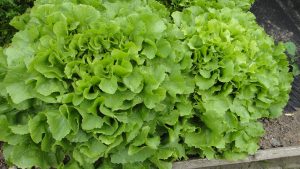
St. Patrick’s Day seems to bring out the “Wearin’ o’ the Green” among human folk. But plants wear their green throughout the year, and it is the green that makes plants such unique life forms. Plants get their green color from a pigment called chlorophyll. Green plants produce their own food supply through a process called photosynthesis, which can only take place when both chlorophyll and light are present. Other ingredients are also essential for…Read more about It’s Easy to be Green, if You’re a Plant[Read More]


Lily-of-the-valley

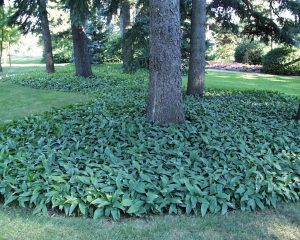
Q. I wish to know what can be done to help my lily-of-the-valley. It does not flourish as most do, and I don’t have a clue what would help. A. Lily-of-the-valley is more frequently perceived as a bit of a garden thug, due to its aggressive spreading nature in shady, moist, rich, well-drained gardens. However, it is not particularly tolerant of intense heat or compacted, dry soil. The extreme heat and drought experienced throughout the…Read more about Lily-of-the-valley[Read More]


Variegated Solomon’s Seal Named 2013 Perennial Plant of the Year

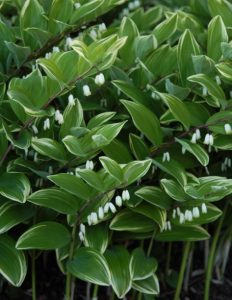
Variegated Solomon’s seal has been selected by members of the Perennial Plant Association as the 2013 Perennial Plant of the Year. Known botanically as Polygonatum odoratum Variegatum, this classic hardy favorite is a well-behaved addition that adds seasonal interest with foliage and flowers. The bright green foliage edged with white reaches about 8 to 24 inches tall and spreads by rhizomes to form small colonies. In late spring pendulous, white, bell-shaped flowers appear in pairs…Read more about Variegated Solomon’s Seal Named 2013 Perennial Plant of the Year[Read More]


Question and Answer

Q. My elephant grass just keeps getting smaller year after year. It just dies and kind of turns to dust in the middle. How do I keep from losing them entirely? I would love for them to be lively and beautiful and big. Can you help me please? (Submitted from Charlestown, Ind.) A. It is quite common for perennial grasses (and other perennials) to die out in the center, particularly those that form dense clumps….Read more about Question and Answer[Read More]


Recycle Your Holiday Greenery

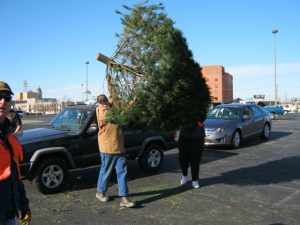
Though it may give you the blues to take down your holiday decorations, you can find solace in recycling your greenery. After you remove tinsel, plastic and other non-recyclable decorations, use the greenery to provide food and cover for wildlife or chip it into mulch for landscape protection. Winter birds will appreciate having recycled trees and garlands for cover, especially if you decorate them with bird-food ornaments. You’ll need to secure the tree trunk or…Read more about Recycle Your Holiday Greenery[Read More]


Sweet Potato or Yam?

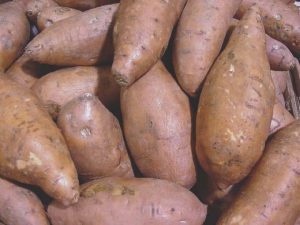
Will you be eating sweet potatoes or yams at your Thanksgiving dinner? While many folks use the terms interchangeably, they are distinct. Botanically speaking, the sweet potato is known as Ipomoea batatasand belongs to the morning glory family (Convolvulaceae). True yams belong to one of several species of Dioscoreain the yam family (Dioscoreace), and their production is limited to tropical climates. So most likely you will be eating sweet potatoes rather than true yams. There…Read more about Sweet Potato or Yam?[Read More]


Putting Vegetables By for Winter

Remember when your grandmother talked about putting food “by” for winter? There are several methods of preserving and storing our garden produce for later enjoyment, including freezing, canning and cold storage. The method of choice depends on the specific produce item, as well as more personal factors such as taste preferences, amount of time available and know-how. For busy gardeners, storing produce may provide a relatively easy, quick way to enjoy your harvest in winter…Read more about Putting Vegetables By for Winter[Read More]


Fall Good Time to Replace Trees and Shrubs

Many Indiana gardeners lost landscape plants this year; particularly plants that were already in trouble and perhaps were dealt a fatal blow by summer’s extreme heat and drought. Cooler temperatures and more adequate rainfall can make fall an ideal time to replace or add to your woody plant collection. But keep the following notes in mind. Plants that are most successful for fall planting include most shrubs, crabapple, hackberry, hawthorn, honeylocust, linden, most maples, sycamore,…Read more about Fall Good Time to Replace Trees and Shrubs[Read More]


Stressed plants may look like early fall

To state the obvious, many of our landscape plants really show the signs of excessive heat and extreme drought. Some trees are losing leaves already and may be turning color before they drop. Others have turned completely brown while still remaining attached. Early fall color and/or defoliation is common when plants are under stress and this season has been quite challenging for many trees, both old and young. The intense heat made it difficult for…Read more about Stressed plants may look like early fall[Read More]