Purdue students help shape ideas for major Indianapolis redevelopment through themed entertainment design
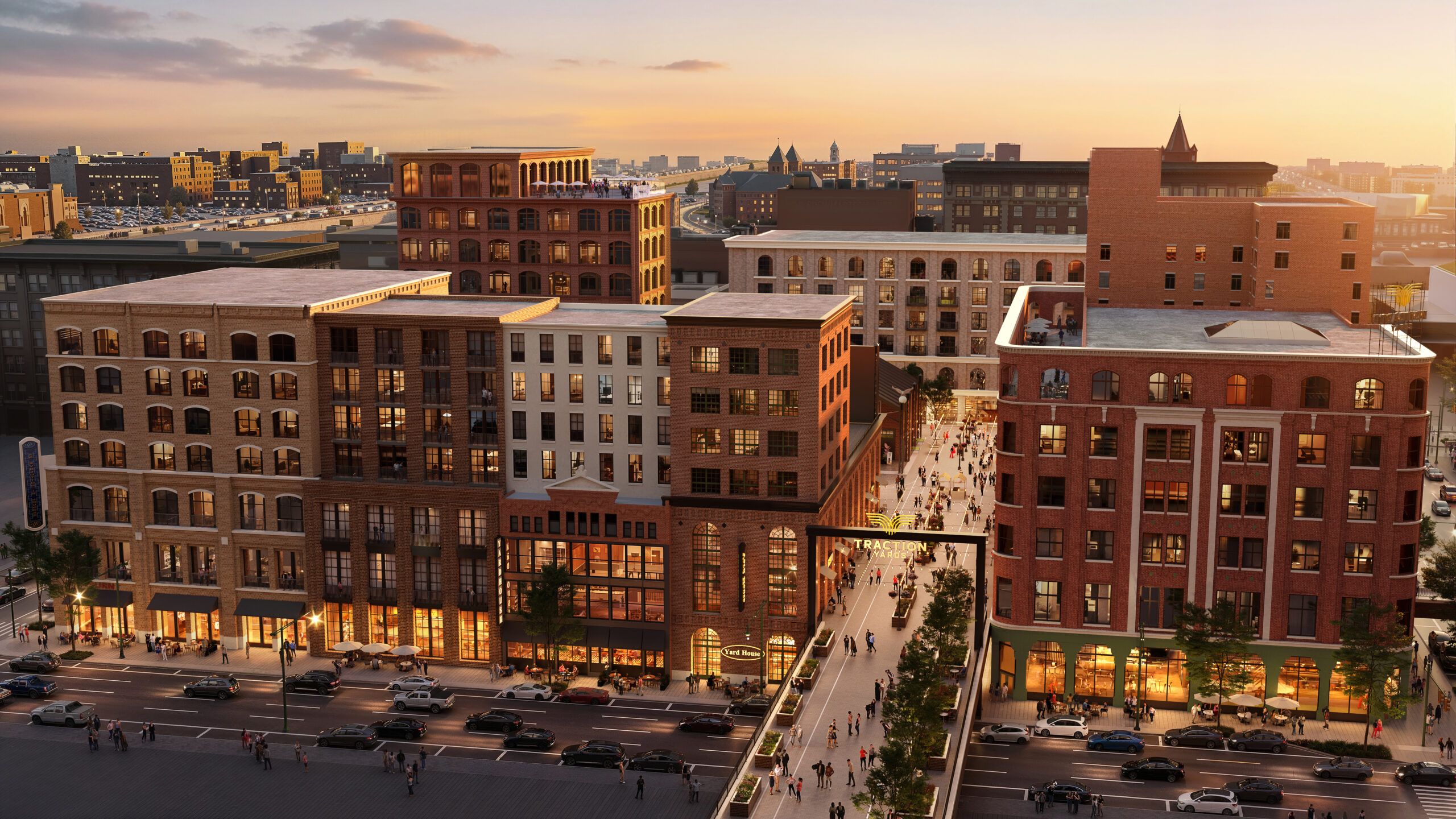
Traction Yards is planned as a mixed-use redevelopment at the former Circle Centre Mall site in downtown Indianapolis. Purdue students in themed entertainment design courses have developed concepts exploring storytelling, placemaking and visitor experiences for the project. (Rendering provided by Hendricks Commercial Properties)
INDIANAPOLIS — Purdue students are getting something few college courses can offer: the opportunity to pitch ideas to a commercial real estate developer that could potentially shape the future of a major city center.
Through the university’s themed entertainment design bachelor’s and certificate program courses offered in Indianapolis, student teams have been developing concepts for Traction Yards, a mixed-use destination planned for the site of the former Circle Centre Mall. The collaboration gives students experience working with a real client while providing Hendricks Commercial Properties with fresh perspectives for their reimagined development focusing on storytelling, place-making and visitor experiences.
“Having the opportunity to work with a real organization like Hendricks has been highly valuable for our students,” said Christian Rogers, assistant dean for Purdue Polytechnic in Indianapolis and associate professor in the School of Applied and Creative Computing. “They understand how to work and interact with — and pitch to — a real client.”
Students also get a better understanding of the breadth of the industry, Rogers said.
“One of the biggest things that we realized as we worked on various aspects of the project was that themed or experiential thinking doesn’t need to mean ‘theme park,’” said Brandon Vo, a student who participated in the Traction Yards project as part of a course in the themed entertainment design certificate program. “It can be applied to real estate through place-making, programming, storytelling, tenant strategy, circulation and operational design.”
Unlike a classroom exercise, the project is tied to a real-life redevelopment effort with apartments, a boutique hotel, dining and themed pedestrian areas attractive to tourists. Students receive background information about the site and then design, develop and deliver proposals that explore how storytelling, attractions, public spaces and other experiential elements could enhance the visitor experience.
Their ideas are being heard. Lance Evinger, vice president of asset management for Hendricks Commercial Properties, said project leaders regularly discuss concepts from student presentations.
“Almost every presentation, there’s at least one little nugget that we take away and say, ‘OK, let’s see how we can integrate this into the project,’ ” Evinger said.
Student proposals have included concepts inspired by Indianapolis’ transportation history, immersive trolley-themed experiences, interactive water features and other place-making elements designed to create memorable connections with visitors.
“It was exciting knowing we were working on a real property that is actively being redeveloped in Indianapolis,” Vo said. “In the future, we may actually be able to walk through Traction Yards and experience a place that we spent months studying and thinking about.”
As redevelopment progresses, the collaboration is expected to evolve with it. Student involvement remains valuable, Evinger said, as future teams may focus more on specific experiences, storytelling elements and public spaces within the development.
Learn more about themed entertainment design through Purdue Polytechnic and the themed entertainment design certificate online program at Purdue.
About Purdue University
Purdue University is a research institution ranked among the top 10 public universities in the United States. More than 106,000 students study at Purdue across multiple campuses, including more than 57,000 at our main campus locations in West Lafayette and Indianapolis. As a land-grant university committed to affordability and accessibility, Purdue’s main campus has frozen tuition 14 years in a row, enabling more students than ever to graduate debt-free.