Category: Summer

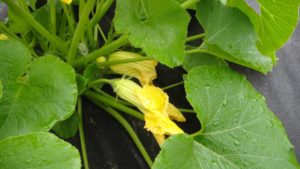
Squash blossoms drop, and sometimes that’s normal

A common complaint among vegetable gardeners is that their squash plants have a lot of flowers, but many of them just fall off without producing any fruit. This same observation can be made of cucumbers, melons, pumpkins and gourds, all of which are collectively known as “vine” crops to home gardeners. These plants are all members of the Cucurbitaceae family and are also commonly referred to as “cucurbits.” All of these vine crops produce separate…Read more about Squash blossoms drop, and sometimes that’s normal[Read More]
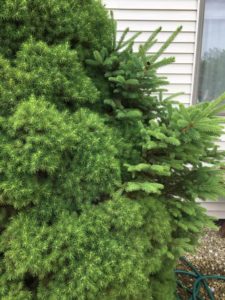
Remove errant branches to save ‘weird’ tree

Q: Please don’t think I’m totally crazy, but I couldn’t get anyone around here to answer this question and I thought someone at Purdue could. I have two trees in my backyard that are growing branches that are completely different from the rest of the trees. It is NOT another tree coming up under them, which is what most people tell me. Am I correct in guessing this is a cultivar that went wrong? Do we…Read more about Remove errant branches to save ‘weird’ tree[Read More]


When lightning strikes, is the tree out?

When lightning strikes a tree, it will most certainly leave a calling card, but it can be difficult to predict whether that injury is strike one, two or three. There are many variables to consider, including the species, moisture content, relative health of the tree at the time of the strike, and the intensity of the strike. Lightning can strike just about anything tall, but trees do seem to be a frequent target. And the…Read more about When lightning strikes, is the tree out?[Read More]


Renewal pruning has immediate, delayed rewards

Q:  I have 2 Forsythias, 2 Spireas, a Ninebark and a variegated Dogwood that appear to be half dead. My thought is to cut them down now to regrow so they’ll have all summer to do this. What are your thoughts? Last year all of these bushes were lush and full. A: Although it could be done now, late winter is the ideal time of year to completely cut the shrubs to the ground. But…Read more about Renewal pruning has immediate, delayed rewards[Read More]


Oedema Is a Corky Quirk

Plants that experience extremes in soil moisture may develop spots on their leaves, called “oedema” (also spelled “edema”). The spots may first appear as a blister or raised spot, particularly on the undersides of leaves, but may occur on the top side as well as on the stems. Eventually, the blister develops a rust-colored, cork-like scab. Oedema is most commonly seen in the greenhouse on ivy-leaf geraniums but also on pansies, jade, and other thick-leaved…Read more about Oedema Is a Corky Quirk[Read More]


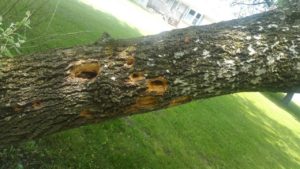
Gaping wounds likely a woodpecker’s work

Q. I saw these holes in my tree and am wondering what they are from. This tree is the only one I have seen them on. – M.S., Chesterton Some species of woodpeckers cause large holes in tree trunks. A. The holes are likely from woodpecker injury, but the tree may have some other issues. Has the tree been in a state of decline for a while? Perhaps branch dieback, leaf drop or other symptoms?…Read more about Gaping wounds likely a woodpecker’s work[Read More]

 Categories:

Perennials for Shady Gardens

Plants differ in their adaptability to different growing conditions. Sunshine is one of the most significant factors. We often think of light as being either sunny or shady, but, in fact, there are many “shades” of light in between. Your garden may experience light shade, such as that filtered through an overhanging tree; dense shade, such as that found in woodlands; or intermittent shade from an object, such as a building that blocks the sun…Read more about Perennials for Shady Gardens[Read More]


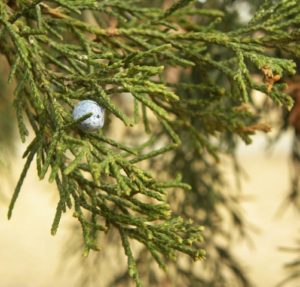
Eastern Red Cedars Volunteer Way Too Often

Q. I am wondering what you might know about the small “red cedar trees” that seem to be invading fencerows and highways, especially U.S. 31 north of Kokomo. I think a column from you would be worthwhile, since I can`t seem to get my neighbors to control the “pretty little trees,” which are much like Canadian thistle and kudzu. — E.W., Kokomo A. The eastern red cedar is a juniper, rather than a true cedar. Known…Read more about Eastern Red Cedars Volunteer Way Too Often[Read More]


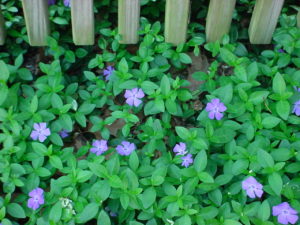
Use Caution With Spreading Plants

People often select plants first for their beauty and second for their functionality in the garden. Frequently, we don’t know or don’t consider a plant’s behavior when we’re selecting them. Almost by definition, a species that is an effective ground cover will have a spreading habit. But does that make the species aggressive or invasive? There can be much confusion about the meaning of the terms aggressive and invasive. Some plants, given their optimal habitat,…Read more about Use Caution With Spreading Plants[Read More]


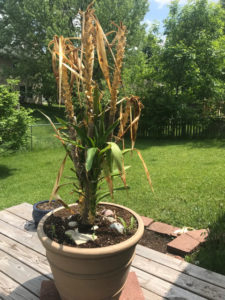
Common Winter Injury Symptoms We Saw this Spring

Q. I have a yucca tree that is 5-6 years old. What was a small plant has become a mature tree. I transplanted my yucca to a larger pot last summer. There was a significant explosion in growth. If you look at the picture you can see the growth. Unfortunately, it suffered through this past winter indoors. Much of the new growth witnessed last year is gone. Please see the attached photo — I think it…Read more about Common Winter Injury Symptoms We Saw this Spring[Read More]

 Categories:

Page last modified: June 14, 2018

Indiana Yard and Garden – Purdue Consumer Horticulture - Horticulture & Landscape Architecture, 625 Agriculture Mall, West Lafayette, IN 47907

© 2026 Purdue UniversityAn equal access/equal opportunity universityCopyright ComplaintsMaintained by Indiana Yard and Garden – Purdue Consumer Horticulture

If you have trouble accessing this page because of a disability, please contact Indiana Yard and Garden – Purdue Consumer Horticulture at homehort@purdue.eduAccessibility Resources