Category: Seasonal Information

Composting Turns Trash to Treasure

Autumn frosts usually means lots of clean up around the yard and garden. Why not turn that yard waste into treasure? Composting is a naturally occurring process that breaks down organic materials into an excellent soil amendment that improves soil structure, as well as adds some nutrients. Composting will help you recycle your garden wastes, improve your soil and reduce disposal costs. All organic materials will break down eventually, but gardeners can speed up the…Read more about Composting Turns Trash to Treasure[Read More]
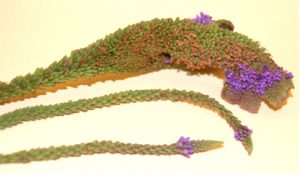

Fascinating Fasciation

Every so often, gardeners find a deformed-looking flower or stem that appears as if the plant has bulked up on steroids. The stem or flower stalk will appear somewhat squashed and splayed, sometimes splitting in two or more sections. Or it may appear that two or more stalks have merged together to form one distorted structure. This odd growth is called fasciation, which literally translates to banding or bundling. Fasciation is thought to be caused…Read more about Fascinating Fasciation[Read More]


All-American Selections New Flowers and Vegetables for 2008

Only three new garden plants were chosen for All America Selections (AAS) 2008, based on superior performance in test gardens all over the country. Osteospermum (a.k.a. cape daisy) ‘Asti White’ is this year’s bedding plant winner, selected for its outstanding bright white 2 – 2.5 inch daisy flowers with blue centers that continue blooming all summer.  The compact plants, reaching up to 20 inches tall and wide, are ideal for container gardens and will tolerate…Read more about All-American Selections New Flowers and Vegetables for 2008[Read More]


Showy Foliage for Shade Gardens

You don’t have to live in the tropics to have a stunning foliage display in your shade garden. Midwest gardeners have a wonderful foliage palette that can fill in areas among other perennials, or even star as the focal point. Of course, everyone thinks of hosta for showy shade-loving foliage, and there are an awesome number of cultivars to choose from. They come in various shades of green and blue and accented with white, cream…Read more about Showy Foliage for Shade Gardens[Read More]


Help Your Garden Cope with Dry Spell

Dry summers are not unusual in Indiana. In fact, I addressed dry conditions in this column just two years ago. Gardeners struggle hard enough to maintain healthy plants when extreme high temperatures are accompanied by lack of rain. What compounds the stress of this year’s dry weather is that it follows the wild weather extremes experienced earlier this year. March brought unseasonably warm temperatures to lure plants out of dormancy, and then April put the…Read more about Help Your Garden Cope with Dry Spell[Read More]


Wisteria A Mystery for Most Gardeners

Nothing rivals the beauty of a wisteria arbor in full bloom, but, unfortunately, successfully growing these lovely vines eludes many Midwestern gardeners. Two types of wisteria are most commonly planted in our area: Japanese wisteria ( Wisteria floribunda ) and Chinese wisteria ( Wisteria sinensis). Japanese wisteria is known for its fragrant violet blossoms, which are borne in 8- to 20-inch-long clusters. The individual flowers of a cluster open gradually, beginning at the base. Chinese…Read more about Wisteria A Mystery for Most Gardeners[Read More]


Spring Puts the Freeze on Gardens

Indiana gardeners may be used to the ups and downs of spring weather, but spring 2007 has been an unwelcome roller coaster ride! First, March’s unseasonably warm weather pushed many plants to break dormancy earlier than “normal.” Then, these plants were caught out in Old Man Winter’s last gasp when unseasonably low temperatures — down to the low- to mid-20s — fell across the state. Temperatures continued to drop below freezing for at least seven…Read more about Spring Puts the Freeze on Gardens[Read More]


Resist the Urge To Work Wet Soil

Many gardeners are getting that itch to get out the tiller and work up their garden soil. But many areas are still soggy from snow melt and rain, making soils too wet to work. It really is best for your garden’s long-term health to resist the urge to work the soil when it is still wet. Whether you use a tiller, plow or just a garden spade, working wet soil can badly compact soil, and…Read more about Resist the Urge To Work Wet Soil[Read More]


Snow Is Good for Gardens

Though your aching back may not agree, recent heavy snows actually will be good for your garden and landscape. Snow provides moisture as well as protection from cold and wind. Snow is an excellent insulator against low temperatures and excessive winds. The extent of protection depends on the depth of snow. Generally, the temperature below the snow increases by about 2 degrees F for each inch of accumulation. In addition, the soil gives off some…Read more about Snow Is Good for Gardens[Read More]


Terrariums

A terrarium is a delightful way to grow an indoor garden of small plants in an enclosed glass container. With proper care, a terrarium will create a humid atmosphere that protects tender, tropical plants that are difficult to grow in the normally dry atmosphere of our homes. The concept of a terrarium as we know it was discovered quite by accident by an English physician and botanist named Nathaniel Ward. He was trying to raise…Read more about Terrariums[Read More]


Page last modified: February 15, 2017

Indiana Yard and Garden – Purdue Consumer Horticulture - Horticulture & Landscape Architecture, 625 Agriculture Mall, West Lafayette, IN 47907

© 2026 Purdue UniversityAn equal access/equal opportunity universityCopyright ComplaintsMaintained by Indiana Yard and Garden – Purdue Consumer Horticulture

If you have trouble accessing this page because of a disability, please contact Indiana Yard and Garden – Purdue Consumer Horticulture at homehort@purdue.eduAccessibility Resources