Category: Seasonal Information

Some Shrubs Best Pruned After Flowering

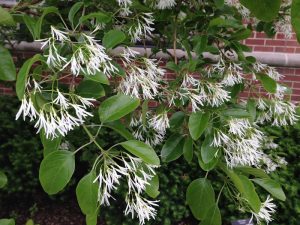
Although late winter is generally the ideal time for pruning chores, many of our spring-blooming shrubs are best pruned immediately after flowers have faded. Trees and shrubs that bloom in early spring, such as forsythia, lilac, honeysuckle, quince and spirea, set their flower buds the previous fall, referred to as “flowering on old wood.” If you prune in late winter, some or all of the bloom potential for spring is sacrificed. By waiting until after…Read more about Some Shrubs Best Pruned After Flowering[Read More]
Some Shrubs Best Pruned After Flowering

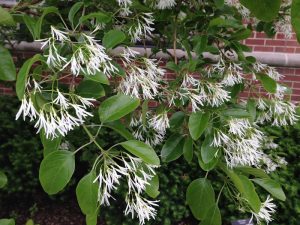
Although late winter is generally the ideal time for pruning chores, many of our spring-blooming shrubs are best pruned immediately after flowers have faded. Trees and shrubs that bloom in early spring, such as forsythia, lilac, honeysuckle, quince and spirea, set their flower buds the previous fall, referred to as “flowering on old wood.” If you prune in late winter, some or all of the bloom potential for spring is sacrificed. By waiting until after…Read more about Some Shrubs Best Pruned After Flowering[Read More]

2015 Is the Year of the Sweet Pepper

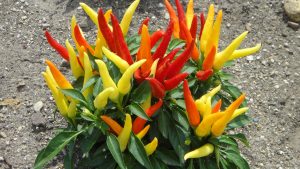
The National Garden Bureau has declared 2015 to be the Year of the Sweet Pepper! Sweet bell peppers are cultivars of Capsicum annuum. Sweet peppers are called sweet because they lack the gene that produces capsaicin—the chemical that gives hot peppers their heat. Pepper plants are easy to grow, and are quite compact making them a good fit for limited-space gardens and containers. Peppers are warm-season crops and should be planted out in the garden…Read more about 2015 Is the Year of the Sweet Pepper[Read More]


New Kalettes Are Cool!

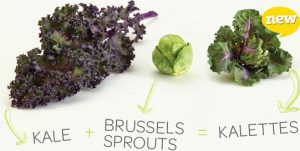
It’s not often that a new vegetable comes along, so I’m really looking forward to trying the new Kalettes this year. Developed in Great Britain, where they are called Flower Sprouts, this new vegetable is a hybrid cross between Brussel sprouts and kale. The result is beautiful. They resemble miniature, ornamental kale rosettes with purple highlights on dark green, leafy buds growing in the leaf axils along the stem – just like Brussel sprouts. Kalettes…Read more about New Kalettes Are Cool![Read More]


Try Your Luck with Shamrocks

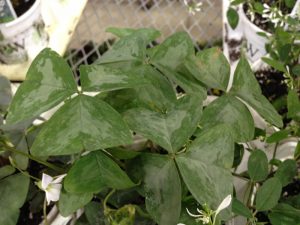
Although sometimes referred to as clover, the shamrock is not a “true” clover but more typically one of several species of Oxalis. The Oxalis selections commonly sold as shamrocks are grown more for foliage than for their flowers. Both green and purple foliage are popular, and some have quite striking variegated patterns. The shamrock’s dainty flowers vary from white to pink and from lavender to yellow, depending on the cultivar. Their flowers close at night…Read more about Try Your Luck with Shamrocks[Read More]


Stevia in the Windowsill Garden

Looking for a fun gardening project for chasing away your winter blues? Why not try growing Stevia in your windowsill garden. It may not be the most ornamental of plants, but hopefully will present a sweet reward for your efforts. Stevia rebaudiana, also known as sweetleaf and sugarleaf, is a low-growing, tender, perennial herb grown for the high levels of stevioside, which can be 30-300 times sweeter than cane sugar yet has zero calories. The…Read more about Stevia in the Windowsill Garden[Read More]


Wrap It Up

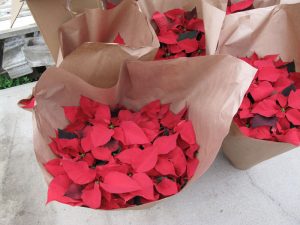
A sad thought occurred to me the other day while I was doing some holiday errands. I watched in horror as shoppers steered their carts full of holiday gift plants through gusty winds and miserably cold temperatures only to put these frigid plant victims into icy-cold automobiles. I wondered how many of these plants would even make it to their intended recipients? And how long would they last if they did make it that far?…Read more about Wrap It Up[Read More]


Cool-Season Brussels Sprouts Are Hot

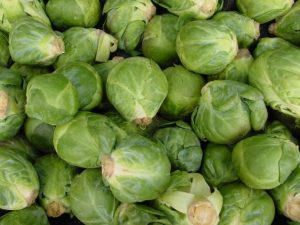
Brussels sprouts have long been under-appreciated by many, but now they proudly join other conveniently packaged vegetables in produce aisles and at farmers markets. They’re loaded with good nutrition – a one-half cup serving has just 28 calories, 0 fat grams and 81 percent of your daily vitamin C requirement. Brussels sprouts are also a good source of dietary fiber, vitamins A and K, folate, potassium, iron, manganese and many other nutrients. Brussels sprouts are…Read more about Cool-Season Brussels Sprouts Are Hot[Read More]


A “Pearfect” Nightmare!

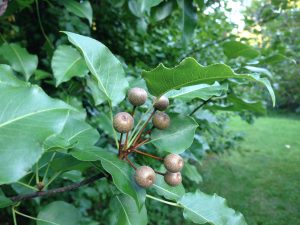
Think about what might be the perfect ornamental tree for your yard. Fast, compact growth, pretty white flowers in spring, glossy green foliage in summer, spectacular scarlet – purple fall color, and relatively resistant to pests and diseases. It is easy to propagate and transplant and adapts to a wide range of site conditions. You want one, don’t you? This describes the ‘Bradford’ cultivar of Callery (ornamental) Pear. It is difficult to find a downtown…Read more about A “Pearfect” Nightmare![Read More]


Tender Perennials Need Indoor Protection

While fall is the time to plant hardy bulbs, it is also the time to dig up tender perennials to save for next year’s garden. Some flowering perennials are not hardy in our climate but produce an underground bulb, root or other structure that can be lifted from the soil and stored overwinter. The most common garden plants in this category include gladiolus, caladium, tuberous begonias, canna and dahlia. Although these plants are all collectively…Read more about Tender Perennials Need Indoor Protection[Read More]


Page last modified: October 4, 2016

Indiana Yard and Garden – Purdue Consumer Horticulture - Horticulture & Landscape Architecture, 625 Agriculture Mall, West Lafayette, IN 47907

© 2026 Purdue UniversityAn equal access/equal opportunity universityCopyright ComplaintsMaintained by Indiana Yard and Garden – Purdue Consumer Horticulture

If you have trouble accessing this page because of a disability, please contact Indiana Yard and Garden – Purdue Consumer Horticulture at homehort@purdue.eduAccessibility Resources