Category: Plants

Holiday Cactus FAQs

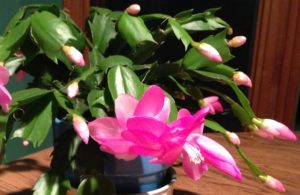
Holiday cacti are not only popular gift plants, but they are also the subject of frequent debate among gardeners. There appears to be much confusion about these unique tropical cacti regarding care, maintenance and, especially, on how to get them to re-bloom. While most folks just lump them all together as Christmas cactus, there are actually distinct species. The following tips address the most frequently asked questions. The various species of holiday cactus bloom at…Read more about Holiday Cactus FAQs[Read More]
 Categories:

What’s killing the oak trees?

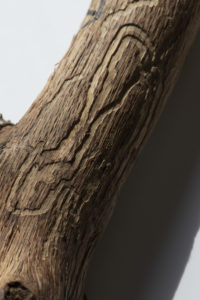
Q. In 22 years I’ve had more than a dozen oaks die because of a grub or larvae. Symptoms: First the leaves die and turn brown at the top of the tree. It slowly spreads down the tree until all the leaves are brown and have fallen off. Then the bark begins to peel away from the trunk, and then it falls off pieces at a time. You can see where it cuts off the…Read more about What’s killing the oak trees?[Read More]

 Categories:

Thankful for Cranberries

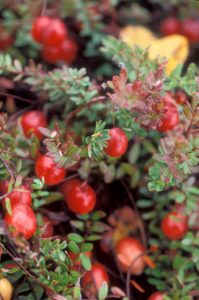
The cranberry plant is native to large portions of the northeastern United States as well as the West Coast states and portions of Canada. Cranberry production requires a rather unique acid bog habitat, which restricts its commercial production to just a few states. Wisconsin, Massachusetts, New Jersey, Oregon, and Washington are the leading producers in the US. The ideal soil pH is 4.0-5.5, quite acidic compared to other horticultural crops. A large supply of fresh…Read more about Thankful for Cranberries[Read More]


Honeyvine – a native plant that can be both friend and foe.

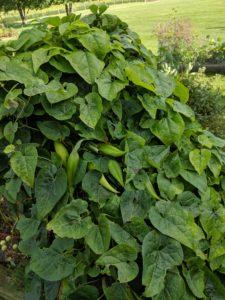
Q: This vine has perennially volunteered in my garden for a few years now. I let it grow because it seemed to please the butterflies, and the small white flowers smelled nice. At present it has grown chartreuse seed pods. Can you tell me what this vine is? Is it something I should destroy? – W.B. A: Ah, beauty and function are in the eye of the beholder. I believe your plant is what is…Read more about Honeyvine – a native plant that can be both friend and foe.[Read More]

 Categories:

Cut Back Perennials Now or Later?

Gardeners often ask, “When is the best time to cut back the dead tops of herbaceous perennials (stems die back to the ground each year)? Should we cut them in fall as the tops fade? Or wait until spring, just before new growth begins?” The answers depend, in part, on the specific plant and whether disease or insect pests are a factor. For most healthy plants, leaving plant tops over winter is fine and, in…Read more about Cut Back Perennials Now or Later?[Read More]


Mystery plant likely a flowering quince

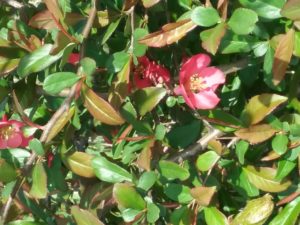
Q: Can you help me identify this shrub that flowered this spring? We’ve lived on this property for over 10 years but have never noticed it because it is on a part of the property that is not mowed. I only noticed it because of the bright red flowers. – T.G., Noble County A: This looks to be one of the flowering quince species, most likely the common flowering quince Chaenomeles speciosa. Although the plant…Read more about Mystery plant likely a flowering quince[Read More]

 Categories:

Don’t let sap-sucking squash bugs get old

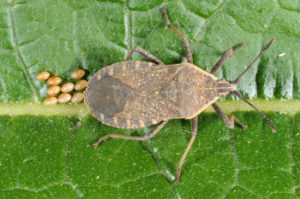
Q: We have been battling squash bugs for years. This year we went to preventive measures. Well, they are back. I now need to know what can we do to apply to kill them on contact. We are totally organic here. – T.H., Bremen, Indiana A: Squash bugs can be a persistent pest on all of the cucurbits, but especially on squash and pumpkins. This pest overwinters as adults in crop residue or nearby weeds, then fly to…Read more about Don’t let sap-sucking squash bugs get old[Read More]


Native Shrubs For Fall Color

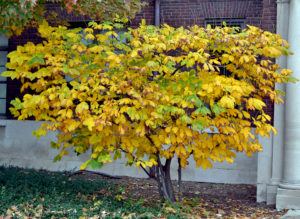
                    If you’re looking to add native shrubs to your home landscape, fall is an excellent time to look for those with good fall color. While many factors affect the display of fall color, there are a number of native shrub species that perform reliably in our area. Here’s a short list to consider, including their mature height as well as flowers and fall color. Most…Read more about Native Shrubs For Fall Color[Read More]


Her ‘Sensation’ lilac looks different this year. Enjoy!

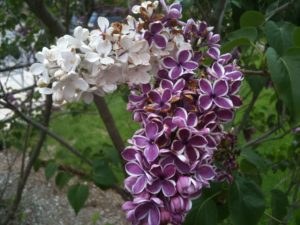
Q: I have had a ‘Sensation’ lilac for several years. It has always produced lovely pinkish purple flowers edged in white. But this year it produced a few odd clusters that had only pale pink flowers. What causes this to happen? Should I prune off the odd branches? A: Many horticultural cultivars of plants, particularly those with interesting color variegation, begin as genetic mutations (sometimes called sports) of the species. If the sport with the…Read more about Her ‘Sensation’ lilac looks different this year. Enjoy![Read More]


Squash blossoms drop, and sometimes that’s normal

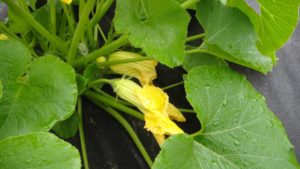
A common complaint among vegetable gardeners is that their squash plants have a lot of flowers, but many of them just fall off without producing any fruit. This same observation can be made of cucumbers, melons, pumpkins and gourds, all of which are collectively known as “vine” crops to home gardeners. These plants are all members of the Cucurbitaceae family and are also commonly referred to as “cucurbits.” All of these vine crops produce separate…Read more about Squash blossoms drop, and sometimes that’s normal[Read More]


Page last modified: August 15, 2019

Indiana Yard and Garden – Purdue Consumer Horticulture - Horticulture & Landscape Architecture, 625 Agriculture Mall, West Lafayette, IN 47907

© 2026 Purdue UniversityAn equal access/equal opportunity universityCopyright ComplaintsMaintained by Indiana Yard and Garden – Purdue Consumer Horticulture

If you have trouble accessing this page because of a disability, please contact Indiana Yard and Garden – Purdue Consumer Horticulture at homehort@purdue.eduAccessibility Resources