
Category: House Plants

February Garden Calendar

HOME (Indoor plants and activities) Check water levels in cut flowers daily. Check stored produce and flower bulbs for rot, shriveling, or excess moisture. Discard any damaged items. Most houseplants require less water in the winter because growth is slow or stopped. Check the soil for dryness before watering. Move houseplants to brighter windows, but don’t place plants in drafty places or against cold windowpanes. Potted spring-flowering bulbs forced into early blooming can make good…Read more about February Garden Calendar[Read More]
January Garden Calendar

Home (indoor plants and activities) Keep holiday poinsettias and other plants near a bright window. Water as top of soil becomes dry. Increase humidity around houseplants by grouping plants together, placing them on a pebble-water tray or running a humidifier. Check stored produce and tender flower bulbs and roots for rot, shriveling or excess moisture. Remove and discard damaged material. Repot houseplants as they outgrow current pots. Yard (lawns, woody ornamentals and fruits) Check young…Read more about January Garden Calendar[Read More]


Holiday Cactus FAQs

Holiday cacti are not only popular gift plants, but they are also the subject of frequent debate among gardeners. There appears to be much confusion about these unique tropical cacti regarding care, maintenance and, especially, on how to get them to re-bloom. While most folks just lump them all together as Christmas cactus, there are actually distinct species. The following tips address the most frequently asked questions. The various species of holiday cactus bloom at…Read more about Holiday Cactus FAQs[Read More]

 Categories:

Bringing houseplants back indoors

Many houseplants thrive during the long, bright summer days, especially when properly moved outdoors. But these plants may have some trouble adjusting back to indoor conditions when colder weather strikes. Many of our common indoor plants are native to the tropical or subtropical climates and cannot tolerate cold temperatures. Houseplants should be brought back inside before the outdoor temperature drops to 55 F. If days are warm but night temperatures are cold, you might consider…Read more about Bringing houseplants back indoors[Read More]


How to care for poinsettia

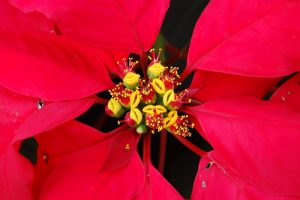
The poinsettia, the most popular holiday plant, is best known as the plant with bright red flowers on a green background. But the showiest part of the poinsettia is the group of colorful specialized leaves called floral bracts that surround the small, yellowish-green structures that are the true flowers. Red is still the most popular color, but bracts may also be pink, salmon-colored, yellow, white or multicolor. The long-lasting nature of today’s poinsettias can only…Read more about How to care for poinsettia[Read More]


Question and Answer

Q. Saw your article the other day about bulbs blooming in winter. I’ve never seen January budding snowdrops. When do they normally bloom? My daffodil’s are up about 3 inches! Also, I would like info on flowers to plant in clay-like soil. I would like perennials that bloom quite a bit of the summer and in partial shade or full sun. I have planted many flowers and half don’t live or don’t come up the next…Read more about Question and Answer[Read More]


Terrariums

A terrarium is a delightful way to grow an indoor garden of small plants in an enclosed glass container. With proper care, a terrarium will create a humid atmosphere that protects tender, tropical plants that are difficult to grow in the normally dry atmosphere of our homes. The concept of a terrarium as we know it was discovered quite by accident by an English physician and botanist named Nathaniel Ward. He was trying to raise…Read more about Terrariums[Read More]


Cyclamen (Cyclamen persicum)

Cyclamen (Cyclamen persicum) This species of cyclamen is a popular plant with florists, and often is called the “Florist’s cyclamen.” The plant is a tuberous perennial with heart-shaped leaves, 1 to 5-1/2 inches long, deep green in color. The leaves often have a silver-marbled tint on top of the leaf and pale or purplish green on the bottom of the leaf. It produces sweet-scented pink, red, or white flowers, 1/2 to 3/4 inches or more…Read more about Cyclamen (Cyclamen persicum)[Read More]

 Categories:

Summer Houseplant Care

As temperatures warm up in late spring, many home gardeners move houseplants to outdoor living areas such as porches, patios, and sunrooms. Most indoor plants can flourish outside if given proper attention. First, have the patience to wait until temperatures are dependably warm. Most houseplant species originated in the tropics and are sensitive to temperatures below 55 degrees Fahrenheit. Be prepared to bring the plants back indoors on cool nights. Gradually acclimate the plants by…Read more about Summer Houseplant Care[Read More]


Holiday Cactus

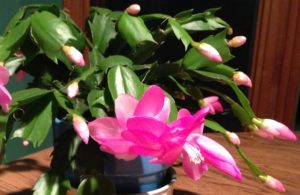
The plants we call Holiday Cactus may be either Christmas cactus or Thanksgiving cactus. Thanksgiving cactus (Schlumbergera truncatus) has oblong, bright green stem segments 1-1/2 to 2-1/2 inches long with 4 to 8 prominent sawtoothed marginal projections that point forward. The flowers have a short tube-like form with spreading, pointed petals, similar to trumpets. The plant bears deep pink, red, orange, or white flowers, up to 3 inches long, from late autumn to winter. The…Read more about Holiday Cactus[Read More]


Page last modified: September 23, 2016

Indiana Yard and Garden – Purdue Consumer Horticulture - Horticulture & Landscape Architecture, 625 Agriculture Mall, West Lafayette, IN 47907

© 2026 Purdue UniversityAn equal access/equal opportunity universityCopyright ComplaintsMaintained by Indiana Yard and Garden – Purdue Consumer Horticulture

If you have trouble accessing this page because of a disability, please contact Indiana Yard and Garden – Purdue Consumer Horticulture at homehort@purdue.eduAccessibility Resources