Category: Fruits and Nuts

January “In The Grow”

Q. I thought bagworms and webworms were two different worms. Your answer to the question about bagworms in your November column confused me. Please clarify. Also, I have been trying to grow sweet peas in my flower garden. They seem to germinate and come up OK. They grow to about 1 foot tall, then they die. Could you tell me what type of soil and location is best for growing sweet peas? I see them…Read more about January “In The Grow”[Read More]

November “In The Grow”

Q: I have hardy kiwi vines that have been planted for six or seven years. Last year they bloomed, but the blooms dropped off. This year they bloomed, and it looked as if little fruit set on. Then those fell off. What could the problem be? I was supposed to have both male and female plants. — Aldona Short, Valparaiso, Ind. A: Several cultural factors can contribute to premature fruit drop. Unseasonable spring frosts often…Read more about November “In The Grow”[Read More]


Peanuts Make their Way to Northern Gardens

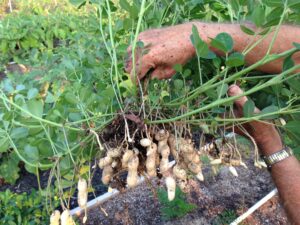
Peanuts have long been a popular backyard garden crop in the southern United States, much to the envy of northern gardeners. But since some garden seed catalogs make peanuts available all over the county, peanuts, also known as goober peas, are making their way north. Peanuts do require a long, warm growing season of about 120 days. Bright yellow flowers begin to form about seven weeks after planting. After the flowers fade, a small peg…Read more about Peanuts Make their Way to Northern Gardens[Read More]

 Categories:

Prune, Propagate Raspberries For Tidy Garden, Better Crop

It’s time to sharpen up the pruners and head to the raspberry patch for a bit of midsummer gardening. Raspberries grow long stems (canes) that are biennial, meaning they produce foliage the first year, flowers and then fruit the second year. The second-year canes then die after the fruit is harvested. The specific pruning technique for raspberries depends on which type you’re raising. Summer-bearing red and yellow raspberries should be pruned to remove all old…Read more about Prune, Propagate Raspberries For Tidy Garden, Better Crop[Read More]


August 1997

Q: Could you please tell me why my hollyhock’s leaves turn pale green around the bottom of the stalks, then yellow, then brown and drop off? The same thing happens on my geranium leaves, and the flowers die and wilt in the middle of the clusters. My rhododendron leaves turn yellow and curl together with spots on the leaves, and they drop off also. — Kay Nickless, Clay City, Ind. A: Yellowing leaves can indicate…Read more about August 1997[Read More]


It’s Time to Renovate the Strawberry Patch

The strawberry harvest may be over, but that doesn’t mean it’s time to forget the strawberry patch. Post-harvest care is an important part of keeping your patch healthy and productive. With yearly renovation, strawberry plants can remain productive for 10 years or longer. Begin renovating the strawberry bed immediately following the last harvest. Mow or trim off the leaves near the base of the plant, being careful not to injure the crown. Removing this foliage…Read more about It’s Time to Renovate the Strawberry Patch[Read More]


October 1996

Q: I hear about taking cuttings from different plants, but it has not worked for me. Please give us amateurs some pointers on when to take them and what type of soil or other medium to use. Do we keep them indoors or outdoors? – W.J. Harber, Ossian, Ind. A: This is a great time of year to take cuttings of tender plants so you can enjoy them again next growing season without having to purchase them…Read more about October 1996[Read More]


Outstanding new plants announced for 1997

(Released: 03 October 1996) By B. Rosie Lerner Extension Consumer Horticulture Specialist Six new garden plants have been awarded the prestigious honor of being an All America Selection (AAS) for 1997. These new cultivars have been judged as superior in their class based on their performance in test gardens all over the country. Zinnia angustifolia ‘Crystal White’ is not your ordinary everyday zinnia! Crystal White has a daintier texture, with small, pure-white, daisy-like flowers that…Read more about Outstanding new plants announced for 1997[Read More]


December 1995

Q: I have been trying to raise tomatoes on trellises for several years with not too much success. I tried shorter trellises, several different fertilizers and ground-up eggshells for copper and calcium. My plants grew tall vines, went above the trellis by about 3 feet and fell over, ruining my pepper plants next to them. Also, I had brown spots on the tomatoes. I tried different varieties, so variety isn’t a factor. Could you enlighten me,…Read more about December 1995[Read More]


November 1995

Q. How do I get rid of these small, round, red-orange bugs that look like ladybugs? They are swarming on our screens, doors and porches trying to get in the house, and many of them succeed. Nothing seems to discourage them. If you happen to smash them, there is a terrible odor. I don’t know if they damage anything, but they sure are annoying. Thanks for all your useful answers. – Ellen Roe, Crawfordsville, Ind. A. I…Read more about November 1995[Read More]


Page last modified: August 4, 2017

Indiana Yard and Garden – Purdue Consumer Horticulture - Horticulture & Landscape Architecture, 625 Agriculture Mall, West Lafayette, IN 47907

© 2026 Purdue UniversityAn equal access/equal opportunity universityCopyright ComplaintsMaintained by Indiana Yard and Garden – Purdue Consumer Horticulture

If you have trouble accessing this page because of a disability, please contact Indiana Yard and Garden – Purdue Consumer Horticulture at homehort@purdue.eduAccessibility Resources