
Rosie Lerner

716 articles by this author

Posts List

Propagate Herbs Now For Yearlong Enjoyment

Herb gardeners can snip fresh herbs throughout the winter by propagating their garden plants now. There are several approaches to overwintering plants. One easy method is to dig up a plant, or a portion of one, and pot it up. Plants such as chives, lemon balm, mint, burnet and sweet woodruff can be lifted and divided into sections to create more plants. Dividing is a fairly foolproof method of propagation because both roots and shoots…Read more about Propagate Herbs Now For Yearlong Enjoyment[Read More]
 Categories:

Propagate Herbs Now For Yearlong Enjoyment

B. Rosie Lerner, Consumer Horticulture Extension Specialist Herb gardeners can snip fresh herbs throughout the winter by propagating their garden plants now. There are several approaches to overwintering plants. One easy method is to dig up a plant, or a portion of one, and pot it up. Plants such as chives, lemon balm, mint, burnet and sweet woodruff can be lifted and divided into sections to create more plants. Dividing is a fairly foolproof method…Read more about Propagate Herbs Now For Yearlong Enjoyment[Read More]


Peanuts Make their Way to Northern Gardens

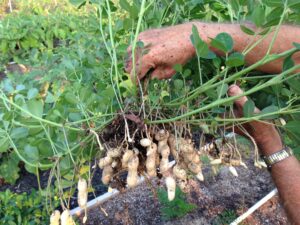
Peanuts have long been a popular backyard garden crop in the southern United States, much to the envy of northern gardeners. But since some garden seed catalogs make peanuts available all over the county, peanuts, also known as goober peas, are making their way north. Peanuts do require a long, warm growing season of about 120 days. Bright yellow flowers begin to form about seven weeks after planting. After the flowers fade, a small peg…Read more about Peanuts Make their Way to Northern Gardens[Read More]

 Categories:

Peanuts Make their Way to Northern Gardens

B. Rosie Lerner, Consumer Horticulture Extension Specialist Peanuts have long been a popular backyard garden crop in the southern United States, much to the envy of northern gardeners. But since some garden seed catalogs make peanuts available all over the county, peanuts &emdash; also known as goober peas &emdash; are making their way north. Peanuts do require a long, warm growing season of about 120 days. Bright yellow flowers begin to form about seven weeks…Read more about Peanuts Make their Way to Northern Gardens[Read More]


September “In The Grow”

Q: I would like to plant some “surprise lilies,” the pink ones that seem to pop out of the ground late in the summer. I’ve looked through all the nursery catalogs and garden stores, but cannot find any. Do you know where I could purchase some? – Anne Bodine, Covington, Ind. A: They can be hard to find because they aren’t carried by many companies and because they have so many common names! The foliage…Read more about September “In The Grow”[Read More]

 Categories:

Prune, Propagate Raspberries For Tidy Garden, Better Crop

It’s time to sharpen up the pruners and head to the raspberry patch for a bit of midsummer gardening. Raspberries grow long stems (canes) that are biennial, meaning they produce foliage the first year, flowers and then fruit the second year. The second-year canes then die after the fruit is harvested. The specific pruning technique for raspberries depends on which type you’re raising. Summer-bearing red and yellow raspberries should be pruned to remove all old…Read more about Prune, Propagate Raspberries For Tidy Garden, Better Crop[Read More]


Tomato Troubles Don’t Bother Most Gardeners

Despite the endless list of potential problems, tomatoes continue to be the most popular plant in Midwestern vegetable gardens. Many tomato problems are related to environmental factors such as temperature and moisture, rather than insects or disease. The good news is that these environmental problems are not infectious, meaning they don’t spread to other fruits and plants. The most common tomato affliction is known as blossom-end rot, so named for the black, leathery scar that…Read more about Tomato Troubles Don’t Bother Most Gardeners[Read More]


August 1997

Q: Could you please tell me why my hollyhock’s leaves turn pale green around the bottom of the stalks, then yellow, then brown and drop off? The same thing happens on my geranium leaves, and the flowers die and wilt in the middle of the clusters. My rhododendron leaves turn yellow and curl together with spots on the leaves, and they drop off also. — Kay Nickless, Clay City, Ind. A: Yellowing leaves can indicate…Read more about August 1997[Read More]


It’s Time to Renovate the Strawberry Patch

The strawberry harvest may be over, but that doesn’t mean it’s time to forget the strawberry patch. Post-harvest care is an important part of keeping your patch healthy and productive. With yearly renovation, strawberry plants can remain productive for 10 years or longer. Begin renovating the strawberry bed immediately following the last harvest. Mow or trim off the leaves near the base of the plant, being careful not to injure the crown. Removing this foliage…Read more about It’s Time to Renovate the Strawberry Patch[Read More]


July 1997

Q. I have this smoketree that is about 10 years old. It will get to the seedy stage, but then it won’t completely bloom out. There might be two or three that will completely bloom out. Do I need more than one tree? Is there such a thing as a male and a female? Please help me get that tree to bloom. — Shirley Sitek, Knox, Ind. A. Smokebush has a rather ineffective flower, but…Read more about July 1997[Read More]