
Purdue visit to Caterpillar Inc’s Tinaja Hills Demonstration and Learning Center shows the power of partnerships in action
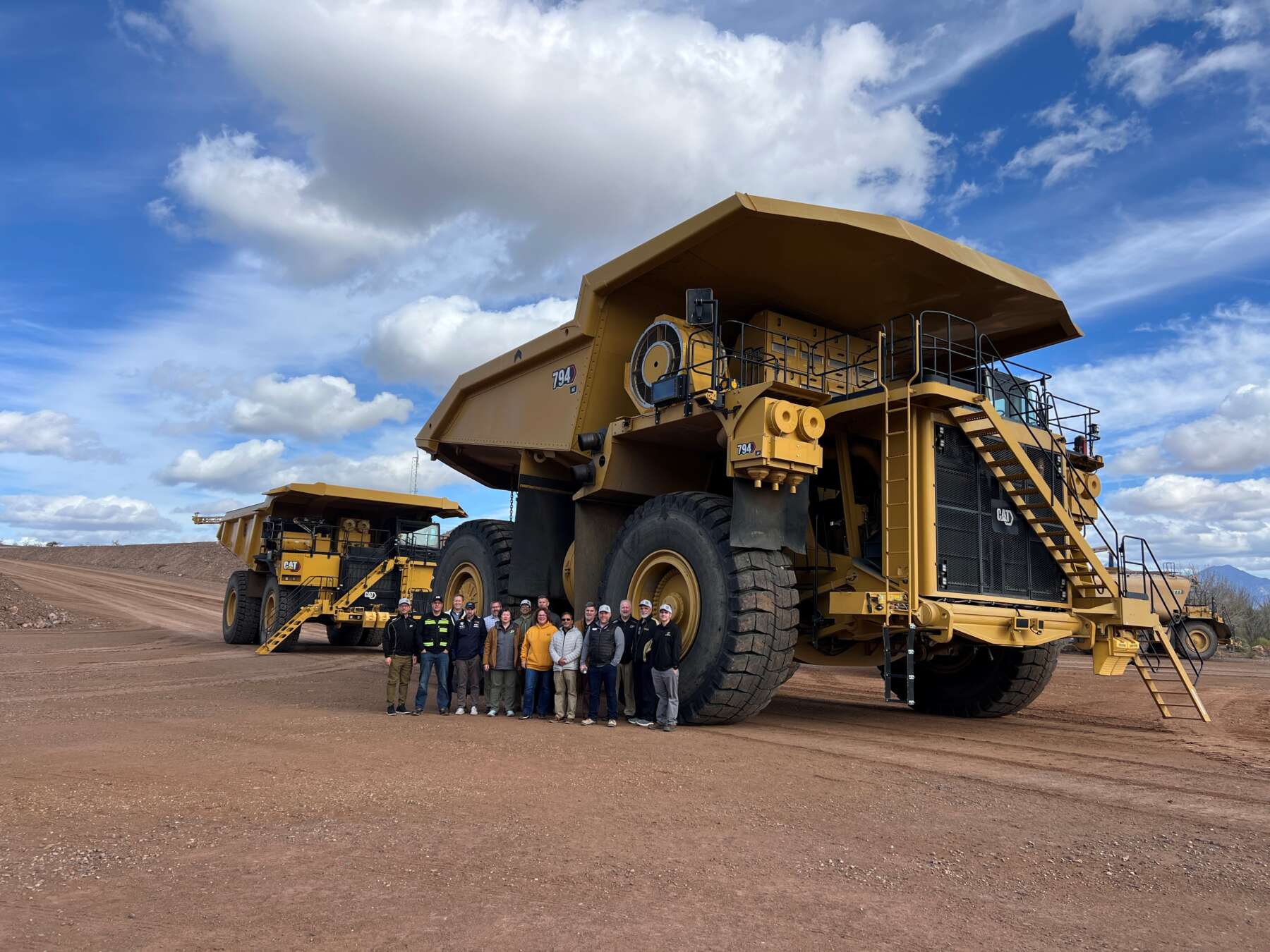
In the high desert outside of Tucson, Arizona sits Caterpillar Inc.’s Tinaja Hills Demonstration and Learning Center. At this 6,000-acre facility, Caterpillar (CAT), one of the world’s leading manufacturers of construction and mining equipment, tests and showcases its boundary-pushing machines. Amidst the stark, rugged terrain, these machines conduct amazing feats — quite literally moving mountains and shaping landscapes. The goal? To create a more efficient, safer way of building the world.
This past February, Eric Woods, executive director of industry partnerships in Purdue’s Office of Industry Partnerships, and several Purdue faculty took a trip to CAT’s demonstration facility in the Arizona desert. There, they got to see for themselves how CAT’s equipment is redefining safety, efficiency and scale. The trip was also a diplomatic mission; one meant to open up new avenues for research, collaboration and workforce development in Purdue’s longstanding partnership with CAT.
“This visit was the result of Purdue reaching out to Caterpillar and seeing what they needed from us, and how we could help them,” said Woods. “Throughout our relationship, Caterpillar has come to Purdue’s campus many times. We wanted the chance to go to them and do a show and tell.”
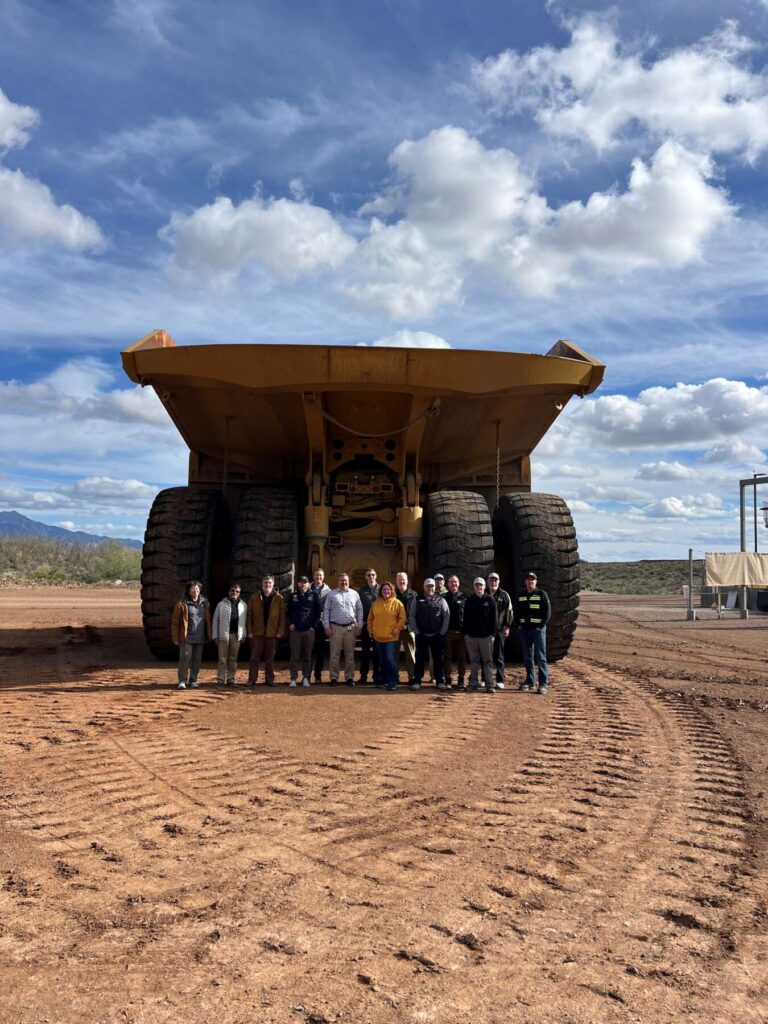
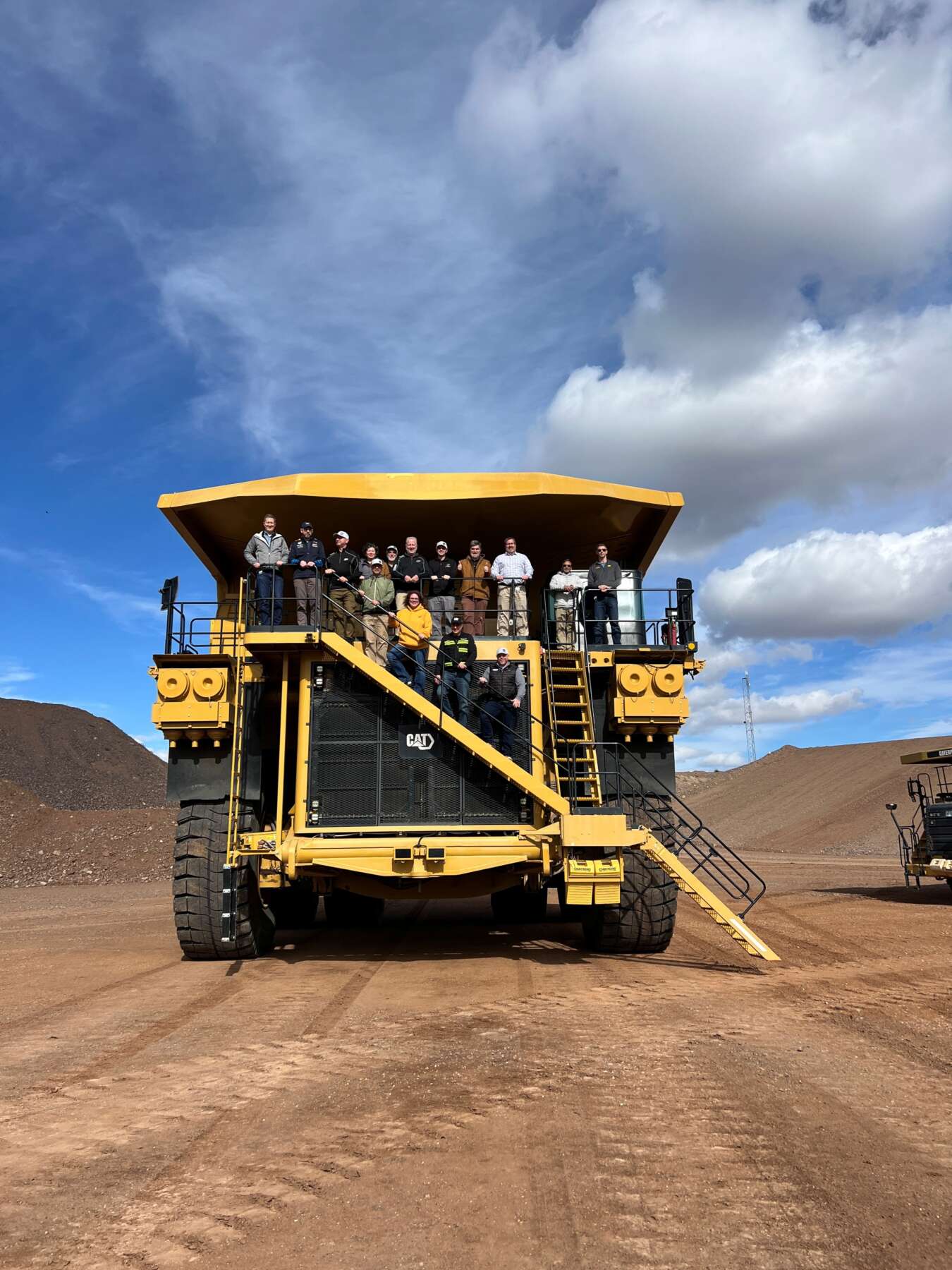
This show and tell brought together representatives from CAT and faculty from across Purdue (pictured left in front of a CAT machine), including faculty from the College of Engineering, Purdue Polytechnic, College of Agriculture, The Center for Education and Research in Information Assurance and Security, and Purdue in Indianapolis. During the visit, they got to experience CAT’s innovation first-hand, riding in three-story tall machinery that can be controlled autonomously (i.e. without a driver), reach speeds of 40 miles per hour and come to a full stop in seconds. The experience was unforgettable, Woods said. It also generated a lot of ideas for future collaborations and research projects that Purdue and CAT can complete together.
“Caterpillar has unbelievably cool technology,” Woods said. “Our visit generated a lot of research ideas, and it furthered our relationship. We brought in experts from across Purdue, because we wanted to match Caterpillar’s innovation with our expertise.”
According to Woods, connecting CAT with Purdue faculty is a good example of the symbiotic relationships that Purdue’s Office of Industry Partnerships (OIP) cultivates. Through partnering with leading companies like CAT, faculty have more resources to conduct innovative research, and their students have stronger career pathways. In turn, CAT gets connected with researchers who can help them launch new technologies, and, in many cases, they hire Purdue students to build these technologies.
“Caterpillar does a lot of research with Purdue. They have buildings and offices around campus,” said Woods. “They also offer a lot of internships to Purdue students, and they hire Purdue students. It’s a strong pathway.”
“The Office of Industry Partnerships is very thankful for the partnership with Caterpillar,” said Luna Lu, vice president of Purdue’s Office of Industry Partnerships. “This relationship is a true example of partnership where ideas are shared, and all parties achieve goals together. Caterpillar’s collaboration with Purdue University continues to provide opportunities for our students and faculty.”
Purdue’s relationship with CAT started in the early 1980s, when the company opened a Caterpillar Large Engine Center in nearby Lafayette, Indiana. Since then, CAT has made significant investments in Purdue, opening up an office at Purdue’s Convergence Center, lending its name to the Caterpillar Simulation Lab and Caterpillar Smart Foundry at Purdue Polytechnic, and hosting annual Caterpillar Days on Purdue’s campus, where students have a chance to explore internship and career opportunities at CAT.
“At Caterpillar Days, students get to interact with Caterpillar’s systems firsthand,” Woods said. “They even get to drive the machines remotely. They’re pressing the controls, and it’s making the machinery move all the way in Arizona. It’s a really cool experience.”
“We are so very thankful for the collaboration with Caterpillar,” said Greg Shaver, Reilly Professor of Mechanical Engineering at Purdue. “CAT is the world’s leader for construction and mining machines — which we got to see in action during this visit to Tinaja Hills. Purdue is the world’s leader in STEM education and research excellence at scale. Together, we have created an elite partnership. The research we do with, and for, CAT is advancing their technical leadership in their markets. These projects also help faculty recruit the very best students to our graduate research programs, and sustains a talent pipeline from Purdue to Caterpillar that is supremely meaningful to both organizations.”
CAT’s autonomous machinery has big implications for mining and building around the world. Since this equipment doesn’t need a driver to operate it, it can traverse rugged, dangerous landscapes to complete projects. It can also reach down into the depths of the earth and mine for essential resources — a job that was traditionally done by humans, usually at great personal risk. Through creating autonomous machines, CAT is ensuring this work can be done efficiently and safely.
“That’s what we want Purdue students to understand,” Woods said. “Construction, mining — these are now high-tech fields, and CAT is at the forefront of that.”
CAT’s mining machines also play a crucial role in mining critical materials like copper, which is used heavily in the development of electronics, infrastructure, computer chips and, increasingly, data centers. Ahead of every technological development, CAT is quite literally breaking new ground.
Maybe not everyone knows that CAT is a tech company. Because it’s a very established company. But they’re improving efficiency, they’re innovating all the time, and they’re prioritizing safety in all of it.
Eric woods
Executive Director of Industry Partnerships
As a representative from OIP, Woods is passionate about connecting faculty and students at Purdue with companies at the forefront of innovation. CAT is one such company, but OIP works with many companies across the globe, bolstering relationships and ensuring Purdue students and researchers have the connections they need to make an impact. Often, that means figuring out how Purdue can help companies reach their goals.
“A good partnership is about exploring what’s working and what’s not working,” Woods said. “We love troubleshooting with companies. We meet them where they’re at.”’
Even if it means going deep into the desert or traversing heavy machinery, OIP and its faculty partners put in the legwork to support Purdue’s myriad corporate relationships. According to Woods, this legwork pays dividends for students and faculty, who benefit from working with companies like CAT.
“It’s an impressive number, how many of our students go on to work with our industry partners.” Woods said.
To learn more about Purdue’s Office of Industry Partnerships and get connected, visit the office’s webpage.