

New online Graduate Certificate in Healthcare Systems Innovation and Quality program meets industry’s challenges
As more efficient and creative ideas reshape the very infrastructure of healthcare, the need for innovative leaders who can embrace change while keeping an eye on quality has never been greater. To equip the next wave of innovators, Purdue University is launching a new online Graduate Certificate in Healthcare Systems Innovation and Quality.
This program is designed to give working professionals the tools needed to facilitate systemic improvements across an ever-changing healthcare environment.
“The certificate focuses on healthcare economics and financing, health policy, quality improvement, systems thinking, informatics and emerging technologies such as artificial intelligence,” said Libby Richards, the School of Nursing’s department head and professor.
“It is intentionally designed to be practical and applied, helping learners move beyond theory to implement meaningful change in healthcare settings.”
Learn more about Purdue’s online Graduate Certificate in Healthcare Systems Innovation and Quality
Created with the demands faced by working healthcare professionals in mind, the program consists of four asynchronous online courses. The program’s flexibility allows students to grow at their own pace.
“It is designed to be immediately applicable,” Richards said. “Learners can bring concepts from coursework directly into their workplace, whether that involves improving workflows, leading quality initiatives, understanding reimbursement systems or navigating policy decisions.”
According to the World Health Organization (WHO) in a 2025 report, providing access to healthcare is just the first step towards strengthening quality across a health system. Other key elements needed are a skilled, competent, supported health workforce; financial systems that promote quality care and “information systems that continuously monitor and learn to drive better care.”
Students will explore how local, state and federal health policies are created and implemented. They will learn how to manage company resources and develop fiscal strategies. They will also discover how to make data-informed decisions to improve the quality of care and services at their facilities. Lastly, they will gain the skills to become thought leaders in the healthcare sector.
“One important distinction is that this certificate is less about supervising people and more about improving systems,” Richards said.
“It prepares professionals to ask: How can healthcare work better? How can we redesign care delivery to improve quality, safety, efficiency and outcomes? I see this program helping professionals become translators between clinical practice, data, technology, and organizational decision-making.”
From caring to curating change to improve care
Richards said she believes healthcare is at a nexus. Currently, the field is facing several challenges, including workforce shortages, financial pressures increasing complexity of care, rapid technological advances and growing expectations around quality, safety and equity.
“At the same time, healthcare organizations are increasingly asking clinicians and frontline professionals to lead change, improve processes, interpret data and implement innovations,” Richards said.
This moment also presents exciting opportunities such as growth in precision health, artificial intelligence, predictive analytics and interdisciplinary care models.
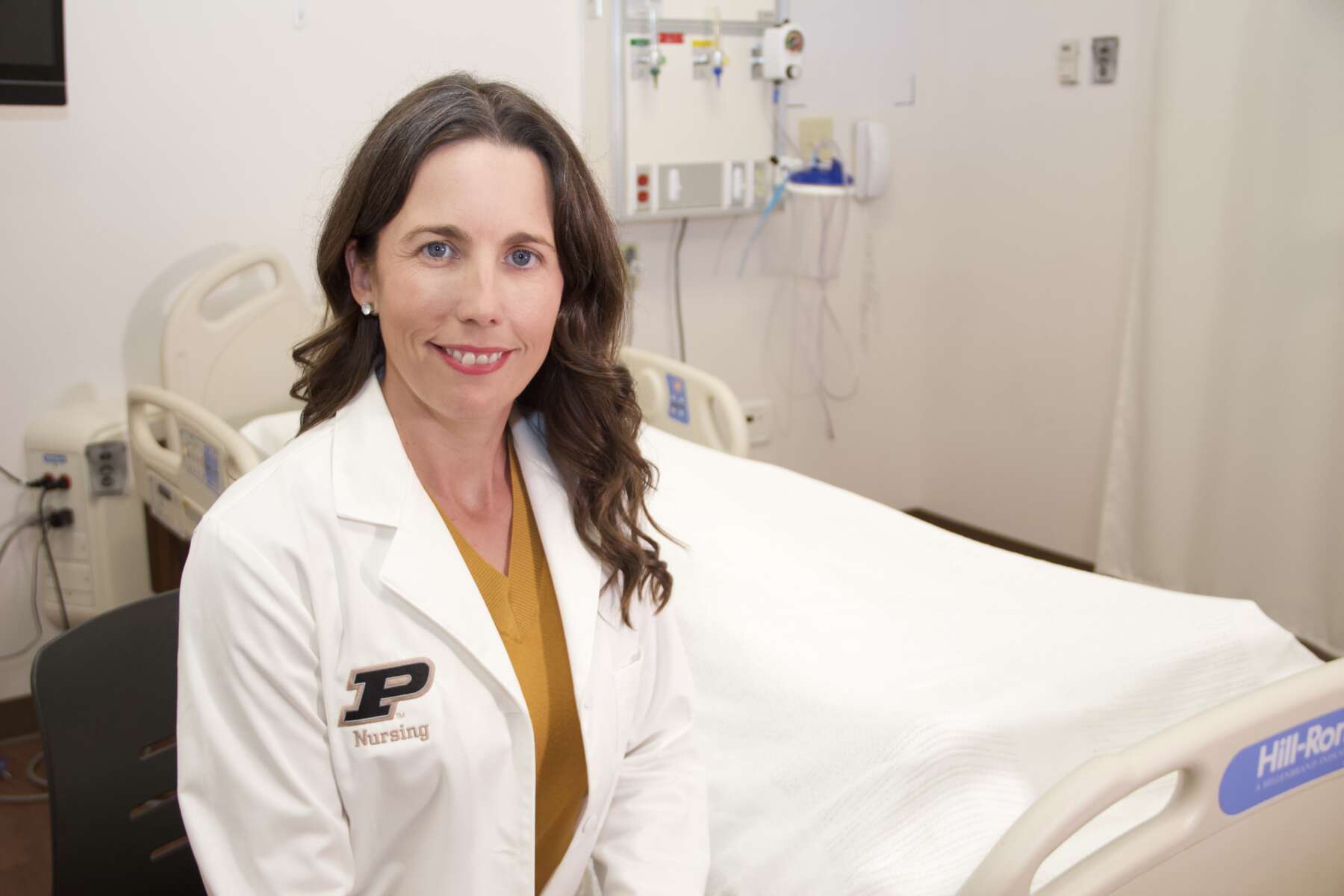
Healthcare is experiencing an extraordinary period of transformation.
Libby richards
Purdue University School of Nursing Head and Professor
Currently, she said, clinicians are trained to care for patients but not always to improve systems. The skills introduced in the program fill that gap.
“In five to 10 years, I think healthcare organizations will increasingly expect clinicians and healthcare professionals to have competencies beyond direct patient care,” Richards said. “Skills in quality improvement, data interpretation, systems redesign, informatics and policy will become essential rather than optional.”
Change is coming; get ahead of the curve.
The program follows the framework created by the Institute of Medicine. That framework recommends six goals for the healthcare system: safe, effective, patient-centered, timely, efficient and equitable —all elements emphasized in the healthcare systems innovation and quality graduate certificate.
“This program reflects where healthcare is heading,” Richards said. “It recognizes that improving healthcare requires more than clinical expertise alone. We need professionals who understand systems, can work across disciplines, use evidence and technology thoughtfully and lead meaningful change.”
“Graduates of this certificate will be positioned to serve as change agents. Some may move into formal leadership roles, but many will remain in clinical or operational settings while leading improvement efforts, implementing new technologies, improving patient outcomes or shaping policy and organizational strategy.”
To learn more about Purdue’s online Graduate Certificate in Healthcare Systems Innovation and Quality, visit the program’s website.