
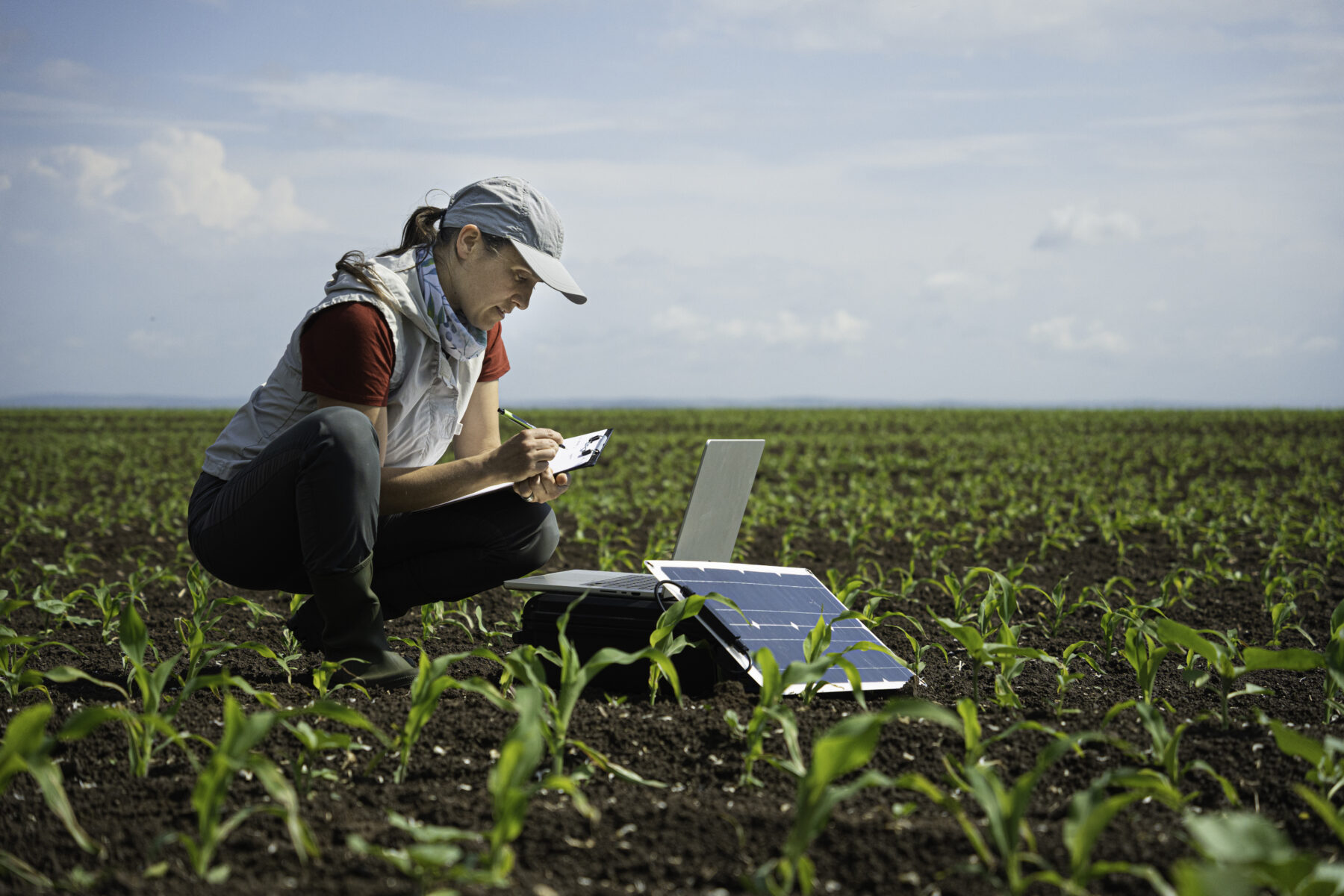
New College of Agriculture program preps agricultural professionals for farming’s tech evolution
Farmers have long depended on experience, local knowledge and common sense to produce food, feed and fiber. But the way they are doing it is continuously evolving. Digital agriculture is providing farmers with more tools to help them to successfully manage their production — with AI and automation emerging as powerful assets.
As agricultural professionals face numerous management options, tight margins and the constant demand for better productivity and stewardship, knowing how to navigate today’s technological advancements is critical.
That’s why Purdue University’s College of Agriculture is updating its Agronomy E-Learning Academy by replacing the Precision Agriculture program with the more expansive Digital Agriculture course. The new online professional development program lasts 10 weeks.
“We felt more, and updated education was needed around all this technology,” said Bruce Erickson, clinical professor of digital agriculture and the director of the Agronomy e-Learning Academy.
“A lot of people new to agriculture need to know about soils, fertilizers, plant growth, pests and all that kind of stuff, but they also need a basic understanding of all these digital tools and how they can be used in agriculture.”
Participants will be introduced to a variety of concepts, including data acquisition and analysis. The course covers input application technologies and how they apply when managing soils, crops, nutrients and pests. They will also learn best practices and critical factors to consider before investing in new equipment.
“There’s always new stuff coming out. New electronics. New applications on farm equipment,” Erickson said. “Part of the reason is technology is always changing. The stages of growth of corn, the different types of soil, they’re pretty much the same as they’ve always been. But one of the reasons why you’d want to take this course is to try to stay up to date with all the technology.”
Discover Purdue’s online digital agriculture course
For those professionals in the agriculture community like equipment dealers and farm suppliers, this course can aid in guiding farmers searching for answers, Erickson said. However, the format and language are designed to be relatable to anyone who wants to grow their knowledge base.
The use of technology on farms is not new. The combine replaced the reaper, which replaced the scythe, increasing productivity while easing back-breaking labor. For the College of Agriculture, which has evolved in response to technological changes, it was time to expand its offerings to include more data-focused courses in addition to classes introducing students to innovative digital equipment.
“There’s been these cycles of innovation that have happened where they’ve allowed farmers to increase productivity and farm more land, a double gain in efficiency,” Erickson said.
“This most recent technological leap has been in digital agriculture where you measure everything, and you know more about what’s going on and then you can try to keep doing better all the time.”
The 10-module program covers topics ranging from agronomy and resources management to ways to transform farm data into meaningful decision-making tools. Each module provides video case studies highlighting common challenges faced by today’s farmer and possible solutions in an interactive format.
For example, in the unit on global positioning systems (GPS), the lesson opens with the struggles faced by a family as the farm is passed to the next generation, the need for and expense surrounding equipment upgrades and the benefits of adding digital technology. It explores how a GPS guidance system works and its many applications on farms. It also covers the challenges and limitations users may encounter and how to address them. It even offers questions students should ask if they encounter the same scenario.
“We really try hard to make our courses applicable to the typical person,” said Erickson, who designed the new course. “We are always trying to engage the learner.”
Being fully online and recorded, it offers flexibility to a profession known for inflexible hours. The online modality is also convenient for those who live and work too far away to attend traditional classes on a college campus, Erickson said.
Upon completion, participants will receive a digital badge demonstrating verifiable new skills they can add to their LinkedIn page. They will also receive a frameable certificate.
Erickson said he recommends the course to those desiring to increase their value to their employers and to employers looking to invest in a team member.
“The more knowledgeable you are, the more valuable you are to your customers and to your organization,” Erickson said.
While the basics of growing a crop are familiar, the field of agriculture is evolving, thanks to new technology and developments. The Digital Agriculture course is designed to equip working professionals with the skills needed to utilize technology and data effectively while providing knowledge to help navigate common challenges. To learn more, visit the program’s website or register here.