

Is a master’s in information technology worth it?
It’s easy to believe that information technology’s (IT) best days are behind it.
Tech companies dominate employment headlines with news of hiring and firing rounds. Artificial intelligence (AI) appears to be threatening many human workplace functions. Cybersecurity threats, reported almost daily, are more sophisticated.
But the news requires a more nuanced view. The demand for skilled workers is high, but the skills employers need have changed. For those in the IT field, experience combined with continuing education can be a gamechanger.
“That is the uncertainty and the opportunity in one picture,” said Feng Li, Purdue University professor and head of its School of Applied and Creative Computing (ACC).
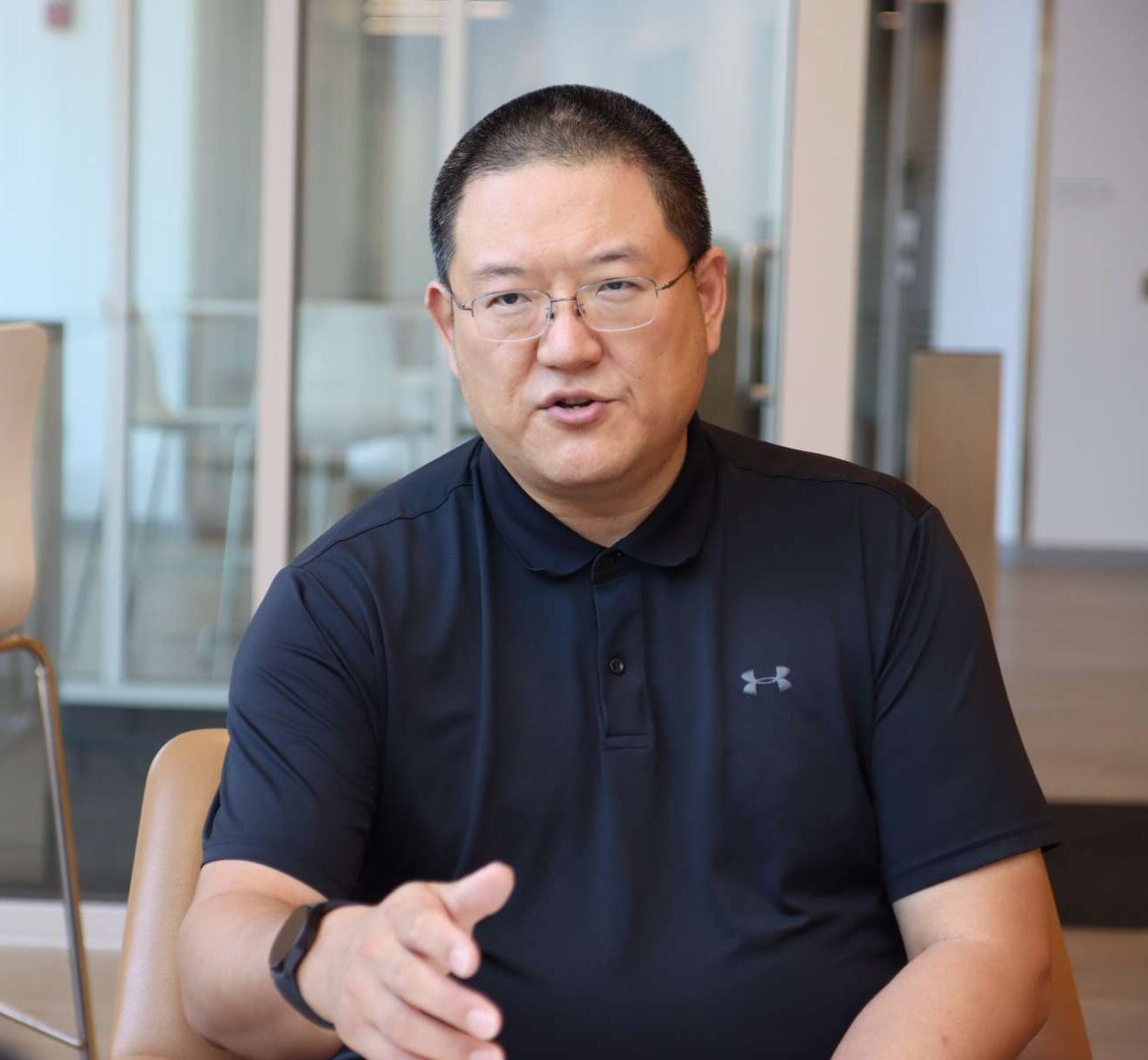
The market is not shrinking — it is moving. It is moving away from routine work and toward people who can lead AI adoption, secure systems, analyze data and manage change. For a working professional, a relevant master’s program offers a structured way to prepare for that change.
Feng Li
Professor, Purdue University
Why get a master’s in IT?
According to Indeed.com, there are skills that everyone in the IT field needs. They include technical writing, coding, network configuration, hardware deployment, operating system knowledge and database management.
An advanced degree enhances that skill set.
“A master’s degree in IT can aid in shifting you from being a ‘maker’ to being a ‘governor’,” said Paul Thomas, an ACC associate professor of practice.
“While the rise of AI agents continues to disrupt routine coding and development jobs, professionals who master governance, risk and compliance (GRC) remain uniquely insulated. Automated tools can write code, but they cannot evaluate enterprise risk, navigate complex global regulations or manage algorithmic bias. As such, an immense premium is placed on professionals who can govern these increasingly complex ecosystems.”

Author and industry expert Kevin Dittman (pictured left), an associate professor in ACC, also pointed to skills like communication, collaboration and networking.
“One of the most overlooked benefits of a master’s degree in IT is that students are not just learning from faculty, they are learning from a diverse group of experienced professionals who are actively working in the field,” Dittman said. “In many ways, the professional network and peer learning environment become as valuable as the coursework itself.”
“When students participate in discussion forums or work in teams, they regularly engage with peers who may be cybersecurity analysts, IT managers, business analysts, project and product managers, systems engineers, data analysts and technology executives.”
Those relationships, developed over the course of a two-year program, can lead to professional opportunities, Dittman said.
Job and wage projections point to a promising future for IT professionals with a master’s in IT
Jobs in the computer and information technology sector are projected to grow faster than the average for all occupations from 2025 to 2035, according to the Bureau of Labor Statistics’ Occupational Outlook Handbook.
It reported that the 2025 median annual wage for those in the computer and information technology sector was $109,470. During the same period, the median wage for all occupations was $50,980.
Distinguish yourself in the IT industry with an online master’s from Purdue University
“These occupational wages provide context for the opportunities in IT; they do not measure the additional earnings attributable to a master’s degree,” Li said.
In its 2025 Career Outlook report, BLS found workers 25 years old and older who had a bachelor’s degree had a weekly median income of $1,578. Those with a master’s earned $1,876.
“The jobs a master’s opens are the ones that manage systems, budgets and people,” Li said.
“The BLS notes that ‘some organizations require or prefer’ a graduate degree for those roles. I see this every week in the resumes that cross my desk: the degree is not what gets you the interview for a director role, but it is very often what keeps you in the room.”
The lack of workers with in-demand skills has created an opportunity for those with a master’s in IT
The lack of skilled workers is well documented. BLS predicts 280,000 job openings annually from 2025-2035. A 2026 study by Robert Half Talent Solutions, a global consulting and professional staffing firm, found 78% of tech leaders planned to hire for permanent roles and 66% for contract positions.
The lack of skilled workers in these roles is impacting companies globally. According to the Robert Half report, 65% of hiring managers said it is more difficult to find qualified candidates over the previous year; 71% said the shortage has delayed projects, with AI integration projects the most affected.
“The constraint employers report is not too many people — it is too few with the right skills,” Li said.
That study said the areas of growth include IT project managers, network/cloud engineers, software engineers, data engineers, systems administrators and DevOps engineers.
The need is even greater for cybersecurity expertise, Li said. The 2025 Cybersecurity Workforce Study found 59% of organizations reported critical or significant cybersecurity skills needs, up from 44% a year earlier, with AI the single largest gap.
Benefits of a master’s in IT for experienced professionals
When professionals pursue a master’s degree, it is usually with one goal in mind: career advancement. Encoura, a data company that specializes in helping colleges gain and retain students, found 94% of the students surveyed in 2024 had a career-based reason for obtaining a master’s.
That rationale has merit, Thomas said. In addition to updating skills and learning about new industry developments, a master’s degree can redefine you professionally.

A master’s in IT can help professionals break through the individual contributor plateau at times found in certain organizations.
Paul thomas
Associate Professor of Practice, Purdue University
The IT master’s programs also provide an environment for professionals to learn from each other.
“Students learn how other organizations solve similar problems, expanding their professional perspectives,” Dittman said.
“Many professionals spend years working within a single organization and naturally begin viewing problems through that organization’s culture and processes. One of the most powerful aspects of graduate discussion forums and team projects is exposure to different organizational approaches.”
Why Purdue’s online Master of Science in Computer and Information Technology?
Purdue University’s online Master of Science in Computer and Information Technology (MS CIT) program was ranked No. 1 in the nation by Forbes Advisor in 2026. It is offered by the School of Applied and Creative Computing, home to the university’s Applied AI Research Center. The same professors who teach the applied AI, information security and cyber forensics concentrations on campus are engaged in the online program.
With its 100% online modality and eight-week course schedule, the program allows working professionals to balance personal responsibilities and educational goals. It can be completed in as little as 12 months or up to five years. Courses such as AI in Business Analysis, Project Management and Adversarial Techniques in AI put applied AI to work.
Not ready to commit to a master’s degree but interested in upgrading your skill set? Purdue provides a pathway for its credits to apply toward the MS CIT, with a separate application required for admission to the master’s program. The online graduate certificates in Applied AI and Cybersecurity, Applied Data Analytics in Technology, Information Technology Business Analysis and Managing Information Technology Projects can all be counted towards the MS CIT or online Master of Science in Applied Geospatial Analytics degrees.
“The half-life of skills is getting shorter,” Li said. “The people who will thrive are not the ones who learned the right tool. They are the ones who learned how to keep learning — who are agile, nimble and ahead of the change instead of chasing it.”
Learn more about the Master of Science in Computer and Information Technology at its website.