
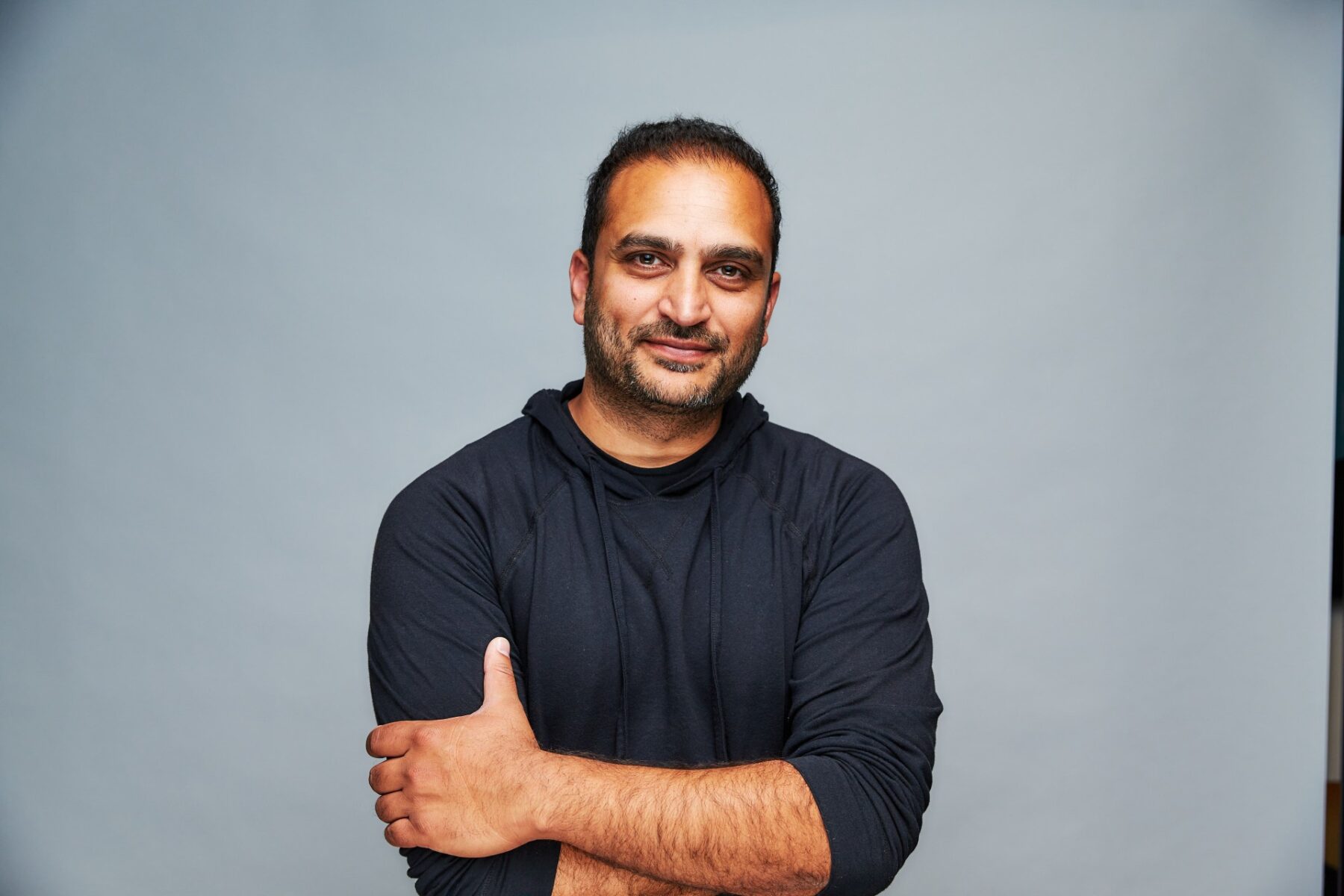
How Ketal Amin found his purpose at the intersection of technology and human impact with Purdue University’s online Master of Science in Artificial Intelligence
When Ketal Amin began his career, he never imagined he’d end up working at some of the most complex intersections of technology and humanity. A self-described builder and problem solver, Amin has always been passionate about uncovering how technology could make life better for others.
Long before his career in technology, Amin dreamed of opening his own pizza shop and leading businesses. It was a goal rooted in creativity and independence. He began studying business at Rensselaer Polytechnic Institute to build the business foundation he thought he’d need but soon realized it wasn’t the right fit. He transitioned into computer and systems engineering. That pivot sparked a career that spanned across multiple functions and multiple industries, each new role reinforcing his drive to keep learning and building with purpose — momentum that ultimately led him to Purdue University’s online Master of Science in Artificial Intelligence, where he majors in AI Management and Policy.
Before his studies at Purdue, Amin joined GE’s Information Management Leadership Program, where he learned how data and processes could transform business outcomes. He later joined Philips Healthcare and Stanford Healthcare, developing and modernizing large-scale medical systems. He has led teams of engineers, IT/security analysts, and product, UX and project managers. He has also led businesses in the Fortune 500, startups, an academic medical center, top medical device manufacturers and cybersecurity firms. Today, Amin serves as a product manager at Cisco, shaping strategy for threat detection and response systems, vulnerability and threat intelligence in cybersecurity, a role that continues to reflect his belief that technology should serve people, not just progress.
“I’ve always wanted to build technology for good; things that protect people or help them live better lives,” Amin said. “Artificial intelligence has always been around. It’s just the next version of computer science, just logic and data applied to respond in smarter ways.”
Even with decades of solid experience, Amin wanted a deeper understanding of how AI continues to inform leadership, governance and decision-making at scale. That curiosity led him to Purdue University’s online Master of Science in Artificial Intelligence, a program he said finally aligned with how he thought about technology: not just as an engineer, but as a strategist. He valued how the AI Management and Policy major bridged the technical side of AI with the human, ethical and operational dimensions that leaders must navigate.
“Purdue offered me the right mix of structure and freedom,” he said. “The flexibility, the respect the name carries, the openness of the faculty. It all just fits. This program gave me the framework to think about how to [build AI capability] responsibly.”
Ready to influence AI policy and management?
The master’s program also appealed to him on a personal level. As a Chicago native and long-term basketball fan, he said Purdue’s athletic pride played a role in his decision.
“I love the energy of [Purdue],” he said. “When people say, ‘Boiler Up,’ you can feel the pride and power behind it.”
But more importantly, he saw Purdue as a place he’d be proud for his children to attend one day.
“It’s not just about me learning,” he said. “It’s about setting an example for my kids and showing them that learning never stops.”
Now in his second year, Amin said the experience has validated his choice. His classes challenged him to approach problems differently, not just analyzing what AI can do but also questioning what it should do. Assignments that required applications of AI, policy analysis or global research helped him connect theory to practice. He often took insights from his coursework and shared them directly with his team at Cisco.
“It’s nice when something you do academically actually moves the needle at work,” he said. “The program puts a lot of focus on AI ethics, privacy and governance, so when I write a paper for class, I can also send it to my team [at Cisco]. That’s critical for people like me who want to build systems that serve people, not just create efficiency.”
He added that he’s gained a new appreciation for international AI regulation, especially the way European policy decisions affect industries worldwide. While Amin offered suggestions from his industry experience — such as integrating more product management focus and certification opportunities like AIGP — he appreciated that those ideas were welcomed by program leadership. For him, that openness reinforced Purdue’s commitment to listening to its students and continuously evolving the curriculum to stay aligned with industry needs. He also shared that the program has already given him something incredibly valuable: clarity.
“This degree is giving me the vocabulary to explain what I’ve been doing all along,” he said. “I’ve always worked at the intersection of technology and policy without realizing there was a name for it. It opened my eyes to how fast this field is changing and how much responsibility comes with being part of it.”
Outside of work, Amin spends time coaching youth basketball and mentoring early-career professionals, often blending lessons from the court with lessons from his experiences in his career and at Purdue. He tells his players the same thing he tells his children: perfection isn’t the goal, progress is.
“You don’t need to be the best in your class,” he said. “Just keep going directionally positive. Be agile, learn from what doesn’t work and iterate.”
Amin often draws inspiration from Lean Six Sigma concepts like Kaizen, which emphasize continuous improvement, and Ikigai, which emphasizes the harmony between what one loves, what one is good at and what the world needs. Looking ahead, Amin said he remains open to where his curiosity might lead. Whether he continues as a product leader, advances toward a chief product officer role, leads technology delivery at a fortune 500 or teaches the next generation of engineers, his direction remains grounded in purpose.
“That’s really what keeps me going,” he said. “Figuring out what I can contribute with the tools I have and helping others do the same. I don’t build just to build. I build with purpose and to help shape what comes next, I seek to deliver outcomes. I seek to build capability to make an impact.”
To learn more about Purdue’s online Master of Science in Artificial Intelligence, visit the program’s webpage.